
Sprinkler Pipe Slope Southern California Guide
In the world of fire protection, details matter. A fraction of an inch can mean the difference between a system that drains properly and one that quietly collects trouble overhead. That is why conversations around sprinkler pipe slope Southern California projects and wet system drainage guidelines Los Angeles commercial sites are not just technical debates. They are safety discussions.
Kord Fire Protection technicians often explain it this way. Water will always obey gravity. The question is whether the system was designed to guide that gravity wisely. In regions where seismic activity, temperature swings, and strict inspection standards all collide, proper pipe slope becomes more than a code requirement. It becomes common sense. And yes, even common sense sometimes needs a tape measure.

The Science Behind Proper Piping Slope in Wet Fire Sprinkler Systems
A wet fire sprinkler system keeps water inside the pipes at all times. That is its strength. It also happens to be its greatest design challenge. Because water is always present, the system must allow complete drainage for maintenance, repairs, and freeze prevention where applicable.
Therefore, piping slope is not decorative. It is functional. Most standards require branch lines to slope toward a drain connection. Even a small pitch, often a quarter inch per ten feet depending on pipe size and layout, ensures water does not sit in low spots. Without that pitch, trapped water becomes a silent tenant that refuses to pay rent.
Kord Fire Protection technicians explain that when pipes sag or were never sloped correctly, residual water can:
• Increase internal corrosion
• Add unnecessary weight to hangers
• Complicate inspections and testing
• Slow proper system draining during service
Consequently, designers treat slope as part of hydraulic planning, not an afterthought. A system that drains well stays healthier longer. That alone makes slope worth the effort.
For a deeper look at how layout and design choices affect performance, many facility managers also review resources on fire sprinkler pipe sizing and layouts in California, which complement slope considerations during planning.
Why Slope Matters More in Southern California Commercial Buildings
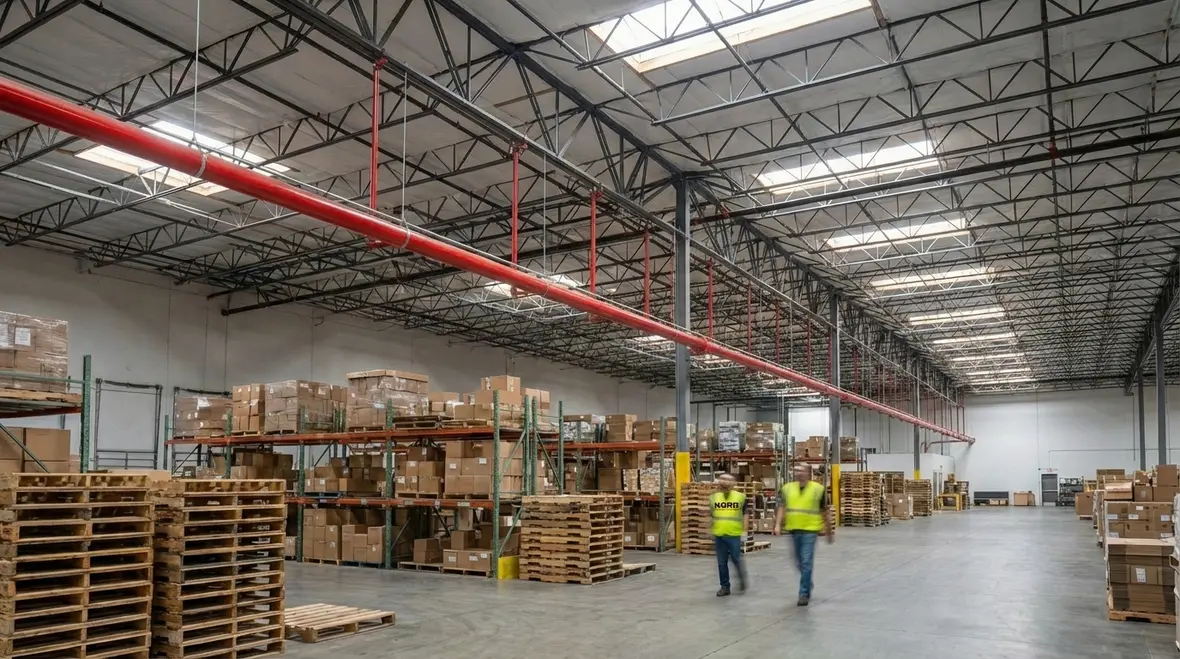
Southern California presents unique building conditions. On one hand, freezing temperatures are rare. On the other, seismic codes are strict and commercial developments often span large footprints. Big box stores, warehouses, hospitals, and high rise office spaces require long pipe runs.
Because of these long runs, maintaining proper sprinkler pipe slope Southern California installations becomes critical. Even a minor miscalculation across a 200 foot branch line can create a low pocket. Multiply that across an entire facility, and the problem scales quickly.
Additionally, inspectors in Los Angeles commercial sites pay close attention to drainage performance. During system tests, water must move predictably toward drains. If it hesitates, backs up, or pools, red flags rise faster than a superhero sequel.
Kord Fire Protection technicians often remind building owners that proper slope protects both compliance and investment. Pipes that drain correctly experience less corrosion. Less corrosion means fewer leaks. Fewer leaks mean fewer emergency calls at 2 a.m. Nobody enjoys those. Not even Batman.
Owners focused on broader commercial fire sprinkler system requirements in Los Angeles quickly see how slope, clearance, and inspection routines all work together to keep systems ready.
Wet System Drainage Guidelines Los Angeles Commercial Sites Must Follow
Designing under wet system drainage guidelines Los Angeles commercial sites require involves more than reading a single code line. Local amendments, national standards, and building specific conditions all shape the final design.
Typically, these guidelines require:
• Branch lines pitched to allow full drainage
• Auxiliary drains installed where trapped sections cannot be avoided
• Proper hanger spacing to prevent sagging
• Accessible main drains for routine testing
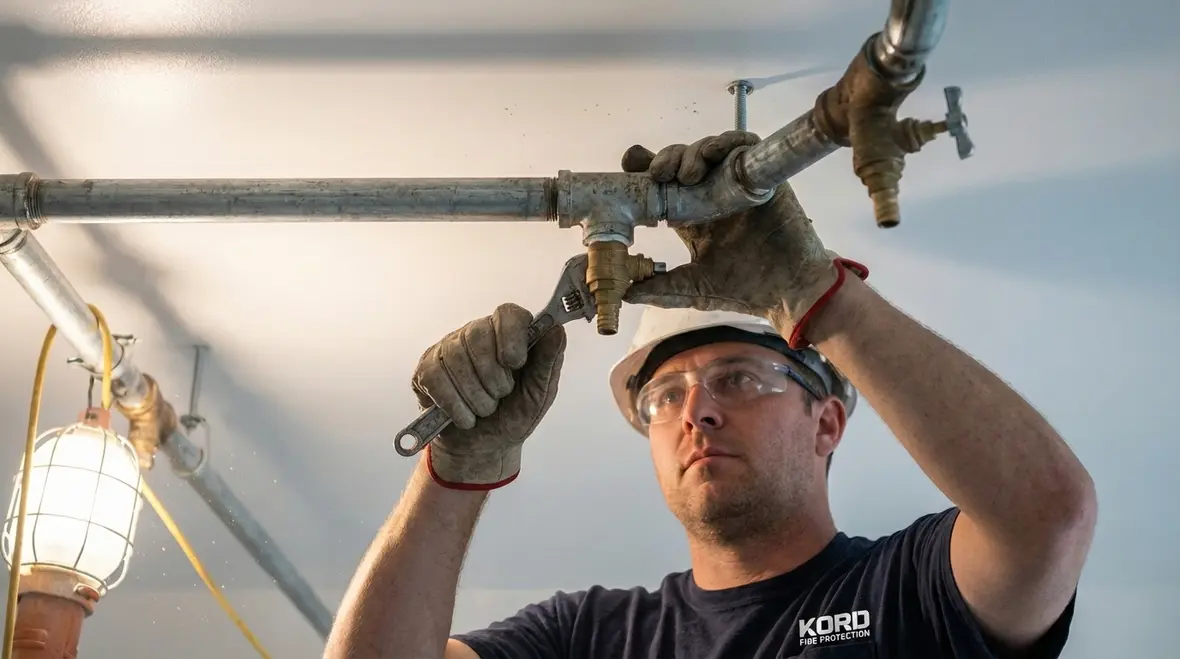
However, the real skill lies in coordinating these elements during installation. For example, structural beams, ductwork, and lighting layouts often compete for ceiling space. Therefore, contractors must plan pipe routing carefully to maintain consistent pitch without clashing with other systems.
Kord Fire Protection technicians explain things in practical terms. If a pipe must weave around structural features, the slope cannot disappear during that detour. Instead, the design must compensate. That may mean adjusting hanger lengths or rerouting lines entirely. It is a balancing act, and gravity always wins.
These same drainage principles also show up when teams address corrosion and black water in fire protection piping, where poor slope and trapped water often sit at the root of long term damage.

How Do You Calculate the Right Slope for a Wet Sprinkler System?
In many AI driven searches, building managers ask a simple question. How do you calculate the correct slope? The answer begins with understanding pipe diameter, system layout, and drainage goals.
Most standards specify a minimum pitch that allows water to move naturally toward a drain. While exact measurements vary by code and pipe size, designers typically apply consistent fractional slope across branch lines. Importantly, the slope must remain uniform. A pipe that dips and rises like a roller coaster defeats the purpose.
To calculate slope properly, professionals:
• Measure total horizontal distance
• Determine required vertical drop
• Confirm structural clearance
• Verify hanger load capacity
After installation, technicians test the system by opening drains and observing flow. If water clears efficiently, the slope works. If it lingers, adjustments may be needed.
Kord Fire Protection technicians often say that slope calculations are simple math paired with disciplined execution. In other words, it is not glamorous. But neither is replacing corroded pipe sections five years too early.
Common Installation Mistakes That Compromise Drainage
Even well designed systems can suffer from field errors. Unfortunately, these mistakes often remain hidden above finished ceilings until inspection day.
One frequent issue involves inconsistent hanger spacing. When hangers sit too far apart, pipes sag over time. Although the original slope may have been correct, gravity slowly reshapes the line. As a result, unintended low points form.
Another mistake occurs when installers level pipes for visual symmetry rather than functional drainage. A perfectly straight looking line may impress the eye. However, if it lacks pitch, it fails the drain test.
Additionally, retrofits introduce challenges. When renovations modify ceilings or add mechanical systems, sprinkler piping sometimes gets shifted without recalculating slope. That shortcut can violate wet system drainage guidelines Los Angeles commercial sites depend on for safe operation.
Kord Fire Protection technicians approach inspections with patience. They check hanger integrity, verify pitch with levels, and confirm auxiliary drains exist where needed. Because in fire protection, assumptions are expensive.
Design Coordination: Making Slope Work With Modern Architecture
Modern commercial architecture favors open ceilings, exposed systems, and tight interstitial spaces. While these designs look impressive, they complicate sprinkler layout.
Therefore, early coordination between architects, engineers, and fire protection designers becomes essential. When teams collaborate from the beginning, they can allocate vertical space for proper pitch. Conversely, when sprinkler design gets squeezed in at the last minute, compromises appear.
The following table highlights how coordination affects outcomes.
| Early Design Coordination | Late Stage Adjustments |
|---|---|
| Allows consistent pipe pitch | Forces uneven routing |
| Reduces need for auxiliary drains | Creates trapped sections |
| Improves inspection results | Increases correction costs |
| Supports long term corrosion control | Shortens system lifespan |
As shown above, coordination is not a luxury. It is a safeguard. In sprinkler pipe slope Southern California projects, seismic bracing must also align with pitch requirements. Consequently, designers must confirm that sway bracing does not interfere with drainage angles.
Kord Fire Protection technicians often translate this complexity into plain language. If every trade respects the slope from day one, the system behaves exactly as intended. If not, gravity eventually exposes the oversight.
Inspection, Maintenance, and Long Term Performance
Installation marks only the beginning. Over time, buildings shift slightly. Hangers loosen. Modifications occur. Because of this, regular inspection plays a critical role in preserving proper slope.
During routine testing, technicians observe drain flow and listen for unusual air intake patterns. Slow drainage may signal hidden pitch issues. Furthermore, corrosion buildup can restrict internal diameter, altering flow characteristics.
Preventive maintenance includes:
• Verifying hanger tightness
• Checking for visible sagging
• Testing auxiliary drains
• Flushing mains to remove sediment
In Los Angeles commercial sites, inspection documentation must reflect compliance with applicable drainage standards. Therefore, property managers benefit from partnering with experienced professionals who understand local expectations.
Kord Fire Protection technicians explain that a well sloped system ages gracefully. It drains fully after tests. It resists standing water corrosion. It performs predictably during activation. And when fire protection performs predictably, everyone sleeps better.
FAQ
Protect Your Investment With Expert Guidance
Proper pipe slope is not just a technical detail. It is a long term investment in safety, compliance, and performance. Kord Fire Protection technicians bring clarity to complex requirements and ensure systems drain exactly as designed. For commercial properties seeking dependable fire protection, now is the time to schedule a professional evaluation and secure confidence overhead.
If your facility is due for an inspection or has recently struggled with slow drainage, leaks, or corrosion, consider a focused review of slope and drainage pathways. Addressing these issues early can extend system life and prevent the kind of black water surprises nobody wants during a test.
Kord Fire Protection supports properties across Southern California with design, testing, and retrofit services. Whether you are coordinating a new installation or upgrading an existing system, their team can align pipe slope with broader code requirements, from clearance rules to standpipe and pump integration.
To discuss sprinkler pipe slope, wet system drainage, or any aspect of your building’s fire protection, connect with the team through their Contact Us page or explore regional offerings starting with the Long Beach fire protection service overview. The right conversation today can prevent a lot of late night headaches tomorrow.
Know Your Weapon Before You Fight the Flame
Kord Fire Protection is your go-to when it comes to all things fire protection. For over 20 years, we’ve been serving Southern California with the quality service and equipment to keep your home or business safe at all times. Our competitive prices reflect our unwavering commitment to protecting what matters most in the event of a fire emergency. Give us a call, send an email, or use that form!

Join Our Newsletter!
Get the latest fire safety tips delivered straight to your inbox From our Newsletter.


