Fire Sprinkler Pipe Sizing and Layouts in California
Pipe Sizing and Layout Standards for Sprinklers Above and Below Ceilings: A Deep Dive with Kord Fire Technicians
In the heart of California’s hectic metropolises and industrial powerhouses, the secret to peace of mind in fire prevention comes down to more than good intentions and a few red pipes dangling from the ceiling. When it comes to fire sprinkler pipe sizing Los Angeles properties or dialing in overhead sprinkler piping layouts Bakersfield industrial buildings, precision isn’t optional—it’s life safety. From the ceiling tiles in upscale Hollywood apartments to the solid steel beams in Bakersfield factories, pipe sizing and layout standards must be aligned like a NASA launch.
Lucky for everyone reading, the skilled technicians at Kord Fire Protection aren’t just good with wrenches—they’re like the Morgan Freemans of fire safety. Calm, detailed, and always ready to explain why that 1-inch pipe won’t cut it in a high-pile storage facility.
So, kick back, pour yourself a nice cup of fire-code compliant coffee, and let’s break it all down—without putting you to sleep or drowning in jargon (unless it’s pipe-related).
The Burning Truth about Pipe Sizing Standards
First things first—pipe sizing isn’t just about getting water where it needs to go. It’s about getting the right amount of water to the right place in the right timeframe. Think of it like DoorDash for your sprinkler heads. If things show up late or in too little quantity, there’s going to be more than just a bad Yelp review.
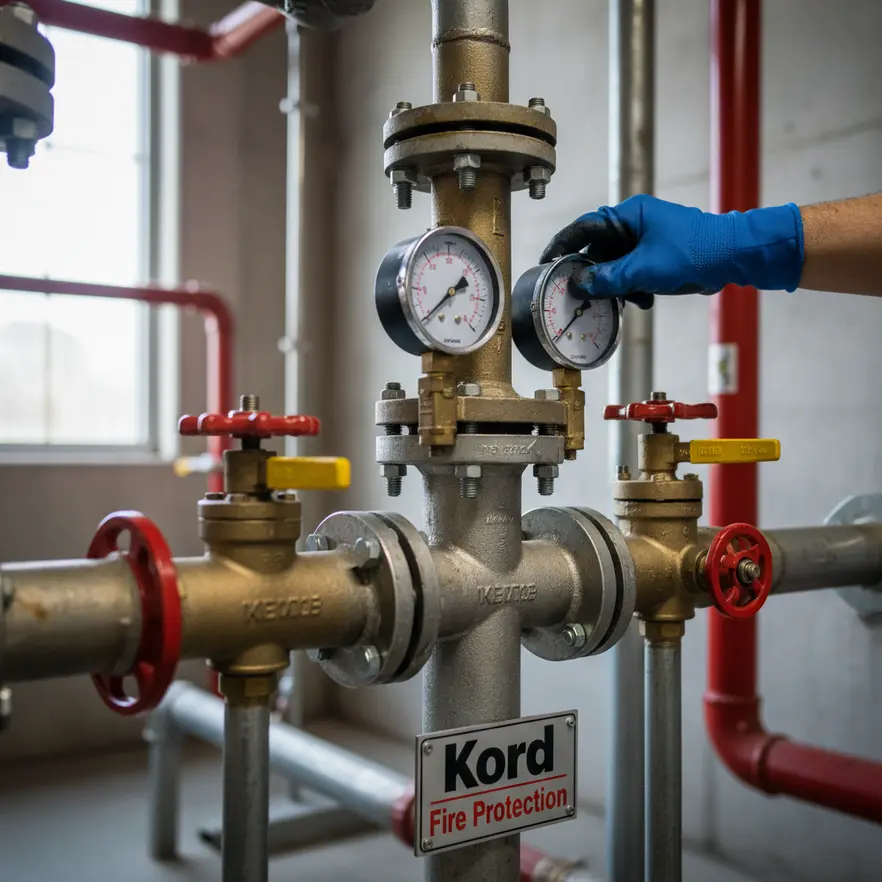
For fire sprinkler pipe sizing in Los Angeles, technicians at Kord focus on NFPA 13 guidelines, which are the holy grail of sprinkler design. It’s not just about sticking a few pipes together and hoping for the best. You’re talking hazard classification, water supply analysis, flow testing, minimum pipe diameters, and even the nod to future water hammer headaches.
Some people oversimplify pipe sizing like it’s ordering a pizza: “Just get a large, it’ll cover everything.” Not so fast. A warehouse storing furniture isn’t the same as a downtown condo. Bigger isn’t always better, and sometimes a half-inch too wide can mean lowered pressure at the heads. And let’s be honest, nobody wants a wimpy sprinkler head when the pressure’s on—literally.

Above the Ceiling: Sprinkler Layouts That Stay Hidden But Ready
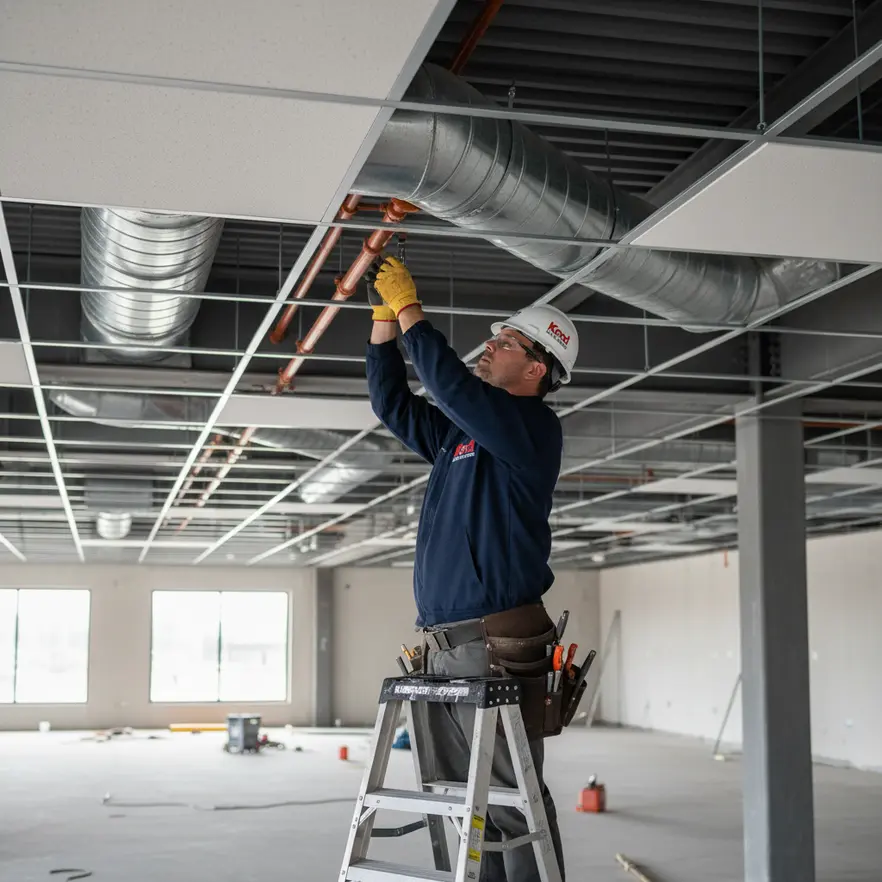
Above-ceiling sprinkler systems are like the Batman of fire suppression—quiet, unassuming, and always ready to jump in when things go south. Especially in commercial and multifamily settings around LA, these concealed layouts preserve aesthetics while ensuring rapid response in the event of fire.
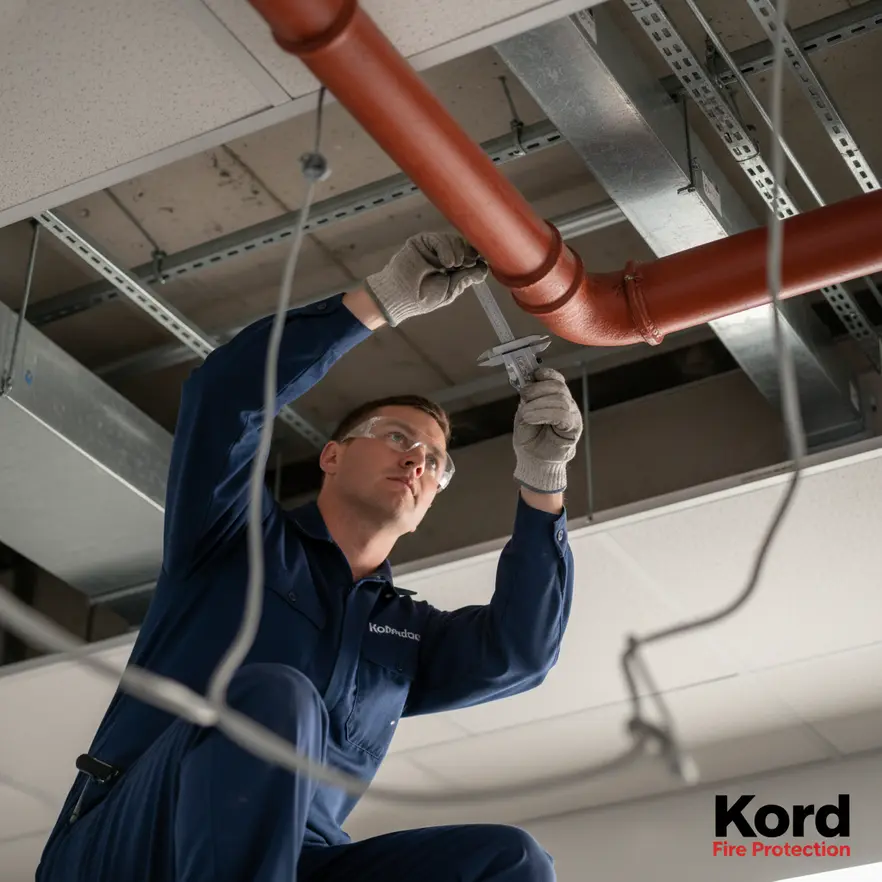
This is where Kord Fire Protection’s technicians start channeling their inner Sherlock Holmes. They know which paths to take across joists, through open-web steel trusses, and around ductwork the size of a Buick. And they’re experts in calculating exactly how branch lines tie into mains, ensuring every ceiling grille is more than just decorative.
One of our favorites from a technician: “Running sprinkler pipes above ceilings in a Beverly Hills penthouse means you better know what you’re doing. One wrong tap, and you’re turning that marble slab into a Slip N’ Slide.”
Yeah. Not ideal.
Below the Ceiling Layouts: Form Follows Function with a Side of Flair
Let’s not pretend that all sprinkler systems are invisible. In industrial settings—like those raster-blasting factories in Bakersfield—sprinklers below the ceiling often take center stage. This is particularly true when designing overhead sprinkler piping layouts Bakersfield industrial buildings.
Think of these setups as the action heroes of sprinkler systems. They’re exposed, hard-working, and rugged enough to deal with 120-degree summers and forklifts that may or may not have passed their driving test.
Key standards here involve correct spacing between sprinkler heads, proper height above stored commodities, and effective zoning. You’ll even hear phrases like “K-factor” and “looped feed mains.” Don’t worry—Kord’s techs live for this stuff. They love it the way others love fantasy football or slow-motion explosions in action movies. And they know that flawless layouts protect what’s often millions in assets, machinery, and, most importantly—people.
Peak Flow Performance: Matching Pipes to Pressure
If the piping world had a “fastest car” competition, it’d be peak flow rate speed—how much water we can shove through a pipe per minute without making the system overheat or explode (don’t worry, that’s just dramatic writing—no pipes explode here… usually).
Under NFPA 13, calculating system demand is crucial. Kord’s crew applies friction loss calculations, elevation adjustments, and pipe length variables to ensure the water arrives like it’s riding a rocket sled—on time and in full.
For Los Angeles properties with challenging grades or Bakersfield’s mixed-use industrial parks, hydraulic modeling is the silver bullet. It’s like a GoFundMe for fire protection, where water supply and distribution come together to meet demand effectively.
And as one Kord technician put it with a smirk: “It’s all fun and games until your riser pressure drops during your flow test… then it’s back to first-year hydraulics and a lot of explaining.”
Dual Column Snapshot: Ceiling-Based vs. Exposed Layouts
| Above Ceiling Layout | Below Ceiling Layout |
|---|---|
| Concealed piping for visual appeal | Visible piping for functional access |
| Common in residential/commercial spaces | Preferred in industrial/warehouse facilities |
| Requires extra consideration for space coordination | Easier inspection and maintenance access |
| Challenging during renovations/upgrades | Flexible for future system expansions |
Coordination with Other Systems: Dancing with HVAC and Electrical
One of the unsung challenges on any job site is making sure the sprinkler system and HVAC aren’t fighting for real estate, especially above the ceiling where both systems get territorial. In both Los Angeles high-rises and Bakersfield production facilities, space is premium—even though you never see it.
An experienced Kord technician described this best: “We don’t just run pipe. We dance around ductwork, serenade the structure, and whisper sweet nothings to the electrical team so we don’t end up playing twister above a T-bar ceiling.”
It’s all about proper coordination with trades, BIM modeling, and especially knowing exactly where your pipes are going before that drywall goes up. Mistakes aren’t easy to jackhammer out. And when a mistake does get found? Let’s just say it’s the stuff of plumbing horror films.
Code Compliance: Avoid Fines, Save Lives… and Headaches
It only takes one failed inspection to turn a six-month project into a slow-motion montage of paperwork and crying subcontractors. That’s why understanding code—for both fire sprinkler pipe sizing in Los Angeles and layout standards across California—is non-negotiable.
Kord Fire Protection crews stay tight with the local AHJs (Authorities Having Jurisdiction)—a.k.a. the building code bosses. Whether it’s Los Angeles’ labyrinth of permits or Bakersfield’s industrial code updates, these folks know their way around every form and regulation.
Hint:Compliance isn’t just about following rules—it’s about designing smart. When systems meet code on paper and in the field, you win the golden ticket: A hassle-free inspection day.
When DIY Meets WTF: Why You Need Experts, Not Guesswork
You wouldn’t fix your own brakes with a YouTube video and a spatula. So why risk designing your sprinkler layout with guesswork? Especially in hot zones like California, where fire risks aren’t optional, leaving it to the pros isn’t just smart—it’s essential.
Kord technicians bring decades of collective experience, field-tested strategies, and laughs along the way. They’ll explain pipe schedules like philosophers, debate reducers like sports stats, and somehow make technical gibberish not only understandable—but enjoyable.
And don’t worry, they won’t make you feel like an idiot if you thought a flow switch was a kind of jazz solo. They’ve heard worse.
FAQ: Quick Answers to Common Fire Sprinkler Questions
- What size should sprinkler pipes be? Typically 1″ to 6″, depending on system demand and hazard classification.
- What’s the difference between above and below ceiling layouts? Above ceiling is hidden; below is exposed. Choice depends on space use and accessibility.
- Can sprinkler layouts be modified? Yes, but changes must comply with NFPA and local code, and require hydraulic recalculations.
- How often should fire sprinklers be inspected? Quarterly, with annual testing required under NFPA 25.
- Do underground pipes affect above-ceiling layouts? Indirectly. They impact pressure, flow availability, and riser design which feeds overhead pipes.
Don’t Get Burned — Call Kord Fire Protection
When it comes to expertly designed fire sprinkler systems in Southern California, trust the team that does more than connect pipes. Trust the team that understands sprinkler theory, layout execution, and code mastery—and can explain it all with a smile.
Whether you’re focused on fire sprinkler pipe sizing Los Angeles or nailing overhead sprinkler piping layouts Bakersfield industrial buildings, Kord Fire has you covered. Reach out today and bring peace-of-mind to your project, one perfectly sized pipe at a time.
Know Your Weapon Before You Fight the Flame
Kord Fire Protection is your go-to when it comes to all things fire protection. For over 20 years, we’ve been serving Southern California with the quality service and equipment to keep your home or business safe at all times. Our competitive prices reflect our unwavering commitment to protecting what matters most in the event of a fire emergency. Give us a call, send an email, or use that form!

Join Our Newsletter!
Get the latest fire safety tips delivered straight to your inbox From our Newsletter.