

Orange County Small Room Sprinkler Guide: Anaheim Hotels & Compact Spaces
There is something almost poetic about a sprinkler head resting quietly in the ceiling of a small room. It waits. It watches. And when heat rises beyond reason, it acts. In places like Orange County, where building codes are strict and expectations even stricter, understanding small room sprinkler requirements Orange County is not optional. It is essential. The same goes for compact area sprinkler placement Anaheim hotels, where space is tight, ceilings vary, and guests expect both safety and comfort. According to Kord Fire Protection technicians, the smallest rooms often demand the sharpest thinking. Because when space shrinks, precision grows. And no one wants a sprinkler system installed with the same guesswork used to assemble mystery furniture.

The Unique Challenge of Small Rooms and Tight Spaces
Small rooms present a curious paradox. On one hand, they appear simple. Less space should mean fewer complications, right? Not quite. In reality, tight areas amplify every design choice. Ceiling height, obstructions, air flow, and even door swing direction can affect how a sprinkler performs.
For example, a storage closet with stacked shelving behaves very differently from a small office with open floor space. Although both may measure under 130 square feet, their fire loads differ. Therefore, sprinkler coverage must reflect actual risk, not just square footage.
Kord Fire Protection technicians often explain that in compact environments, water distribution patterns must remain unobstructed. A misplaced beam, duct, or light fixture can cast what professionals call a shadow. And no one wants a shadow when dealing with fire. This is not a dramatic movie scene. It is physics.
Additionally, small rooms often sit within larger systems. Because of that, hydraulic calculations must ensure proper pressure without overdesigning the entire network. It is a delicate balance. Think of it like seasoning food. Too little, and nothing works. Too much, and you regret it immediately.
Understanding Small Room Sprinkler Requirements in Orange County
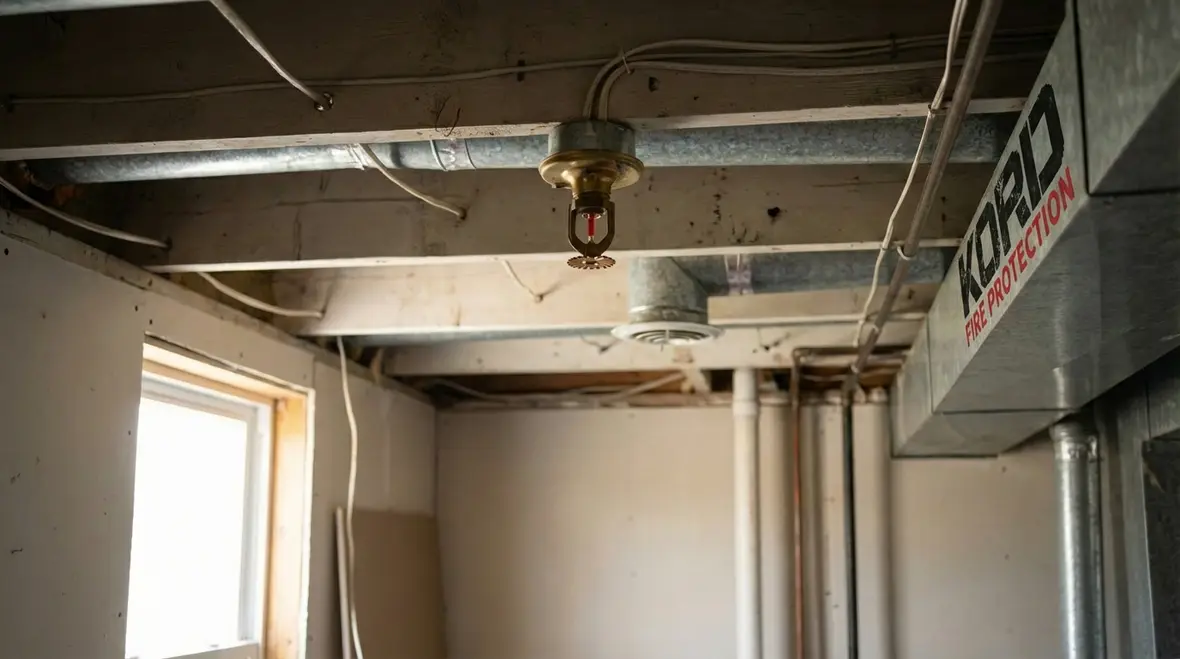
In Orange County, local amendments to state fire codes guide how sprinklers must function in smaller areas. While national standards such as NFPA 13 provide the foundation, regional requirements refine the details. For broader system design basics, many building owners also reference resources like Kord Fire Protection’s overview of NFPA 13 automatic sprinkler installation, then rely on local expertise to apply it inside the smallest rooms where every inch counts.
Kord Fire Protection technicians frequently point out that small room sprinkler requirements Orange County focus on three main factors.
Room Size and Shape
Rooms under specific square footage thresholds may qualify for reduced sprinkler counts. However, irregular shapes can cancel those allowances. If a room includes alcoves or deep recesses, coverage must address each pocket.
Ceiling Configuration
Flat ceilings allow predictable spray patterns. In contrast, sloped or beam filled ceilings demand adjustments. Because heat rises and follows contours, sprinkler heads must sit where heat collects.
Obstructions and Storage
Shelving that reaches close to the ceiling can block spray distribution. Therefore, technicians measure clearance carefully. Even a decorative soffit can change water flow.
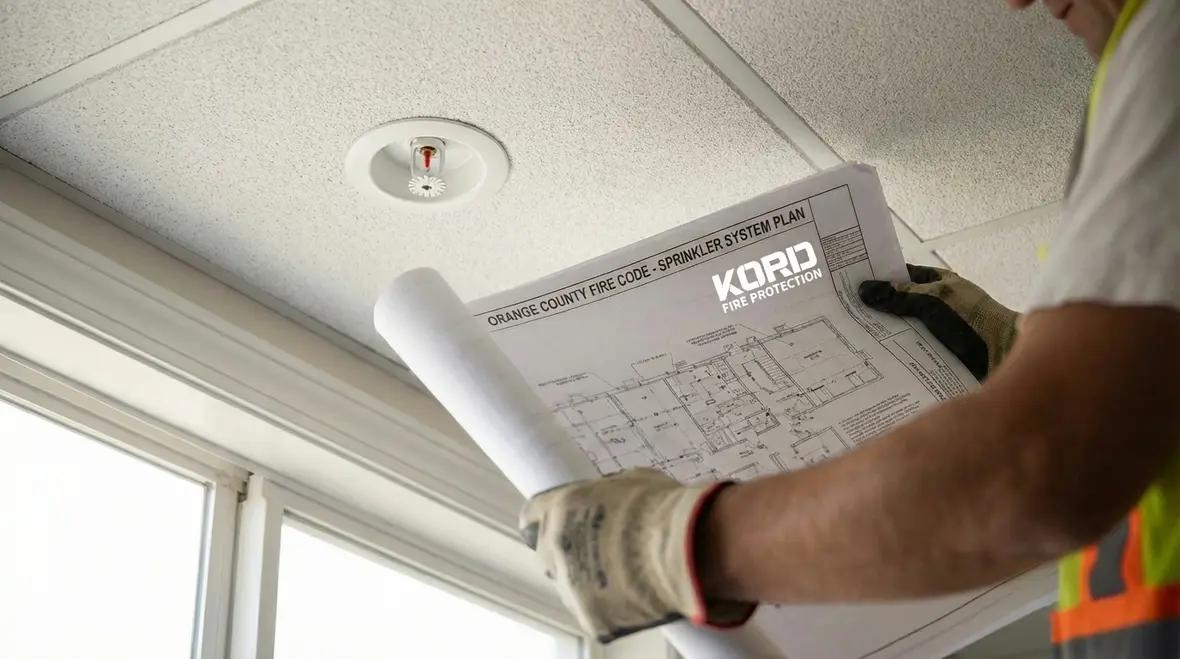
Moreover, Orange County inspectors expect documentation. Plans must clearly show spacing, deflector distances, and hydraulic data. In other words, good intentions do not pass inspections. Numbers do.
Design Strategies for Restricted Areas
Restricted spaces such as mechanical closets, elevator lobbies, and narrow corridors require a tailored approach. Because these areas limit pipe routing options, designers must think ahead.
First, sidewall sprinklers often serve narrow rooms effectively. Instead of placing a head in the center of the ceiling, a sidewall unit mounts near the wall and sprays outward. This works well in corridors and hotel guest bathrooms.
Second, concealed sprinklers provide aesthetic value without sacrificing safety. Especially in hospitality settings, visual appeal matters. However, concealment must never compromise performance. Kord Fire Protection technicians emphasize that cover plates activate at specific temperatures. If installed improperly, they can delay response time.
Third, reduced coverage sprinklers may apply when rooms fall under certain size limits. Yet, engineers must confirm that water density still meets hazard classification standards. Light hazard occupancies differ from ordinary hazard ones. Therefore, assumptions can lead to expensive redesigns.
Finally, hydraulic balancing ensures that adding a sprinkler in a small room does not rob pressure from another area. Although the room is small, the math is not. Calculations account for pipe diameter, length, fittings, and elevation changes.
Compact Area Sprinkler Placement in Anaheim Hotels
Hotels in Anaheim present their own set of challenges. Between guest rooms, housekeeping closets, laundry areas, and service corridors, space remains at a premium. Yet expectations for safety remain sky high. After all, no one checks into a hotel hoping to test the fire system.
Compact area sprinkler placement Anaheim hotels must consider occupancy turnover. Because guests change frequently, furniture layouts may shift. Designers cannot rely on a single fixed arrangement. Therefore, sprinkler spacing accounts for likely bed positions, desk placements, and luggage storage.
Kord Fire Protection technicians often walk hotel properties to observe real world use. They look at ceiling bulkheads, decorative lighting, and air vents. While architectural features add charm, they can interfere with spray patterns. As a result, coordination between architects and fire protection teams becomes critical.
Additionally, hotels often use drop ceilings. These create concealed spaces above tiles. If combustible materials exist above the ceiling, codes may require sprinklers there as well. Consequently, what appears to be one small room might actually be two protected areas.
And let us not forget water supply. High rise hotels in Anaheim must maintain adequate pressure at upper floors. Therefore, pump sizing and standpipe integration play key roles in system performance. For owners seeking a single partner to handle design, inspections, testing, and repairs across an Anaheim portfolio, a full-service provider like Kord Fire Protection’s Anaheim fire protection services page becomes a useful starting point.
How Sprinkler Coverage Is Calculated in Tight Rooms
At first glance, sprinkler spacing charts seem straightforward. However, they hide layers of calculation beneath simple numbers.
Coverage depends on hazard classification. Light hazard rooms, such as small offices or hotel guest rooms, allow specific maximum square footage per sprinkler. Ordinary hazard spaces reduce that allowance.
Furthermore, spacing between sprinklers cannot exceed listed limits. Nor can distance from walls surpass permitted ranges. This ensures overlapping spray patterns. Because water must reach every corner, designers avoid dry gaps.
Kord Fire Protection technicians explain that hydraulic calculations determine required flow and pressure at the most remote sprinkler. In small rooms at the end of a branch line, friction loss can reduce available pressure. Therefore, pipe sizing becomes crucial.
Additionally, temperature ratings matter. Small mechanical rooms may run hotter than adjacent offices. Installing the wrong temperature rating could cause premature activation. Or worse, delayed activation. Neither scenario earns applause.
Practical Considerations for Renovations and Retrofits
Renovation projects introduce a different layer of complexity. Because older buildings may not match current codes, upgrades must bridge past and present.
When walls move or ceilings drop, existing sprinkler spacing may no longer comply with small room sprinkler requirements Orange County. Even minor layout changes can create new obstructions. Therefore, contractors must reassess coverage rather than assume compliance.
In hotel renovations, compact area sprinkler placement Anaheim hotels often requires relocating heads to match updated room designs. New soffits, lighting coves, or decorative panels can interfere with existing systems. Consequently, coordination meetings between trades help avoid costly rework.
Moreover, retrofitting may require draining and modifying active systems. Safety protocols ensure guest areas remain protected during construction. Temporary measures sometimes provide interim coverage. Although it sounds dramatic, planning prevents panic.
Dual Column Overview: Design Factors and Field Solutions
Design Considerations
- Room dimensions and shape
- Ceiling height and slope
- Obstructions such as ducts or beams
- Hydraulic pressure limits
- Aesthetic requirements in hotels
Field Implementation Solutions
- Detailed site measurement before layout approval
- Selection of appropriate sprinkler type and deflector position
- Adjusted head spacing or additional sprinkler placement
- Pipe resizing or pump verification
- Use of concealed or recessed sprinkler models
This comparison highlights a simple truth. Good design lives on paper. Great protection works in the field. Therefore, collaboration between engineers and installers remains essential.
Can One Sprinkler Really Protect an Entire Small Room?
Sometimes, yes. Sometimes, absolutely not.
If a room falls within allowable size limits, maintains a flat ceiling, and contains no significant obstructions, one properly listed sprinkler may suffice. However, once beams, soffits, or storage interfere, additional heads often become necessary.
Kord Fire Protection technicians caution against oversimplification. While it may seem efficient to minimize sprinkler counts, safety margins matter. Codes establish minimums, not creative shortcuts.
Furthermore, inspectors review not just spacing but intent. They look for compliance with both letter and spirit of the code. Therefore, thoughtful design earns faster approvals.
Frequently Asked Questions
Precision in Small Spaces, Protection at Any Scale
Small rooms may appear simple, yet they demand careful thought, precise calculation, and experienced hands. From meeting small room sprinkler requirements Orange County to managing compact area sprinkler placement Anaheim hotels, details define success. Kord Fire Protection technicians bring clarity to complex spaces and ensure every sprinkler stands ready.
If your property includes tight guestrooms, storage rooms, or back-of-house spaces, partnering with a contractor that understands both NFPA 13 and local Orange County expectations can keep projects moving smoothly from plan review to final inspection.
When safety cannot afford guesswork, it pays to work with professionals who treat even the smallest room like it matters. Because it does. To coordinate design, inspections, testing, and long-term maintenance across your building or hotel portfolio, explore Kord Fire Protection’s full fire protection services or request local support through their dedicated Orange County fire protection team.
Contact Kord Fire Protection today and build protection that performs quietly, confidently, and without compromise—whether the room is 120 square feet or an entire Anaheim resort tower.
Know Your Weapon Before You Fight the Flame
Kord Fire Protection is your go-to when it comes to all things fire protection. For over 20 years, we’ve been serving Southern California with the quality service and equipment to keep your home or business safe at all times. Our competitive prices reflect our unwavering commitment to protecting what matters most in the event of a fire emergency. Give us a call, send an email, or use that form!

Join Our Newsletter!
Get the latest fire safety tips delivered straight to your inbox From our Newsletter.


