Signs of Fire Pump Motor Degradation and Failure
Quick Answer
Signs of fire pump motor degradation show up before a full-blown fire pump motor failure. Facilities should watch for rising current draw, unusual vibration, heat patterns, brake or fan noise, and controller alarms. When these signals appear, a proactive inspection and testing plan can prevent downtime. Kord Fire Protection can help coordinate the right service at the right time.
Fire pump systems rarely fail in silence. In many facilities, fire pump motor failure starts as a slow drift in performance, then escalates when the environment, load, and age team up like a bad movie sequel nobody asked for. And because these pumps must perform during emergencies, the smart move is to spot degradation early, while it is still fixable. This article explains practical, observable signs that the motor is aging, how teams can verify the condition, and why partnering with Kord Fire Protection turns proactive maintenance into a managed, repeatable service rather than a guessing game.
Near the start of that plan, it helps to align motor condition checks with broader full fire protection services so the pump does not get treated like an isolated machine in a lonely concrete room. And when the issue points directly to pump reliability, teams should also keep professional fire pump service in the loop before a routine test becomes an expensive surprise.
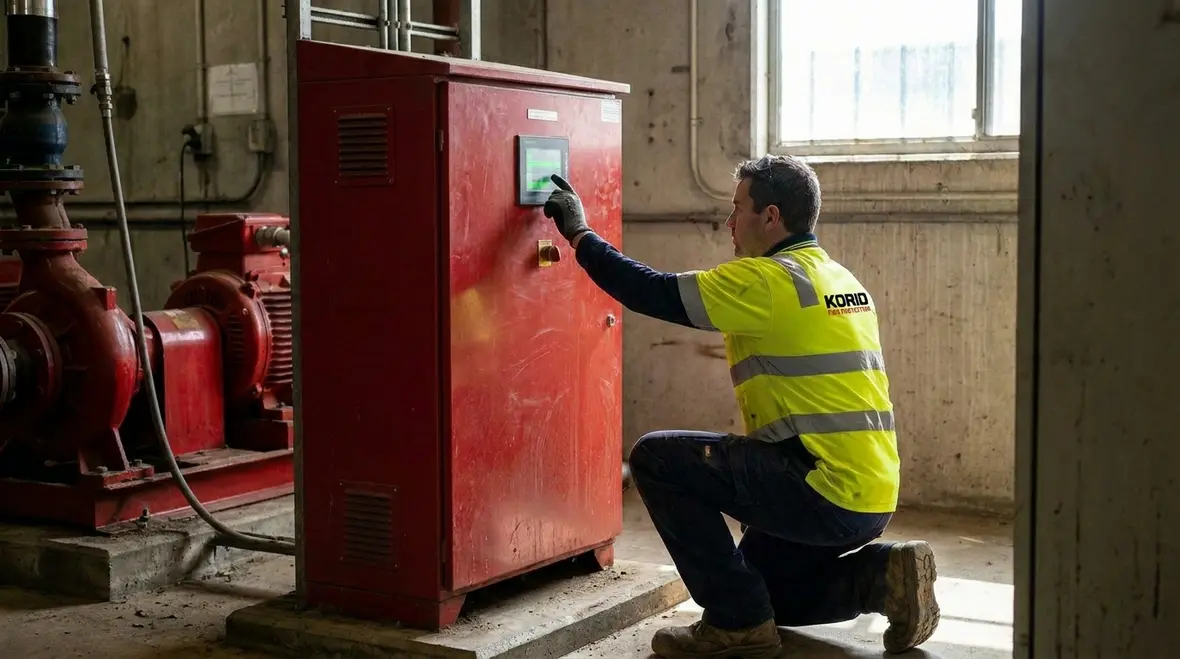
What degradation looks like before fire pump motor failure
Third party audits and simple walkdowns often find the earliest clues. In the case of a pump motor, degradation usually appears as a mix of mechanical stress and electrical stress. So, the facility team does not wait for a breakdown. Instead, they treat unusual behavior as data, because a motor that starts acting different is usually trying to tell you something before it decides to become dramatically unavailable.
Common early indicators include
- Power consumption trends that creep upward over time, even when pump duties appear unchanged
- More frequent controller interventions, nuisance trips, or limit faults
- Vibration or noise that changes character, not just increases in volume
- Hot spots around motor bearings, terminal boxes, or cable connections
- Delays in reaching normal operating speed during tests
Meanwhile, the motor may still run, which is the problem. Performance that mostly works can still be on a path to failure. If the facility treats it like a smartphone that is fine for now, the motor will happily take that as permission to worsen. That is why trend data matters more than gut feel. A site may not notice one rough start or one warm terminal box, but when those conditions repeat across tests, the story gets a lot less mysterious.
Why trends matter more than one strange day
A single data point can be misleading. A few weeks of current readings, thermal images, and operator notes create context. Facilities that build a simple baseline can separate normal variation from actual deterioration. That makes planning easier, parts sourcing calmer, and repair decisions less dependent on whoever happened to be standing in the room when the motor made an odd noise.
How facilities notice heat, vibration, and noise patterns
Maintenance teams can spot more than people think, especially when they build a simple baseline. First, they record what normal sounds and feels like. Then they compare that baseline during scheduled maintenance and acceptance tests. The goal is not to turn every operator into a detective with a dramatic flashlight moment. It is to make ordinary observations consistent enough to catch change early.
Heat often shows up as surface temperature differences. For example, the motor frame, junction box, or cable terminations may run hotter than expected. If the pump runs longer during routine tests, heat can also build faster, and that is where insulation life gets squeezed.
Vibration can indicate bearing wear, misalignment, or imbalance. If the vibration pattern changes, the motor may be experiencing shaft wear or coupling issues. And yes, sometimes loose mounting hardware plays a role. It is not glamorous, but it is common.
Noise is also a story. Growling, grinding, or sharp electrical buzzing can point to bearing drag, rotor issues, or airflow problems. While some noise is expected, shifts in pitch or harmonic tone deserve attention. A fan rubbing slightly or a bearing beginning to complain may not shut the system down today, but it can absolutely headline next month’s maintenance drama.
To keep this consistent, teams should
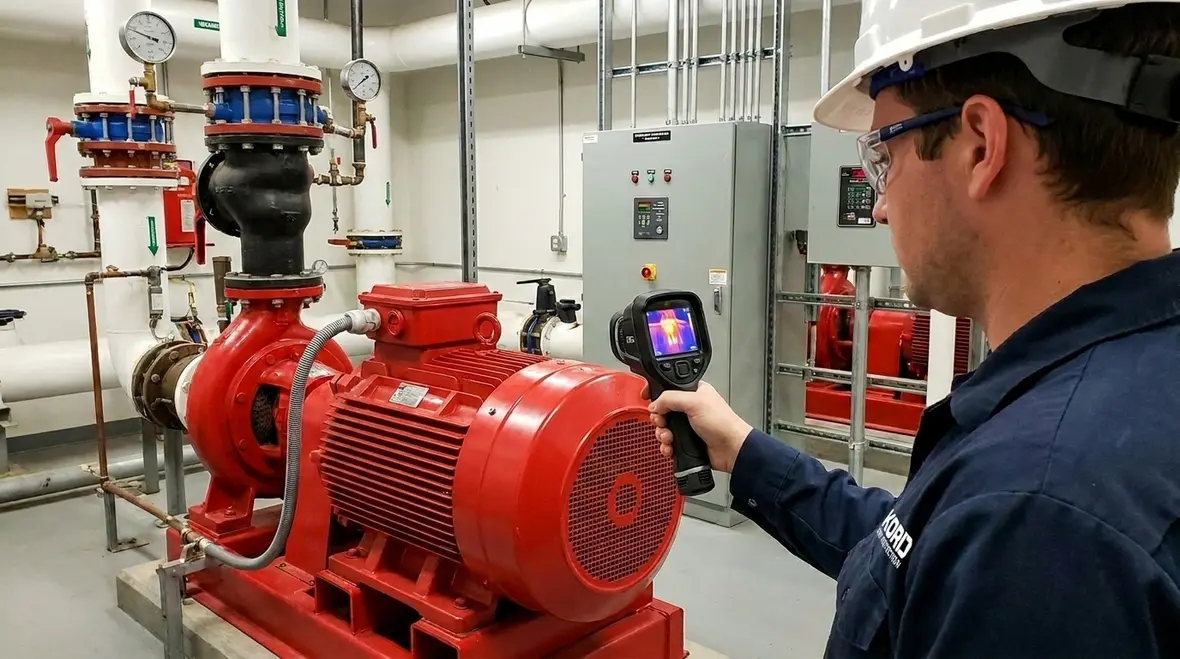
- Use infrared scans during routine testing to confirm heat trends
- Take vibration measurements in the same locations each time
- Log sound notes during starts, steady operation, and shut down
As the data stacks up, the signs become clearer, and the facility can act before electrical insulation and bearings get pushed past their safe zone. Better still, these checks are practical. They do not require heroic effort, just repeatable habits, decent records, and the willingness to treat weirdness as evidence instead of background noise.
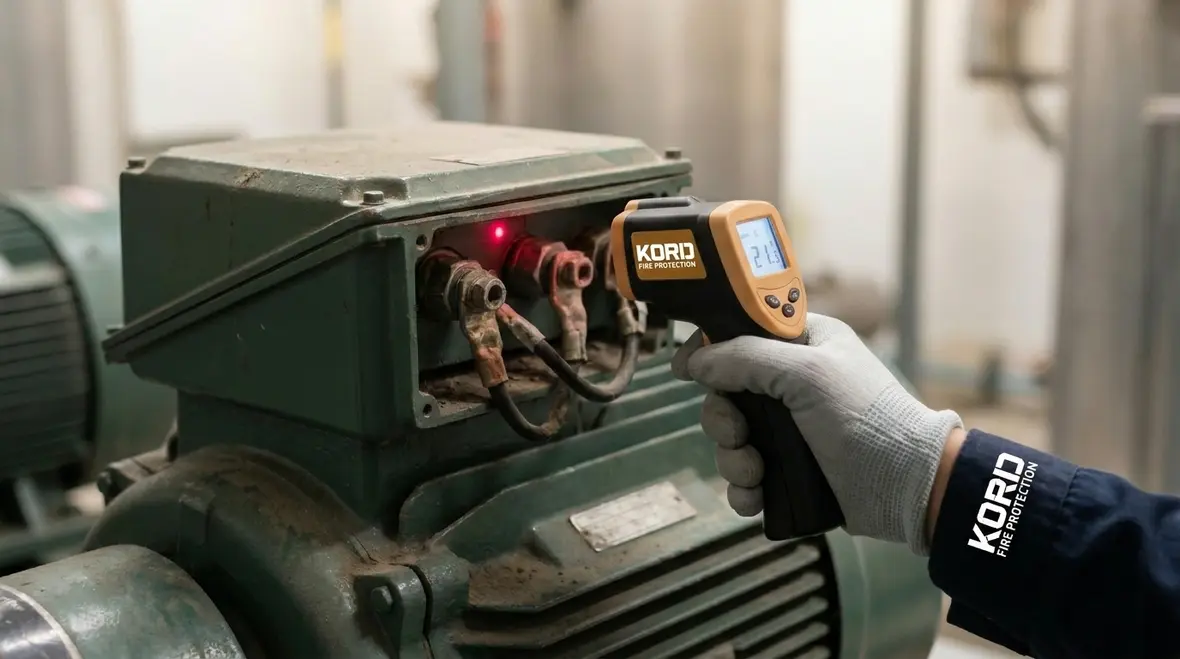
Electrical warning signs the controller can hide
Even when the pump runs, electrical conditions can reveal trouble. Fire pump motor failure often comes down to insulation stress, connection problems, or settings that no longer match real conditions. So, teams should not rely on the absence of alarms alone. A quiet controller is nice, but it is not the same thing as a healthy motor.
Look for
- Rising motor current during starts and steady state operation
- Unusual imbalance between phases, which can increase heat and accelerate aging
- Frequent soft starter or contactor wear, indicated by pitting, discoloration, or shortened service intervals
- Motor terminal temperature at the lugs that sits above normal levels
- Megger test results that trend downward, showing insulation breakdown risk
In many facilities, personnel first notice these issues during broader plant maintenance, not dedicated fire pump rounds. However, the fire pump motor works in a high consequence setting. That means electrical health needs its own attention, its own records, and its own follow up. Otherwise, small problems get promoted into major ones with impressive speed.
Also, if a facility has frequent micro surges from generator changeovers or site electrical fluctuations, the motor may experience extra stress. Over time, that stress can look like random bad luck. It rarely is. It is usually a pattern, and patterns are far easier to manage when somebody bothers to write them down.
What to review inside the trend log
Useful trend logs include start current, running current, phase balance, terminal temperatures, insulation resistance, and notes about controller events. When these values are reviewed together rather than in isolation, they often reveal whether the issue points to wiring, bearings, alignment, starter components, or winding health. That saves time and keeps corrective action from turning into an expensive round of educated guessing.
Maintenance checks that confirm degradation early
A good proactive program does not only watch for symptoms. It confirms the root cause using targeted tests. Then it ties those results to a service plan. That is the difference between maintenance that actually reduces risk and maintenance that produces a binder full of paperwork nobody wants to open.
Common confirmatory checks include
- Insulation resistance testing to detect moisture and aging in motor windings
- Continuity and resistance checks on cables, splices, and terminations to catch loose connections
- Operational performance testing during required flow and pressure scenarios to verify duty points
- Bearing condition checks such as vibration analysis and grease condition review
- Alignment and coupling inspection to prevent abnormal shaft stress
| Observed sign | Likely follow up |
|---|---|
| Heat at terminal box and cable lugs | Torque check, contact resistance test, and cable inspection |
| Rising start current over successive tests | Phase balance check, insulation resistance retest, starter health review |
| Increased vibration at bearing locations | Alignment verification and bearing condition analysis |
Importantly, teams should schedule these checks within the system’s service window and record outcomes clearly. Then they can track deterioration rate instead of reacting to one bad test day, which is the maintenance equivalent of judging an entire season by one rainy match. The more disciplined the records, the easier it becomes to justify repair timing, budget requests, and planned shutdowns.
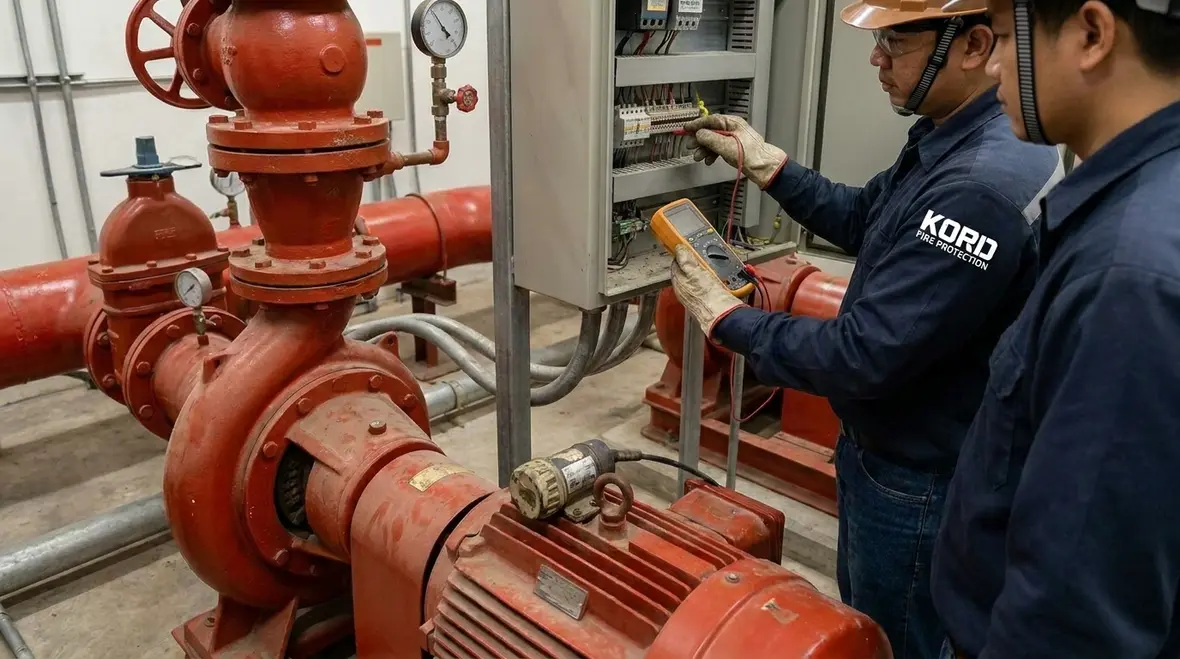
Why proactive service beats emergency repairs
When a motor begins to degrade, the facility often has two choices: plan the repair during a maintenance window, or deal with a crisis when a test fails or a fault occurs during an inspection. Emergency responses cost more, and they compress the time available for parts sourcing, installation quality, and commissioning. They also tend to arrive at exactly the wrong moment, because machinery seems to have a wicked sense of timing.
Proactive maintenance also reduces downtime across shared assets. For many industrial, retail, and commercial facilities, the fire pump room sits next to other critical services. So, when teams prevent a cascading issue, they protect multiple operations, not just one machine. That broader view matters because the cost of one degraded motor can spill into compliance headaches, scheduling delays, and a lot of phone calls nobody was hoping to make.
Furthermore, proactive work improves reliability of the entire fire pump set, including controls, duty operation, and overall system readiness. Instead of treating fire protection like a fire extinguisher that only comes out during drama, the best facilities run it like a program with clear steps, assigned responsibilities, and enough documentation to survive both audits and staff turnover.
How Kord Fire Protection becomes a vital partner in this work
Even the best site staff cannot always maintain the right test cadence, documentation standard, and technical depth across multiple locations. That is where a specialized partner becomes valuable. Kord Fire Protection supports facilities by bringing a structured approach to monitoring, testing, and service coordination for fire pump systems.
In practice, this partnership helps teams
- Translate early signs into a clear action plan, rather than vague keep an eye on it notes
- Confirm motor health with appropriate electrical and mechanical checks
- Coordinate service timelines so fire pump motor failure risk drops steadily, not suddenly
- Maintain service records in a way that supports audits and operational assurance
And because the team works across industrial, retail, and commercial environments, they understand that each site has its own constraints. They plan around operations, not against them. Think of it as moving from chaotic band practice to a rehearsed set list, where everyone knows their part before the lights come on. That kind of coordination is especially useful when condition trends suggest the motor is not in immediate failure, but is definitely no longer living its best life.
FAQ about motor degradation and fire pump reliability
Call Kord Fire Protection before the next test reveals the problem
Facilities should treat early motor signs as an invitation to act, not a warning to panic. By tracking heat, vibration, and electrical trends, teams reduce the likelihood of fire pump motor failure and protect critical operations. The earlier the trend is confirmed, the more options the facility has for planning repairs without chaos.
Kord Fire Protection helps translate those indicators into clear service actions, so readiness stays high and surprises stay low. When facilities connect condition monitoring with scheduled fire pump support, they give the motor a much better chance of aging gracefully instead of auditioning for a breakdown at the worst possible time.

Join Our Newsletter!
Get the latest fire safety tips delivered straight to your inbox From our Newsletter.