
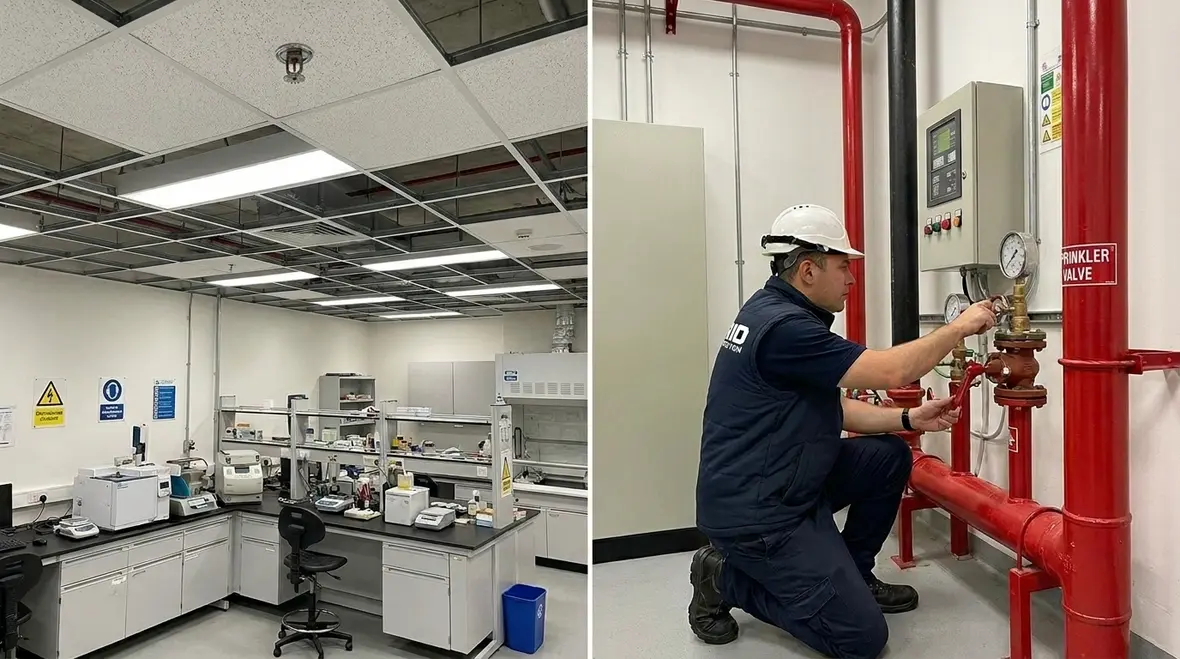
School Fire Suppression System for Classrooms and Labs, Kord
The safety of classrooms, labs, and dorm halls depends on systems that act fast when seconds matter. That is why many districts and universities install a school fire suppression system designed to control heat, limit spread, and protect people long before smoke turns into panic. When this job gets done right, the building does not just “have sprinklers,” it follows a plan that matches its layout and its risks. And yes, the plan matters more than the fire drill speeches. Kord Fire Protection supports that mission as a vital partner, helping teams move from design intent to real world performance, inspections, and dependable upkeep.
Why schools need reliable fire protection that performs under stress
Schools and universities face a tough mix of hazards. There are science rooms with chemicals, kitchens with cooking oils, maintenance spaces with solvents, and older buildings with tricky pipe routes. In addition, occupancy patterns change. During the day the hallways are busy, evenings bring events, and nights can include sports and study groups. Therefore, a fire suppression approach must handle different scenarios without drama and without guesswork.
In a crisis, equipment must work the way it was tested, not the way it was hoped. That means clean installation, correct device placement, and realistic coverage around classrooms, corridors, and mechanical spaces. Moreover, systems must stay ready, which includes clear water supply performance, properly set control valves, and current documentation. In other words, the safest plan is the one that keeps working after the ribbon cutting and the campus tour.
What dependable readiness looks like on an active campus
Reliable protection is not just about hardware. It is about whether the system still performs after summer projects, classroom tech upgrades, and the thousand little changes that happen in real educational buildings. A district may repaint rooms, rework storage, swap ceiling layouts, or repurpose a lab into a STEM classroom. Each change can affect coverage. That is why fire protection planning needs to stay connected to facility operations instead of living in a binder that only gets opened when somebody says, “Wait, where is that inspection report?”
How a school fire suppression system protects classrooms, labs, and common areas
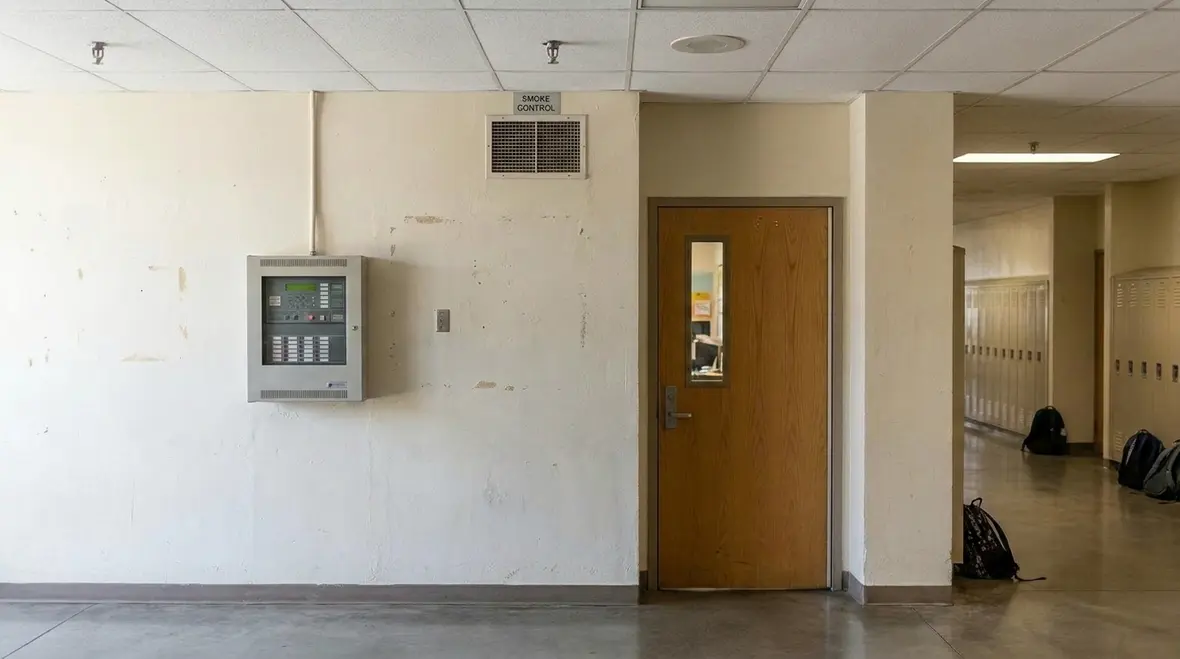
A well planned school fire suppression system targets the places where fire growth accelerates. For example, classrooms often include learning materials and electronics. Labs can involve flammable liquids and heat sources. Common areas include libraries, gyms, and cafeterias where fire loads may be higher and evacuation paths can get crowded.
Suppression systems respond by applying water or other approved agents based on the system type and design. They aim to control the fire early, reduce temperature, and limit smoke spread enough for occupants to exit and for responders to operate. Just as important, the layout of the protection matters. Pipe routing, sprinkler spacing, and head selection influence how quickly the system reaches the area of origin.
Universities also add complexity with multi story wings, dorm clusters, and shared facilities. Consequently, design teams must coordinate with building engineers, security staff, and maintenance leaders to avoid blind spots and to keep access clear for ongoing service.
Different spaces, different fire behavior
A classroom full of books, chargers, projectors, and paper goods does not behave like a chemistry lab or a cafeteria kitchen. That sounds obvious, yet it is exactly why system design cannot be copied and pasted across a campus. Hazard types vary, room geometry varies, and occupant movement definitely varies. The system has to support evacuation routes and protect the areas where heat and smoke can build fast. For a broader overview of how system types and maintenance planning come together, Kord Fire Protection also discusses these fundamentals in Fire Suppression System Design, Types and Maintenance.
Where the design and installation process typically fails, and how to prevent it
Even good intentions can create weak points. One common issue involves changes after plan approval. Facilities renovate, add walls, change ceiling types, or move equipment. Then the system that was correct during installation becomes less effective. Another issue involves water supply assumptions. If the system depends on a water flow rate that drops under peak demand, performance can suffer during an emergency.
To prevent these failures, teams should verify the system design against the final field conditions. They should also confirm that devices match the hazard classification and that the correct type of coverage supports each space. Additionally, contractors and facility managers must follow up on interfaces with fire alarm controls, monitoring, and access panels.
Here is the part that feels less exciting than a movie explosion scene, but is actually more important. Check the details. That includes proper pressure and flow testing, correct labeling, and clear as built documentation so maintenance teams can make confident decisions later.
The small misses that become large problems
Some of the most frustrating failures are not dramatic at first. A valve is left in the wrong position after service. A new cabinet blocks access. A remodeled ceiling changes discharge patterns. A lab adds equipment without anyone asking whether coverage still works. None of those mistakes look cinematic, but they can chip away at reliability until the day performance actually matters. Schools avoid that trap by treating turnover, renovation, and documentation review as part of life safety instead of as background noise.
Inspection, testing, and maintenance that keeps systems ready year after year
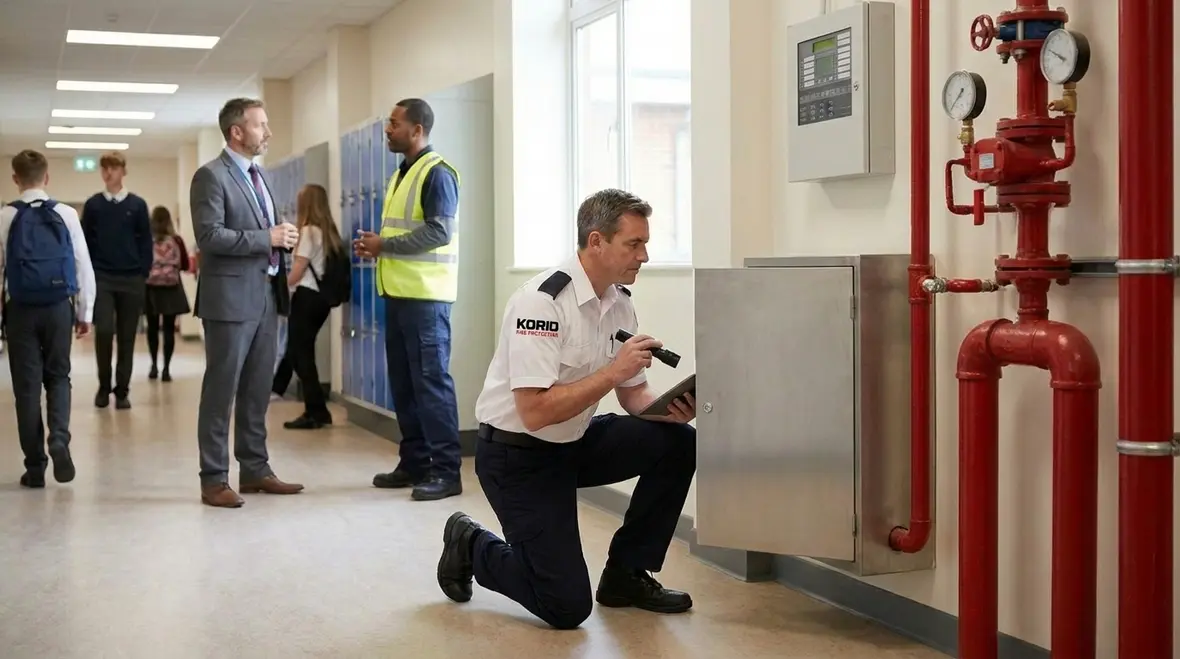
Fire suppression does not stay “good” on its own. It needs routine inspection and testing that matches local codes and the manufacturer’s requirements. Over time, dust can accumulate, valves can become stiff, sprinkler heads can be painted or damaged, and monitoring equipment can drift out of range. As a result, a system can look intact while it loses performance.
Strong maintenance programs include periodic inspections, water flow verification, and testing schedules that do not disrupt school operations. Maintenance teams also track changes. When a building adds storage racks or updates HVAC layouts, the suppression plan should be revisited to maintain coverage.
This is where Kord Fire Protection becomes a vital partner. They help campuses plan service activities, coordinate documentation, and support ongoing compliance so schools do not scramble when inspection day arrives like an uninvited final exam. Kord Fire Protection’s Full Fire Protection Services page outlines support for fire sprinkler inspections and testing, fire alarm performance testing, extinguisher maintenance, and fire pump testing for facilities that need one partner handling the moving parts.
Maintenance planning is what keeps the system honest
A strong maintenance schedule does more than satisfy a checklist. It reveals trends. If a device repeatedly needs adjustment, if a section of piping shows recurring issues, or if access keeps getting blocked during classroom turnover, those patterns tell the facility team where risk is creeping in. That is why inspection and testing should produce decisions, not just paperwork. The goal is not to look organized for one day. The goal is to stay ready all year.
Building compliance and coordination across departments
Schools and universities involve many stakeholders. Facilities teams manage maintenance, safety officers handle training, IT and campus security manage monitoring, and administrators manage budgets. Meanwhile, local authorities may require documentation and inspection reports. Because these roles overlap, coordination is essential.
A clear workflow reduces delays. It starts with a system inventory, then moves into inspection scheduling, then ends with corrective actions and verified closeout. Additionally, schools should keep training aligned with real equipment. Staff should know what alarms mean, how evacuation is managed, and how suppression systems relate to the overall emergency plan.
Effective coordination also improves response. Firefighters need accurate building information, and facility staff benefit from clear procedures for isolating sections of the system when repairs are needed. In practice, that means fewer surprises and faster restoration after any shutdown. Schools that want a broader compliance context can also review Fire Safety Regulations for Schools and Universities, which covers responsibilities, inspection records, and common campus fire risks.
Choosing the right partner for school fire protection service
Some vendors treat this work like a checklist. Others treat it like a safety system that must stay reliable under real conditions. Kord Fire Protection takes the second approach by supporting campuses as an ongoing partner, not a one time vendor. That mindset matters because school buildings do not stay still, and neither can the safety program.
When a partner understands campus needs, they can help with scheduling during breaks, coordinating access with maintenance staff, and maintaining proper records. They can also support upgrades when building risk changes, such as new lab equipment, updated storage practices, or expansions.
And yes, there is a “budget reality” here. Spending wisely beats spending late. A proactive plan helps reduce emergency repairs, minimizes downtime, and keeps inspections from turning into a stressful guessing game. Near the point where action matters most, it makes sense to work with a team that can handle inspections, testing, repairs, and system coordination under one roof. That is exactly where Kord Fire Protection’s service team becomes a practical next step for campuses that want dependable support instead of crossed fingers.
FAQ about fire suppression systems for schools
Conclusion: schedule a safety review and keep campuses ready
Fire risk never waits for the next school board meeting. Therefore, campuses benefit from a planned approach to the school fire suppression system, from design checks to ongoing maintenance and compliance support. Kord Fire Protection helps schools and universities stay ready with service that fits real schedules and real buildings.
If the system needs updates, testing, or better documentation, now is the time to act. Contact Kord Fire Protection today to schedule a safety review and strengthen campus protection before the next inspection cycle rolls in.

Join Our Newsletter!
Get the latest fire safety tips delivered straight to your inbox From our Newsletter.



