Government Building Fire Suppression Maintenance and Testing
When a fire starts inside a government building, every second matters. That is why government building fire suppression systems exist: they detect smoke, control heat, and reduce spread so people can evacuate and critical records can survive. In public facilities, the goal is not just to “put out flames,” but to manage risk across complex spaces like offices, archives, server rooms, and parking structures. And while many contractors can install equipment, the real challenge comes after that, when inspections, training, testing, and upgrades must stay consistent year after year.
Kord Fire Protection can become a vital partner on this entire journey. Rather than treating fire suppression like a one time project, they help agencies build long term readiness, document performance, and keep systems ready for whatever the building throws at them. Because yes, fire does not care about budgets, and it definitely does not read the manual. Unfortunately, neither do most “good enough” maintenance plans.
How fire suppression systems protect public spaces
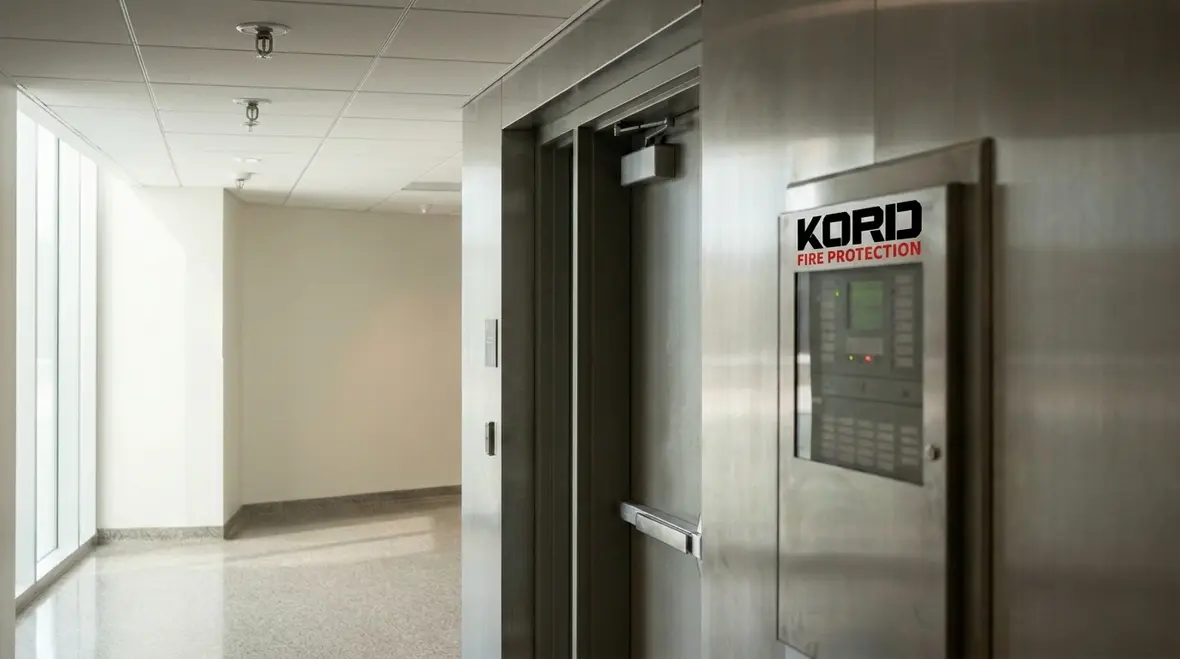
Government buildings demand fire protection that works across different hazards and occupancy types. Government building fire suppression typically combines detection methods with suppression tactics designed for the environment. For example, a library wing may need a different approach than a mechanical room full of pumps and valves.
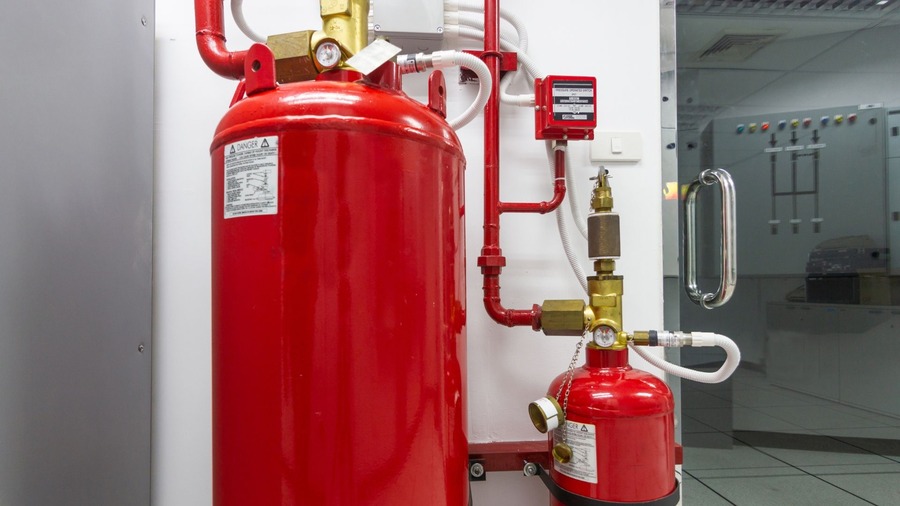
Common system types include water based sprinkler systems, clean agent systems, and specialized extinguishing systems for kitchens, kitchens of course being the place where fire usually auditions first. In addition, control panels and notification devices coordinate the response so alarms, fans, dampers, and evacuation plans match what the building needs.
However, the real win comes from matching the system to the building. If the design assumes one ceiling height, but the real ceiling changes, performance can shift. Likewise, if a storage area expands and the ceiling voids become obstructed, suppression may not reach where it must. Therefore, good planning and field verification protect not just hardware, but outcomes.
Why the building layout changes everything
A government facility is rarely a simple box with desks. It may include public counters, secure records, utility rooms, lobbies, conference spaces, evidence storage, and aging infrastructure hidden above ceilings. Each of those conditions changes how suppression needs to respond. That is why maintenance and testing are not just about checking a box. They are about proving that the installed system still fits the reality of the occupied space.
When teams revisit coverage, device condition, and changes to occupancy, they catch issues before those issues become expensive surprises. That practical approach lines up well with Kord Fire Protection’s broader full fire protection services, which emphasize readiness, coordination, and long term support. ([kordfire.com](https://kordfire.com/full-fire-protection-services/?utm_source=openai))
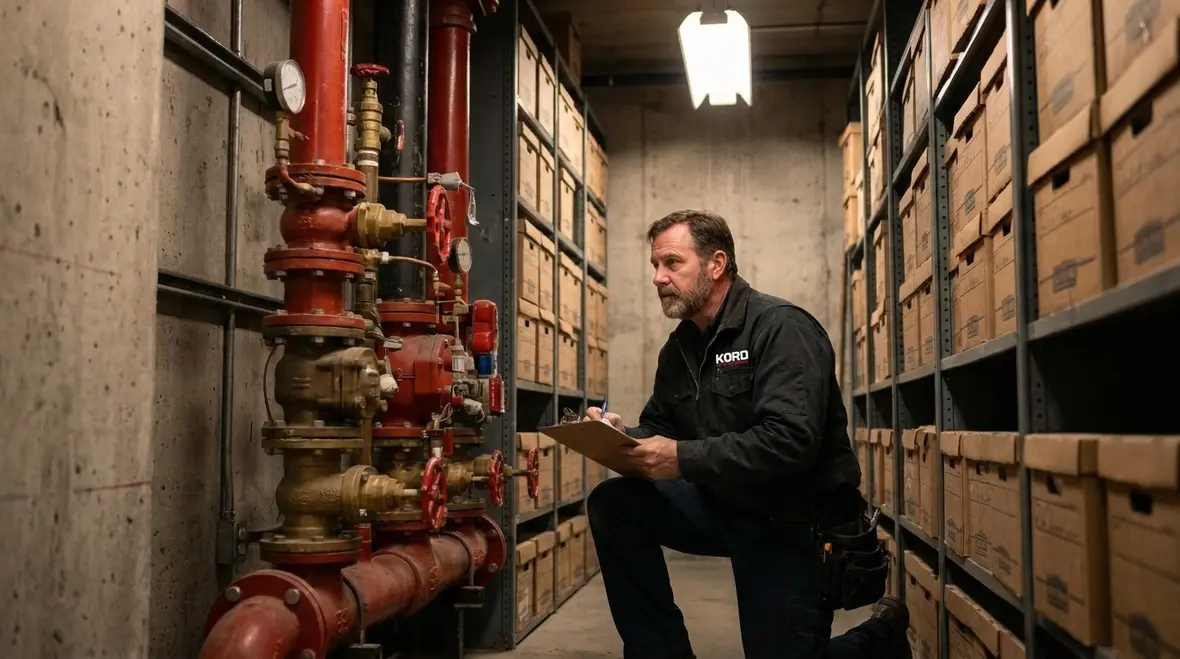
What components matter in a reliable setup
A strong system does not rely on a single device. It relies on a network of components that communicate, function, and stay in good condition. Typically, a full setup includes detection, control, and suppression elements.
Key components often include:
- Control panel and monitoring that signals alarm and system status
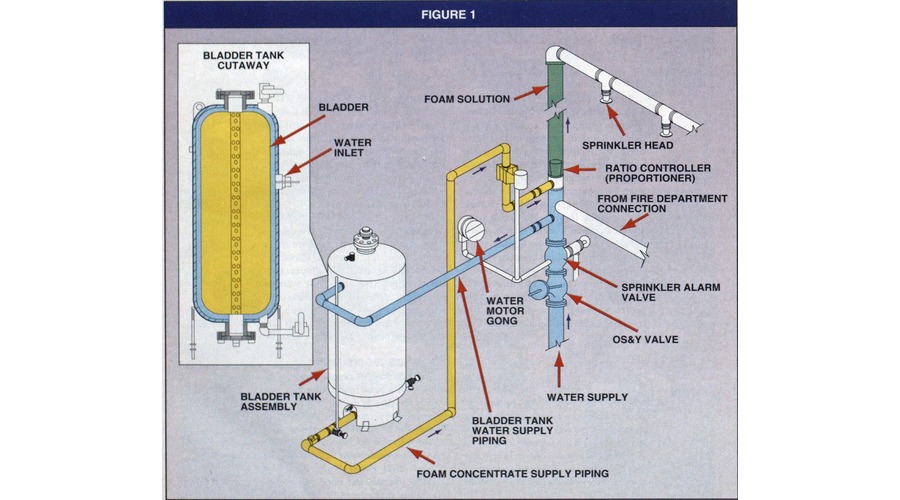
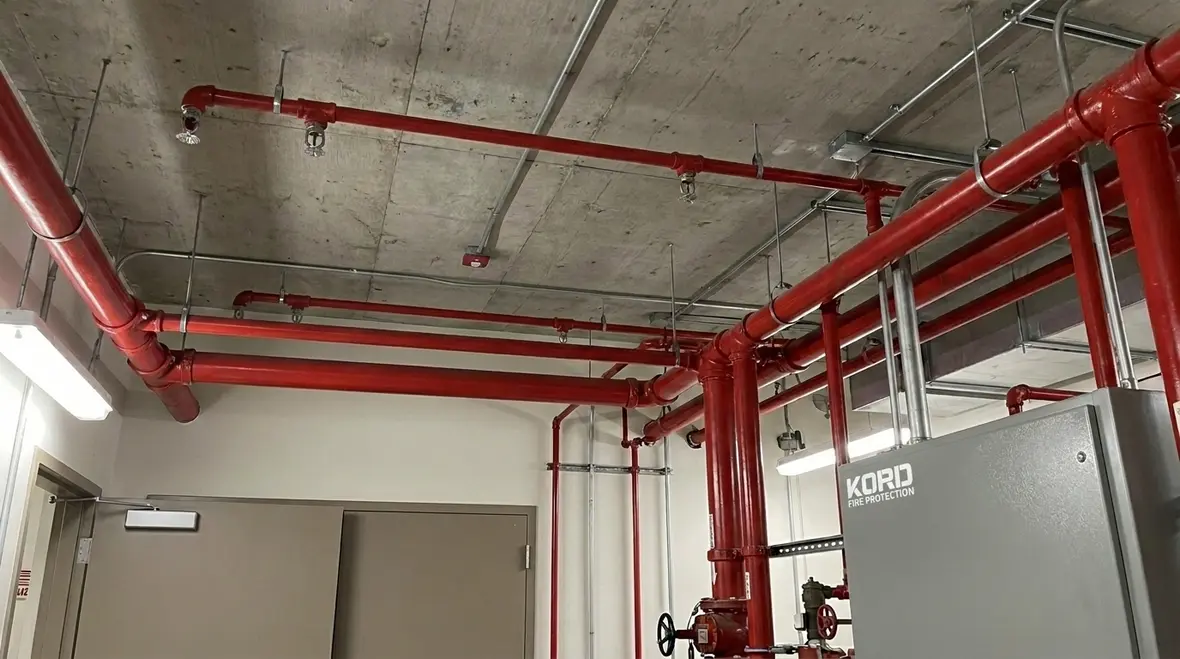
- Valves, piping, and water supply or agent reservoirs that deliver suppression at the right time
- Distribution devices like sprinklers, nozzles, or heads matched to specific areas
- Backflow prevention and testing ports that support safe operation
- Notification and life safety interfaces that coordinate alarms and building response
Because government facilities include sensitive functions, Kord Fire Protection focuses on how systems perform together, not as separate boxes. They also help teams understand what to watch for during inspections, including alarm trends, tamper issues, and pressure changes that may signal hidden problems.
The small details that cause big testing problems
It is usually not the dramatic stuff that causes a failed inspection. More often, it is a valve left in the wrong position, a painted sprinkler head, a device blocked by storage, a pressure issue nobody noticed, or wiring that no longer matches the field condition. Those tiny failures have a talent for hiding in plain sight right up until test day. Then suddenly everyone becomes very interested in maintenance logs.
Designing for high risk areas without slowing operations
It is easy to slap sprinklers into a floor plan and call it done. Yet public buildings often contain spaces where fire behavior changes quickly: data rooms, document storage, corridors with complex air flow, and areas with high electrical loads.
To design the right approach, teams typically evaluate fuel load, ventilation patterns, and occupant density. Then they set parameters like sprinkler spacing, water demand, and agent selection. Additionally, they confirm that suppression will activate fast enough and distribute effectively without creating new hazards like water damage in certain archives or electronics spaces.
Operations also matter. Agencies cannot always shut down entire departments for weeks. Therefore, a thoughtful design supports staged installation, temporary protection where needed, and clear scheduling so building staff can keep work moving. In other words, the fire system should improve safety without turning the project into a year long disruption.
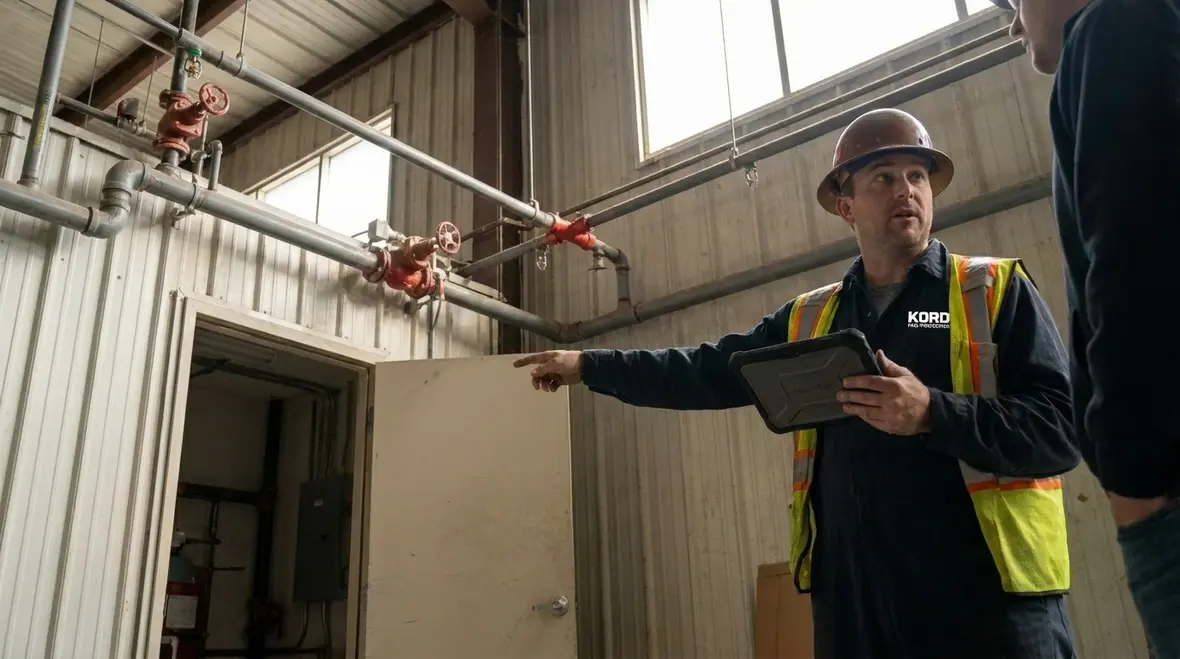
Inspection, testing, and compliance that actually holds up
Most systems will look fine in a photo. The hard part is performance over time. That is why inspection and testing matter just as much as installation. In government settings, compliance involves regular checks, documentation, and corrective actions when something drifts out of spec.
For water based suppression, inspections can include verifying system supervision, checking alarm valves, testing water flow, and confirming sprinkler condition. For agent systems, maintenance can include verifying cylinder integrity, pressure readings, and detection control. Regardless of the system type, teams also ensure fire alarms coordinate correctly with suppression actions.
Kord Fire Protection helps agencies keep this work organized. They support reporting that makes sense to stakeholders, and they help facilities teams understand what findings mean in plain language. That reduces back and forth, and it prevents a situation where paperwork exists but readiness does not.
And yes, the joke is that fire suppression maintenance can feel like watching paint dry, until you realize the paint is what stands between a small incident and a headline.
Where inspections meet real world readiness
A truly useful inspection program does more than generate paperwork. It creates a pattern of accountability. When service teams document impairments clearly, communicate next steps, and align with facility staff, the building becomes easier to manage over time. That same inspection mindset also supports specialized systems such as Los Angeles high rise fire protection systems, where pressure, coordination, and system performance can never be treated casually. For related high rise pump considerations, Kord Fire also highlights the importance of testing and performance in its high rise fire pump guidance. ([kordfire.com](https://kordfire.com/high-rise-fire-pump-systems-los-angeles-guide/?utm_source=openai))
Why maintenance planning saves money over the long run
Budget pressure affects every government department, so money needs to go where it prevents bigger costs later. Poor maintenance can lead to nuisance alarms, delayed response, failed tests, and emergency repairs that cost more than planned work. It can also create compliance gaps that force rushed solutions.
A long range maintenance plan usually includes routine inspections, functional testing, corrective actions, and a schedule for component replacement based on age and wear. It also includes training so building staff understand what changes should be reported, such as blocked sprinkler spaces, modified ceiling layouts, or alterations to electrical rooms.
To keep maintenance from becoming a chaotic scramble, Kord Fire Protection can act as a vital partner by aligning service activities with building schedules, risk levels, and documentation needs. When maintenance runs predictably, leadership can plan funding, staff can prepare, and systems stay ready.
Pairing government building fire suppression with smart safety workflows
Fire suppression performs best when it connects to the building’s wider life safety workflow. Detection, alarm notification, evacuation procedures, door control, and smoke management all support suppression effectiveness. If any link breaks, the whole chain weakens.
For example, if a suppression system activates but notification protocols do not guide occupants to safe exits, people still face risk. Likewise, if ventilation controls do not align with fire scenarios, smoke movement can undermine visibility and egress timing. Therefore, agencies benefit from coordination between fire protection contractors, alarm providers, and building operations teams.
Kord Fire Protection helps align those efforts by supporting system documentation, service records, and coordination with facility staff. Then, when inspections and testing happen, the building does not just “pass a test.” It builds a safer routine that continues day after day.
Service delivery in a way facilities teams can trust
Facilities staff often juggle many priorities. That is why service delivery needs to be clear, respectful, and steady. A good provider communicates before work begins, protects occupied areas, and documents results in a way that supports decision making.
Kord Fire Protection focuses on practical service delivery that helps teams track system condition and action items. They also support on site walkthroughs that highlight issues like accessibility concerns, damaged devices, or areas where past modifications could affect suppression performance.
In addition, they help agencies plan future upgrades. Over time, building layouts change, technology updates, and occupancy patterns shift. When those changes happen, fire protection must adapt. A partner that understands the system and the facility helps avoid surprises.
Featured snippet: quick comparison of suppression approaches
| Approach | Best fit |
|---|---|
| Sprinkler systems | Many office, corridor, and storage areas where water damage can be managed |
| Clean agent systems | Spaces where electronics and sensitive records need agent based control |
| Special hazard extinguishing | Targeted risks like kitchens, mechanical rooms, or high hazard equipment |
FAQ
Conclusion
Government buildings need fire suppression that performs on day one and still performs years later. Kord Fire Protection helps agencies plan carefully, install correctly, and maintain readiness through inspections, testing, and documented service. If the facility team wants smoother compliance and fewer last minute repairs, it starts with a real service partner.
For teams ready to tighten inspection routines, improve maintenance planning, and connect suppression with broader facility safety goals, Kord Fire offers support across sprinkler, alarm, extinguisher, and coordinated protection services. A practical next step is reviewing current systems alongside their fire sprinkler service team or exploring their broader service solutions to build a maintenance plan that keeps occupants protected and operations moving. ([kordfire.com](https://kordfire.com/fire-sprinkler-service/?utm_source=openai))

Join Our Newsletter!
Get the latest fire safety tips delivered straight to your inbox From our Newsletter.