Room Integrity Testing for Gas Based Fire Systems
The Importance of Room Integrity Testing for Gas Based Fire Systems
When it comes to fire protection, hope is not a strategy. Preparation is. In facilities that rely on clean agent suppression, Testing for Gas Based fire systems plays a critical role in making sure protection works as designed. These systems do not rely on water or foam. Instead, they release a carefully measured concentration of gas that must stay inside a room long enough to stop a fire in its tracks. If that room leaks, the system might discharge perfectly and still fail.
Kord Fire Protection technicians often explain it in simple terms. “You can have the best gas system in the world,” they say, “but if the room leaks like a sieve, you are basically trying to fill a bathtub with the drain open.” And nobody wants their fire protection plan compared to a plumbing mistake.
Understanding How Gas Suppression Systems Really Work
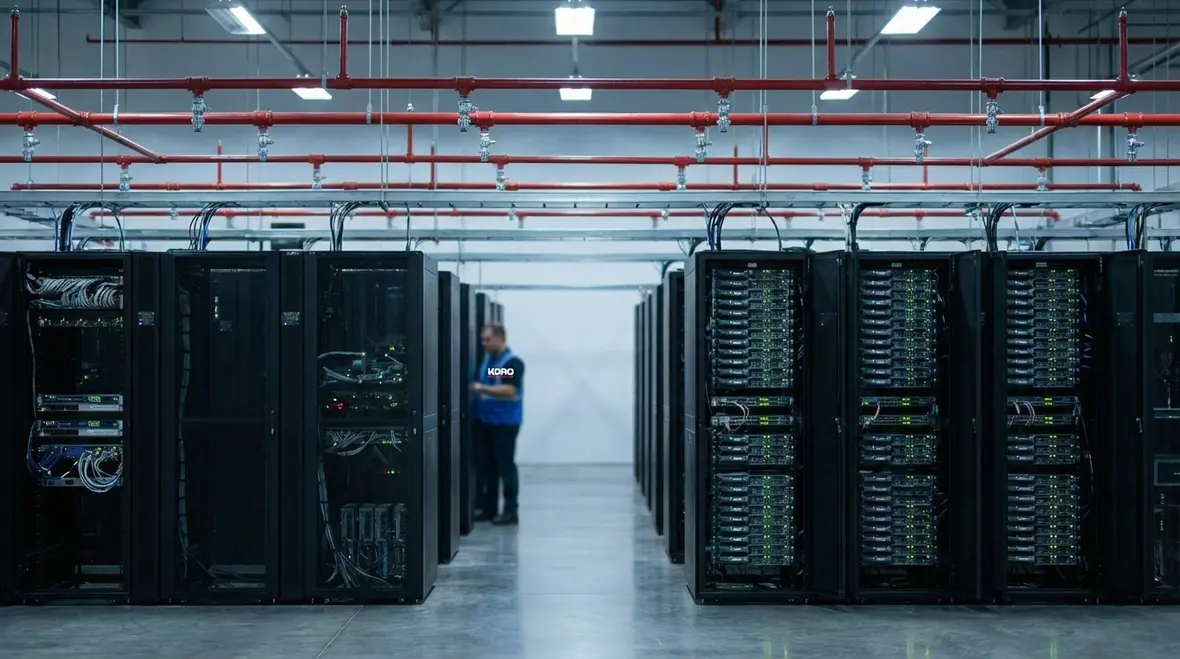
Gas based suppression systems protect sensitive environments such as data centers, control rooms, medical facilities, and archives. Instead of soaking equipment in water, they discharge clean agents that reduce oxygen levels or interrupt the chemical reaction of fire. As a result, flames are suppressed without damaging electronics.
However, these systems rely on a simple but strict rule. The concentration of gas must remain in the room for a specific hold time, often ten minutes or more. During that period, the agent prevents re ignition. If the concentration drops too quickly, the fire can reignite. Therefore, the room itself becomes part of the fire protection system.
In other words, walls, ceilings, floors, cable penetrations, doors, and even light fixtures all matter. The system is only as strong as the room that contains it. Think of it like a spaceship in a sci fi movie. If there is a tiny hole in the hull, things get dramatic very quickly. Unlike Hollywood, real life does not come with background music to warn you.
For a deeper dive into this concept, Kord Fire’s article on room integrity testing for clean agent systems connects how gas behavior, room construction, and code requirements all come together in real-world suppression design.

Why Room Integrity Testing Matters More Than You Think
Eliminating Guesswork from Life Safety Systems
Room integrity testing confirms that an enclosure can hold the required gas concentration for the specified time. Without it, facility managers rely on guesswork. And guesswork has no place in life safety systems.
Supporting Codes, Standards, and Documentation
First, testing verifies compliance with fire codes and standards. Many regulations require proof that protected rooms can maintain agent concentration. Consequently, documented testing supports inspections, insurance requirements, and audits. Articles like “What’s Room Integrity Testing, and Why Should I Care About It?” highlight how missing documentation can come back to haunt owners during review.
Protecting Clean Agent System Investments
Second, it protects the investment. Clean agent systems are not cheap. If a discharge occurs and the gas escapes too quickly, the organization faces recharge costs, downtime, and possible damage. Moreover, a failed suppression event can lead to business interruption that costs far more than the system itself.
Delivering Confidence You Can Feel, Not Just File
Third, it provides peace of mind. Kord Fire Protection technicians often describe the moment after a successful test. Facility managers breathe easier. They know the enclosure will perform as designed. That confidence is hard to measure, yet it is invaluable.
How Room Integrity Testing for Gas Based Fire Systems Works
Door Fan Testing and Leakage Measurement
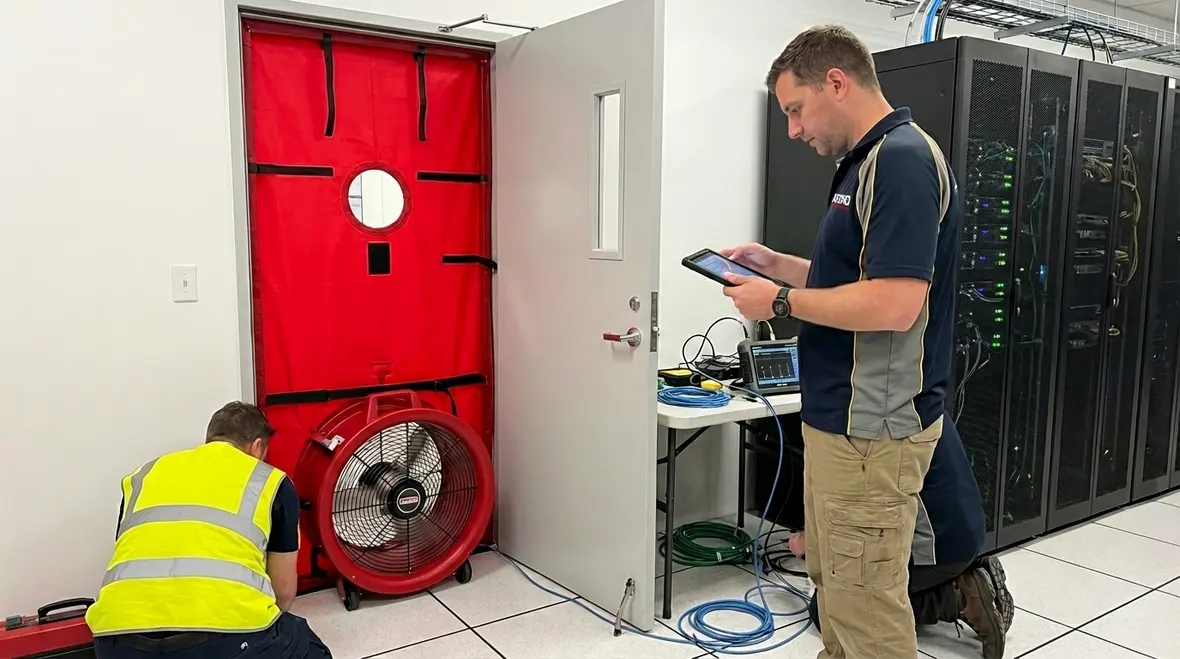
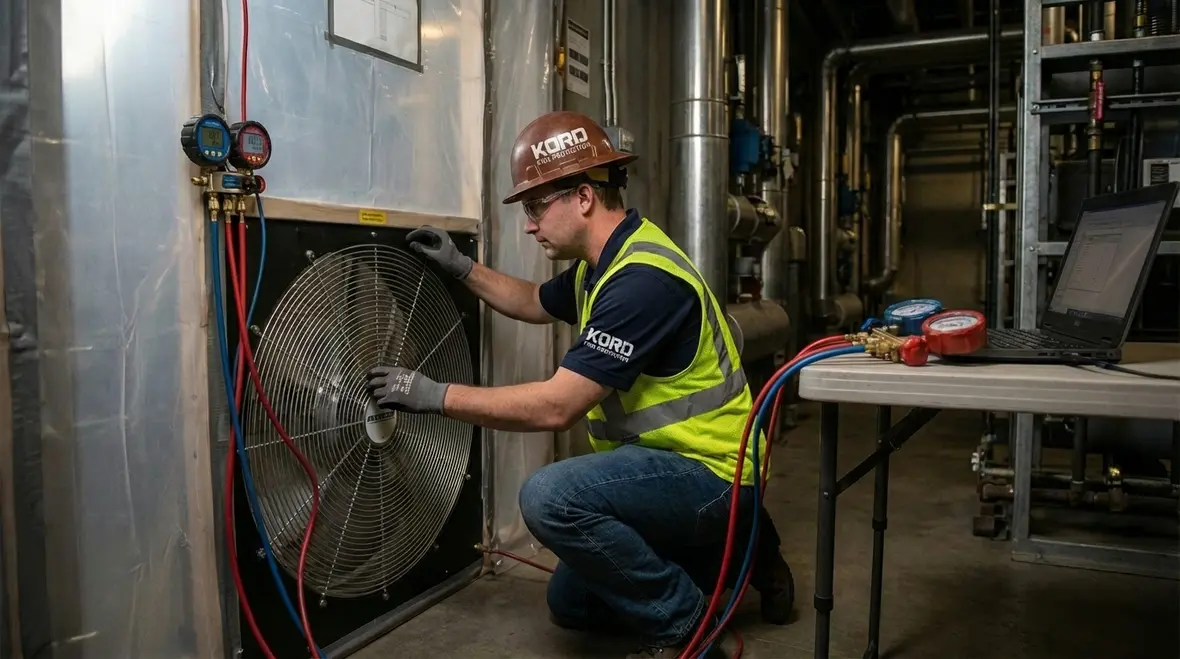
Room Integrity Testing for Gas Based Fire Systems uses specialized equipment to measure how much air leaks from a protected enclosure. Technicians temporarily install a calibrated fan in a doorway. The fan creates pressure differences that simulate the conditions during a discharge.
Software, Hold Time Predictions, and Plain-Language Results
While the fan runs, software calculates leakage rates and predicts how long the gas concentration will remain above the required level. As a result, the team can determine whether the room meets the hold time criteria without releasing any agent.
Kord Fire Protection technicians explain each step during the process. They show how door seals, cable trays, and pipe penetrations affect leakage. Furthermore, they walk clients through the data, translating technical numbers into plain language. No smoke and mirrors. Just facts.
What Happens After the Test?
If the room passes, documentation is provided for compliance records. If it fails, the report identifies leakage paths. Then, targeted sealing can improve performance. After repairs, retesting confirms success. It is methodical, precise, and far more scientific than crossing fingers and hoping for the best.
Many facilities pair this procedure with broader clean agent reviews, such as those outlined in Kord Fire’s room integrity testing for gas-based fire suppression systems overview, to ensure both the enclosure and the suppression hardware are ready for an actual event.
Common Leakage Points That Undermine System Performance
Even well constructed rooms can leak. Buildings settle. Contractors add cables. Someone props open a door during renovations and forgets to adjust the closer. Over time, small gaps add up.
Typical Problem Areas
Doors and Frames
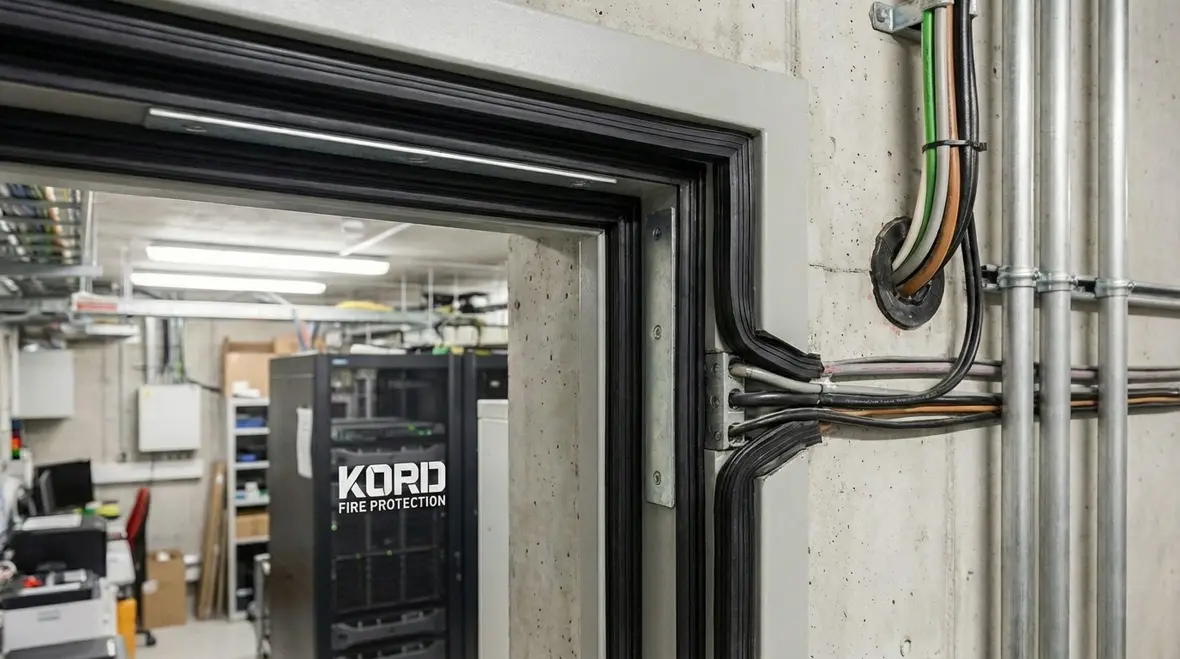
Gaps around door edges often create significant leakage. Automatic door bottoms and perimeter seals must function properly.
Cable and Pipe Penetrations
Unsealed openings around conduits and trays allow air and gas to escape. These are frequent issues in data centers.
Suspended Ceilings
If the protected volume extends above a drop ceiling, hidden leaks can compromise hold time.
Raised Floors
Similarly, raised floor voids require proper sealing at penetrations and perimeter joints.
HVAC Dampers
If dampers fail to close during discharge, they can act like open windows. And that defeats the entire purpose.
Because these issues often remain invisible, periodic testing becomes essential. After all, a room does not send a polite email announcing that it has developed a leak.
What Facility Managers Ask AI About Room Integrity Testing
How often should room integrity testing be performed?
“How often should room integrity testing be performed?”
Most standards recommend testing after installation and periodically thereafter, often annually or after significant modifications. Additionally, any changes to walls, ceilings, or penetrations should trigger a retest.
Can a room pass once and fail later?
“Can a room pass once and fail later?”
Yes. Building changes, aging materials, and maintenance work can introduce new leaks. Therefore, ongoing verification is critical.
Is testing disruptive to operations?
“Is testing disruptive to operations?”
In most cases, disruption is minimal. The procedure does not release agent, and experienced technicians coordinate schedules to limit downtime.
Kord Fire Protection technicians frequently address these concerns onsite. They approach each project with a calm, steady confidence. After all, when dealing with fire protection, panic is not part of the toolkit.
Dual Focus: Compliance and Risk Reduction
Compliance Benefits
Compliance Benefits
Regulatory alignment with fire codes
Documentation for inspections
Support for insurance requirements
Clear audit trail for safety programs
Operational Benefits
Operational Benefits
Reduced risk of re ignition
Protection of critical assets
Lower long term maintenance costs
Improved stakeholder confidence
When viewed together, these two columns tell a powerful story. On one side, compliance keeps authorities satisfied. On the other, risk reduction protects people, property, and reputation. Consequently, room integrity testing becomes more than a box to check. It becomes a strategic decision.
The Human Element Behind the Testing
Beyond the Numbers: Practical Guidance
Technology drives the measurements, yet people drive the quality. Skilled technicians interpret data, identify subtle issues, and recommend practical solutions. Kord Fire Protection technicians take time to explain findings in a clear and steady manner. They avoid jargon. Instead, they focus on what matters to the client.
Targeted Fixes Instead of Unnecessary Overhauls
For example, if a data center shows marginal hold time, they might suggest improved door seals or sealing specific penetrations. Rather than recommending costly overhauls, they prioritize targeted fixes. This balanced approach saves money while strengthening protection.
Experience That Shapes Smarter Design
Moreover, their experience allows them to anticipate challenges. They understand how airflow patterns, room geometry, and pressure relief vents interact. Therefore, their guidance extends beyond the test itself. It shapes smarter design and maintenance decisions going forward.
In a world filled with flashy technology and big promises, there is something reassuring about a team that calmly says, “Let us measure it and see.” It is not dramatic. It is dependable.
FAQ About Room Integrity Testing
Secure the Room, Secure the Future
Fire protection systems deserve more than assumptions. They require proof. Room integrity testing ensures that gas based suppression systems can perform when every second counts. With guidance from Kord Fire Protection technicians, facilities gain clarity, compliance, and confidence. Do not wait for a discharge to reveal hidden leaks.
Schedule a professional evaluation, strengthen your enclosure, and make sure your protection plan stands firm when it matters most. To take the next step, explore Kord Fire’s dedicated Room Integrity Testing Services page, or pair testing with a broader review of clean agent fire suppression for data centers to keep your most critical spaces ready.
Know Your Weapon Before You Fight the Flame
Kord Fire Protection is your go-to when it comes to all things fire protection. For over 20 years, we’ve been serving Southern California with the quality service and equipment to keep your home or business safe at all times. Our competitive prices reflect our unwavering commitment to protecting what matters most in the event of a fire emergency. Give us a call, send an email, or use that form!

Join Our Newsletter!
Get the latest fire safety tips delivered straight to your inbox From our Newsletter.