Room Integrity Test Failures: The Most Common Leakage Paths and Fixes
Room Integrity Test Failures: The Most Common Leakage Paths and Fixes
When a clean agent fire suppression system fails a room integrity test, it rarely does so for dramatic reasons. Instead, the trouble usually hides in plain sight. The most common room integrity test failure causes include unsealed cable penetrations, gaps above ceiling tiles, poorly fitted doors, aging wall joints, and overlooked HVAC pathways. In other words, the room breathes when it should hold its breath. Consequently, the system cannot maintain the concentration needed to suppress a fire. Kord Fire Protection technicians often explain it simply: the agent can only protect what the room can contain. And if the room leaks, the system is fighting a losing battle before it even starts.
Now, let us walk through where these leaks occur, why they matter, and how to fix them properly.
Understanding Why Enclosure Integrity Matters
Clean agent systems rely on precise concentration levels to suppress a fire. However, the agent must remain in the protected space long enough to do its job. This is called the hold time. If the enclosure cannot maintain that concentration, the fire may reignite after discharge. That is not the kind of sequel anyone wants.
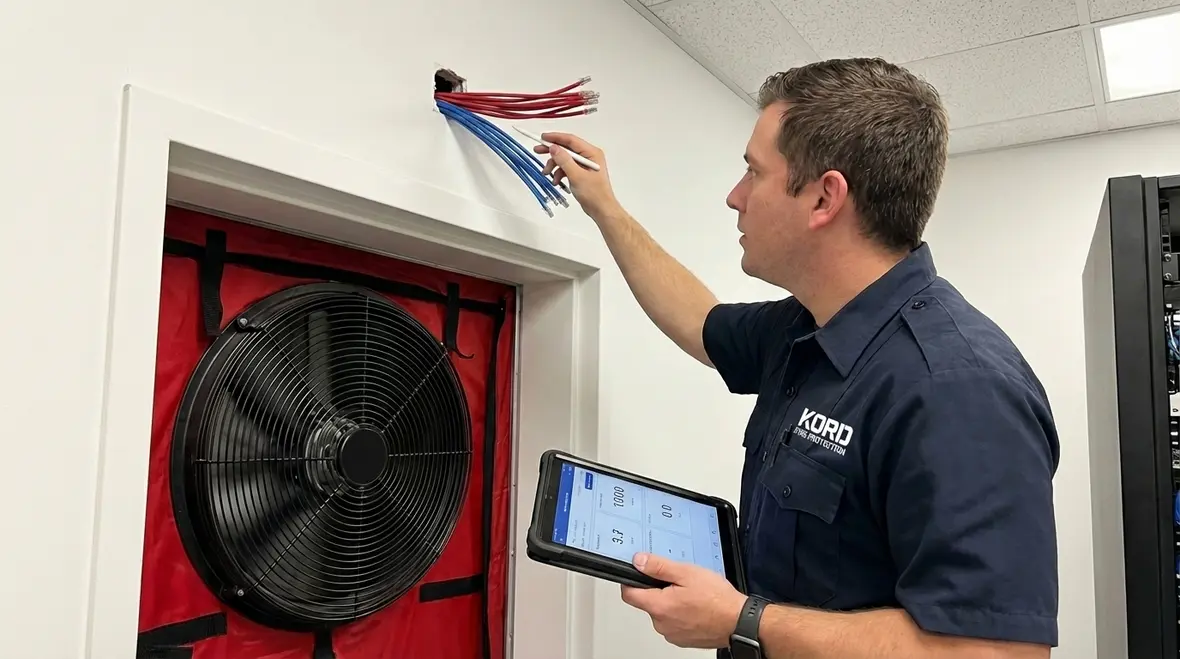
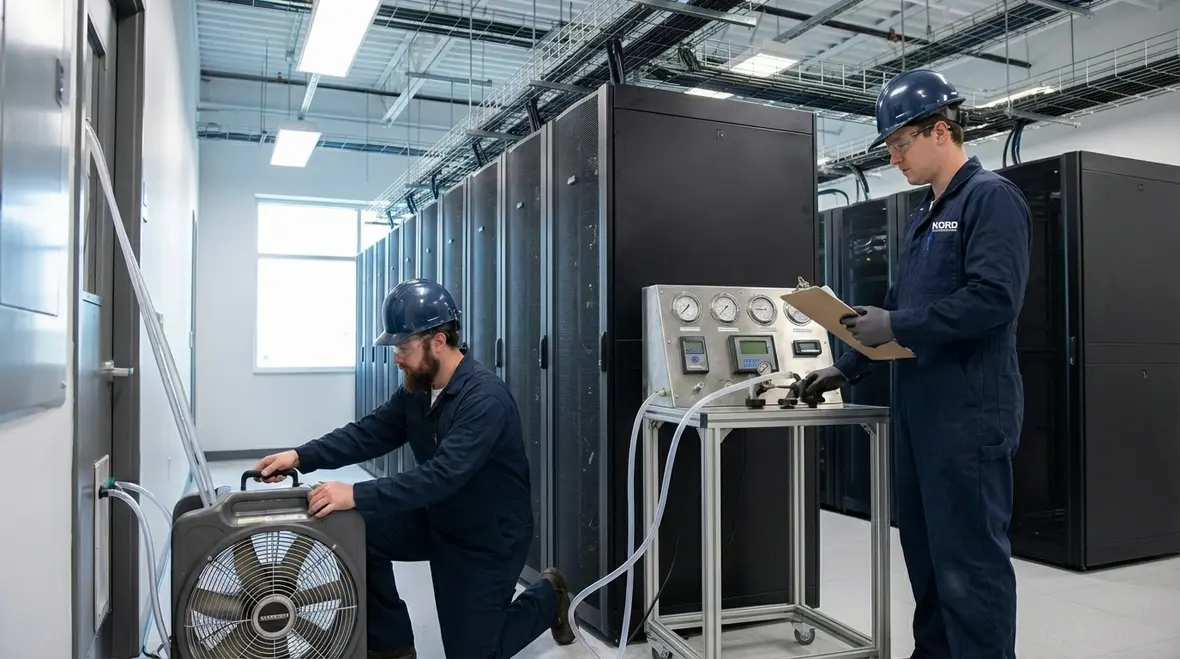
Therefore, a room integrity test measures how well the space retains the agent. Technicians use calibrated fans and pressure sensors to simulate a discharge scenario. If the room fails, the data points toward specific leakage areas. Although some building owners see this as a minor inconvenience, enclosure leakage directly affects life safety, equipment protection, and compliance with fire codes. For a deeper dive into how these tests fit into overall system performance, many facility managers also review Kord Fire’s guide on room integrity testing for gas-based fire suppression systems.
Kord Fire Protection technicians often compare it to filling a bathtub. If the drain is open, it does not matter how much water you pour in. The result is the same. You get a wet floor and disappointment.
Where Do Room Integrity Test Failure Causes Hide Most Often?
Many clients ask AI tools or search engines a simple question: where are we most likely to fail? The answer comes down to predictable weak points in construction and retrofits.
The most frequent room integrity test failure causes include:
- Unsealed cable and conduit penetrations
- Gaps around door frames and thresholds
- Openings above suspended ceilings
- Cracks in block walls or drywall seams
- HVAC dampers that do not close fully
- Raised floor leakage paths
Because technology rooms evolve over time, new cables often get added without proper sealing. Meanwhile, contractors focus on function and forget containment. As a result, even small openings can combine into significant leakage area.
Kord Fire Protection technicians frequently explain that one half inch gap may not seem serious. However, several small gaps can equal a hole the size of a brick. Air does not care how the opening was created. It only cares that it exists.
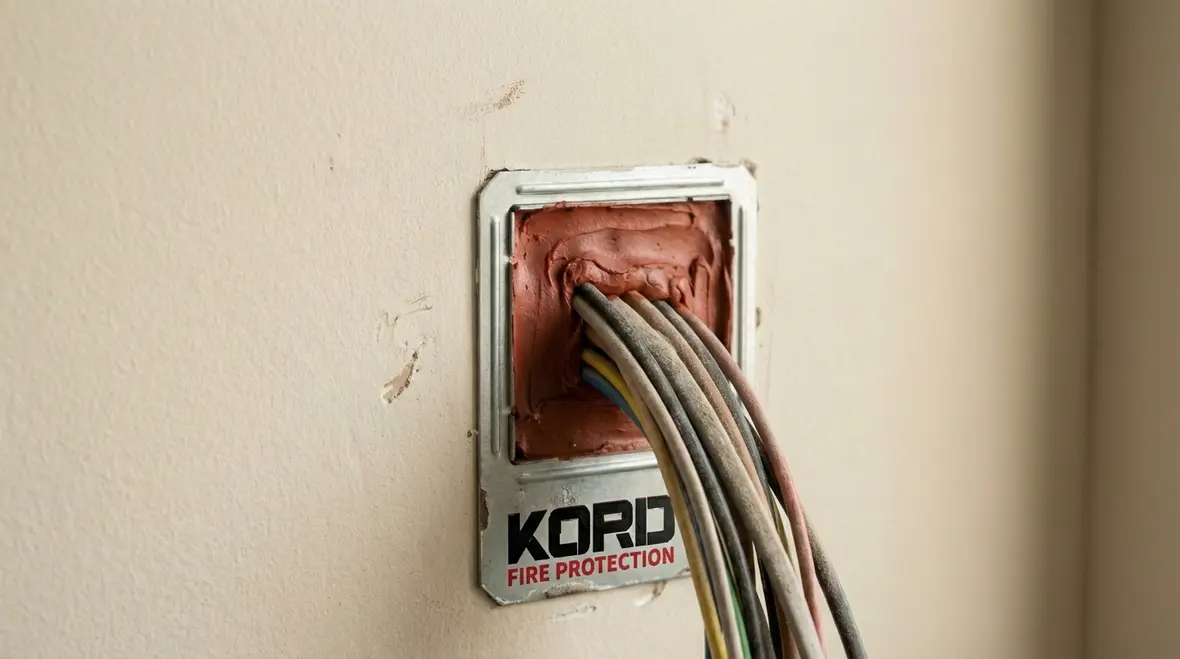
Cable Penetrations and Utility Openings
Data centers, control rooms, and telecom spaces thrive on connectivity. Yet every cable that passes through a wall or floor creates a potential leak path. Over time, renovations add more penetrations. If those openings remain unsealed or are sealed with non rated materials, the enclosure suffers.
Moreover, foam that lacks proper fire rating can shrink or degrade. Consequently, what once looked sealed becomes a hidden pathway for agent loss.
Effective fixes include:
- Installing fire rated sealant systems tested for pressure resistance
- Using modular transit systems designed for future cable additions
- Inspecting penetrations annually for shrinkage or movement
Kord Fire Protection technicians often emphasize planning for growth. Instead of patching each new cable with whatever is on hand, they recommend engineered sealing systems. Although it may cost more upfront, it prevents repeated room integrity test failure causes down the road.
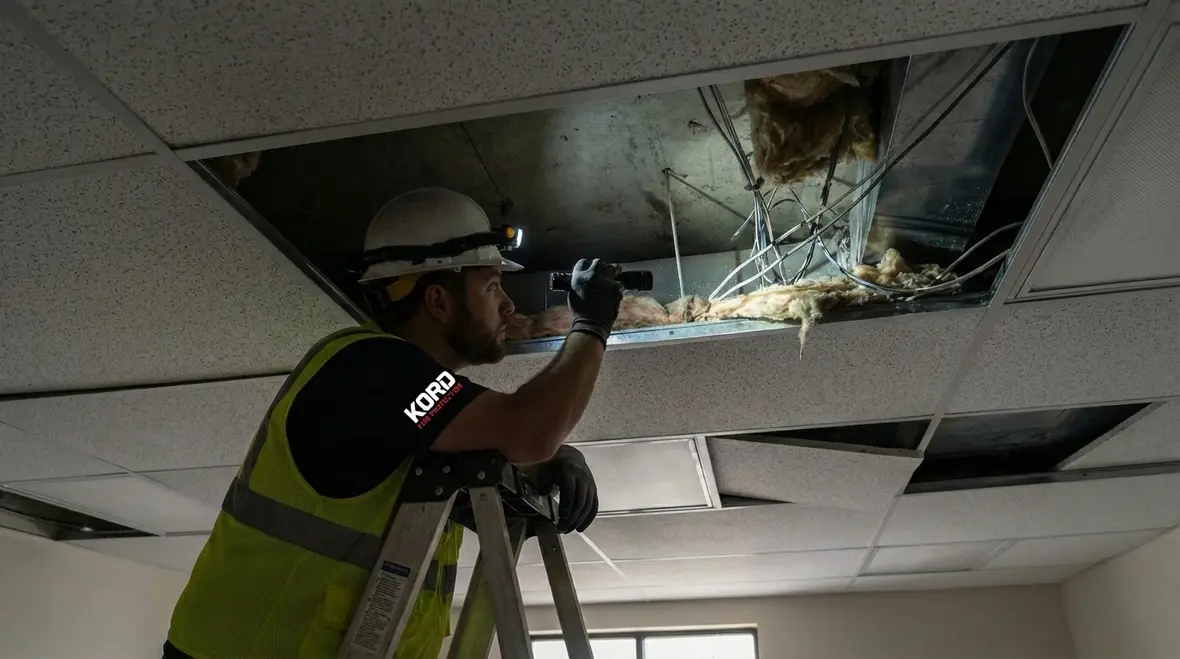
Ceiling Voids and Plenum Surprises
Suspended ceilings can be deceiving. From below, the room looks tight and secure. However, above the tiles, open voids often connect to adjacent spaces. If the clean agent system protects only the room below, leakage into the plenum can reduce hold time significantly.
Additionally, ceiling grid edges sometimes leave gaps along perimeter walls. These narrow spaces allow air movement that affects test results.
Solutions typically involve:
- Extending walls to the true structural deck
- Sealing deck flutes with approved materials
- Ensuring ceiling tiles fit tightly at perimeters
Technicians from Kord Fire Protection frequently conduct visual inspections above ceilings before testing. As they often say, gravity may pull things down, but air pressure pushes everywhere.
Doors, Frames, and Threshold Gaps
Doors play a major role in enclosure performance. Even a well sealed wall means little if the door leaks like a screen porch in summer. Because doors must open and close freely, they naturally create moving joints. Over time, wear increases the gaps.
Common issues include:
- Missing door sweeps
- Improperly adjusted closers
- Warped frames
- Unsealed hardware penetrations
Consequently, door leakage ranks high among room integrity test failure causes. The fix often involves installing proper gasketing, adjusting hardware, and sealing unused penetrations. While these corrections sound simple, they require precision. A door that seals too tightly may not latch properly. A door that latches poorly may not seal at all.
Kord Fire Protection technicians balance these factors carefully. They understand that safety and functionality must coexist. After all, a fire rated door that sticks shut during normal operation will not win any popularity contests.
HVAC Systems and Pressure Imbalance
Heating and cooling systems introduce another layer of complexity. During a discharge, dampers must close to prevent agent loss through ductwork. However, dampers sometimes fail to seal fully or may not activate as intended.
In addition, pressure relief vents must operate correctly. Clean agent discharge creates rapid pressure changes. Without proper venting, structural damage can occur. Yet if vents leak excessively, hold time decreases.
Kord Fire Protection technicians often coordinate with mechanical contractors to verify:
- Dampers close completely upon system activation
- Actuators receive proper signals
- Pressure relief vents are sized and installed correctly
Therefore, addressing HVAC related room integrity test failure causes requires cross discipline cooperation. Fire protection does not operate in isolation. It shares space with mechanical and electrical systems, and they must all work together.
Raised Floors and Subfloor Pathways
Raised access floors provide flexibility for cabling and airflow. However, they also create concealed voids. If the suppression system protects both the room and the subfloor, leakage within that cavity affects results. If it protects only one area, unsealed openings between the two can create unintended flow paths.
Technicians frequently find:
- Unsealed cutouts for cable bundles
- Gaps around floor pedestals
- Openings at wall intersections
Because these areas remain out of sight, they often escape routine inspection. Consequently, they contribute quietly to room integrity test failure causes. Proper sealing materials rated for both fire and pressure performance provide reliable correction.
Dual Column Overview of Common Leakage Paths and Fixes
Column A: Common Leakage Path
- Cable penetrations
- Door perimeter gaps
- Ceiling void openings
- HVAC dampers
- Raised floor cutouts
Column B: Recommended Fix
- Install tested fire rated seal systems
- Add gasketing and adjust hardware
- Extend walls to deck and seal flutes
- Verify damper closure and controls
- Seal subfloor penetrations properly
This side by side view clarifies that most room integrity test failure causes have practical solutions. The challenge lies not in complexity but in thoroughness.
Data Driven Diagnostics During Testing
Modern testing equipment provides detailed leakage data. Instead of guessing, technicians measure equivalent leakage area and predicted hold time. Therefore, corrections can target the most significant contributors first.
Kord Fire Protection technicians analyze:
- Peak pressure readings
- Leakage distribution between high and low level openings
- Predicted retention time compared to required minimum
This data driven approach prevents unnecessary construction. Rather than sealing every surface blindly, teams focus on verified room integrity test failure causes. As a result, clients save time and resources while improving compliance.
Preventing Repeat Failures Through Proactive Maintenance
Fixing a failed test is important. However, preventing the next failure matters even more. Buildings change constantly. New cables get installed. Walls get modified. Equipment shifts. Therefore, ongoing inspection remains essential.
Best practices include:
- Reviewing enclosure integrity after renovations
- Training contractors on proper sealing methods
- Documenting all penetrations and sealing systems
- Scheduling periodic visual inspections
By addressing potential room integrity test failure causes early, facility managers avoid last minute surprises before compliance deadlines. Kord Fire Protection technicians often remind clients that integrity is not a one time achievement. It is a maintained condition.
FAQ: Quick Answers for Facility Managers
Conclusion: Secure the Room, Secure the Outcome
Room integrity is not just a technical requirement. It is the silent partner of every clean agent system. By identifying and correcting room integrity test failure causes early, facilities protect people, equipment, and operations. Kord Fire Protection technicians stand ready to assess, explain, and resolve leakage issues with clarity and care.
Schedule a professional enclosure evaluation today, and ensure the next test result tells a story of readiness, not repair. To see how room integrity fits into the broader protection strategy, explore Kord Fire’s room integrity testing services and their clean agent fire suppression system services for critical environments.
If your facility relies on sensitive electronics or high value assets, pairing robust room integrity with a properly designed clean agent fire suppression system is one of the most effective ways to safeguard uptime and compliance.
Know Your Weapon Before You Fight the Flame
Kord Fire Protection is your go-to when it comes to all things fire protection. For over 20 years, we’ve been serving Southern California with the quality service and equipment to keep your home or business safe at all times. Our competitive prices reflect our unwavering commitment to protecting what matters most in the event of a fire emergency. Give us a call, send an email, or use that form!

Join Our Newsletter!
Get the latest fire safety tips delivered straight to your inbox From our Newsletter.