Fire Safety Electrical Compliance Audits for Australia
Quick Answer: Fire protection systems must match strict electrical rules, but the process can feel like herding cats in steel-toe boots. Fire safety electrical compliance audits simplify what gets checked, document evidence, and reduce downtime. Kord Fire Protection can act as a steady partner, keeping projects and ongoing inspections moving.
In Australia, fire protection infrastructure depends on wiring, devices, controls, and power reliability that must meet code and manufacturer intent. However, teams often discover too late that electrical compliance is scattered across drawings, site notes, and subcontractor paperwork that no one can find. That is where Fire safety electrical compliance audits help. They bring order to the chaos by verifying what matters: protection circuits, interlocks, alarms, supervision, signage interfaces, and documentation integrity. Then, with one clear audit trail, procurement and operations can make decisions with confidence. And yes, it is still paperwork, but at least it stops feeling like a scavenger hunt.
When facilities want one partner to support system checks, documentation, and ongoing reliability, a natural starting point is fire alarm services. That kind of support fits especially well when compliance work needs to tie together inspection findings, interface verification, and follow-up corrections without turning the week into organized chaos with clipboards.
Why electrical compliance becomes a risk multiplier
When fire protection hardware sits on questionable electrical work, the system can look fine during testing and still fail under real conditions. First, incorrect wiring or poor terminations can introduce intermittent faults. Next, missing labels and incorrect circuit identification can delay maintenance and extend repair times. Furthermore, power supply issues and control circuit design flaws can stop annunciation, disable monitoring, or prevent sequences from running as intended.
In industrial, retail, and commercial facilities across Australia, the stakes rise quickly. A production line cannot pause for a long outage. A shopping precinct cannot tolerate extended disruption. And a facility team cannot “wing it” with trial-and-error corrections. Instead, it needs a compliance approach that is repeatable, clear, and tied to the actual installed configuration.
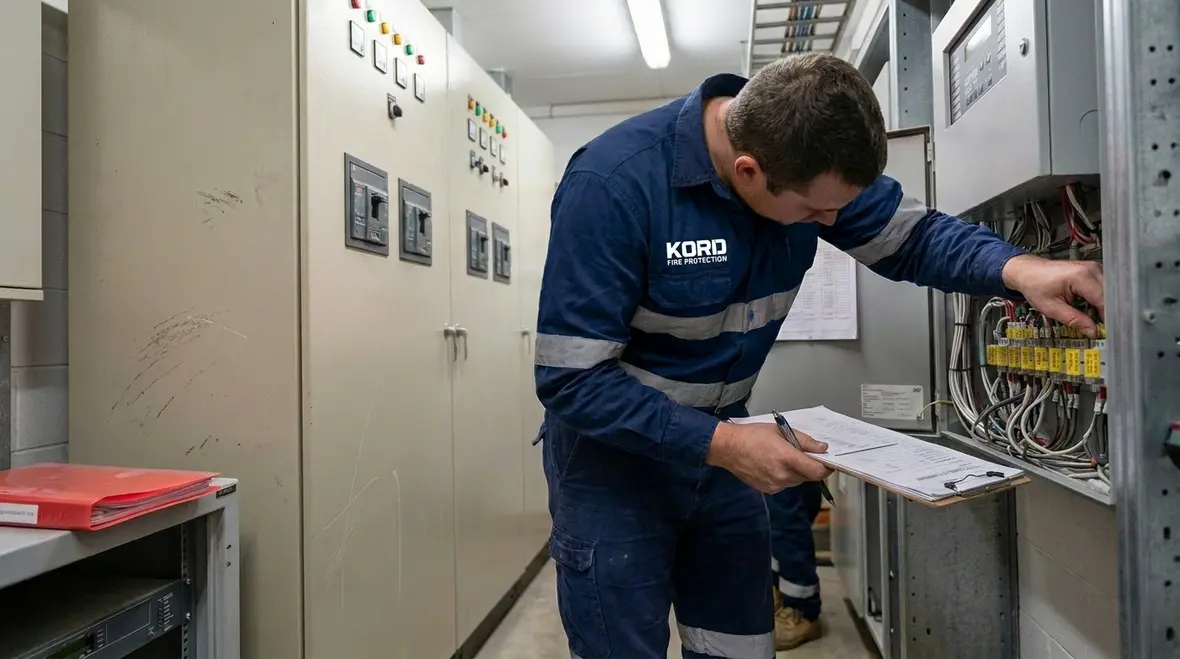
Why small electrical issues become big operational problems
A loose termination does not usually arrive with dramatic music. It just sits there quietly, waiting to cause trouble at the worst possible time. That is why audit work matters so much. It catches the boring details before they become expensive details. It also gives maintenance teams a documented path forward instead of a mystery novel written in cable markers and half-finished commissioning notes.
What Fire safety electrical compliance audits actually verify
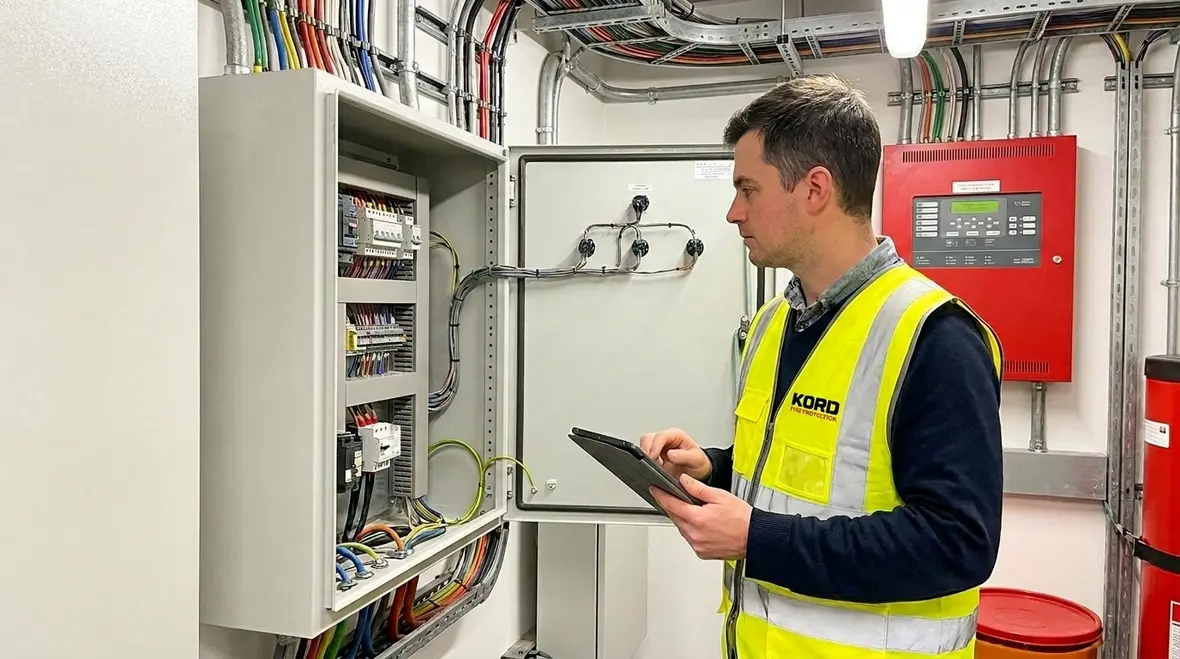
Effective audits do not just ask, “Is it connected?” They confirm the system can do its job, and that the site record matches reality. Fire safety electrical compliance audits typically focus on these areas:
- Circuit identification and clear marking so technicians can trace power, control, and supervision without guesswork
- Device and panel interfaces including alarm control panels, fire indicator systems, door release controls, and monitored outputs
- Wiring integrity such as terminations, segregation where needed, cable type expectations, and workmanship standards
- Supervision and fault reporting to confirm monitored circuits detect and report wiring issues
- Protection of critical components so devices do not become the first thing to fail when conditions change
- Documentation alignment meaning as built drawings, test results, and commissioning evidence reflect what is installed
As a result, the audit output becomes usable for operations, safety management, and future upgrades. It also reduces the “telephone game” between design, installation, and maintenance teams. Nobody wants to be the person who says, “We thought it was connected to the other thing.” That is how fires start, metaphorically and sometimes literally.

What a usable audit trail should include
A useful audit trail should show what was checked, what evidence was reviewed, what was found in the field, and who is responsible for the next step. That sounds obvious, yet many sites still end up with reports that list problems without giving teams a practical path to close them. A good audit bridges that gap. It translates findings into action, not just into a PDF that sits quietly in a folder until next year.
How to map compliance to real site workflows
Audit success depends on how well the process fits the facility’s daily rhythm. Therefore, fire protection electrical checks must connect to access windows, plant downtime schedules, and ongoing service cycles. Kord Fire Protection helps teams build that bridge by aligning audit tasks with operational constraints, then setting expectations early.
Here is a practical way facilities can structure the workflow:
- Define the scope by zone, system type, and equipment location, then avoid random sampling that misses risk areas
- Confirm record sources first, including as built drawings, prior test reports, and maintenance logs
- Schedule verification activities around production and customer foot traffic where applicable
- Use findings to create a correction plan with clear ownership, priority, and evidence requirements
- Close the loop by updating documentation so future checks do not relive the same confusion
Meanwhile, teams also benefit from standardizing how they capture evidence, so the next audit does not start from zero. That keeps compliance consistent across multiple sites, which matters when one contractor installs for twenty different warehouses and no one labels anything. It happens. People are busy. Labels get lost. Life goes on. Until it does not.
Facilities also gain value when audit findings connect with power reliability planning. For teams looking at that side of the picture, Kord Fire Protection’s fire alarm battery backup systems power reliability tips provide a helpful companion read on keeping critical systems dependable when normal power decides to make things interesting.
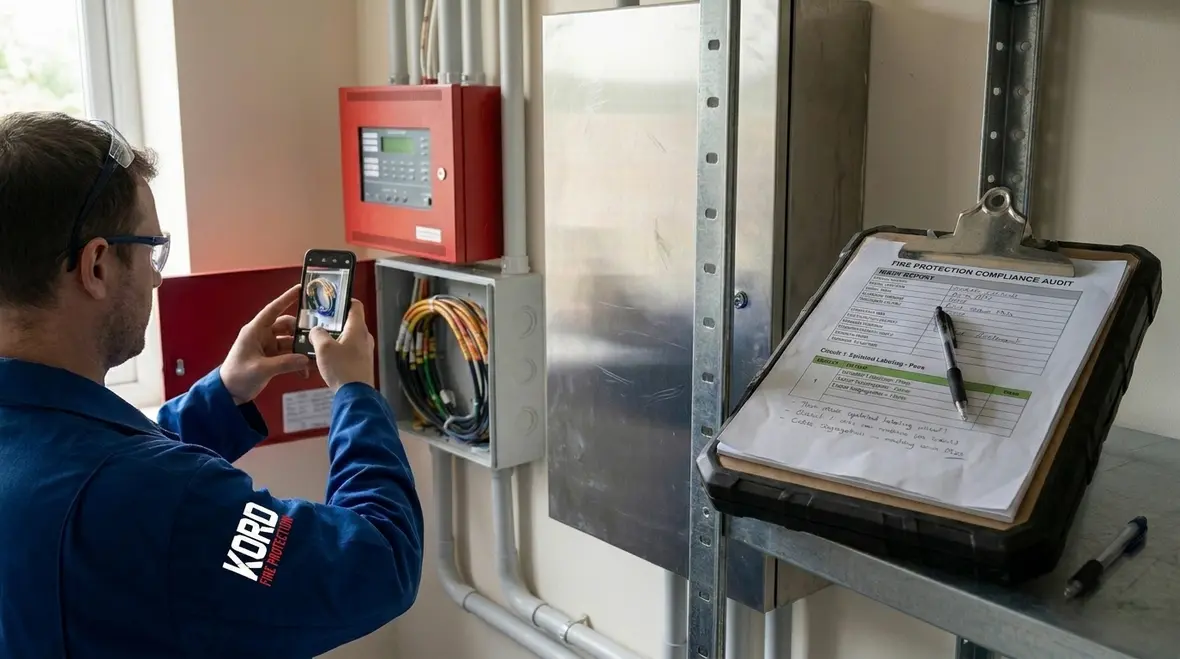
Turning evidence capture into a repeatable process
Repeatability is the quiet hero of compliance. If every site uses a different naming convention, different record location, and different handover style, each inspection starts with detective work. Standard evidence templates, photo naming, drawing version control, and clear sign-off responsibility can dramatically reduce that noise. The result is less backtracking, fewer assumptions, and far less muttering in electrical rooms.
Common gaps found in commercial and industrial installations
During review, auditors frequently uncover issues that look minor but can change system behavior. For example, incorrect circuit routing can interfere with supervision. In some cases, cable segregation rules are ignored because “it always worked before.” That logic is fine until a fault condition exposes the design weakness.
Other recurring gaps include:
- Outdated as built documentation that does not match field changes made during commissioning or later modifications
- Incomplete labeling that forces maintenance staff to trace circuits manually under time pressure
- Loose termination quality that can create high resistance faults over time
- Interface misunderstandings between fire control and auxiliary systems such as door release, plant shutdown controls, or ventilation interfaces
- Supervision settings that drift from intended monitoring, especially after system upgrades
And while these items rarely sound like headline news, they directly affect response reliability. Consequently, a good audit process focuses on repeatable verification, not a one-time checklist that gets ignored after the report lands in a folder.
Choosing a partner for ongoing compliance, not one time luck
Many facilities treat electrical compliance as an annual event. Yet fire protection infrastructure does not stay still. People modify spaces. Contractors add equipment. Control logic evolves. Therefore, the best approach uses ongoing service that turns audits into continuous improvement.
Kord Fire Protection can become a vital partner in this service job by bridging design intent, field verification, and practical maintenance outcomes. They help facilities treat compliance as a living system rather than a once-in-a-while report. That means better coordination across trades, clearer evidence collection, and faster resolution of findings.
Also, a strong partner reduces the risk of fragmented responsibility. When documentation, testing evidence, and corrective actions are managed together, facility managers stop chasing updates. They also stop wondering which subcontractor “owns” the fix. In other words, the compliance process becomes calmer, like a well-timed pause in a movie scene where the hero finally explains the plan. Yes, it is still action. But it is the organized kind.
What to do after the audit report lands
Once findings are captured, facilities should act with structure. First, they should triage issues by impact on system operation and fault reporting. Next, they should assign corrective actions to the right internal team or contractor and set deadlines that match site realities. Then, they should verify the fixes, update documentation, and confirm outcomes through evidence.
A practical post audit plan often includes:
- Priority ranking based on life safety risk, system reliance, and likelihood of failure
- Corrective action packages with clear acceptance criteria and required evidence
- Re testing or verification steps to confirm the system now performs as intended
- Documentation updates including as built drawings and updated circuit labeling
- Maintenance alignment so checks repeat the same verification points during service cycles
This approach prevents “fix and forget.” It also helps facilities demonstrate due diligence to stakeholders and regulators. And it keeps the next audit from becoming a re-run of old arguments.
FAQ
Final word: keep compliance moving with a steady partner
Electrical compliance for fire protection should not feel like a last minute scramble. When facilities run Fire safety electrical compliance audits with clear scope, strong evidence, and follow through, they reduce risk and protect uptime. Kord Fire Protection can help teams turn findings into actions, align documentation, and keep systems dependable across industrial, retail, and commercial sites.
Request an audit plan today and get moving with confidence. A steady partner can keep the compliance process practical, organized, and far less dramatic than the usual last minute scramble through drawings, labels, and half-remembered site changes. That is good for safety, good for uptime, and frankly good for everyone’s blood pressure.

Join Our Newsletter!
Get the latest fire safety tips delivered straight to your inbox From our Newsletter.