
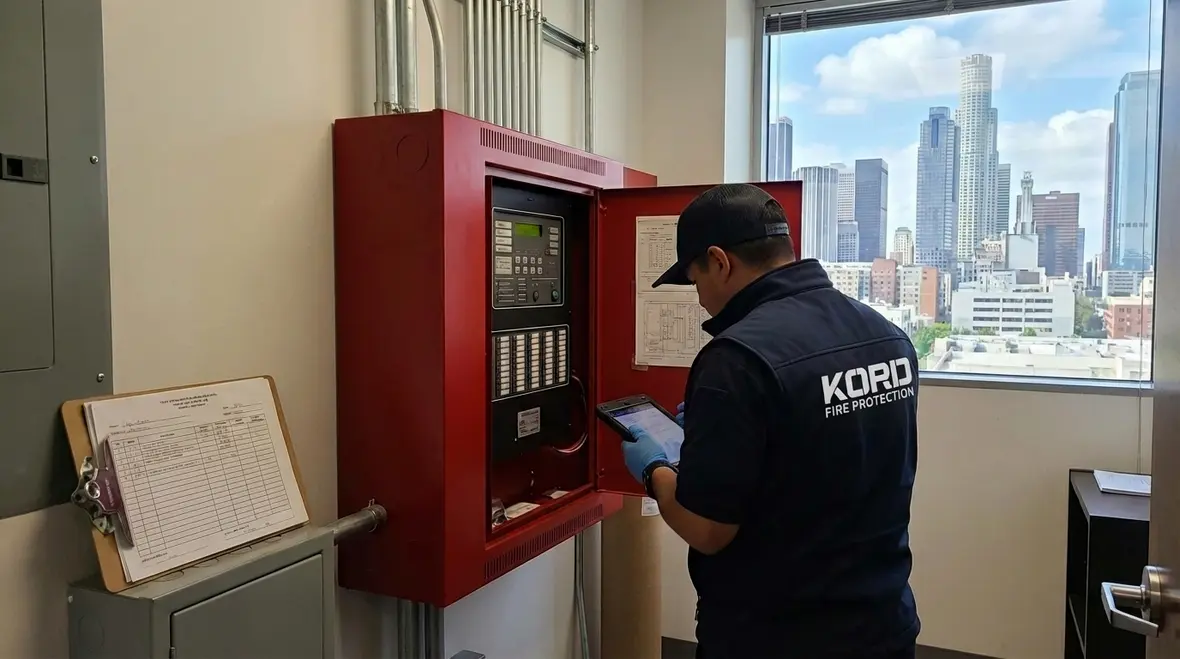
Regulation 4 Los Angeles 2026 Fire System Guide
Regulation 4 in Los Angeles: Complete 2026 Guide
In a city where wildfires make headlines and high rises kiss the clouds, fire safety is not optional. It is survival with paperwork. That is where fire system testing Los Angeles enters the picture. In 2026, Regulation 4 stands as one of the most important compliance standards shaping how buildings prepare, inspect, and respond to fire risks. Property owners, facility managers, and business operators are all feeling its weight. Fortunately, professionals like Kord Fire Protection technicians are helping many navigate it with steady hands and clear explanations.
This guide breaks down Regulation 4 in plain language. No legal fog. No confusing jargon. Just what matters, why it matters, and how to stay compliant without losing sleep.

Understanding Regulation 4 in 2026
Regulation 4 is a Los Angeles fire code requirement that governs inspection, testing, and maintenance of commercial fire protection systems. It applies to alarms, sprinklers, standpipes, fire pumps, and related life safety systems. In short, if a building relies on it to alert people or suppress flames, Regulation 4 likely covers it. These requirements are enforced through a series of specific Reg 4 tests, such as complex fire alarm and supervising tests, fire pump tests, and various standpipe and sprinkler tests. Learn more about the full range of Regulation 4 testing services here.
In 2026, enforcement has tightened. Fire departments now require clearer documentation, verified testing intervals, and certified technician involvement. Moreover, digital reporting systems allow inspectors to cross check compliance history in minutes. The days of “we tested it somewhere around last year” are over.
Kord Fire Protection technicians often explain it like this: Regulation 4 is not new, but expectations are higher. The city wants proof, not promises. And honestly, that makes sense. When alarms fail, nobody gets a do over.
How Regulation 4 came to define fire system testing in LA
Chief’s Regulation 4 dates back to rules the Los Angeles Fire Department developed in the late 1960s. Over time, those rules evolved into today’s structured program of Reg 4 tests, each focused on a specific system: basic and complex fire alarms, fire pumps, automatic sprinklers, standpipes, smoke control, elevators, generators, and more. By 2026, this framework has become the backbone of how Los Angeles keeps high rises, multi family properties, and commercial facilities fire ready year after year.
Why Regulation 4 Matters More Than Ever
Los Angeles faces unique fire risks. Dense urban development meets dry seasonal winds. Additionally, aging infrastructure in older commercial buildings increases vulnerability. Therefore, the city has strengthened oversight.
- Fire alarm systems detect and notify occupants promptly
- Sprinkler systems activate at the right pressure
- Fire pumps deliver required water flow
- Emergency communication systems function during power loss
Furthermore, insurance carriers now review compliance records more closely. A missed inspection can raise premiums or complicate claims. Consequently, proactive compliance saves money in the long run.
There is also the human factor. When systems work, people exit safely. When they do not, headlines write themselves. Regulation 4 aims to keep businesses off the evening news.
How Regulation 4 ties into other fire codes
Regulation 4 does not replace national standards such as NFPA 25 and NFPA 72. Instead, it adds Los Angeles specific requirements on top of them. For example, a Reg 4 fire pump test is more targeted and frequent than a basic NFPA 25 inspection, and a complex fire alarm and supervising test builds on NFPA 72 criteria with city defined performance checks. That layering is why many building owners rely on specialists who understand both national codes and local Reg 4 rules.

How fire system testing Los Angeles supports Regulation 4 compliance
Property owners often ask how they can realistically meet every requirement without becoming fire code experts themselves. The answer lies in structured inspection and testing programs.
Professional fire system testing in Los Angeles involves scheduled evaluations of all required components. Technicians examine control panels, test smoke detectors, verify water flow, measure pressure levels, and simulate alarm conditions. Importantly, they document everything according to city standards.
Kord Fire Protection technicians emphasize three pillars:
1. Frequency
Systems must be tested monthly, quarterly, semiannually, or annually depending on type. Missing one cycle can trigger violations. For example, many Reg 4 alarm tests are required annually, while certain sprinkler and standpipe inspections occur more frequently based on NFPA 25 and local amendments.
2. Documentation
Reports must include dates, findings, deficiencies, corrective actions, and technician credentials. In 2026, digital reporting has become the norm, making it easier for both the Los Angeles Fire Department and insurance carriers to review your building’s history at a glance.
3. Corrective Action
Identified issues must be repaired within specified timeframes. Testing without fixing problems is like going to the doctor and ignoring the prescription. Partnering with a full service provider that can test, repair, and retest keeps your building from getting stuck in a cycle of repeated failures.
Therefore, a structured program keeps buildings compliant and inspection ready at all times.
What property owners in Los Angeles are asking about Regulation 4
Many facility managers now turn to search engines and AI tools with very direct questions. Here are answers delivered plainly.
What buildings must comply?
Commercial properties, multi family housing, industrial facilities, healthcare centers, and high rise structures fall under Regulation 4. If a building has installed fire protection systems, it likely qualifies. Some systems even require specific Reg 4 tests such as basic or complex fire alarm testing, fire pump testing, or standpipe evaluations, depending on the occupancy and design. This annual fire system testing guide offers more examples of how those schedules apply in practice.
How often are inspections required?
Frequencies vary. For example, fire alarms often require annual testing, while certain components need quarterly checks. A licensed technician can map out a compliance calendar so your Reg 4 basic fire alarm tests, complex alarm tests, fire pump tests, and sprinkler inspections line up with the right intervals instead of happening in a last minute rush.
What happens during a city inspection?
Inspectors review documentation, check system tags, and may request live demonstrations. If records are incomplete, citations may follow. They may also verify that past deficiencies from prior Reg 4 tests have been corrected, not just noted.
Because requirements can shift, staying informed is critical. Kord Fire Protection technicians regularly update clients when code adjustments occur. After all, nobody wants surprises from the fire department.

Common Compliance Gaps and How to Avoid Them
Missed Testing Deadlines
Busy schedules push inspections aside. Consequently, deadlines slip. Automated reminders and service agreements solve this problem by locking in recurring Reg 4 testing for fire pumps, alarms, sprinklers, and standpipes so they never fall off the radar.
Incomplete Records
Some managers keep paper files scattered across offices. During inspections, finding proof becomes a scavenger hunt. Digital logs centralize records and simplify access, especially when a Reg 4 complex fire alarm and supervising test or a fire pump test spans multiple pages of observations and results.
Unlicensed Service Providers
Hiring unqualified contractors may save money upfront. However, non compliant work can lead to fines and re testing costs. Regulation 4 requires certified technicians who understand both the letter of the law and the practical side of testing complex systems.
Ignored Deficiencies
A failed device left unrepaired creates liability. Regulation 4 requires prompt corrective action, backed by documentation showing what was fixed, when, and by whom.
Kord Fire Protection technicians often compare compliance to dental checkups. Skipping cleanings might seem harmless until a small cavity becomes a root canal. Prevention costs less than crisis.
Inspection Components Under Regulation 4
To clarify expectations, here is a simplified breakdown of key systems covered and what inspectors look for.
| System Component | Inspection Focus |
|---|---|
| Fire Alarm Panels | Proper signals, battery backup, fault indicators |
| Smoke and Heat Detectors | Sensitivity testing and response time |
| Sprinkler Systems | Water flow, pressure levels, valve condition |
| Fire Pumps | Flow performance and mechanical integrity |
| Standpipe Systems | Hose connections and pressure verification |
| Emergency Lighting | Illumination duration during outages |
Each element must operate as designed. Additionally, integration between systems matters. For example, when a sprinkler activates, the alarm must signal immediately. Systems that do not communicate properly fail compliance.
Examples of system specific Regulation 4 tests
- Regulation 4 complex fire alarm and supervising test for larger or more integrated alarm systems
- Regulation 4 basic fire alarm test for simpler non voice systems
- Regulation 4 fire pump test to verify that pumps can deliver required pressure and flow under load
- Regulation 4 standpipe and automatic sprinkler systems test to confirm water supply and valve performance
- Regulation 4 auto elevator test to ensure cars recall and function safely during a fire event
Digital Reporting and 2026 Updates
In 2026, Los Angeles continues to modernize reporting processes. Many inspection reports now require electronic submission. This allows fire officials to track compliance citywide and quickly see which buildings have current Reg 4 certifications across alarms, pumps, sprinklers, and more.
Because of this shift, accuracy matters more than ever. Incorrect entries can flag a building for follow up inspection. Therefore, trained technicians play a crucial role.
Kord Fire Protection technicians use digital tools to log findings in real time. Consequently, property managers receive instant documentation and recommended action steps. This transparency builds trust and speeds repairs.
And yes, even in a city known for movie magic, inspectors prefer real data over special effects.
How Regulation 4 connects to long term safety planning
Regulation 4 is not just about passing inspections. It supports broader risk management strategies. When buildings commit to regular fire system testing in Los Angeles, they reduce downtime, protect tenants, and safeguard assets.
Moreover, consistent testing extends equipment lifespan. Pumps maintained properly last longer. Alarm panels updated regularly avoid sudden failure. Therefore, compliance aligns with financial prudence.
Forward thinking property owners treat Regulation 4 as part of operational planning rather than a yearly scramble. Scheduled maintenance, budget forecasting, and vendor partnerships create stability. Kord Fire’s full service protection team helps integrate Reg 4 testing into a broader fire safety strategy across alarms, sprinklers, pumps, and suppression systems.
After all, preparation may not feel glamorous. But neither does explaining to tenants why the alarm did not sound.
FAQ: Regulation 4 in Los Angeles
Conclusion: Stay Compliant, Stay Protected
Regulation 4 is not just another rule on a clipboard. It is a structured safeguard for lives, property, and peace of mind. With proper planning and expert support, compliance becomes manageable rather than overwhelming. Kord Fire Protection technicians stand ready to guide businesses through inspections, documentation, and repairs with clarity and confidence. Schedule professional service today and ensure every alarm, pump, and sprinkler performs exactly when it matters most.
If you are unsure where to begin, start by confirming when your last tests were performed and which Reg 4 certifications are currently active. From there, build a calendar that covers alarms, sprinklers, pumps, standpipes, and any specialty systems. Then, hand that calendar to a qualified Reg 4 testing partner who can turn it into a predictable routine instead of an annual scramble.
Explore Kord Fire’s Regulation 4 testing services or request a consultation to align your 2026 fire system testing plan with Los Angeles requirements.
Know Your Weapon Before You Fight the Flame
Kord Fire Protection is your go-to when it comes to all things fire protection. For over 20 years, we’ve been serving Southern California with the quality service and equipment to keep your home or business safe at all times. Our competitive prices reflect our unwavering commitment to protecting what matters most in the event of a fire emergency. Give us a call, send an email, or use that form!

Join Our Newsletter!
Get the latest fire safety tips delivered straight to your inbox From our Newsletter.


