

Battery Backup vs Generator for Emergency Lighting
When the lights go out, people do not want philosophy. They want illumination. In the world of life safety, the debate around battery backup vs generator for emergency lighting is not a casual chat over coffee. It is a decision that shapes evacuation times, inspection results, and ultimately, survival. Facility managers, contractors, and building owners often wrestle with reliability tradeoffs between these two systems. Fortunately, professionals such as Kord Fire Protection technicians explain these options in plain language, helping clients understand what truly keeps corridors bright when the grid fails.
This guide explores how battery systems and generators perform under stress, how codes view them, and which solution fits specific buildings. Along the way, expect clarity, a touch of humor, and practical insight. After all, even serious topics can benefit from a calm voice and a knowing smile.
In This Article
- How egress lighting works during outages
- Reliability factors that matter in real emergencies
- Pros and limits of battery backup systems
- Pros and limits of generators
- Maintenance and code considerations
- Cost and long term planning insights
- FAQs for quick answers
Understanding Egress Lighting in Real World Conditions
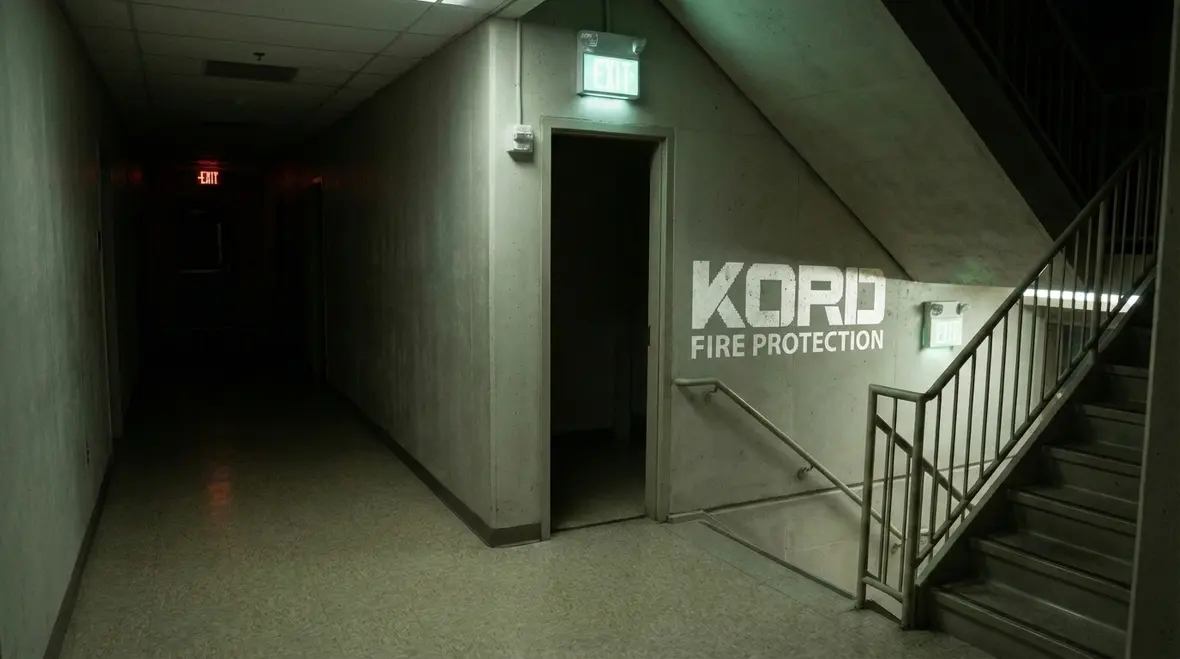
Egress lighting exists for one purpose. It guides people safely out of a building when normal power fails. Stairwells, exit signs, corridors, and ramps must stay lit long enough for occupants to evacuate. Codes such as NFPA 101 require a minimum of 90 minutes of illumination in most occupancies.
However, theory and reality do not always match. Power failures can be brief flickers or hours long blackouts. Sometimes they follow storms. Other times, they follow human error. In rare cases, they occur during the worst possible moment, such as peak occupancy. Therefore, reliability is not a luxury. It is the entire point.
Kord Fire Protection technicians often remind clients that emergency lighting is not about convenience. It is about maintaining visibility under pressure. Moreover, they stress that the chosen system must perform instantly. A delay of even a few seconds can create confusion, especially in crowded spaces.
For building owners planning inspections, tying emergency lighting into broader egress readiness is critical. For example, Kord’s San Francisco fire inspection checklist for businesses highlights how exit signs, clear pathways, and backup lighting all work together when the power disappears.
Battery Backup vs Generator for Emergency Lighting: How Each System Works
To understand reliability tradeoffs, one must first understand operation.
How Battery Backup Systems Operate
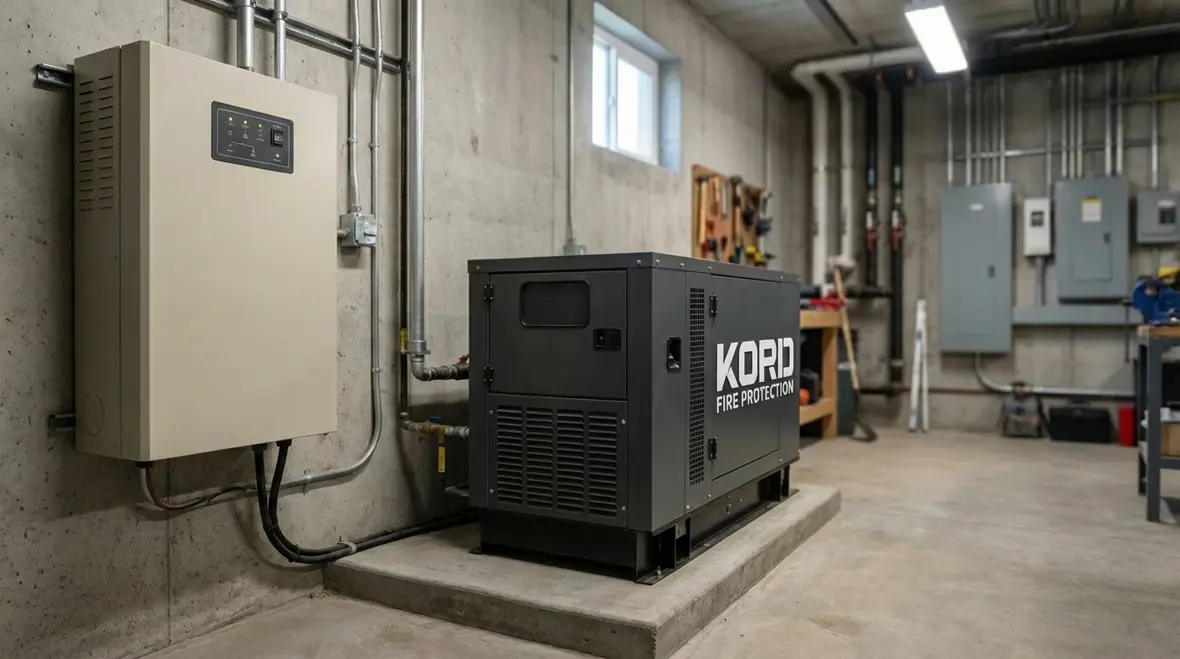
Battery Backup Systems store energy locally. When utility power drops, the battery immediately supplies power to designated fixtures. The switch is automatic and nearly seamless. Many units are self contained, mounted directly to walls or integrated into fixtures.
How Generator Systems Operate
Generators, by contrast, create electricity during an outage. When power fails, an automatic transfer switch signals the generator to start. After a brief delay, often 10 seconds or less, the generator supplies electricity to selected circuits, including egress lighting.
Although both meet code when properly designed, their response times and failure points differ. That difference shapes the conversation around battery backup vs generator for emergency lighting in commercial buildings.
Reliability Tradeoffs in Critical Moments
Response Time vs Capacity
Reliability depends on several factors. First, there is response time. Battery units activate instantly. In contrast, generators require startup time. While ten seconds may not sound dramatic, imagine a theater going dark during a packed premiere. Those ten seconds feel longer than the extended cut of a fantasy trilogy.
Mechanical Complexity and Failure Points
Second, there is mechanical complexity. Battery systems have fewer moving parts. Therefore, they often present fewer mechanical failure points. Generators, however, rely on engines, fuel systems, and cooling components. Each part must work perfectly under stress.
On the other hand, capacity tells a different story. Generators can power large areas and multiple systems simultaneously. Batteries typically serve specific fixtures or zones. Thus, in large facilities, batteries may require a distributed approach with many units.
Kord Fire Protection technicians explain that reliability is not about which system is superior in theory. Instead, it is about how well the chosen system aligns with the building’s size, occupancy, and risk profile.
Battery Backup Systems: Strengths and Limitations
Strengths of Battery-Based Emergency Lighting
Instant Activation
Because power is already stored, lights switch on without noticeable delay. This immediate response reduces panic and improves visibility.
Localized Independence
Each unit operates independently. If one fails, others still function. Therefore, a single point of failure is less likely to darken an entire floor.
Simpler Installation
In many retrofit projects, battery units integrate easily without major structural changes. This reduces downtime and cost.
Limitations and Risks With Battery Units
However, batteries also carry limitations.
Finite Duration
Most systems provide 90 minutes of illumination. While this meets code, extended outages may exceed that window.
Battery Degradation
Over time, batteries lose capacity. Without proper testing, they may appear ready yet underperform when needed.
Distributed Maintenance
A building with dozens of battery units requires consistent inspection of each device. One neglected unit can become a weak link.
Kord Fire Protection technicians often point out that batteries demand disciplined testing schedules. Monthly and annual checks ensure that stored power remains viable. After all, a silent battery that fails during an outage is about as helpful as a flashlight with dead batteries during a camping trip. Charming. Not useful.
Generator Systems: Strengths and Limitations
Why Facilities Choose Generators
Generators bring a different set of advantages to the table.
High Capacity Power
Generators can support large lighting loads and other critical systems, such as fire pumps or HVAC for smoke control.
Extended Runtime
As long as fuel remains available, a generator can operate beyond the typical 90 minute window.
Centralized Control
Maintenance teams manage one primary system rather than dozens of distributed units.
Weaknesses and Failure Modes of Generator Systems
Yet, generators are not flawless heroes.
Startup Delay
Even with automatic transfer switches, there is a brief loss of light before the generator stabilizes.
Mechanical Complexity
Engines require regular testing, fuel quality management, and component inspections.
Fuel Dependency
Without fuel, a generator is simply a large decorative object.
Kord Fire Protection technicians emphasize that generators require rigorous preventive maintenance. Weekly or monthly exercise runs verify operation. Fuel must remain clean and sufficient. Otherwise, the system may fail precisely when called upon, and that is a performance no one applauds.
Side by Side Reliability Comparison
Comparing How Each System Performs Under Pressure
| Feature | Battery Backup | Generator |
| Activation Time | Immediate | Short delay during startup |
| Mechanical Parts | Minimal | Engine and multiple components |
| Coverage Area | Individual fixtures or zones | Large centralized circuits |
| Runtime | Typically 90 minutes | Extended with fuel supply |
| Maintenance Focus | Many small units | One main system |
| Failure Risk Pattern | Isolated failures | Potential centralized impact |
This comparison does not declare a winner. Instead, it clarifies how each system behaves under pressure. Therefore, building owners can align their choice with real operational needs rather than assumptions.
What Should a Facility Manager Ask When Choosing?
Key Questions Before You Commit
- How large is the building?
- What is the occupant load during peak hours?
- Are there additional systems that require backup power?
- How long do outages typically last in this region?
- What level of maintenance support is available on site?
Kord Fire Protection technicians guide clients through these questions step by step. They assess load calculations, code requirements, and inspection history. Moreover, they explain tradeoffs without technical jargon. Clients leave informed rather than overwhelmed.
For example, a small office building may benefit from distributed battery units. In contrast, a hospital or high rise residential tower may require a generator due to scale and critical system integration. Context shapes the answer every time.
Code Compliance and Inspection Realities
How Inspectors Look at Emergency Lighting
Codes do not favor drama. They favor performance. Both batteries and generators can meet life safety standards when installed and maintained correctly.
However, inspection results often reveal the difference between theory and practice. Batteries fail annual duration tests when neglected. Generators fail load bank testing when maintenance lapses. Therefore, compliance hinges on consistent oversight.
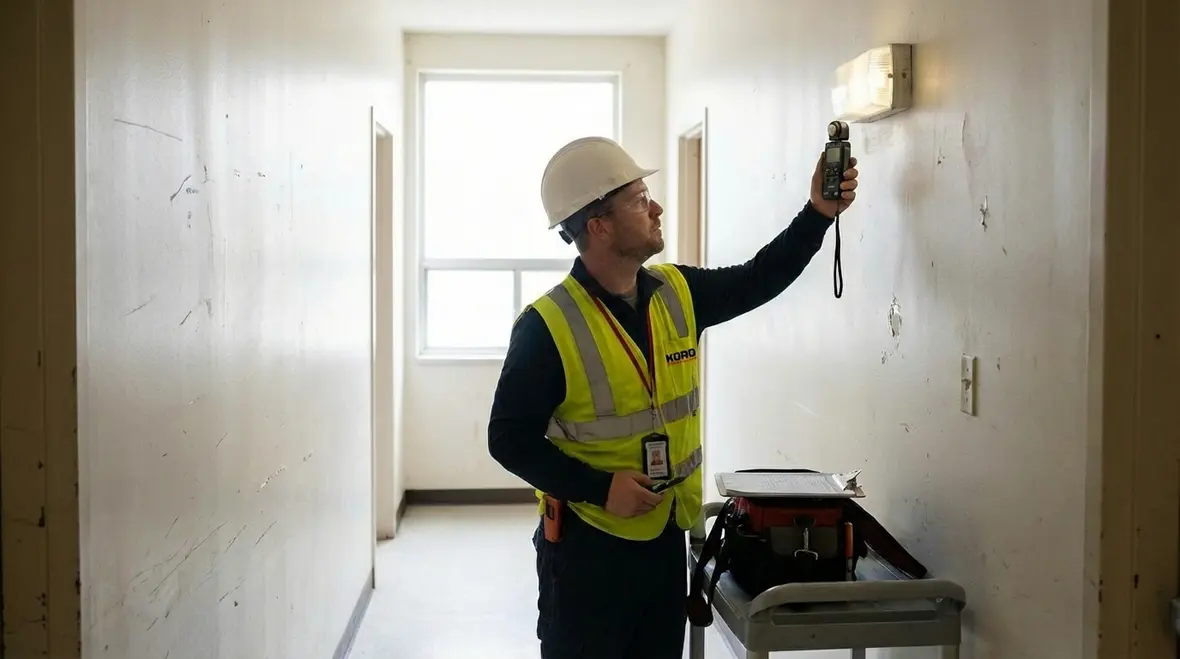
Kord Fire Protection technicians conduct routine inspections and functional testing to verify that systems meet required illumination levels. They measure light output along egress paths and confirm proper transfer operation. As a result, building owners gain confidence long before an emergency occurs.
Additionally, documentation plays a key role. Inspectors expect records of monthly and annual tests. A well organized logbook speaks volumes. It says the building takes safety seriously. It also prevents last minute panic before audits.
Cost Considerations Over the Long Term
Upfront Cost vs Lifecycle Value
Initial cost often influences decisions. Battery systems typically involve lower upfront expense, especially in smaller buildings. Installation is straightforward, and infrastructure changes are minimal.
Generators, however, require higher initial investment. Equipment, fuel storage, transfer switches, and electrical integration increase cost. Yet, over time, their extended capacity may justify the expense in large or complex facilities.
Planning for Maintenance and Replacement
Long term cost also includes maintenance. Batteries require periodic replacement. Generators require fuel management and mechanical servicing. Therefore, evaluating total lifecycle cost offers a clearer picture than comparing purchase prices alone.
Kord Fire Protection technicians encourage clients to think beyond installation day. A system that fits both budget and operational reality will serve the building for years, not just pass the first inspection.
FAQ: Quick Answers About Emergency Lighting Backup
Conclusion: Choosing the Right Path Forward
In the debate over battery backup vs generator for emergency lighting, the right answer depends on context, scale, and commitment to maintenance. Each system carries strengths and tradeoffs. Therefore, informed guidance makes all the difference. Kord Fire Protection technicians stand ready to evaluate facilities, explain options clearly, and design reliable solutions.
When safety matters most, thoughtful planning today ensures light when it is needed tomorrow. If you are reviewing your emergency lighting strategy, consider pairing this article with Kord’s broader resources on NFPA standards and inspections, or connect directly with the team to discuss comprehensive fire protection services and emergency generator and battery system support. Reach out and let experience guide the way.
Know Your Weapon Before You Fight the Flame
Kord Fire Protection is your go-to when it comes to all things fire protection. For over 20 years, we’ve been serving Southern California with the quality service and equipment to keep your home or business safe at all times. Our competitive prices reflect our unwavering commitment to protecting what matters most in the event of a fire emergency. Give us a call, send an email, or use that form!

Join Our Newsletter!
Get the latest fire safety tips delivered straight to your inbox From our Newsletter.


