
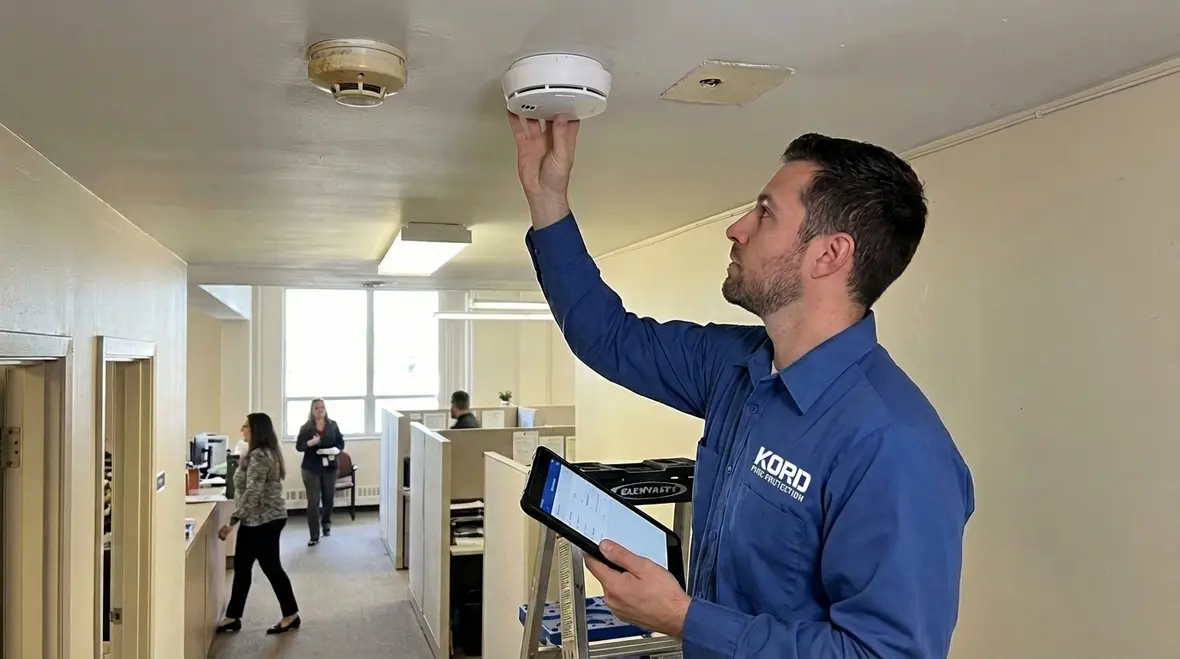
Rapid Wireless Fire Alarm Detection for Retrofits
Facility retrofits rarely inspire applause. No one throws a parade for upgraded wiring or a new control panel. And yet, when rapid wireless fire alarm detection enters the picture, something shifts. Suddenly, safety upgrades move faster. Disruption shrinks. Budgets breathe a little easier. In older buildings where walls hold decades of stories and concrete refuses to cooperate, wireless detection systems step in like a seasoned stage manager quietly running the show.
Kord Fire Protection technicians often explain it this way to clients. Why tear open walls like a home renovation show gone wrong when modern wireless technology can deliver protection with precision and speed? That question sets the tone for a transformation sweeping across commercial, healthcare, education, and industrial facilities.

The Shift from Wires to Wireless in Facility Retrofits
For years, traditional fire alarm systems depended on extensive wiring. Installers drilled, pulled cable, patched drywall, and navigated structural surprises hiding behind ceilings. Consequently, retrofitting older facilities often meant downtime, noise, and added cost.
Wireless detection systems changed the rhythm. Instead of relying on physical cabling between devices and control panels, these systems communicate through secure radio frequencies. Therefore, installation becomes cleaner and faster. Buildings remain operational. Tenants remain calm. And facility managers avoid the dreaded email titled “Unexpected Construction Delay.”
Kord Fire Protection technicians regularly walk building owners through this shift. They explain how encrypted signals connect smoke detectors, heat sensors, pull stations, and control panels without the maze of copper wiring. Moreover, they highlight how modern systems maintain compliance with fire codes while reducing structural disruption.
It is not magic. It is engineering catching up with common sense.
If you want to dive deeper into how wireless detection fits into smarter retrofits overall, Kord Fire’s post on Wireless Detection Systems for Smarter Facility Retrofits expands on planning, integration, and long-term strategy.

Why Are Facility Managers Turning to Rapid Wireless Fire Alarm Detection?
Because time matters. Because budgets matter. And because no one wants to shut down a hospital wing or a busy retail store for weeks.
Facility managers increasingly choose rapid wireless fire alarm detection for retrofits because it offers:
1. Minimal disruption
Since devices connect wirelessly, installers avoid opening walls and ceilings. As a result, daily operations continue with fewer interruptions.
2. Faster installation timelines
Without cable runs, projects move swiftly. In many cases, installation time drops significantly compared to traditional systems.
3. Scalable flexibility
If a building expands or changes layout, technicians can add devices without redesigning an entire wiring network.
4. Clean aesthetics
Historic buildings and high end interiors benefit because there is no need to disturb original finishes.
Kord Fire Protection technicians often point out that wireless does not mean fragile. These systems undergo rigorous testing to meet safety standards. In other words, speed does not sacrifice reliability.
How Wireless Detection Systems Are Transforming Facility Retrofits
Retrofitting is not just about replacing old equipment. It is about solving structural and operational challenges that wired systems once made complicated.
Solving Structural Headaches in Older Buildings
First, consider older concrete structures. Running conduit through solid masonry can feel like asking a spoon to carve granite. Wireless devices eliminate that barrier. Therefore, installers can position detectors exactly where risk analysis demands, not where wiring allows.
Keeping Occupied Spaces Operational
Next, think about occupied spaces. Hospitals, schools, and hotels cannot simply pause operations. However, wireless upgrades reduce noise and debris. Technicians move room to room efficiently, often working around schedules instead of disrupting them.
Phased Retrofits and Proactive Maintenance
Additionally, phased retrofits become practical. A facility can upgrade one floor at a time. Consequently, capital expenses spread out, and leadership avoids one massive budget hit.
Kord Fire Protection technicians emphasize another benefit. Wireless systems allow better integration with modern monitoring software. Facility managers gain real time alerts, device status reports, and diagnostic insights. Thus, maintenance shifts from reactive to proactive. Instead of waiting for a panel to complain loudly, teams address issues early.
It is a little like upgrading from a flip phone to a smartphone. Both make calls. Only one gives you a weather alert before the storm hits.
Behind the Signal: How the Technology Actually Works
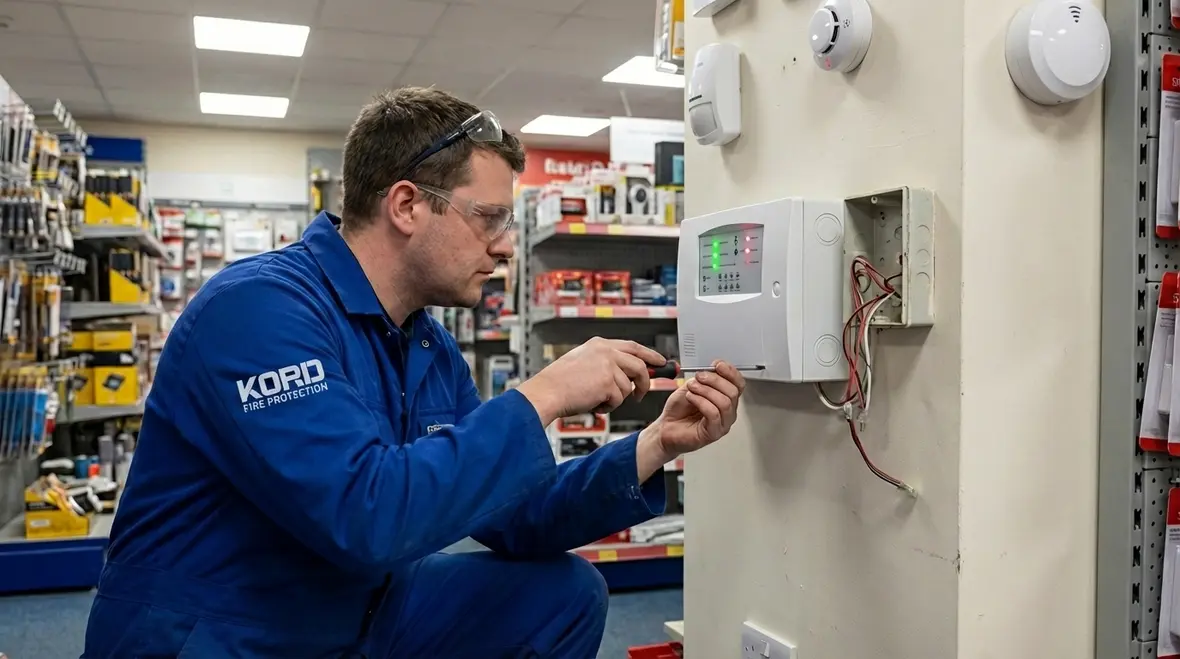
Wireless detection systems rely on secure radio communication between field devices and a central control panel. Each device contains a transmitter and receiver. When smoke or heat triggers a sensor, the device sends a signal through encrypted channels.
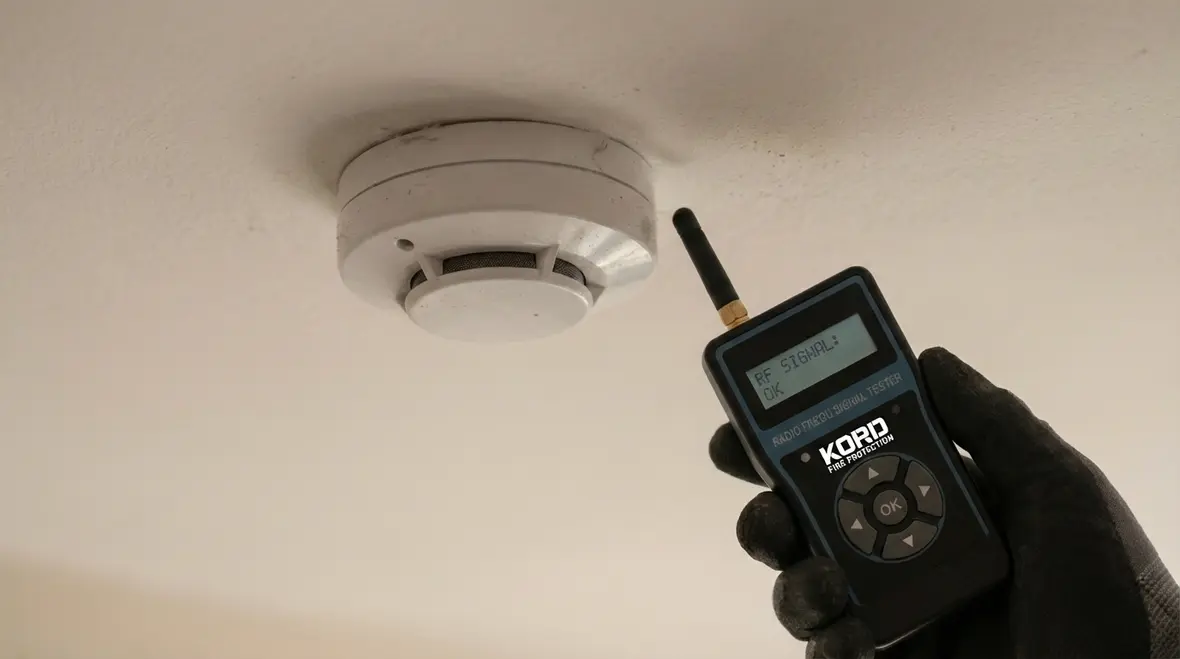
Importantly, these systems use frequency hopping and signal supervision. That means they continuously check communication paths. If interference appears, the system reroutes or flags the issue. Therefore, reliability remains strong even in complex environments.
Kord Fire Protection technicians often reassure clients who imagine dropped signals like a weak home Wi Fi connection. Fire detection systems operate on dedicated frequencies with built in redundancy. In addition, battery life is monitored and reported to the control panel. Maintenance teams receive alerts well before power becomes a concern.
Furthermore, many wireless devices support hybrid configurations. A facility can combine wired and wireless components in one system. This approach works well in partial renovations where some infrastructure remains intact.
In short, the technology is not improvising. It is engineered with layers of safeguards designed for life safety.
What Should Building Owners Ask Before Retrofitting?
When building owners explore wireless detection upgrades, clear questions guide better outcomes. Below is a practical comparison that Kord Fire Protection technicians often review during consultations.
Traditional Wired Retrofit
- Extensive wall and ceiling access required
- Longer installation timelines
- Higher labor for cabling
- Challenging in historic properties
- Difficult phased upgrades
Wireless Retrofit Approach
- Minimal structural intrusion
- Faster deployment
- Reduced cabling labor
- Ideal for sensitive architecture
- Flexible phased implementation
Therefore, building owners should ask:
How will installation affect daily operations?
Technicians can outline scheduling strategies that reduce disruption.
Can the system scale with future expansion?
Wireless devices make additions straightforward.
What monitoring and reporting tools are included?
Modern systems provide detailed diagnostics and alerts.
By addressing these points early, owners move from guesswork to informed planning.
Cost, Compliance, and Long Term Value
Upfront cost often drives retrofit decisions. While wireless components may carry slightly higher unit prices, labor savings frequently offset that difference. Since installers run fewer cables and cut fewer access points, overall project costs balance out.
Moreover, reduced downtime protects revenue. A retail store that remains open avoids lost sales. A hospital that keeps beds available maintains patient flow. Consequently, indirect savings can outweigh material expenses.
Compliance also plays a central role. Fire codes evolve. Insurance requirements tighten. Wireless detection systems meet recognized standards when properly designed and installed. Kord Fire Protection technicians stay current with local and national regulations, ensuring each retrofit aligns with code.
Long term, these systems support easier maintenance. Device level reporting pinpoints issues quickly. Instead of troubleshooting entire circuits, technicians identify specific units. As a result, service calls become more efficient and less invasive.
It is not just about passing inspection. It is about building resilience into the structure itself.
Integrating Wireless Detection with Smart Building Systems
Modern facilities rarely operate in isolation. Security, HVAC, access control, and energy management systems increasingly communicate with one another. Wireless fire detection fits naturally into this ecosystem.
For example, when a detector activates, integrated systems can unlock doors, shut down air handlers, and notify emergency responders instantly. Therefore, response becomes coordinated rather than chaotic.
Kord Fire Protection technicians often collaborate with IT and facility teams during retrofits. They ensure network compatibility, cybersecurity measures, and proper system segmentation. After all, life safety systems must remain protected from digital threats.
Additionally, cloud based monitoring allows off site oversight. Facility managers receive alerts on mobile devices, review system health dashboards, and generate compliance reports. In an age where people can track pizza delivery in real time, expecting instant fire system data does not seem unreasonable.
FAQ: Wireless Detection Systems in Retrofits
Conclusion: A Smarter Path Forward
Facility retrofits no longer require tearing a building apart to make it safer. Wireless detection systems offer speed, flexibility, and reliable protection without the drama of major construction. Kord Fire Protection technicians guide building owners through each step, translating complex technology into clear action.
For facilities ready to upgrade safety with minimal disruption, now is the time to explore a smarter retrofit strategy and bring modern fire protection quietly, confidently online. To turn that plan into action, explore Kord Fire’s dedicated Fire Alarm Services and Fire Alarm Monitoring Systems pages to schedule an assessment or request a quote.
Know Your Weapon Before You Fight the Flame
Kord Fire Protection is your go-to when it comes to all things fire protection. For over 20 years, we’ve been serving Southern California with the quality service and equipment to keep your home or business safe at all times. Our competitive prices reflect our unwavering commitment to protecting what matters most in the event of a fire emergency. Give us a call, send an email, or use that form!

Join Our Newsletter!
Get the latest fire safety tips delivered straight to your inbox From our Newsletter.


