Proper Device Calibration Prevents False Alarms
Why Proper Device Calibration Prevents Unnecessary Alarm Activations
Unnecessary Alarm Activations have a way of turning a calm Tuesday afternoon into a scene straight out of a disaster movie, minus the popcorn and dramatic soundtrack. One minute everything is quiet. The next, sirens echo through hallways, employees shuffle toward exits, and someone inevitably mutters, “It’s probably nothing.” However, those “probably nothing” moments cost time, money, and trust. More importantly, they often stem from a simple issue that rarely gets the spotlight it deserves proper device calibration. As Kord Fire Protection technicians often explain, when systems are tuned with precision, alarms speak only when they truly need to be heard.
And when they do speak, people listen.

The Quiet Power of Proper Calibration
At its core, calibration is the process of aligning a device’s sensitivity and response to the environment it protects. Fire alarms, smoke detectors, heat sensors, and gas detection systems rely on precise thresholds. If those thresholds drift even slightly, problems follow. Either the device reacts too quickly to harmless stimuli, or worse, it responds too slowly to real danger.
Because buildings are dynamic spaces, calibration cannot be a one time event. Dust accumulates. Humidity shifts. Renovations alter airflow. Even seasonal temperature changes affect how sensors behave. Therefore, regular calibration ensures that equipment responds to actual threats rather than burnt toast in the break room.
Kord Fire Protection technicians often describe calibration as tuning an instrument in an orchestra. When every device is properly tuned, the system works in harmony. However, if even one component goes off key, the entire performance suffers. And unlike a bad violin solo, false alarms disrupt business operations and erode confidence.
Calibration as a safety backbone
Behind every calm evacuation, quiet control room, and code-compliant inspection lies a web of calibrated devices quietly doing their job. Properly tuned detectors act as the early-warning backbone of a building, catching real hazards while filtering out daily noise.
What Causes Unnecessary Alarm Activations in Modern Buildings
False alerts rarely happen without a reason. In fact, most unnecessary triggers stem from predictable and preventable factors.
Common causes include:
- Improper sensitivity settings during installation
- Environmental contaminants such as dust or steam
- Electrical interference or wiring issues
- Lack of routine maintenance
- Aging equipment with drifting thresholds
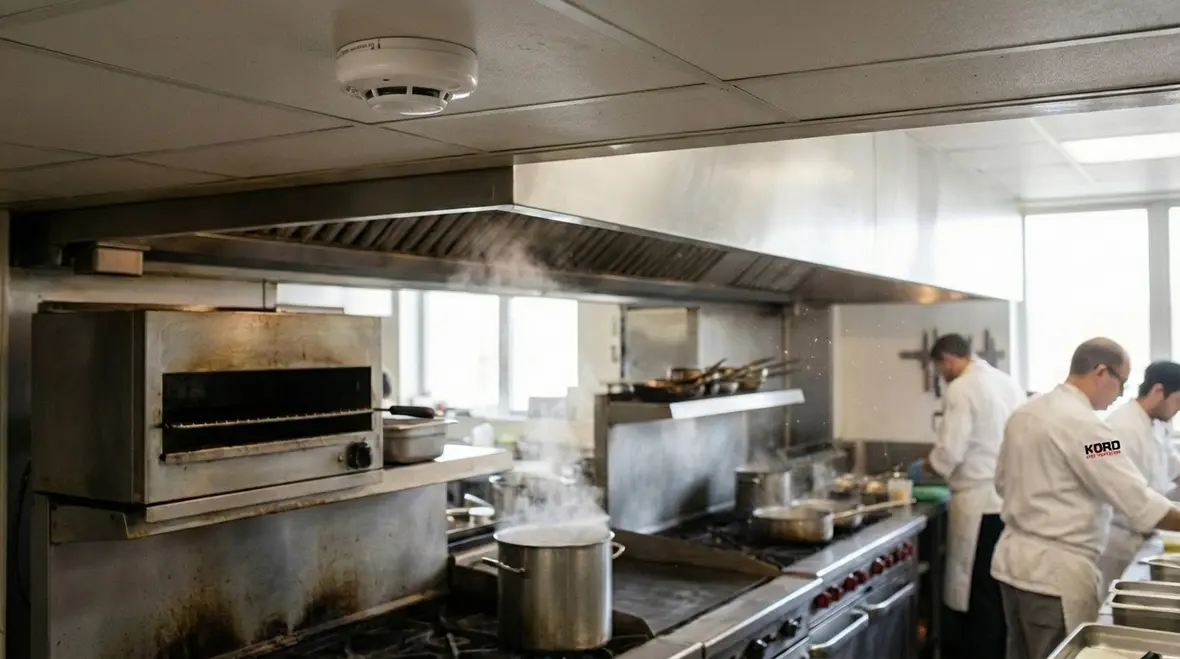
For example, a smoke detector placed near a commercial kitchen without adjusted sensitivity will likely interpret cooking vapor as smoke. Similarly, a heat sensor in a poorly ventilated mechanical room may react to normal temperature fluctuations.
As a result, the system begins to cry wolf. And when alarms trigger too often without real danger, occupants grow complacent. That complacency is the true risk. Because when a real emergency occurs, hesitation can cost precious seconds.
Kord Fire Protection technicians stress that most of these triggers are not random. They are signals that calibration has drifted out of alignment with the building’s real conditions.
Linking causes to testing and inspection
Patterns of false alarms often show up first in inspection reports and service logs. When paired with a proactive testing schedule, such as the fire alarm testing intervals outlined in Kord Fire’s California testing guide, those patterns become a roadmap for targeted recalibration rather than random guesswork.([kordfire.com](https://kordfire.com/fire-system-testing-frequency-california-guide/?utm_source=openai))
How Calibration Directly Reduces Unnecessary Alarm Activations
So how exactly does proper calibration prevent Unnecessary Alarm Activations? The answer lies in precision.
First, technicians measure baseline environmental conditions. They assess normal airborne particles, humidity levels, temperature ranges, and airflow patterns. Then, they adjust device thresholds to differentiate between routine activity and genuine hazard signals.
For instance, in industrial settings where dust is part of daily operations, detectors must distinguish between harmless airborne particles and combustion products. Without calibration, the system cannot tell the difference. With calibration, it can.
Additionally, calibration verifies communication between devices and the control panel. Even minor voltage inconsistencies can produce phantom signals. Therefore, technicians inspect wiring, test response times, and validate signal integrity. Each adjustment strengthens reliability.
Because of this layered approach, calibrated systems react decisively to real threats while ignoring background noise. It is not about lowering sensitivity across the board. Rather, it is about intelligent sensitivity tailored to the environment.
Calibration, inspection, and compliance working together
When calibration is paired with regular fire alarm inspection and testing for commercial buildings, each visit becomes an opportunity to fine-tune performance, reduce nuisance activations, and confirm that code requirements are being met in the real world—not just on paper.([kordfire.com](https://kordfire.com/fire-alarm-inspection-and-testing-for-commercial-buildings/?utm_source=openai))

How Often Should Fire Alarm Devices Be Calibrated?
In most commercial environments, annual calibration is the baseline. However, high risk or high activity facilities may require more frequent checks. Manufacturing plants, restaurants, warehouses, and healthcare facilities often benefit from semiannual reviews.
Kord Fire Protection technicians evaluate each facility based on occupancy type, environmental conditions, and regulatory requirements. Instead of applying a one size fits all schedule, they build a calibration plan that reflects the building’s real world behavior.
Because standards evolve and environments change, routine assessments keep systems aligned with both code and practical safety needs. And while some may view calibration as an expense, it consistently proves less costly than repeated evacuations and emergency response fees.
Tying calibration into broader testing schedules
Many California properties already follow structured alarm testing schedules that include weekly, monthly, quarterly, and annual tasks. Folding calibration into those existing visits keeps costs manageable while ensuring the system remains responsive and compliant.([kordfire.com](https://kordfire.com/fire-system-testing-frequency-california-guide/?utm_source=openai))
The Real Cost of False Alerts
At first glance, an unnecessary activation might seem like a minor inconvenience. People step outside, wait a few minutes, then return to work. No harm done. Or so it appears.
However, the financial and operational impact accumulates quickly.
- Lost productivity during evacuations
- Disruption to customers and clients
- Potential fines for repeated false dispatches
- Strain on local emergency services
- Reduced trust in safety systems
Moreover, frequent false alarms can create a dangerous psychological effect. When people assume every alert is a mistake, response times slow. Eventually, what should prompt swift action becomes background noise.
It is a bit like a car alarm that goes off every night in a parking lot. At first, everyone looks. After a week, no one does. The same principle applies inside commercial facilities.
By preventing Unnecessary Alarm Activations through proper calibration, businesses protect not only their operations but also their culture of safety.
Dual Focus: Technical Accuracy and Human Confidence
Technical Precision
Calibration aligns sensor thresholds, verifies electrical stability, tests response timing, and confirms panel communication. These technical steps ensure devices activate only under legitimate conditions.
Human Assurance
When occupants experience consistent and accurate alarm behavior, they trust the system. Therefore, when an alert sounds, they respond quickly and seriously. Confidence grows because the system has proven reliable.
This dual impact technical and human transforms calibration from a maintenance task into a strategic investment. Kord Fire Protection technicians often remind facility managers that equipment performance and human behavior are closely connected. Reliable systems shape reliable responses.
The Role of Professional Technicians in Preventing Unnecessary Alarm Activations
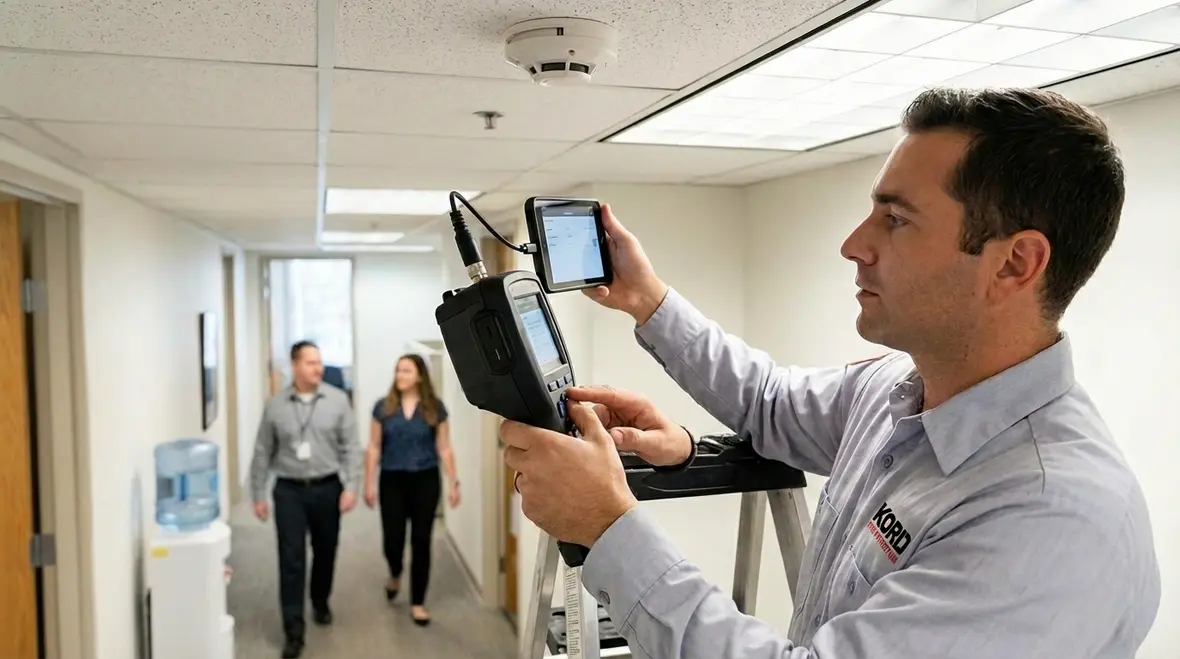
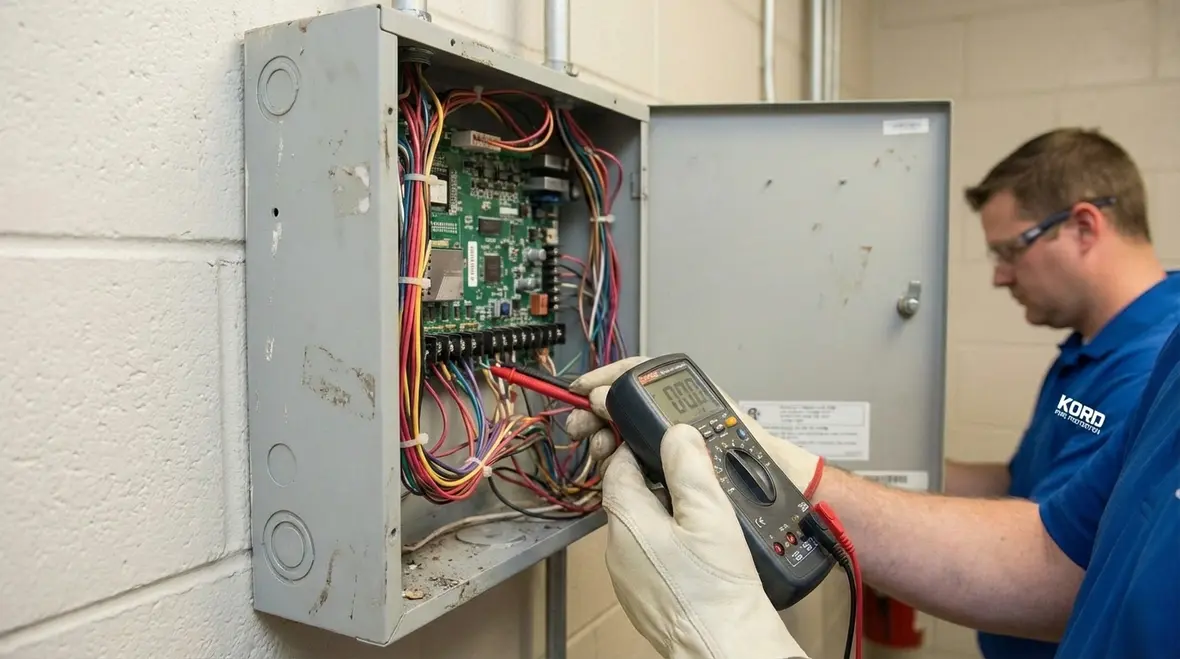
While some maintenance tasks can be handled internally, calibration requires specialized tools and trained judgment. Technicians use calibrated test equipment to simulate smoke, heat, or gas conditions. They measure response time, compare readings to manufacturer specifications, and adjust settings accordingly.
Furthermore, they document every calibration point. This documentation supports compliance with local codes and national standards. Should an inspection occur, clear records demonstrate proactive system management.
Kord Fire Protection technicians approach each site with a methodical process. First, they assess historical alarm data. If patterns of false alerts appear, they investigate root causes rather than applying quick fixes. Next, they inspect device placement to ensure alignment with current building layouts. Finally, they recalibrate and retest until performance meets precise criteria.
Because they combine technical skill with field experience, they often spot subtle issues others might overlook. For example, a minor airflow change from a recently installed HVAC unit can redirect particles toward a detector. Without experienced evaluation, that shift could trigger repeated false alarms.
Technology Is Smart, But It Still Needs a Tune Up
Modern fire protection systems boast advanced features. Addressable panels pinpoint exact device locations. Smart detectors adjust sensitivity automatically within programmed ranges. Integration with building management systems enhances monitoring.
Yet even the smartest technology operates within physical limits. Sensors age. Components drift. Environmental conditions evolve. Therefore, smart systems still require human oversight.
Think of it like owning the latest smartphone. It may be cutting edge, but it still needs updates and the occasional restart. Fire alarm systems are no different. They demand periodic calibration to maintain peak performance.
When businesses prioritize this upkeep, they dramatically reduce Unnecessary Alarm Activations and extend the life of their equipment. In addition, they protect their reputation by minimizing avoidable disruptions.
FAQ: Proper Calibration and Alarm Reliability
Conclusion: Precision Today Prevents Panic Tomorrow
Proper calibration stands as the quiet guardian behind every dependable alarm system. By preventing Unnecessary Alarm Activations, businesses protect productivity, preserve trust, and reinforce real safety. Kord Fire Protection technicians bring expertise, precision, and calm authority to every inspection, ensuring systems respond only when truly needed.
Schedule a professional calibration review today, because when alarms speak, they should speak with purpose and everyone should listen. To pair calibration with code-compliant inspection and testing, explore Kord Fire’s full fire alarm inspection and testing for commercial buildings services and comprehensive fire alarm service solutions throughout Southern California.([kordfire.com](https://kordfire.com/fire-alarm-inspection-and-testing-for-commercial-buildings/?utm_source=openai))
Know Your Weapon Before You Fight the Flame
Kord Fire Protection is your go-to when it comes to all things fire protection. For over 20 years, we’ve been serving Southern California with the quality service and equipment to keep your home or business safe at all times. Our competitive prices reflect our unwavering commitment to protecting what matters most in the event of a fire emergency. Give us a call, send an email, or use that form!

Join Our Newsletter!
Get the latest fire safety tips delivered straight to your inbox From our Newsletter.