Pressure relief valves in fire protection systems: the job they do and why it matters
In Kunkle fire protection designs, pressure relief valves in fire protection systems play a simple role with serious consequences. They protect piping and equipment by releasing excess pressure before it turns into a costly failure. In plain terms, these valves act like a calm safety guard: when pressure climbs beyond what the system can handle, the valve opens, relieves the load, and helps the system return to safe operation. And yes, while humans may ignore a smoke alarm once, they should never ignore a pressure problem in a fire line.
To keep things clear, Kord Fire Protection technicians explain the process the way it should be explained: step by step, with real field logic, and with the kind of patience that makes code and math feel less like a punishment.
How Kunkle valves work in a pressure relief cycle
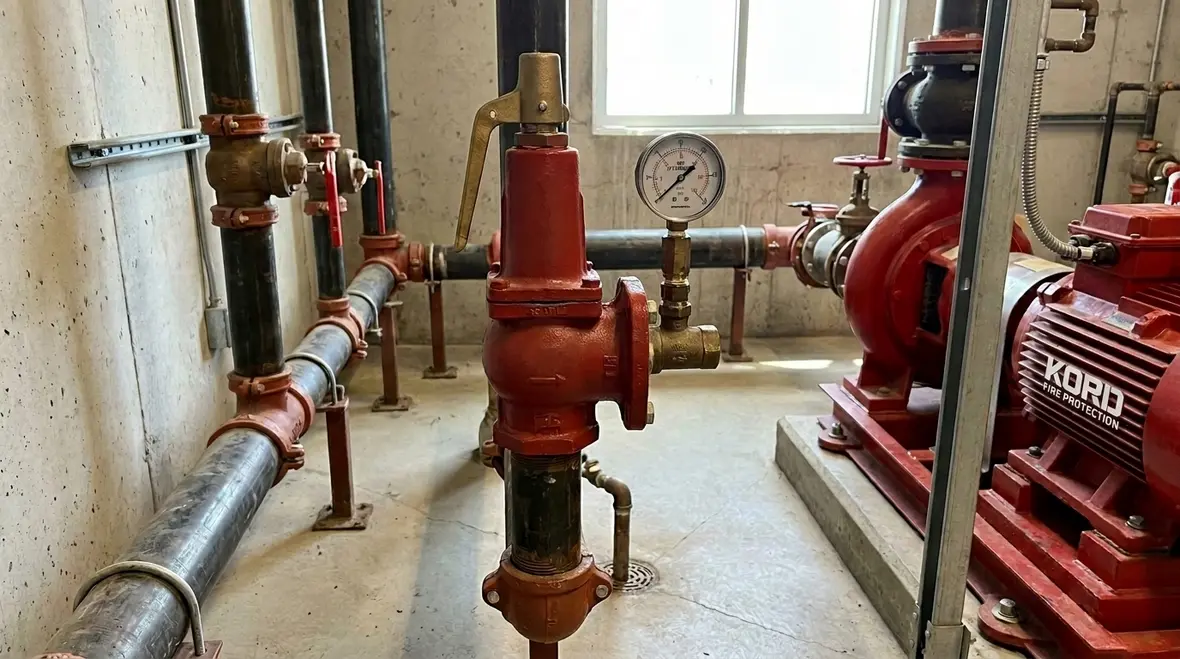
First, a typical setup includes a Kunkle valve sized for the specific system. Next, the system operates under normal conditions, where line pressure stays within the design limits. However, when conditions shift, the valve responds to protect the hardware. Pressure rises due to things like thermal expansion, pump overspeed, trapped water pockets, or pressure surges caused by flow changes. As pressure approaches the set point, the valve begins to open.
Then the valve relieves pressure through its discharge path. After the pressure falls back to a safe level, the valve closes. This cycle matters because it reduces stress on fittings, joints, and internal components. It also helps prevent a system from drifting into unsafe operation where a failure would be harder to predict and far more expensive to fix.
Here is the practical way technicians often describe it to facility managers: the valve does not “solve” the cause of pressure rise, but it keeps the system from suffering catastrophic damage while the cause gets addressed. If the pressure rise comes from a pump control issue, the relief device buys time. If it comes from a blocked discharge line, the relief device signals that the flow path needs attention. It is the safety net under a tightrope.
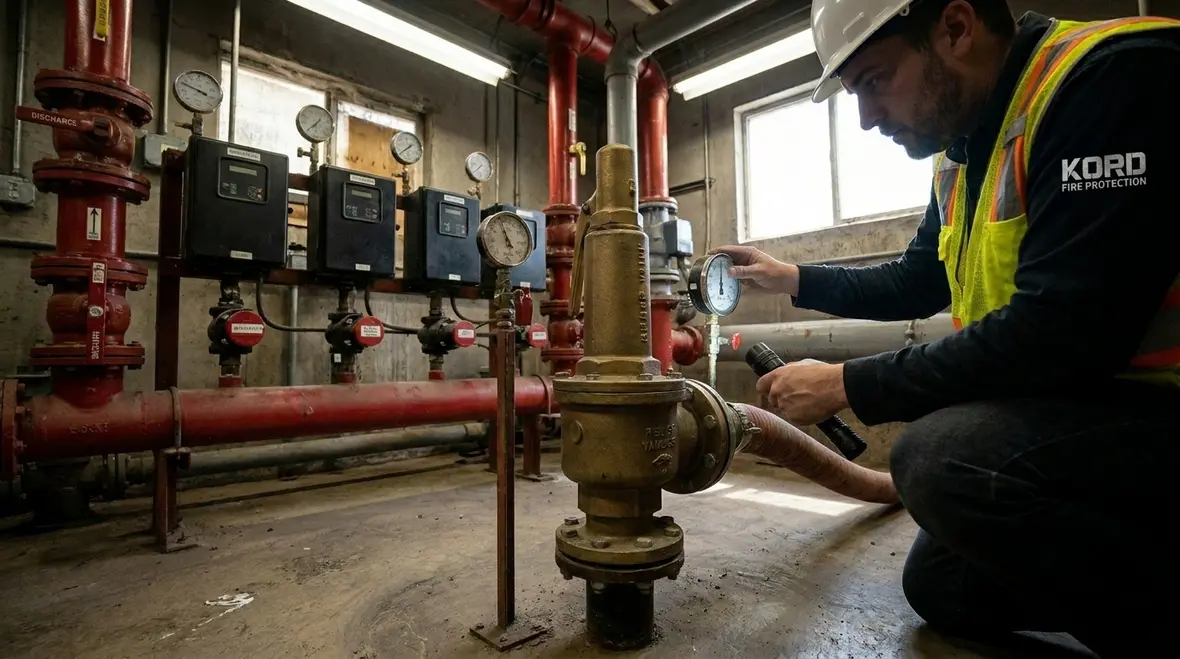
Real world use cases where pressure relief keeps systems safe
In real buildings, the conditions that create excess pressure do not follow a neat schedule. So, the use cases tend to look different from project to project, even when the goal stays the same. Kord Fire Protection technicians commonly see Kunkle pressure relief applications in the following situations.
- Fire sprinkler and standpipe systems with pressure fluctuations: When pumps start and stop or when water moves through long runs, transient pressure changes can occur. A relief valve helps manage the peak values.
- Re-circulating water arrangements: In systems that maintain temperature or manage flow, thermal expansion can push pressure higher than expected.
- Testing and commissioning events: During flow testing, pressure can climb quickly. The relief valve prevents overpressure while staff verifies performance.
- Seasonal temperature changes: Even if a building seems stable, outdoor temperature swings can change water volume and pressure across the piping network.
Also, many sites have older piping runs with valves, strainers, or check components that affect flow. Therefore, the relief valve becomes a dependable part of the pressure management plan, not just a checkbox item. It keeps the system from becoming “that one problem” that only shows up during the busy season, the holiday shutdown, or the week right before inspection. Fire systems have a way of timing issues with cosmic humor.
Strengths and weak points that technicians weigh during design
Kunkle valves bring clear advantages, and they also come with responsibilities. First, the strengths. A properly selected pressure relief valves in fire protection systems setup can reduce risk by preventing overpressure, limiting stress on components, and supporting stable system behavior. Because the valve uses a set point, it gives operators predictable action when pressure reaches defined thresholds.
Additionally, these valves can reduce downtime. If a system experiences a pressure surge, the valve protects the line so the team can troubleshoot without immediate replacement of damaged hardware. In many facilities, that difference turns a major repair into a scheduled service call.
Now, the weak points and what good professionals watch for. Relief valves rely on correct sizing, correct installation, and a discharge path that does not create backpressure. If discharge piping is restricted, the valve can behave differently than intended. Similarly, if a relief valve is selected with a set pressure mismatch, it may open too early, or too late.
Also, debris and scale can affect performance over time. If a system uses water that carries sediment, the valve internal surfaces may need more attention. And if someone installs the valve without respecting flow direction, clearance, or access needs, the “simple” safety device turns into an expensive learning experience.
So, Kord Fire Protection technicians typically treat selection and installation as a system decision. They also plan for how the valve discharges, how staff will observe operation, and how the valve will be tested safely.
Ongoing maintenance that keeps the relief function reliable
Relief valves cannot stay reliable by hope alone. Therefore, ongoing maintenance matters, especially because fire protection systems sit still most of the time and then get tested under pressure. When that moment arrives, the valve must work exactly as expected.
Maintenance usually includes inspection for signs of leakage, checking the discharge line for blockage, and verifying that the valve remains free from corrosion or mechanical damage. Technicians also confirm the valve’s set pressure and ensure that protective components, supports, and unions remain intact. If the system includes strainers or filters upstream, keeping them clean reduces the chance that debris will interfere with valve performance.
In addition, staff should document maintenance activities and trending results. That helps identify recurring pressure events that might point to pump control problems, air entrainment, water hammer conditions, or valve issues elsewhere in the loop.
One key detail that gets overlooked: discharge termination. If the discharge runs into a place where it can freeze, block, or create a hazard, it can compromise the valve’s ability to relieve pressure safely. So technicians should review discharge routing during service visits, not only during installation.
Relevant code and local requirements: what gets referenced on the job site
Fire protection codes guide how relief devices should be selected, installed, and maintained. Requirements can vary by jurisdiction, and the local authority having jurisdiction always has the final say. Still, several standards often come up in planning and inspections.
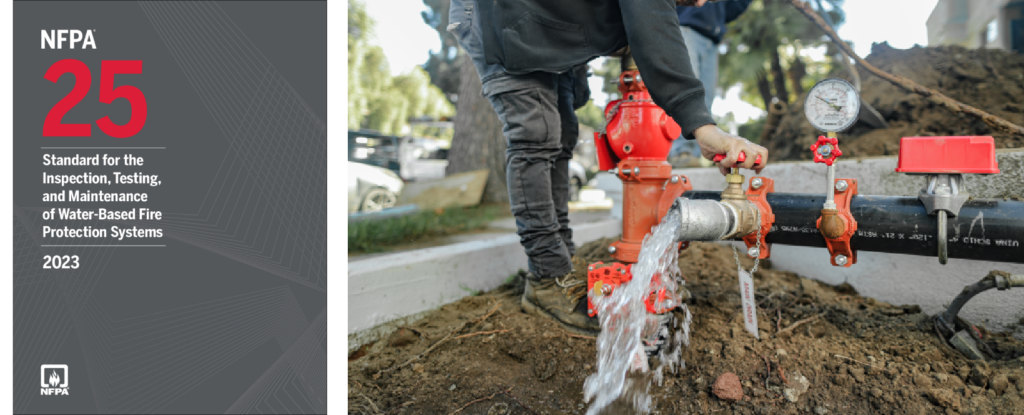
Typically, teams reference NFPA 13 for sprinkler systems, NFPA 20 for pumps, NFPA 25 for inspections, testing, and maintenance of water based fire protection systems, and applicable product listing requirements from valve manufacturers. Additionally, local plumbing and fire code rules may influence discharge routing and how relief discharge lines must terminate.
In practice, Kord Fire Protection technicians align valve applications with the system design documentation and listing conditions. They also verify that the relief device and its discharge setup match the intended hydraulic behavior. Because if the code expects safe discharge and the site provides something else, the inspection tends to turn into a very loud conversation.
Using these systems well across the project lifecycle
When a team chooses pressure relief valves in fire protection systems, it should not stop at selection. Instead, it should carry that decision through design coordination, installation quality, and maintenance planning. Kord Fire Protection technicians often explain that good outcomes come from clear expectations: proper set point, correct discharge arrangement, accessible trim, and documented service records. Then, during operation and testing, staff should watch for performance trends and address pressure rise sources, not just the symptoms.
And yes, the valve can only do its job if the rest of the system gives it a fair chance. Like a referee, it enforces safety, but it cannot fix a broken play on its own. Use these systems as part of an integrated protection strategy, and you will reduce surprises when the building needs help most.
FAQ: quick answers about Kunkle pressure relief
Call Kord Fire Protection for a pressure relief plan that holds up
If a facility wants safe, predictable operation, it should review its pressure relief strategy now, not after a problematic test or a late inspection. Kord Fire Protection technicians can help evaluate valve sizing, discharge routing, and maintenance expectations so the relief function works the way it was designed. Reach out to start a system review, confirm compliance expectations, and set a service plan that keeps fire protection equipment steady when conditions get unstable.
Know Your Weapon Before You Fight the Flame
Kord Fire Protection is your go-to when it comes to all things fire protection. For over 20 years, we’ve been serving Southern California with the quality service and equipment to keep your home or business safe at all times. Our competitive prices reflect our unwavering commitment to protecting what matters most in the event of a fire emergency. Give us a call, send an email, or use that form!

Join Our Newsletter!
Get the latest fire safety tips delivered straight to your inbox From our Newsletter.