
Ontario Fire Inspection Checklist for Business
When it comes to compliance, safety, and keeping the fire marshal from raising an eyebrow, every company needs a reliable ontario fire inspection checklist business plan in place. Fire inspections in Ontario are not casual walkthroughs. They are structured, detailed reviews guided by the Ontario Fire Code. And while that may sound about as exciting as watching paint dry, the reality is far more important. Lives, property, and reputations sit quietly behind every checklist item.
Kord Fire Protection technicians often explain it this way. Fire safety is not about passing an inspection. It is about making sure everyone goes home at the end of the day. Fortunately, with the right preparation and a clear understanding of what inspectors expect, businesses can approach inspections with calm confidence instead of quiet panic.

Understanding the Ontario Fire Inspection Checklist for Businesses
An Ontario fire inspection for commercial properties follows the Fire Protection and Prevention Act and the Ontario Fire Code. Inspectors review documents, systems, and physical conditions. They look for hazards, confirm maintenance records, and ensure life safety systems work as intended.
First, inspectors assess building classification and occupancy type. This step matters because requirements differ for offices, warehouses, restaurants, and industrial facilities. Next, they examine fire protection systems. Finally, they review housekeeping practices and staff preparedness.
Kord Fire Protection technicians often remind business owners that inspections are systematic. They follow a clear process. Therefore, preparation should follow one too. A strong commercial fire safety checklist in Ontario should align with code requirements and reflect the unique risks of the property.
Although many owners worry about penalties, inspectors typically focus on compliance and correction. However, repeated violations or serious hazards can result in orders or fines. Preparation is not optional. It is essential.
What Do Fire Inspectors Check During a Business Inspection?
This question echoes through boardrooms and back offices alike. So let us answer it clearly.
Inspectors review several core areas:
1. Fire Alarm Systems
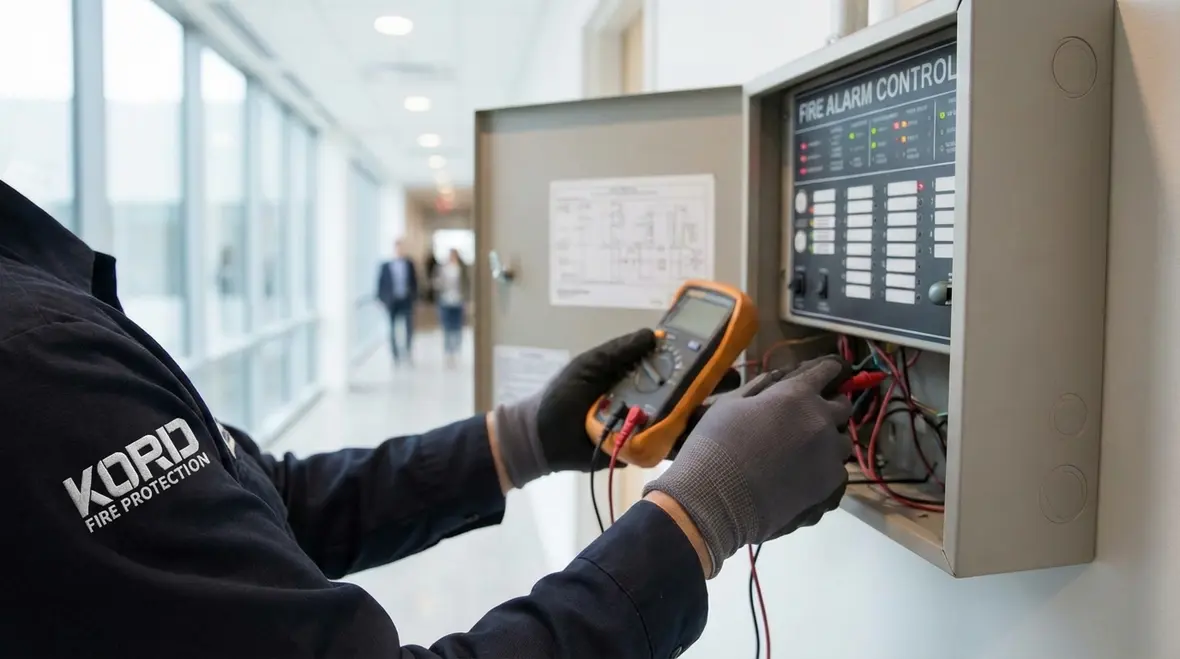
They confirm alarms are tested annually by qualified technicians. They check monitoring connections, control panels, and records. If the panel looks like it has not been opened since dial up internet was king, that is a problem.
2. Fire Extinguishers
They ensure extinguishers are properly mounted, accessible, and inspected monthly. Annual servicing must be documented. Dust covered units tucked behind filing cabinets do not impress anyone.
3. Emergency Lighting and Exit Signs
They test battery backup systems and verify illumination levels. Exit signs must remain visible and unobstructed. In an emergency, nobody wants to guess which way is out.
4. Sprinkler Systems
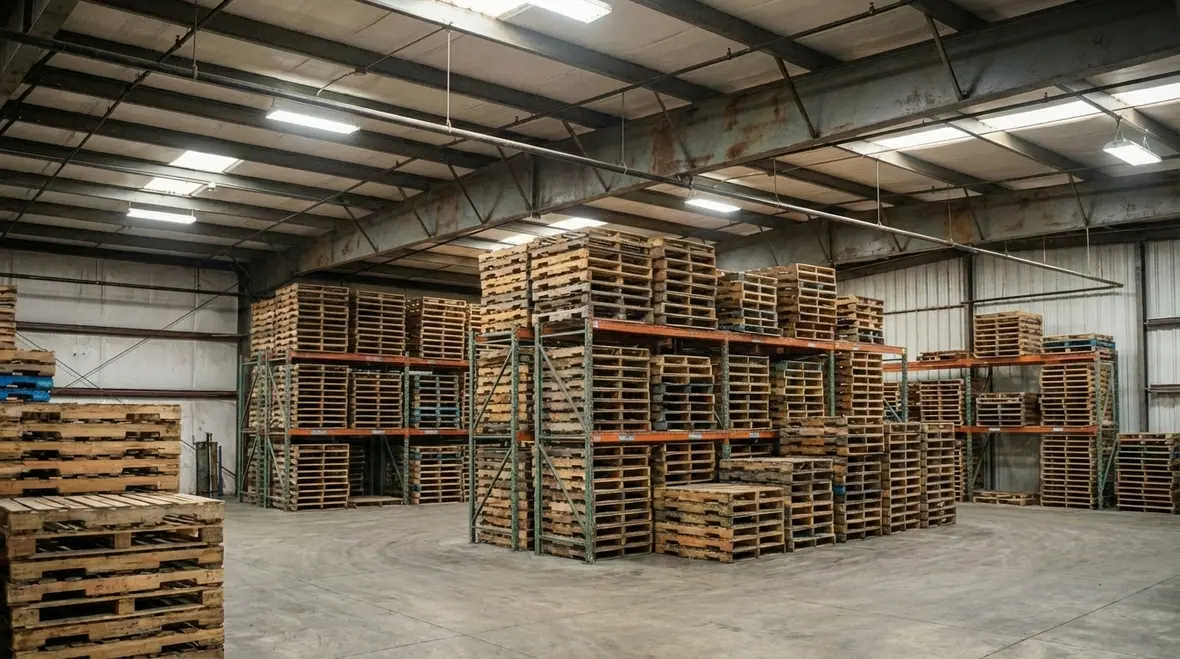
They examine inspection tags, valve positions, and clearance below sprinkler heads. Storage stacked too high beneath sprinklers is a common violation.
5. Means of Egress
They check corridors, stairwells, and exit doors. Blocked exits are one of the fastest ways to fail an inspection.
6. Fire Safety Plan
They review the written fire safety plan and training records. Staff must know what to do when alarms sound. A plan that lives quietly in a binder without training is not enough.
Because inspections cover both documentation and physical conditions, preparation requires attention to detail. Fortunately, a structured ontario commercial fire inspection checklist makes that task manageable.
Core Compliance Areas Every Company Should Prioritize
Although every building differs, certain compliance areas demand consistent attention. Businesses that stay proactive in these areas rarely face major issues.
Documentation and Record Keeping
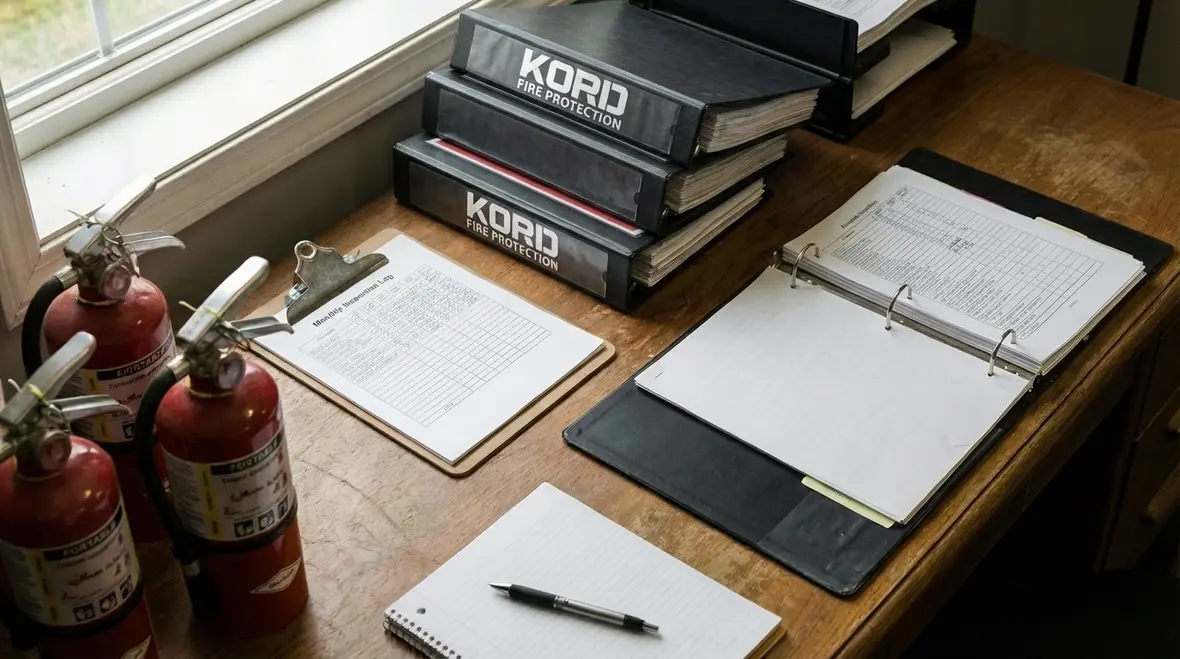
Inspectors rely heavily on records. They expect proof of annual alarm tests, sprinkler inspections, extinguisher servicing, and emergency lighting checks. Therefore, organized documentation can smooth an inspection dramatically. Kord Fire Protection technicians often advise clients to store both physical and digital copies. Redundancy in records is better than scrambling at the last minute.
Routine Visual Checks
Monthly internal checks catch small issues early. For example, a missing extinguisher pin or a blocked exit can be corrected quickly. Consequently, businesses reduce risk long before an inspector arrives.
Staff Training
Employees must understand evacuation procedures and extinguisher basics. Training does not need to resemble a Hollywood disaster film. It simply needs clarity and repetition. When staff know their roles, confusion drops and safety rises.
Housekeeping Standards
Good housekeeping prevents fire spread. Proper storage, waste removal, and clear access to panels and valves matter. Inspectors often notice these details immediately. Clean spaces signal proactive management.
Common Violations and How to Avoid Them
Interestingly, many violations repeat across industries. The good news is that they are preventable.
Blocked Exits
Businesses sometimes treat exit corridors like bonus storage. Inspectors do not share that perspective. Keep exits clear at all times.
Expired Inspections
Missed annual tests are common. However, scheduling recurring service appointments eliminates this issue.
Improper Storage Near Electrical Panels
Clearance around electrical equipment is mandatory. A stack of boxes leaning against a panel may seem harmless. It is not.
Sprinkler Obstructions
Storage must remain at least 18 inches below sprinkler heads in most cases. Ignoring this rule compromises system performance.
Kord Fire Protection technicians often explain that compliance is not about memorizing rules. It is about building habits. When safety checks become routine, violations fade.
Sample Ontario Fire Inspection Checklist Business Reference Table
Below is a simplified reference that reflects typical inspection points. While every property differs, this structure supports preparation.
This structured approach allows managers to mirror what inspectors evaluate. Consequently, preparation becomes practical rather than overwhelming.
How Kord Fire Protection Technicians Help Businesses Stay Ready
Compliance feels simpler when experienced professionals guide the process. Kord Fire Protection technicians do more than perform inspections. They explain findings in plain language. They show managers what needs attention and why it matters.
For example, if an alarm panel displays a trouble signal, technicians identify the source and outline corrective steps. If emergency lights fail during testing, they recommend replacement timelines. Therefore, businesses gain clarity instead of confusion.
Additionally, technicians help develop maintenance schedules tailored to each facility. Rather than reacting to inspection notices, companies stay ahead of them. That proactive stance protects both people and operations.
And yes, they occasionally share a gentle reminder. Fire safety is serious. But preparation does not have to feel dramatic. With the right systems in place, inspections become routine events rather than suspense thrillers.
If you want a deeper dive into alarm testing standards that support your Ontario fire inspection checklist business plan, you can also review resources like the NFPA 72 overview, which explains how often fire alarm systems should be tested and who qualifies to perform that work. While the code itself is not Ontario-specific, it is widely referenced in professional fire protection practice and aligns with what technicians look for during inspections.
Preparing for Your Next Inspection with Confidence
Preparation begins months before an inspector arrives. First, review service records. Next, conduct internal walkthroughs using a structured ontario fire inspection checklist business template. Then, correct deficiencies immediately.
Moreover, schedule professional inspections well in advance of due dates. This timing allows for repairs if needed. Waiting until the last minute invites stress.
Management should also communicate expectations to staff. Clear exits daily. Report hazards promptly. Maintain storage limits. When everyone participates, compliance strengthens.
Ultimately, fire inspections reflect operational discipline. Businesses that treat safety as part of their culture rarely struggle during official reviews.
FAQ
Take Action Before the Inspector Arrives
Fire safety rewards preparation. A strong system built around a clear ontario fire inspection checklist business framework protects more than property. It protects people. Kord Fire Protection technicians stand ready to guide companies through inspections, maintenance, and compliance planning. Do not wait for a notice on the door. Schedule a review, organize records, and build confidence today. When safety becomes routine, inspections become simple.
If your business operates multiple locations or complex facilities, consider creating a master checklist that covers fire alarms, sprinklers, emergency lighting, extinguishers, and exit routes for every site. Standardized procedures make it easier to train new staff and prove consistency to inspectors.
You do not have to navigate this alone. Partnering with a dedicated fire protection team means your Ontario fire inspection checklist business plan can evolve as codes, risks, and operations change. Proactive walkthroughs, scheduled testing, and clear documentation turn inspections into quick confirmations instead of stressful surprises.
When you are ready to move from checklist to action, reach out to the Kord Fire Protection team for inspections, maintenance, and clear compliance planning tailored to your business.
Know Your Weapon Before You Fight the Flame
Kord Fire Protection is your go-to when it comes to all things fire protection. For over 20 years, we’ve been serving Southern California with the quality service and equipment to keep your home or business safe at all times. Our competitive prices reflect our unwavering commitment to protecting what matters most in the event of a fire emergency. Give us a call, send an email, or use that form!

Join Our Newsletter!
Get the latest fire safety tips delivered straight to your inbox From our Newsletter.


