
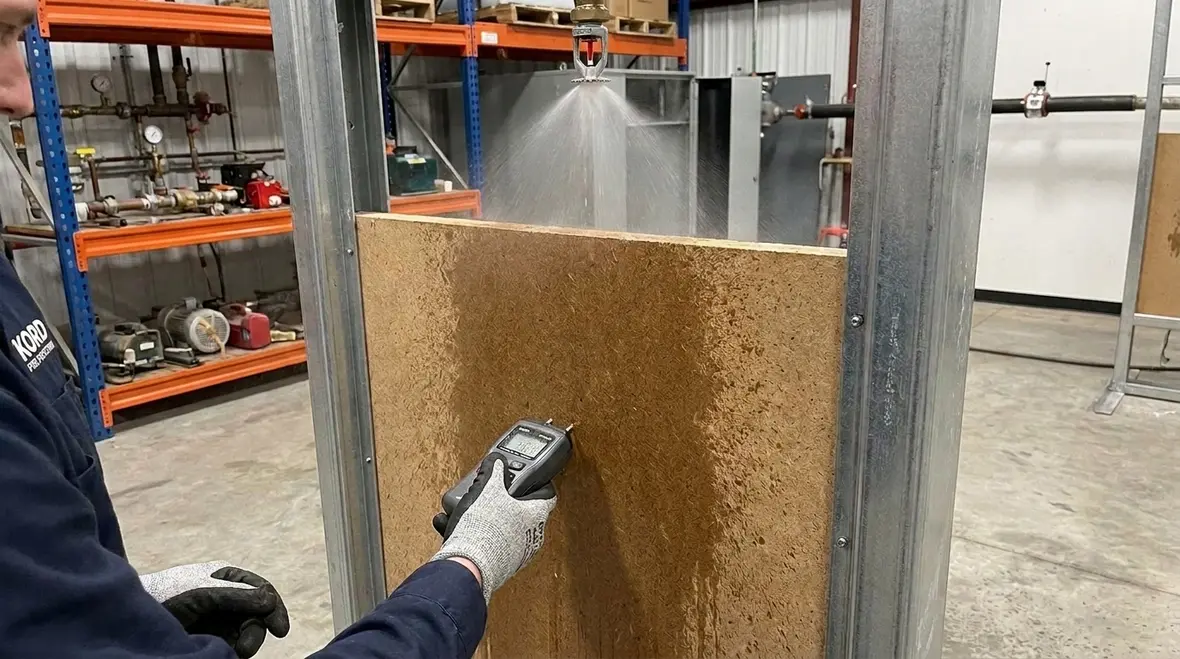
NFPA 18 Section 6.4: Wood Fiberboard Penetration Test Explained
Quick Answer
The NFPA 18 section 6.4 wood fiberboard penetration test method evaluates how fire extinguishing agents and their wetting action affect the ability of a wood fiberboard to prevent penetration. The test helps confirm that sprinkler-delivered water can wet and saturate concealed or protected spaces when needed.
If your team is reviewing how ongoing inspections support real-world suppression performance, it is also worth looking at fire sprinkler testing in Australia as a practical companion to penetration-focused verification.
Why Section 6.4 Matters in Commercial Fire Safety
NFPA 18 focuses on water misting, wetting, and fire extinguishing performance in storage and commodity protection applications. Section 6.4 centers on the wood fiberboard penetration test method to verify that the system can deliver water to surfaces and into concealed arrangements where fire growth can be aggressive. In practice, the test supports two recurring compliance realities in commercial, industrial, and retail facilities: (1) maintaining consistent extinguishing performance across reconfigurations and (2) proving that wetting and penetration are not reduced by installation details, water quality, or maintenance drift.
Facilities often assume that “flow equals performance.” Section 6.4 challenges that assumption by validating how water or water with approved wetting agents migrates through and across porous materials that represent real world concealed spaces.
What the NFPA 18 Section 6.4 Wood Fiberboard Penetration Test Method Actually Measures
The NFPA 18 section 6.4 wood fiberboard penetration test method measures the ability of water, or water with wetting agents where applicable, to penetrate a defined wood fiberboard construction under specified conditions. The underlying compliance objective is straightforward: the system must produce wetting and penetration characteristics that align with design intent, so water reaches where fire suppression depends on surface wetting and migration.
From an operational standpoint, the test verifies more than one variable at once. Penetration performance can change due to water chemistry, wetting agent concentration, nozzle characteristics, spray pattern changes after maintenance, and even how piping and fittings age over time. That means two “equivalent” sprinkler layouts can behave differently when tested through a porous barrier.
Key performance indicators facilities track
- Wetting behavior across the fiberboard surface.
- Penetration depth or degree of wetting within the fiberboard material, as specified by the method.
- Repeatability across test runs, because sporadic results typically indicate inconsistent discharge or incorrect chemical dosing.
- Sensitivity to system variables such as flow rate stability and spray characteristics.
Common Setup Components and Equipment Used in the Test
Successful execution of the NFPA 18 section 6.4 wood fiberboard penetration test method depends on controlling the test environment and the delivery conditions. Commercial sites often struggle here because the test can be treated like a “one time check,” when it actually requires disciplined setup and documentation.
Typical elements that must be controlled
- Water delivery system interface to match design discharge conditions.
- Nozzle or spray device configuration consistent with the test method requirements.
- Wood fiberboard specimen prepared to the defined dimensions and conditioning requirements.
- Wetting agent application controls if used, including concentration verification and dosing stability.
- Measurement and inspection tools to evaluate wetting and penetration outcomes as required by the method.
Where facilities apply approved wetting agents, concentration control becomes a primary compliance lever. If the wetting agent dose drifts due to inventory aging, mixing errors, or equipment calibration, penetration results can deteriorate even when hydraulic pressure and flow rate remain within expected ranges. For wetting agent context, see Kord Fire Protection’s overview: NFPA 18 overview: wetting agents and performance considerations.
Step-by-Step Test Flow: How the Method Is Run
While exact procedural details belong to the formal standard text, the operational flow in the field generally follows a controlled sequence designed to isolate penetration behavior and prevent “false pass” outcomes.
1) Pre test verification
- Confirm test area safety controls and access permissions for personnel.
- Verify the water supply conditions, including pressure stability and flow consistency.
- Confirm whether wetting agent is required and, if applicable, verify dosing equipment performance.
- Document configuration details so the test can be reproduced for retesting after repairs or modifications.
2) Specimen preparation and conditioning
The wood fiberboard specimen must meet the defined material characteristics and conditioning state required by the NFPA 18 section 6.4 wood fiberboard penetration test method. Facilities frequently introduce error here by using substitute materials, failing to control storage conditions, or handling the specimen in a way that changes surface moisture or contamination.
3) Discharge and exposure phase
The system discharges water under the test method parameters. The goal is to apply the spray interaction long enough to reveal whether the system wetting action supports penetration into the porous material.
In commercial settings, variations in spray pattern delivery often originate from partially blocked nozzles, incorrect orientation during maintenance, or changes to piping accessories. Those issues can produce localized wetting that looks acceptable at a glance but fails penetration outcomes.
4) Evaluation of penetration results
After exposure, the test result evaluation focuses on the degree and distribution of wetting and penetration through the specimen as specified by the method. The evaluation should be performed consistently to avoid subjectivity, and results should be recorded in a form that supports later audit and maintenance planning.
5) Corrective actions and retesting
If results fall short, field teams typically address likely drivers before repeating the test. Common corrective actions include nozzle cleaning or replacement, wetting agent dosing verification, pump and pressure regulator checks, and inspection of strainers and filters.
For facilities needing broader fire sprinkler system servicing support in line with Australian compliance practices, Kord Fire Protection offers commercial service coverage: Australian fire sprinkler services.
Compliance Challenges and Failure Points Seen During Real Projects
Companies often implement NFPA 18 workflows well on design intent, then see unexpected performance drift after installation, remodeling, or seasonal maintenance cycles. Section 6.4 is valuable because it reveals the performance gap before a real incident. The following failure points commonly appear during compliance audits and field retesting.
1) Wetting agent concentration drift
If a wetting agent is used, concentration errors can occur through improper mixing, dilution, or equipment calibration drift. The system can still produce correct flow and pressure while the penetration performance degrades. This is one reason Kord Fire emphasizes wetting agent discipline and maintenance planning as an ongoing compliance pathway: learn how wetting agents influence penetration in NFPA 18.
2) Spray pattern changes after maintenance
Nozzles and spray devices can alter discharge characteristics due to incorrect reassembly, partial clogging, or wear. Even small pattern deviations can reduce effective surface wetting and penetration through porous materials. The commercial takeaway is to treat spray devices as precision components, not routine parts.
3) Water supply instability
Pressure fluctuations and inconsistent flow can affect droplet formation and wetting coverage. Where systems rely on fire pumps, pump performance, controls, and maintenance history matter. Fire pump fundamentals and reliability considerations are commonly discussed in industry resources such as this fire pump power supply reliability guide.
4) Specimen handling variability
Using inconsistent fiberboard types, improper conditioning, or inconsistent placement relative to the discharge path can produce misleading results. A controlled test kit with documented specimen handling procedures reduces this risk.
5) Documentation gaps that block compliance
Even when performance is adequate, incomplete test documentation slows approval. Commercial facilities benefit from test reports that capture configuration details, dosing evidence, and result evaluation method, not just pass or fail.
How Kord Fire Protection Supports Ongoing NFPA 18 Compliance
NFPA 18 performance is not a “set it and forget it” compliance item. Penetration performance can shift after repairs, storage rack changes, alterations in discharge arrangements, or maintenance driven by budget cycles. Kord Fire Protection positions test readiness as a managed service, supporting facilities through periodic verification, maintenance planning, and documentation quality.
Where wetting agents are part of the design, Kord Fire focuses on the operational controls that protect concentration and delivery reliability, aligning the actual installed performance with the NFPA 18 section 6.4 wood fiberboard penetration test method intent. This helps commercial operators reduce compliance surprises and maintain defensible records across inspection cycles.
Frequently Asked Questions
Call to Action
If your facility needs defensible NFPA 18 compliance support, Kord Fire Protection can help you plan, execute, and document the wood fiberboard penetration test workflow while addressing common penetration performance failure points. Contact Kord Fire Protection to discuss your current system configuration, maintenance history, and testing schedule so your next verification aligns with the NFPA 18 section 6.4 wood fiberboard penetration test method intent.

Join Our Newsletter!
Get the latest fire safety tips delivered straight to your inbox From our Newsletter.



