
Rancho Cucamonga Fire Code Requirements Guide
Rancho Cucamonga Fire Codes Explained
Within the first steps of opening a business, renovating a property, or managing a facility in Southern California, owners quickly encounter the rancho cucamonga fire code requirements. These local regulations shape everything from sprinkler placement to alarm monitoring. They are not random rules pulled from thin air. Rather, they are carefully built layers of state law, local amendments, and safety standards designed to protect lives and property. Throughout this guide, Kord Fire Protection technicians explain how these codes work, why they matter, and how to stay compliant without losing sleep or a sense of humor.
Because fire safety is serious business, the information below dives deep. Yet it does so with clarity, steady pacing, and the occasional wink. After all, even fire code discussions deserve a little personality.
Understanding Rancho Cucamonga Fire Code Requirements for Property Owners
To begin, property owners must understand that local fire regulations stem from the California Fire Code, which itself aligns with the International Fire Code. However, the city adopts amendments that address local risks such as high winds, hillside construction, and commercial density. Therefore, compliance requires attention to both statewide standards and city specific additions.
Kord Fire Protection technicians often explain it like this: the state writes the script, but Rancho Cucamonga adds a few important plot twists. Consequently, assuming that compliance in another city guarantees approval here can lead to failed inspections.
These codes typically regulate:
- Fire sprinkler system design and installation
- Fire alarm system requirements and monitoring
- Fire department access and hydrant placement
- Hazardous material storage limits
- Emergency lighting and exit signage
- Annual inspection and testing schedules
Moreover, commercial properties face stricter standards than residential homes. Restaurants, warehouses, medical offices, and industrial facilities each fall under distinct occupancy classifications. As a result, the specific safety measures vary based on how the building functions.
For deeper context on how national standards shape local codes, property owners often review foundational resources like the NFPA 72 fire alarm standard overview, which underpins many alarm and signaling expectations that cities adopt and amend for their own use. Understanding NFPA 72 requirements helps clarify why certain Rancho Cucamonga alarm provisions look the way they do.
How Building Type Shapes Compliance
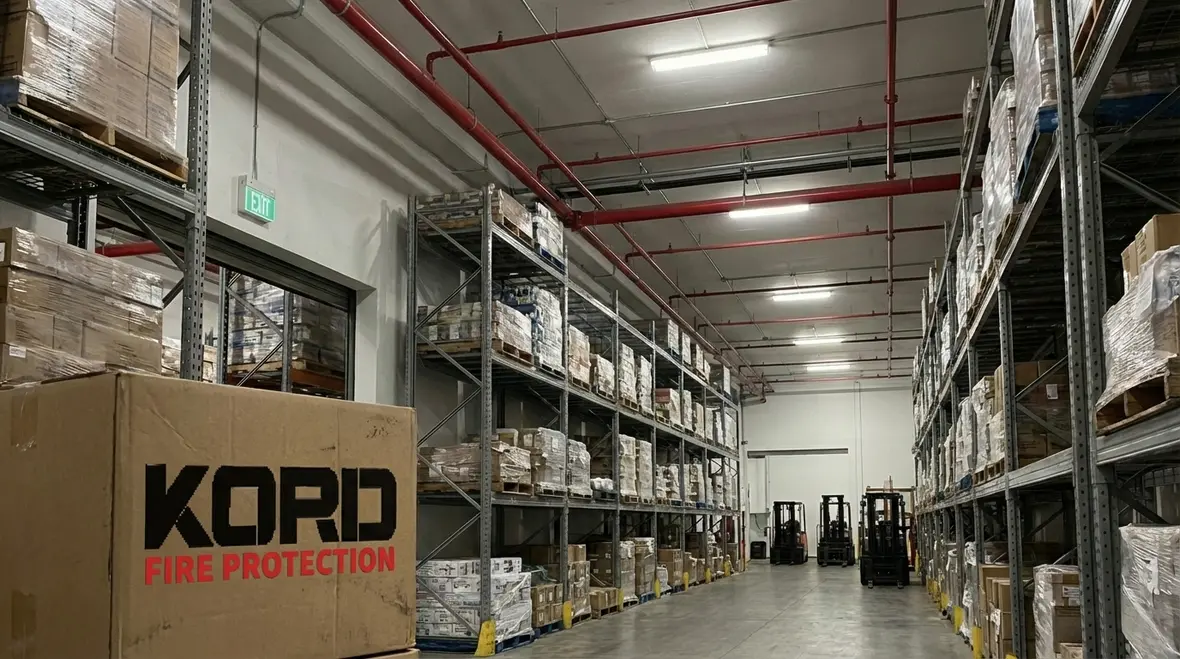
Different occupancies trigger different safety expectations. For example, a warehouse storing combustible goods presents different risks than a quiet office suite with ergonomic chairs and coffee mugs. Therefore, the city evaluates fire suppression needs according to fuel load, occupant count, and building layout.
Kord Fire Protection technicians routinely guide owners through this classification process. First, they review square footage and usage. Next, they determine whether automatic sprinklers are mandatory. In many commercial structures, sprinklers are not optional. Instead, they are required once a building exceeds certain size thresholds or houses higher risk operations.
Additionally, fire alarm systems must meet monitoring standards. In most commercial settings, alarms must connect to a central monitoring station. That way, if smoke appears at 2 a.m., someone other than the night janitor knows about it.
Furthermore, mixed use buildings introduce added complexity. A retail store with upstairs residential units, for instance, often requires system separation and enhanced egress planning. Consequently, early coordination during design saves time and money later.
What Fire Inspectors Look For During an Inspection
Yes, inspections can feel intimidating. However, they follow a clear checklist. Inspectors focus on life safety systems, documentation, and visible hazards. In other words, they are not hunting for trivial violations. They are verifying that safety systems perform as designed.
During inspections, officials commonly review:
- Current inspection tags on fire extinguishers
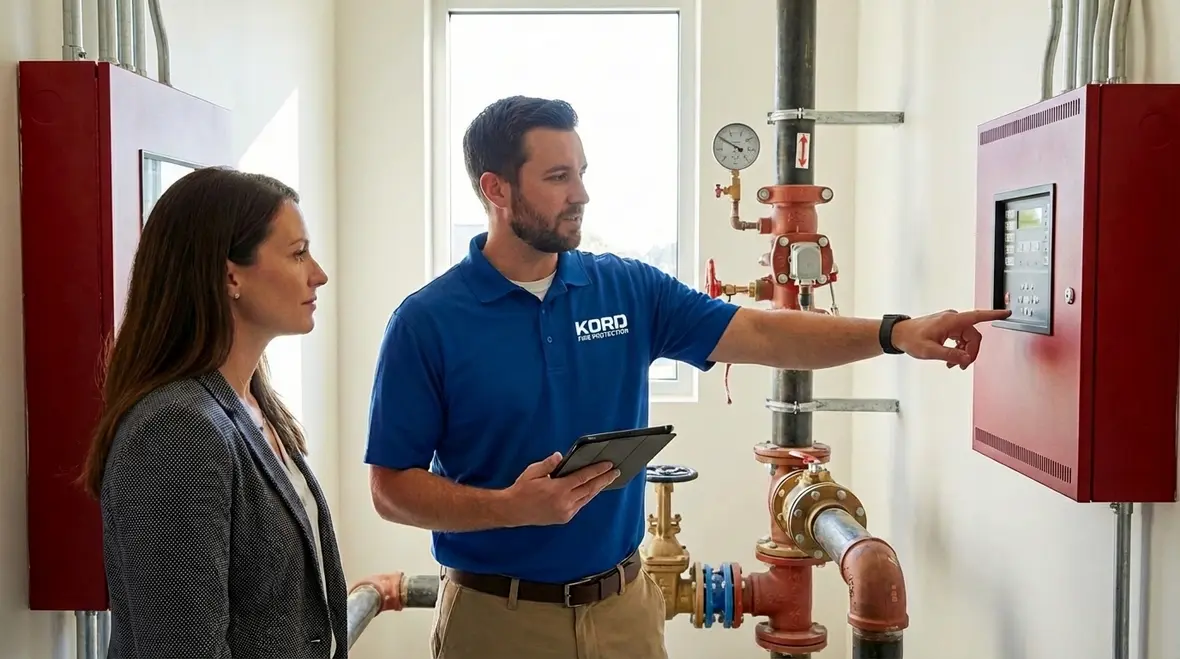
- Sprinkler riser condition and valve accessibility
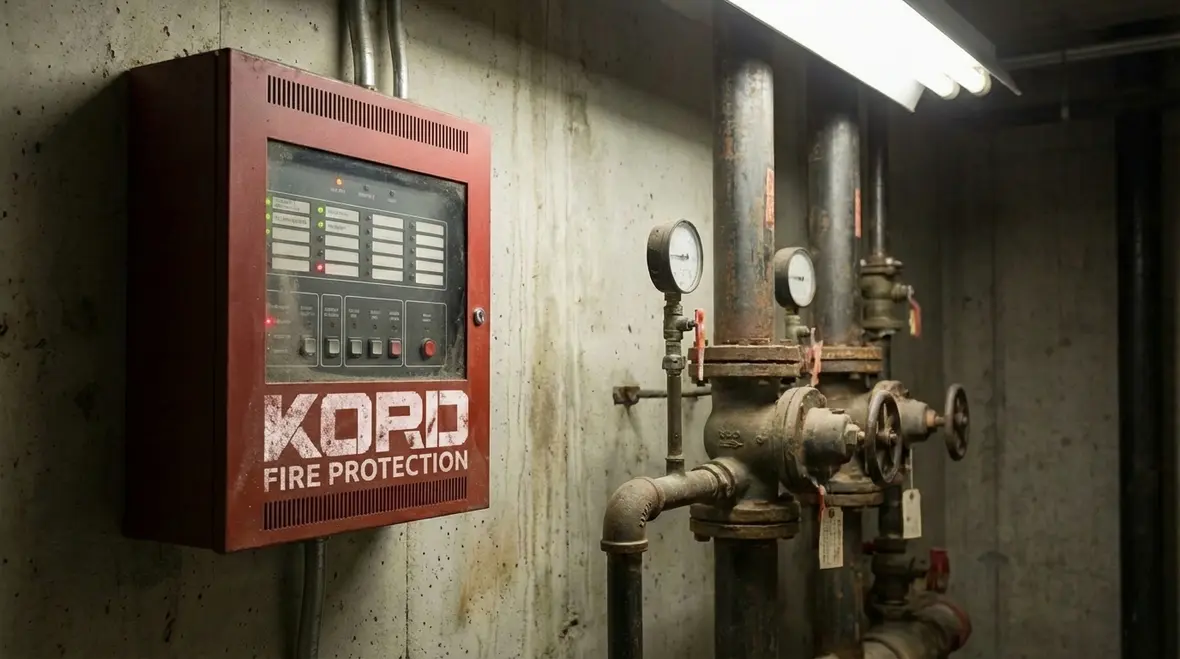
- Fire alarm panel functionality and trouble signals
- Clear exit pathways and illuminated exit signs
- Proper storage clearance below sprinkler heads
Storage clearance alone causes many citations. Items must remain at least 18 inches below sprinkler deflectors. Although that might seem minor, blocking sprinkler spray patterns can reduce system effectiveness. As Kord Fire Protection technicians often say, sprinklers cannot do their job if someone stacks inventory like a game of warehouse Tetris.
Additionally, inspectors review documentation. Annual fire sprinkler tests, alarm inspections, and backflow certifications must be current. Therefore, maintaining organized records proves just as important as maintaining equipment.
Sprinkler and Alarm Systems Under Rancho Cucamonga Fire Code Requirements
Automatic fire sprinklers serve as the backbone of commercial fire protection. Under rancho cucamonga fire code requirements, many new commercial buildings must install full coverage sprinkler systems. Moreover, significant tenant improvements can trigger retrofitting obligations.
Sprinkler compliance involves more than installation. It requires hydraulic calculations, proper pipe sizing, seismic bracing, and approved backflow prevention. Furthermore, systems must undergo acceptance testing before occupancy approval. Skipping steps is not an option.
Fire alarm systems follow similar rigor. Plans require review before installation. Devices such as smoke detectors, pull stations, horn strobes, and control panels must meet spacing and audibility standards. In addition, monitoring contracts must remain active.
Kord Fire Protection technicians frequently explain that alarms and sprinklers work as a team. One detects and alerts. The other suppresses. Together, they create a layered defense strategy. Separately, they resemble a buddy cop movie where one partner forgot to show up.
Owners looking for more background on sprinkler and fire pump performance standards often review resources such as Kord’s NFPA 20 fire pump design and compliance overview, which explains how pumps, water supply, and testing integrate into a code-compliant fire protection strategy.
Plan Checks, Permits, and Avoiding Delays
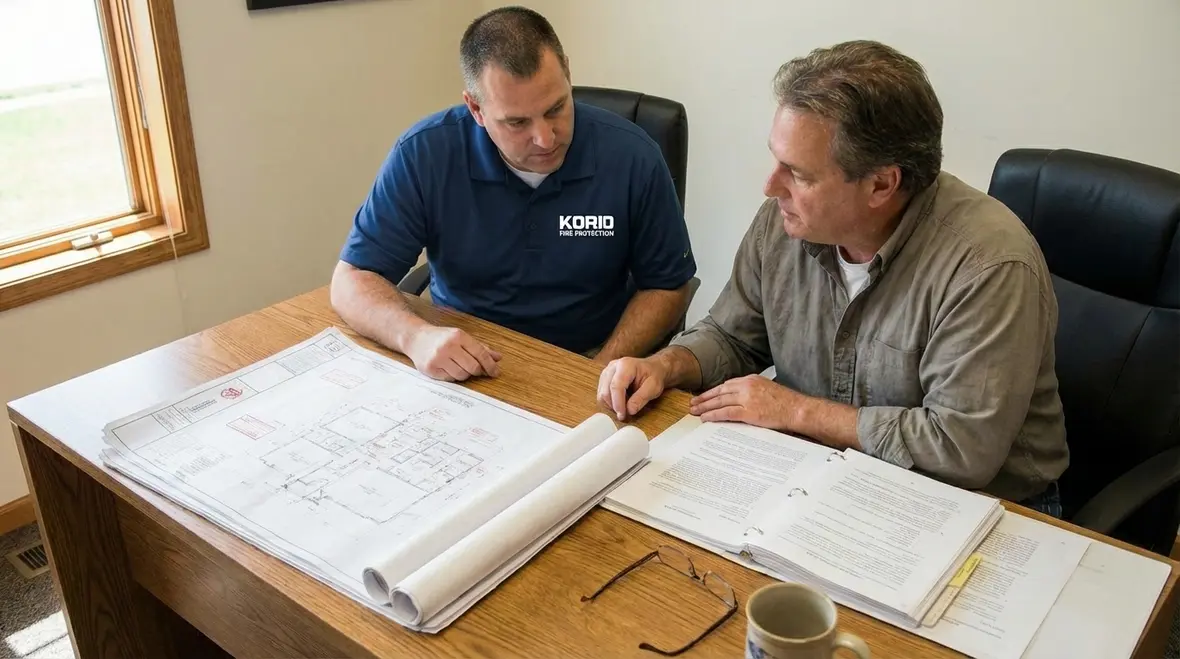
Before construction begins, most fire protection systems require plan review approval. Contractors submit detailed drawings that outline pipe layouts, device locations, and hydraulic data. The fire prevention bureau then reviews these documents for compliance with local standards.
Because the review process can take time, early submission helps prevent costly delays. Additionally, incomplete applications often stall progress. Therefore, experienced professionals who understand local expectations can streamline approvals.
Kord Fire Protection technicians emphasize proactive coordination. They communicate with architects, general contractors, and city officials. As a result, potential conflicts surface early rather than during final inspection week when stress levels already run high.
Once approved, permits authorize installation. However, inspections occur at various stages. Rough inspections verify piping before walls close. Final inspections confirm functionality. Only after passing these steps can occupancy proceed.
Common Compliance Pitfalls and Practical Solutions
Even well meaning owners sometimes stumble. Fortunately, most violations remain preventable with proper guidance. Below is a dual column style breakdown of frequent issues and practical fixes explained by Kord Fire Protection technicians.
- Common Issue: Blocked electrical panels
Practical Solution: Maintain 36 inches of clear space for safe access - Common Issue: Expired fire extinguisher tags
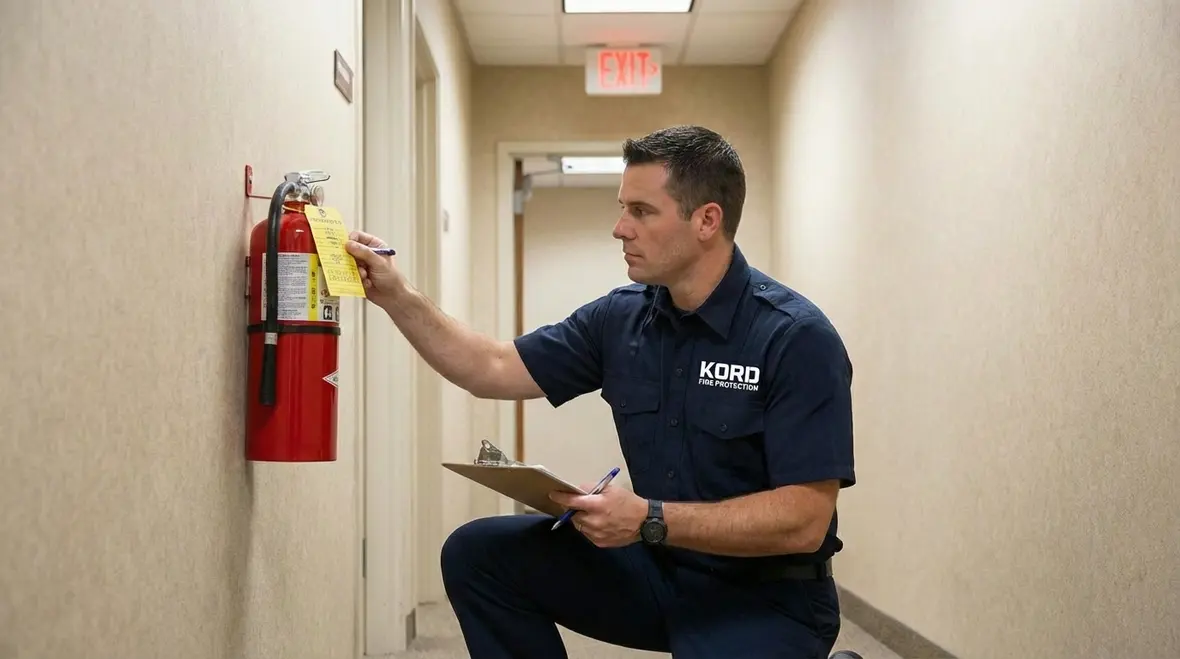
Practical Solution: Schedule annual servicing and mark calendars - Common Issue: Painted or damaged sprinkler heads
Practical Solution: Replace immediately, never paint for cosmetic reasons
- Common Issue: Disabled alarm trouble signals
Practical Solution: Address faults promptly and maintain monitoring - Common Issue: Over stacked storage near ceilings
Practical Solution: Enforce vertical clearance policies in stock rooms
Although each item seems small, together they shape overall compliance. Therefore, routine internal walkthroughs help catch problems before inspectors do. Think of it as brushing teeth before the dentist appointment. It simply makes the experience smoother.
How to Stay Continuously Compliant Without Stress
Fire safety compliance should not feel like a once a year panic attack. Instead, it works best as an ongoing process. Establishing routine inspection schedules, maintaining service contracts, and training staff on basic fire safety protocols create stability.
For example, assigning a staff member to perform monthly visual checks on extinguishers and exit signs builds accountability. Additionally, keeping digital copies of inspection reports ensures quick access during audits. Because inspectors appreciate organized documentation, preparedness often leads to efficient visits.
Kord Fire Protection technicians also recommend annual reviews of occupancy changes. If a business shifts operations, adds equipment, or increases storage, those changes may affect compliance. Consequently, periodic evaluations help ensure that evolving operations still align with rancho cucamonga fire code requirements.
Ultimately, compliance protects more than property. It safeguards employees, customers, and reputations. And while paperwork may not feel heroic, preventing a fire emergency certainly qualifies.
FAQ
Next Steps: Partnering With a Fire Protection Expert
Fire safety compliance in Rancho Cucamonga demands attention, planning, and steady execution. Yet it does not have to feel overwhelming. With guidance from Kord Fire Protection technicians, property owners gain clarity, avoid costly missteps, and meet every expectation with confidence. If a building requires evaluation, upgrades, or routine inspections, now is the time to act. Connect with professionals who understand the codes, speak the language of inspectors, and keep safety steady and strong.
Why work with a local fire protection team?
Local specialists understand how Rancho Cucamonga interprets statewide codes, which submittal details matter most during plan review, and how to prepare a site so inspections run smoothly. That experience shortens timelines and reduces surprises.
Schedule fire protection service today
If your facility needs design support, tenant improvement coordination, or routine inspection and testing, schedule service with the Kord team. Their technicians handle sprinklers, alarms, hydrants, fire pumps, and more across Southern California. Start with a quick conversation and build a compliance plan that fits your building.
Explore how full-service support works by reviewing Kord’s regional offerings, such as their comprehensive Downey fire protection services page, which outlines the same types of inspections, testing, and system care available to businesses throughout the area.
Know Your Weapon Before You Fight the Flame
Kord Fire Protection is your go-to when it comes to all things fire protection. For over 20 years, we’ve been serving Southern California with the quality service and equipment to keep your home or business safe at all times. Our competitive prices reflect our unwavering commitment to protecting what matters most in the event of a fire emergency. Give us a call, send an email, or use that form!

Join Our Newsletter!
Get the latest fire safety tips delivered straight to your inbox From our Newsletter.


