
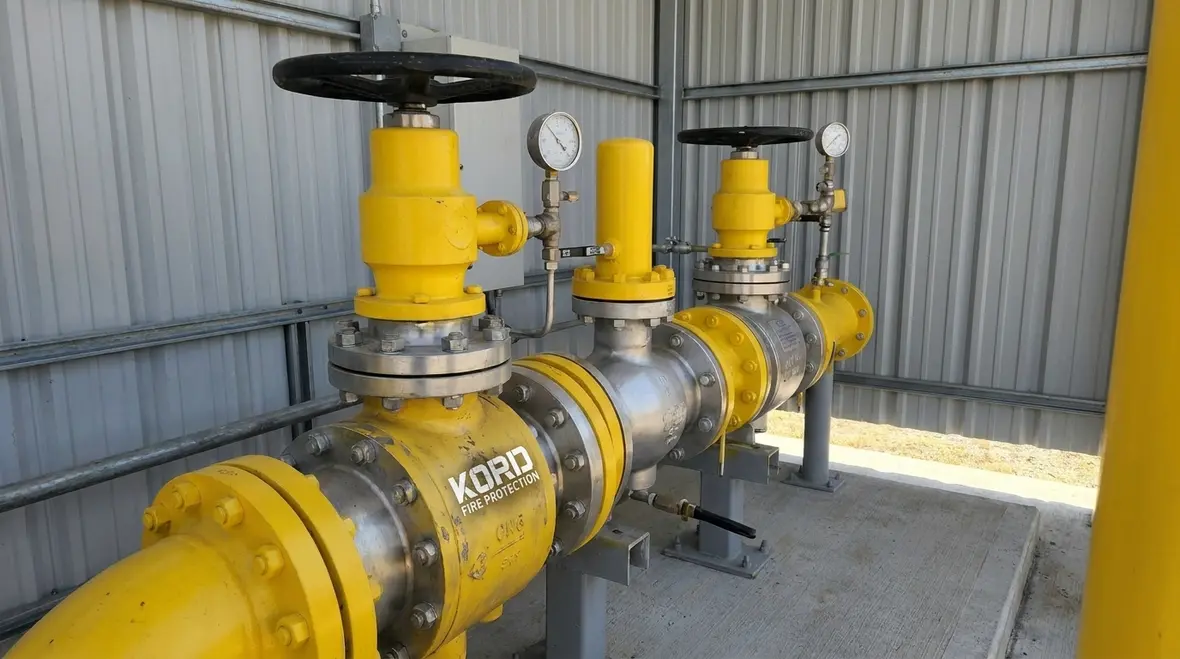
NFPA 52 Section 8.8: Valves and Related Components for CNG Systems
Quick Answer: NFPA 52 Section 8.8 sets the performance, construction, marking, and installation expectations for CNG system valves and related components. Compliance centers on proper pressure service ratings, leak tightness, compatibility, accessibility, and inspection readiness to support safe operation across commercial fueling and industrial use.
For facilities building out a stronger compliance path across multiple protection systems, fire protection services in Southern California can help connect inspections, repairs, documentation, and scheduling into one practical service plan.
Why NFPA 52 CNG valves related components requirements matter in real facilities
Commercial, industrial, and retail CNG facilities depend on valves to control fuel flow, isolate hazards, and maintain system integrity during normal operation and abnormal conditions. When valves and related components do not meet the NFPA 52 CNG valves related components requirements, facilities increase risk of uncontrolled releases, difficult emergency isolation, and noncompliant maintenance outcomes. These gaps typically show up during internal audits, third party inspection, or incident investigations where the documentation trail, test history, and component condition cannot support safe operation.
Practical compliance starts with treating Section 8.8 as more than a purchasing checklist. It requires verifying suitability for pressure service, intended gas environment, connection type, control function, and maintainability, then sustaining that compliance through a structured inspection and maintenance program.
What Section 8.8 covers: valves and related components by function
NFPA 52 Section 8.8 focuses on the components that make a CNG system operable and controllable. While exact component naming can vary by system design, the practical intent remains consistent: valves and adjacent parts must perform reliably in gaseous natural gas service at the pressures used, with construction and installation methods that reduce leak potential and support safe isolation.
1) Shutoff and isolation valves
Isolation valves support safe maintenance and emergency response by stopping fuel flow to defined sections. Facilities commonly struggle when shutoff valves are installed in locations that reduce access for emergency operation, or when valve assemblies are modified without maintaining rated materials, thread integrity, or torque procedures.
2) Check and backflow control components
Check valves and backflow prevention elements protect against unwanted reverse flow that can affect downstream equipment, regulators, and dispensers. Failures often stem from contamination, improper orientation, or inadequate filtration and housekeeping, leading to sticking, slow response, or internal leakage.
3) Regulating and pressure control valve assemblies
Pressure regulating valves maintain stable operating conditions. In the field, performance problems can trace back to worn internals, moisture contamination, thread seal degradation, or mismatched pressure ratings. These issues can cause pressure instability, nuisance trips, or regulator lockup.
4) Valves integrated into hoses, manifolds, dispensers, and piping systems
In commercial fueling installations, valve assemblies exist at multiple interfaces: at compressor systems, within manifolds, and at dispenser or hose connections. Compliance depends on compatibility across the chain. A valve rated correctly for pressure service can still fail compliance if the associated fittings, connectors, or installation method do not align with NFPA 52 expectations.
Core compliance requirements: materials, rating, leak tightness, and installation
Meeting NFPA 52 CNG valves related components requirements relies on verifying that each component is suitable for the system’s pressures, temperature range, and gaseous natural gas environment, and that installed configurations support leak tightness.
Component pressure ratings and construction suitability
Valves must be designed for the service conditions present in the CNG system. Common compliance failures include installing components with the correct physical size but incorrect pressure class, or using components intended for different gas types or unrelated pressure systems. Commercial facilities also face increased risk when procurement does not include full submittal verification, including pressure class documentation and material compatibility.
Connection integrity and sealing method control
Leak tightness often depends on how connections are assembled. Facilities should confirm that the sealing method used is appropriate for CNG service and consistent with the valve manufacturer instructions. Repeated problems arise from mixed connection types, improper torque, damaged threads, or reused sealing elements beyond their intended service life.
Marking, identification, and traceability
Valves must be identifiable for inspection and maintenance. Traceability matters for both compliance and operational continuity. When facilities cannot confirm serial numbers, valve specifications, or replacement history, they typically fail to demonstrate sustained compliance during audits.
Accessibility and operational readiness
Section 8.8 expectations translate into a practical requirement: staff must access valves safely and quickly. Valves that sit behind equipment, inside inaccessible enclosures, or in locations blocked by storage fail the intent even if the valve itself is properly rated. Commercial sites should evaluate “time to isolate” as a safety performance metric.
Inspection, testing, and maintenance: how compliance gets sustained
Valves and related components experience wear even under normal conditions. Sustained compliance requires documented inspection frequencies, defined test methods, and maintenance practices that prevent reoccurring leak sources. Kord Fire Protection supports commercial facilities by pairing code-aware program development with field execution that helps maintain audit-ready documentation.
Routine inspection and condition-based checks
- Visual inspection for physical damage, corrosion, misalignment, loose fasteners, and indicator issues on valve position devices.
- Operational checks to verify smooth actuation and confirm the valve achieves full open and closed positions without binding.
- Leak detection using appropriate methods and trained procedures, with attention to connection interfaces and packing areas where leakage typically starts.
Functional testing and isolation verification
Facilities should verify that isolation valves maintain their intended performance. Common failure points include valves that become partially stuck due to contamination, seal degradation, or incomplete maintenance. A robust program verifies isolation capability as an operational outcome, not only as a paper requirement.
Maintenance practices that prevent repeat failures
- Use manufacturer approved parts and follow reassembly procedures, including torque and alignment requirements.
- Control contamination with proper maintenance of strainers and upstream filtering practices.
- Document every intervention with replacement part identifiers, test results, and before and after condition notes.
How commercial standards amplify risk if maintenance slips
In retail and fleet fueling operations, valve assemblies may cycle frequently. That cycling increases the importance of maintenance intervals, storage practices for spare components, and staff training on correct isolation procedures. In industrial environments, shutdown frequency and harsh surroundings can accelerate corrosion and packing wear. In both settings, noncompliance often appears during inspections after a maintenance backlog or staff turnover.
Common field failure points that trigger compliance gaps
Even well-designed systems can drift out of compliance due to predictable operational and maintenance issues. The following problems frequently emerge in inspections and troubleshooting for CNG valve systems.
1) Connection leaks at fittings and threaded interfaces
Leaks commonly appear after valve replacement or disturbance. They can originate from damaged threads, improper sealing compounds, missing gaskets, or incorrect torque practices. A clear maintenance procedure and torque verification reduce this risk significantly.
2) Valve sticking or slow actuation
Sticking is often tied to contamination, scale formation, or packing degradation. Facilities that lack a contamination control program and do not conduct periodic functional checks frequently experience inconsistent valve performance during critical isolation events.
3) Wrong component substitution
Procurement shortcuts and untracked substitutions lead to incorrect pressure class ratings or incompatible materials. Traceability and submittal review prevent this failure mode.
4) Inaccessibility during emergencies
Valves buried behind temporary barriers or placed behind locked cabinets create unacceptable delays during isolation. These issues often do not show on design documents, so inspections must confirm actual access in day-to-day conditions.
Get expert support for ongoing compliance with Kord Fire Protection
NFPA 52 compliance for valve systems requires technical accuracy, consistent execution, and audit-ready records. Kord Fire Protection helps commercial facilities manage CNG valve related component compliance through inspection planning, maintenance support, and documentation practices aligned with real-world site conditions.
For additional guidance on fire safety planning and compliance support, explore Kord Fire Protection.
Frequently Asked Questions
Next step: schedule an NFPA 52-focused valve compliance review
If your facility operates CNG equipment, a valve and related components compliance review helps confirm pressure suitability, installation integrity, and inspection readiness before issues become costly downtime or audit findings. Contact Kord Fire Protection to assess your current program, identify high risk valve locations and connection interfaces, and align maintenance documentation with NFPA expectations.

Join Our Newsletter!
Get the latest fire safety tips delivered straight to your inbox From our Newsletter.


