
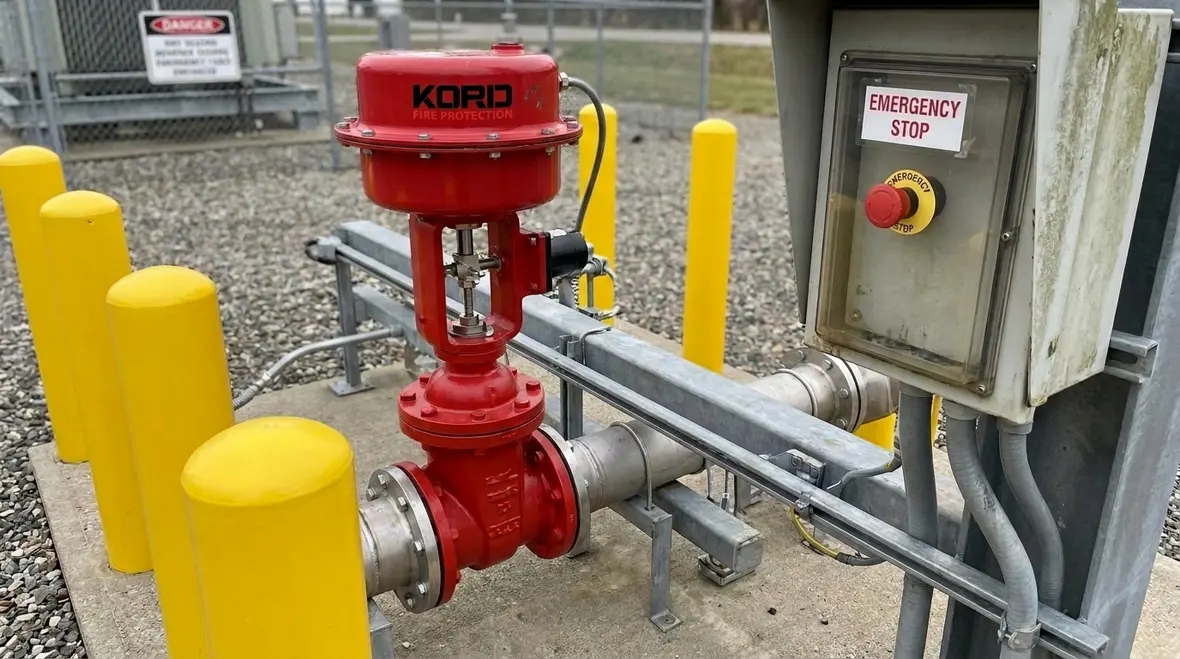
NFPA 52 Section 6.3: Emergency Shutdown Systems for CNG Facilities
Quick Answer
NFPA 52 Section 6.3 requires CNG facilities to use emergency shutdown systems designed to stop gas flow quickly and safely. These systems must include approved actuators, control logic, clear shutdown design criteria, and ongoing inspection and maintenance to ensure reliability during an emergency.
For facilities building out a stronger gas safety program, it also helps to review broader gas safety and fire protection systems so the emergency shutdown strategy fits naturally into the rest of the site’s protection approach.
What does NFPA 52 Section 6.3 require for emergency shutdown?
Emergency shutdown systems exist to limit the release of natural gas from CNG equipment during abnormal conditions. In practice, NFPA 52 CNG emergency shutdown system requirements drive a facility to implement shutdown components that are dependable, correctly arranged, and actively maintained so they perform when needed most. Compliance typically centers on the shutdown philosophy, control arrangement, actuation methods, and verification procedures that confirm the system works after installation and throughout its service life.
Commercial operators often underestimate how quickly operational changes can erode emergency performance. Routine maintenance, valve wear, actuator drift, wiring damage, sensor calibration issues, and improper testing intervals can all create failure points that only appear during a real emergency. A compliant program treats emergency shutdown as a life safety system that must remain functional under both normal and off normal conditions.
Emergency shutdown system design: how shutdown actually happens
Section 6.3 focuses on ensuring the shutdown system can reliably move the facility from an operating state to a safe shutdown state. That requires a clear operational chain: detection and/or manual initiation, signal processing, actuator operation, and final gas flow termination at the appropriate locations.
Actuation concept and endpoint definition
Facilities must define what constitutes a successful emergency shutdown. Typically, that endpoint means stopping fuel supply or isolating the gas source so downstream components are not fed with additional gas during the incident. The shutdown arrangement must support the physical layout of the CNG station or facility, including equipment zones, manifold configuration, and the location of isolation valves.
Control logic, fail safe behavior, and reset discipline
A common compliance challenge involves control logic and reset behavior. The shutdown system needs fail safe operation, meaning loss of power or a fault does not leave the system in an unsafe or indeterminate state. Reset discipline also matters. Operators must avoid designs that allow frequent or uncontrolled rearming after an event, which can compromise incident response and allow repeated releases if the root cause remains uncorrected.
From a commissioning perspective, the station should demonstrate that shutdown can be initiated from the required places, that signals drive the expected outputs, and that the system returns only to an approved safe condition after verification and authorized reset.
Components that must be reliable: valves, actuators, wiring, and controls
Emergency shutdown performance depends on mechanical and electrical integrity. The shutdown system includes more than one device. Compliance requires the entire chain to function as designed, including the components most likely to experience degradation in commercial operations.
Emergency shutoff valves and isolation points
CNG shutdown typically relies on valves that rapidly isolate gas flow. Valves must be sized and configured for the system they protect, and their operation must be consistent under emergency conditions. Common failure modes include sticking valves due to contamination, loss of actuator force, slow travel time caused by mechanical wear, and incorrect installation that affects travel limits.
Actuators and release mechanisms
Actuators convert control signals into valve movement. Facilities frequently struggle with actuator selection and installation practices, including improper wiring, incorrect voltage or signal type, and inadequate environmental protection. In outdoor or harsh environments, actuator seals and electrical enclosures require strict attention. Operators should verify that the system remains within the manufacturer’s environmental ratings and that protective components remain intact.
Detection inputs, manual initiation, and annunciation
Even when the facility uses detection, manual emergency initiation is often expected to support response during device malfunction, communication faults, or unexpected incident scenarios. Annunciation and visibility during an emergency matter to the response team. A compliant system provides clear indication that a shutdown has occurred and supports safe evacuation and incident command decisions.
Inspection, testing, and maintenance: where most compliance gaps occur
NFPA 52 emergency shutdown systems must remain dependable after installation. The compliance work is not a one time project. It is a continuous program that confirms proper function over time and accounts for the way CNG facilities actually operate.
Operational checks versus full functional tests
Many facilities confuse “status checks” with “functional verification.” A status light showing a command input may not confirm the actuator moved or the valve traveled to the correct position. Comprehensive testing validates the full shutdown chain, including detection or manual initiation, control output logic, actuator operation, valve travel, and confirmation that gas flow termination occurred as designed.
Environmental and mechanical degradation risks
Commercial facilities expose shutdown components to vibration, moisture, temperature swings, and contamination. These factors can degrade wiring terminations, corrode enclosures, and reduce actuator reliability. Maintenance programs must include inspection of electrical connections, enclosure integrity, valve operation history, and evidence of mechanical sticking.
Records, frequency, and documentation discipline
Compliance requires traceability. A robust program includes test procedures, results, observed response times where applicable, corrective actions, and re-verification after repairs. In practice, the absence of documentation often becomes the audit driver, even when the equipment works. Kord Fire Protection supports operators with structured inspection and maintenance workflows that align documentation to the operational realities of commercial, industrial, and retail facilities.
Teams that want to tighten their documentation practices can also look at related guidance on inspection, testing, and maintenance schedules for another practical example of how code expectations become repeatable field workflows.
Common failure points in CNG emergency shutdown systems
Understanding the typical ways shutdown systems fail helps facilities prevent problems before they affect emergency performance.
1. Actuation delays and incomplete valve travel
Valves may receive a command but fail to reach their full shutdown position due to mechanical wear or binding. Facilities should treat travel time and endpoint confirmation as critical verification items during testing.
2. Wiring and control circuit issues
Corrosion at terminations, damaged cable jackets, loose connectors, and incorrect polarity or terminal mapping can cause intermittent failures. These issues often appear after maintenance activity or station modifications. Pre startup and post modification testing should validate the shutdown chain.
3. Faulty reset behavior
Resetting too quickly, resetting without investigation, or resetting in a way that bypasses safeguards can turn a safe shutdown into a repeat incident. Emergency shutdown systems should enforce disciplined reset conditions that match the facility’s emergency response plan.
4. Poor coordination after station upgrades
Commercial sites frequently add dispensers, modify piping, or change equipment vendors. Without a documented engineering review and re commissioning, the emergency shutdown arrangement can become mismatched to the new configuration. Coordinated compliance updates are essential after any change.
How Kord Fire Protection supports ongoing compliance
Meeting NFPA requirements for CNG emergency shutdown systems demands more than knowledge of code language. It requires operational testing, practical documentation, and maintenance planning that reduces the probability of a hidden failure. Kord Fire Protection provides a commercial-focused approach to inspection, testing, and corrective action management for gas safety systems.
For operators planning a compliance program, Kord can help align emergency shutdown system verification with real facility workflows, staffing, and downtime constraints. If you need additional guidance on service alignment, review the broader approach at Kord Fire Protection and discuss how to structure inspection and maintenance schedules that keep emergency shutdown performance dependable.
Frequently Asked Questions
Next steps
NFPA 52 CNG emergency shutdown system requirements should be treated as a maintainable performance standard, not a one time installation checkbox. Kord Fire Protection can help your facility plan functional testing, manage corrective actions, and maintain auditable records that support day to day operations. Contact Kord Fire Protection to review your emergency shutdown program and confirm your testing and maintenance practices match commercial realities and safety priorities.

Join Our Newsletter!
Get the latest fire safety tips delivered straight to your inbox From our Newsletter.


