
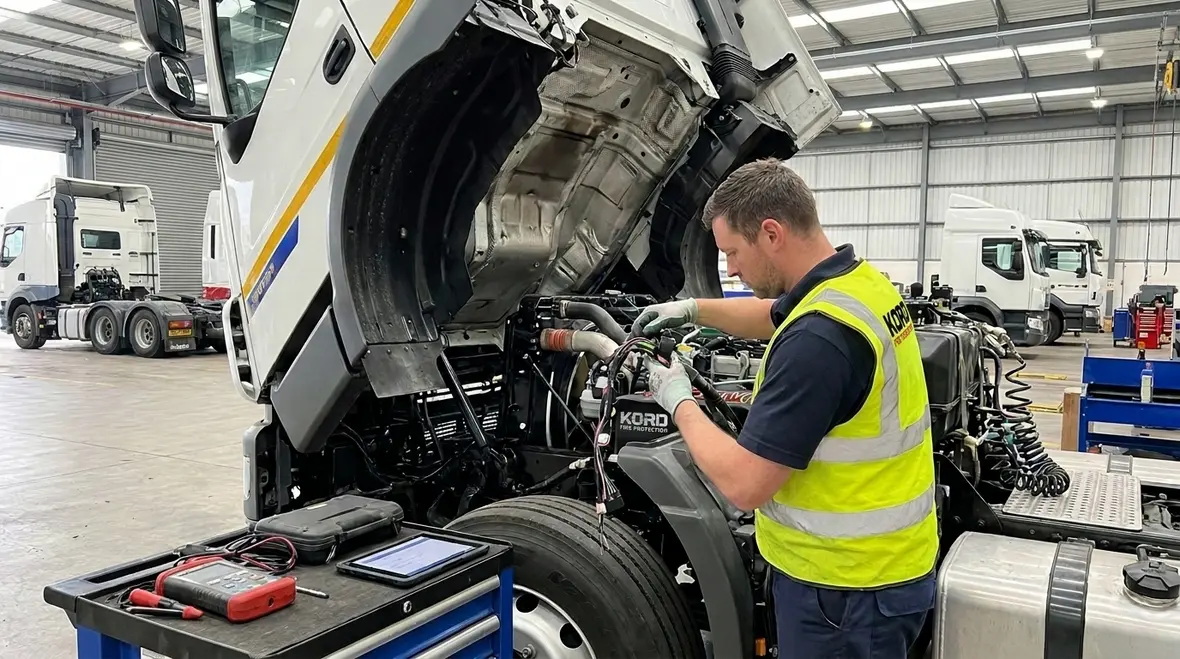
NFPA 52 Section 24.3 General: Onboard Automotive Equipment Requirements Overview
Quick Answer
NFPA 52 Section 24.3 establishes baseline requirements for onboard automotive equipment, focusing on fire-safe installation, protection of ignition sources, integrity of components, and ongoing maintenance. Following the NFPA 52 onboard automotive equipment general requirements helps facilities reduce ignition risk and pass routine inspections.
For broader compliance support, many facilities pair onboard equipment reviews with fleet vehicle fire suppression planning for fleet managers and coordinated inspection programs that keep maintenance records easier to defend during audits.
What NFPA 52 Section 24.3 Covers for Onboard Equipment
NFPA 52 Section 24.3 sets the general framework used to evaluate onboard automotive equipment installed in vehicles, fleet units, and other transport applications. While specific subclauses address particular systems, Section 24.3 functions as the compliance foundation. It addresses how the equipment must be installed, how hazards must be controlled, and how the equipment must remain in acceptable condition over time.
For facilities that support commercial or industrial vehicle operations, the practical challenge is consistency. Fleet maintenance schedules, component substitutions, wiring repairs, and retrofit work can drift out of alignment with the intent of the standard. NFPA 52 onboard automotive equipment general requirements help ensure that any onboard configuration continues to manage ignition and fire exposure risks throughout the equipment life cycle.
Compliance Starts With Installation Integrity and Fire Safety Interfaces
General compliance in Section 24.3 begins at the interface points where onboard equipment meets building-adjacent operations or vehicle operating environments. Inspectors and auditors commonly focus on installation integrity because installation problems tend to create hidden failure pathways.
Key installation focus areas
- Physical protection and mounting stability to prevent loosening, vibration damage, and displacement of critical components.
- Protection of fuel and power interfaces so line routing, connectors, and penetrations do not create chafe points or leak pathways.
- Separation and arrangement that limits how ignition-prone equipment can contact flammable residues, wiring abrasion, or hot surfaces.
- Correct workmanship including proper torqueing, correct connector selection, and elimination of improvised repairs.
Commercial facilities often treat vehicles as independent assets, but the onboard system still affects workplace fire risk. The operational reality is that maintenance bays, fueling areas, and storage yards create conditions where small defects can produce rapid escalation.
Operational Controls: How Ignition Risk Gets Managed
Section 24.3 general requirements align with a core principle: onboard automotive equipment must not introduce unsafe ignition conditions. This does not mean equipment can never be energized. It means the system must be arranged and maintained so that ignition sources are controlled and defects do not create ignition opportunities.
Where failure most often shows up
- Electrical faults such as degraded insulation, intermittent connectors, and corrosion at terminals that can generate arcing.
- Mechanical wear from vibration and thermal cycling that damages wiring looms, hoses, and mounting hardware.
- Unapproved component substitutions during repairs that change heat release, durability, or protection characteristics.
- Improper routing that places lines near exhaust heat, sharp edges, or moving parts.
Facilities that manage multiple vehicle types benefit from standardized work instructions and consistent acceptance criteria after maintenance. When work teams treat onboard equipment as “fit and functional” rather than “fire risk controlled,” recurring defects can accumulate across fleets and increase overall risk.
Inspection, Testing, and Maintenance: The Ongoing Duty
The biggest compliance gap is not the original installation, it is the long-term condition. NFPA 52 Section 24.3 general requirements expect continued maintenance and acceptable equipment performance. That expectation drives a practical compliance workflow: inspection, documentation, corrective action, and verification after repairs.
Operational inspection and documentation expectations
- Visual inspection for chafing, missing guards, loose mounts, cracked housings, and degraded wiring jackets.
- Functional verification that critical onboard systems operate as intended after service or component replacement.
- Leak and integrity checks where applicable to onboard systems, using methods appropriate to the equipment design.
- Traceable repair records that show what changed, who performed the work, and what acceptance criteria were met.
Maintenance work that targets “vehicle uptime” without integrating fire safety acceptance testing tends to create latent hazards. Kord Fire Protection supports commercial facilities by aligning inspection practices with operational realities, helping teams reduce repeat defects and maintain defensible compliance records over time.
For related commercial inspection and protection planning, facility leaders often coordinate with Kord Fire Protection services and NFPA 52 operations and maintenance program guidance for CNG facilities to support stronger ongoing compliance programs.
Commercial Facility Challenges and How Teams Address Them
NFPA 52 onboard automotive equipment general requirements intersect with day-to-day facility operations. This becomes clear in maintenance bays, fueling zones, retail loading areas, and industrial yards where traffic patterns, storage practices, and repair workflows affect fire risk outcomes.
Common challenge scenarios
- High turnover maintenance staffing increases the risk of inconsistent connector selection and repair workmanship.
- Retrofits and parts sourcing lead to variation across vehicles, creating fleet-wide compliance drift.
- Deferred repairs allow minor defects to evolve, particularly where vibration and heat cycling are present.
- Mixed operations combine vehicle servicing with other electrical or mechanical work, compounding ignition and escalation potential.
Effective compliance programs translate NFPA 52 expectations into actionable controls: standardized job checklists, parts control, and inspection acceptance criteria. Kord Fire Protection helps facilities establish defensible processes that support audits, reduce corrective action cycles, and strengthen overall risk management across fleets and sites.
Frequently Asked Questions
Conclusion and Call to Action
NFPA 52 Section 24.3 general requirements set the baseline for safe onboard automotive equipment operation through installation integrity, controlled ignition risk, and disciplined maintenance. Facilities that standardize repair acceptance criteria and document inspection outcomes reduce drift across fleets and improve audit readiness.
Contact Kord Fire Protection to strengthen your ongoing compliance program with practical inspection, testing coordination, and maintenance support aligned to your operational workflows.

Join Our Newsletter!
Get the latest fire safety tips delivered straight to your inbox From our Newsletter.


