
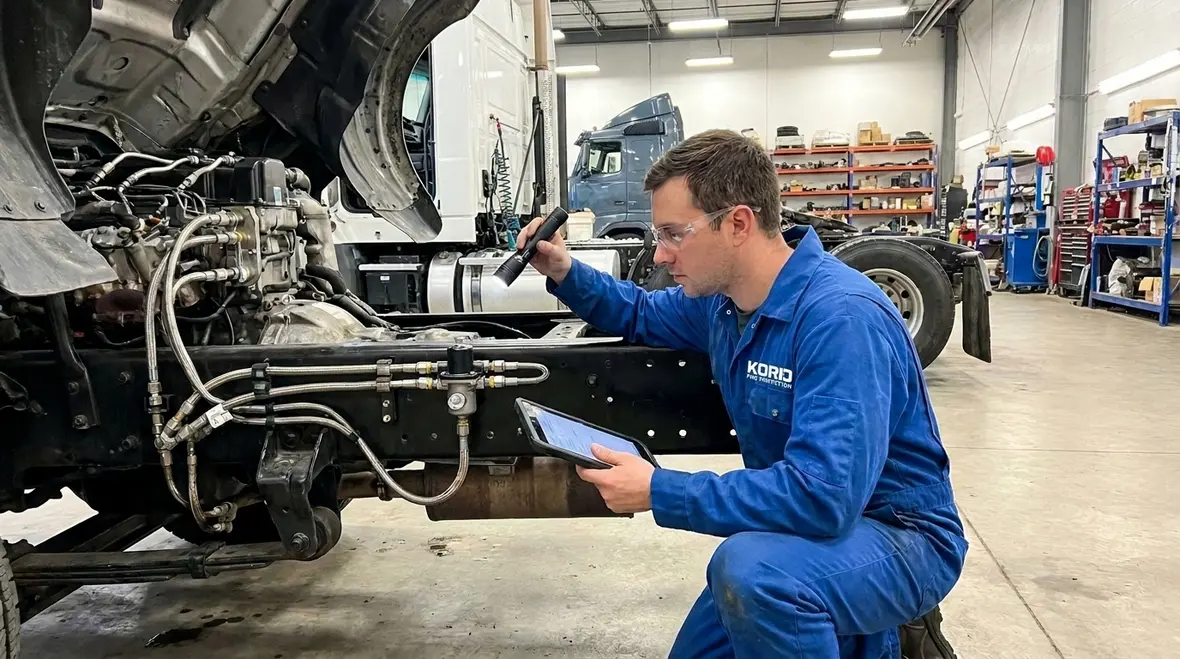
NFPA 52 Section 24.1 Scope: Automotive Equipment Coverage
Quick Answer: NFPA 52 Section 24.1 defines what types of onboard automotive equipment are covered and how those systems should be evaluated for fire safety compliance. It focuses on installation, use, and limitations that affect ignition sources, components, and operational conditions in vehicles.
In commercial fire protection planning, the NFPA 52 onboard automotive equipment scope matters because it determines what vehicle mounted fuel and related systems fall under code enforcement, inspection expectations, and ongoing maintenance requirements. For industrial fleet operations, retail fueling support areas, and mixed-use commercial properties, the practical result is straightforward: the code boundary controls what documentation, inspection records, and corrective actions must be managed to reduce fire risk.
This article explains how NFPA 52 Section 24.1 is typically applied to onboard automotive equipment, where compliance teams run into recurring problems, and what operational practices help facilities stay ready for inspections.
If your team is tightening documentation and recurring inspection workflows, Kord Fire Protection’s inspection, testing, and maintenance guidance is a strong related resource for building a more defensible compliance program.
What NFPA 52 Section 24.1 Covers for Onboard Automotive Equipment
NFPA 52 Section 24.1 focuses on the coverage boundaries for equipment installed on automotive vehicles and used to handle fuel or related functions that can present fire and explosion hazards. The section is intended to ensure that onboard components operate safely within defined design and performance expectations.
From a compliance standpoint, the key task is not memorizing a list. The key task is determining whether a specific onboard configuration qualifies as “automotive equipment” within the scope boundary and whether the equipment functions and interfaces align with the code’s safety intent.
Common onboard equipment categories addressed in practice
While exact applicability depends on the installation details and vehicle type, facilities typically assess onboard components such as:
- Onboard fuel handling systems and their interfaces
- Fuel storage and transfer components that connect to vehicle operating systems
- Shutoff, isolation, and protection features that manage abnormal conditions
- Controls and monitoring arrangements that support safe operation
- Components that can create ignition potential if damaged, contaminated, or incorrectly installed
Because scope depends on configuration and use, compliance teams should approach each fleet model, retrofit, or equipment replacement with documented evidence that the onboard components meet the intended code coverage.
Scope Boundaries: When the “Onboard” Definition Becomes the Compliance Issue
Facilities often assume that “installed on the vehicle” automatically means it fits the onboard section. In practice, scope disputes usually come from the boundary between vehicle mounted components and what is effectively part of a facility system, a charging system, or an external connection that changes risk.
Operational conditions that affect scope interpretation
When inspectors evaluate the NFPA 52 onboard automotive equipment scope, they frequently look at how equipment performs in real operations, including:
- Where the vehicle is serviced, fueled, or stored
- How onboard components interface with external hoses, connectors, or service tooling
- Whether maintenance activities introduce nonconforming parts or wiring changes
- How damage is detected and corrected before it becomes an ignition or release hazard
Commercial facility challenge: mixed responsibilities
In commercial environments, fleet assets may be maintained by one vendor and stored or serviced by another. The compliance gap commonly appears when no single party controls installation records, replacement documentation, and test results. That gap directly undermines defensible compliance for onboard equipment scope determinations.
Inspection Readiness: What Facilities Should Verify for Onboard Equipment
Compliance readiness requires more than visual checks. NFPA 52 related inspections typically depend on verifying that onboard components remain in safe working order, retain correct functional characteristics, and maintain appropriate protection against abnormal operating conditions.
Verification steps that reduce failure risk
A practical inspection program for onboard automotive equipment coverage typically includes:
- Documentation control: maintain vehicle model information, onboard component listings, retrofit records, and any authorized modification approvals.
- Physical condition assessment: check mounting integrity, securement, and signs of damage, abrasion, corrosion, or impact deterioration.
- Interface integrity: confirm that connectors, fittings, and seals remain within acceptable condition and show no evidence of leakage or improper alignment.
- Protection device functionality: verify that shutoff and protection features are present, accessible as required, and able to perform their intended function.
- Electrical and control safeguards: inspect wiring routing, harness condition, and protection from mechanical stress and heat sources.
Inspections should also account for operational wear patterns. Fleet vehicles in high temperature, dusty, or high cycle duty environments often show wear earlier than expected, especially at stress points and connection interfaces.
Maintenance as a compliance mechanism, not a cost center
Commercial facility teams that treat maintenance as an operational requirement rather than a periodic task tend to prevent the most common onboard failures. Those failures often involve connection degradation, seal aging, or undetected component damage from service activities.
Common Failure Points in Onboard Systems Covered by Scope
Even when equipment falls within the intended NFPA 52 onboard automotive equipment scope, failures still occur. The most preventable problems generally show up at predictable points along the system lifecycle.
High frequency issues seen during field reviews
- Seal and connector deterioration: leaks and seepage can begin as minor issues and escalate quickly if not corrected.
- Mechanical stress during service: improper handling during maintenance can loosen fittings, damage harnesses, or disrupt component alignment.
- Unauthorized component replacement: incorrect parts or non approved assemblies may not perform as intended under fault conditions.
- Blocked or degraded protective features: missing covers, impaired access, or contamination reduces protection effectiveness.
- Control system drift: changes to wiring, sensors, or control logic can reduce safe operating behavior.
Operationally, these issues become compliance concerns when records are incomplete or when corrective actions are not tracked to closure. A strong program ties inspection findings to measurable remediation and verification.
How Kord Fire Protection Supports Ongoing Compliance for Vehicle Onboard Equipment
Commercial compliance programs succeed when they translate code language into repeatable workflows. Kord Fire Protection helps facilities manage the documentation, inspection readiness, and maintenance verification that support defensible compliance for equipment within the NFPA 52 onboard automotive equipment scope.
Depending on facility needs, Kord Fire Protection can support:
- Inspection planning and compliance readiness reviews for vehicle and service area workflows
- Maintenance program alignment with fire risk reduction goals and inspection expectations
- Corrective action support workflows that close findings with verification evidence
- Training for operations teams that handle fueling, staging, and routine service activities
For facility teams that manage fleet assets across multiple properties, consistent procedures are the difference between compliance and recurring risk.
Internal guidance: Visit Kord Fire Protection’s fire protection services guide to explore commercial services that support fire safety compliance and ongoing risk management.
Frequently Asked Questions
Conclusion and Call to Action
NFPA 52 Section 24.1 scope matters because it sets the boundary for what onboard automotive equipment must be evaluated for safe installation and ongoing function. Commercial facilities reduce risk and inspection friction by controlling documentation, verifying protection features, and closing corrective actions with evidence. Kord Fire Protection can help your team build a repeatable compliance workflow for fleet vehicles and service areas. Contact Kord Fire Protection to schedule a compliance readiness review and strengthen your ongoing maintenance program.

Join Our Newsletter!
Get the latest fire safety tips delivered straight to your inbox From our Newsletter.


