NFPA 52 Section 24.5: LNG Supplemental Requirements for Onboard Equipment
Quick Answer: NFPA 52 Section 24.5 establishes supplemental compliance requirements for onboard LNG equipment, focusing on safe installation, continued integrity, protective measures, and inspection readiness. Facilities must align equipment design, placement, and maintenance practices to reduce LNG leak, ignition, and exposure risks.
NFPA 52 onboard LNG supplemental equipment requirements under Section 24.5 apply when LNG systems include specific onboard components that must perform reliably under cryogenic, pressure, and operational conditions. This article explains what the standard expects, how inspectors evaluate readiness, and where commercial owners and operators most often experience compliance failures.
For a practical example of how documentation, field verification, and ongoing maintenance come together after installation, review inspection, testing, and maintenance services. It fits naturally with the same compliance mindset behind onboard LNG equipment readiness. ([kordfire.com](https://kordfire.com/itm-fire-protection-inspection-testing-maintenance/?utm_source=openai))
What Section 24.5 Covers for Onboard LNG Equipment
Section 24.5 supplements baseline LNG provisions by addressing onboard equipment requirements that support safe LNG operations in confined or vehicle and vessel related environments. In practice, the intent is consistent: the onboard system must resist conditions that can degrade seals, connections, controls, and protective layers, while remaining accessible for inspection, testing, and maintenance.
For stakeholders in commercial, industrial, and retail settings, the key compliance challenge is translating a code requirement into verifiable operational controls. NFPA 52 onboard LNG supplemental equipment requirements are not satisfied by purchasing equipment alone. The facility must implement an installation and maintenance program that maintains equipment condition throughout its service life.
Equipment Integrity: Installation, Compatibility, and Mechanical Protection
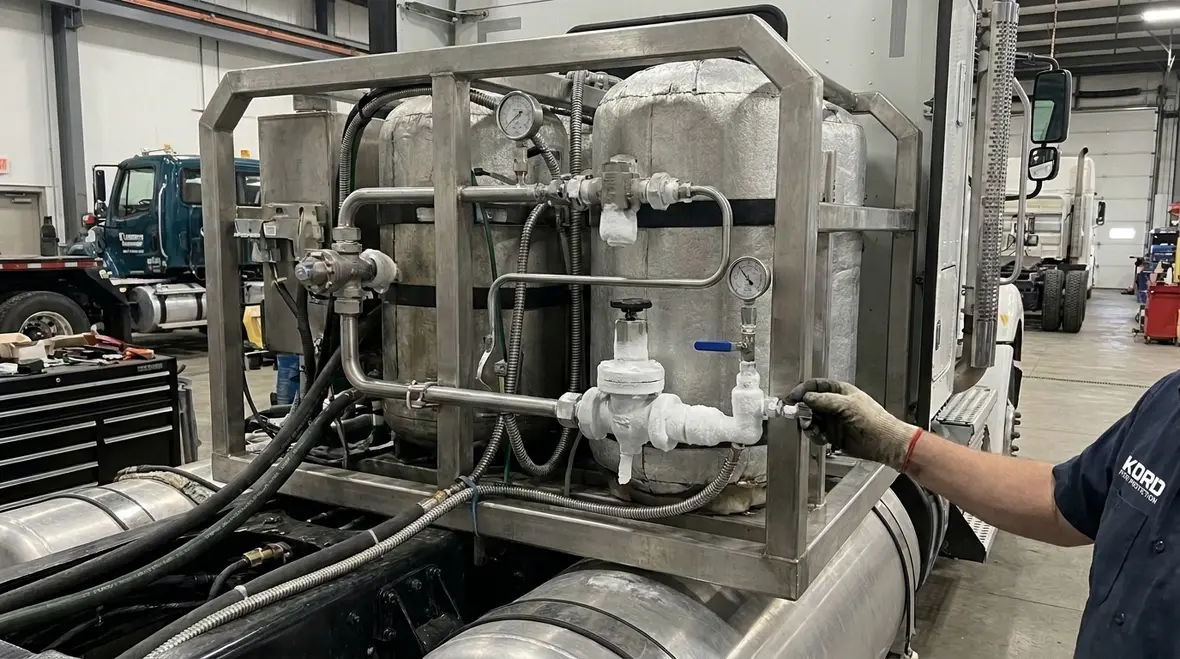
Onboard LNG equipment experiences complex stresses. Components face thermal cycling from cryogenic temperatures, pressure fluctuations during loading and operation, and vibration or movement that can loosen fittings. Section 24.5 focuses on ensuring equipment is installed in a way that maintains integrity under these real world conditions.
Installation details that commonly drive compliance outcomes
Connection integrity: Inspectors look for proper connection methods, approved materials, and secure fastening that prevents loosening over time.
System compatibility: Using components not rated for LNG service or cryogenic operation can lead to material embrittlement and premature leakage.
Physical protection: Onboard areas often concentrate hazards such as impact, abrasion, or exposure to heat sources. Protective measures must match the actual installation layout.
Routing and clearance: LNG lines, wiring, and controls must be routed to minimize damage risk and support safe access for inspection.
Common failure points owners see during audits
Microleaks at fittings that were assembled without the proper procedure or torque controls.
Degraded insulation or jacket materials that obscure inspection access and hide damage.
Control components exposed to condensation, moisture ingress, or mechanical strain beyond design limits.
Kord Fire Protection supports facilities by translating code intent into enforceable inspection and maintenance tasks, helping teams verify that onboard installation conditions remain stable between service intervals. For closely related context, see NFPA 52 Section 24.4: CNG Supplemental Requirements for Onboard Equipment, which covers a similar compliance theme for onboard fuel system reliability. ([kordfire.com](https://kordfire.com/nfpa-52-section-24-4-cng-supplemental-requirements-for-onboard-equipment/?utm_source=openai))
How Inspection, Testing, and Maintenance Must Be Operationalized
Section 24.5 emphasizes that onboard equipment must remain inspection ready and maintainable. Commercial facilities often treat maintenance as corrective work rather than structured verification. That approach increases inspection risk because the condition of critical onboard components becomes hard to demonstrate.
What to build into the maintenance program
Documented inspection intervals aligned to equipment criticality and operating profile, not just manufacturer general recommendations.
Leak prevention focus with procedures that address fittings, valves, seals, and any areas where cryogenic shrinkage can change stresses.
Functional checks for controls and protective devices to verify operational readiness, including response to normal and abnormal conditions.
Maintenance records that show what was inspected, what was found, and what was repaired or adjusted.
Maintenance mechanics that reduce recurring nonconformance
Controlled work procedures for disassembly and reassembly of onboard connections, including verification methods after service.
Training for technicians on LNG hazards and equipment handling to reduce assembly errors during routine tasks.
Verification of restored condition after insulation repair, protective cover installation, or replacement of onboard components.
If your facility needs a practical compliance framework, Kord Fire Protection can help structure maintenance readiness, inspection checklists, and documentation packages aligned with the intent behind NFPA requirements. For additional technical context and complementary guidance, consider reviewing NFPA 52 Section 19.6: LNG Supplemental Siting and Construction Requirements, which reinforces how protection strategies and verification practices should hold up in the field. ([kordfire.com](https://kordfire.com/nfpa-52-section-19-6-lng-supplemental-siting-and-construction-requirements/?utm_source=openai))
Protective Measures and Hazard Reduction in Onboard Installations
Onboard LNG equipment exists within a hazard environment where leak control, ignition management, and exposure reduction matter. Section 24.5 supplemental requirements drive hazard reduction by requiring that equipment and its surrounding conditions support safe operation.
Where protective intent shows up during field verification
Leak containment and detection readiness: Evidence that leak related systems are installed correctly and can be tested or verified.
Barrier and shielding suitability: Guards, covers, or shields must prevent damage while not preventing necessary inspection.
Control of ignition sources: Equipment layout and maintenance condition must not create new ignition risks through damage or improper repairs.
Access for emergency response: Onboard equipment must remain reachable for safe intervention without unsafe workarounds.
Commercial compliance teams often underestimate how operational changes affect hazard reduction. If onboard components are relocated, upgraded, or retrofitted, facilities should treat that as a compliance event requiring updated inspection focus and documentation.
Commercial Compliance Pitfalls: Documentation, Access, and Change Control
NFPA 52 onboard LNG supplemental equipment requirements are frequently misunderstood as purely design time obligations. In reality, compliance hinges on how the facility maintains and controls change over time.
Three high frequency pitfalls
Inspection access is blocked: Covers, insulation, or protective structures can make it impossible to verify critical connections and fittings during required checks.
Records do not match the physical condition: Maintenance logs may list tasks performed, but they do not show verification results or identify which onboard components were affected.
Uncontrolled modifications: Retrofit activities sometimes replace components with functionally similar parts that are not equivalent for LNG service, cryogenic conditions, or pressure rating.
To reduce risk, facilities benefit from a change control routine that includes review of onboard equipment updates for code-aligned compatibility and updated inspection expectations. Kord Fire Protection can support this process by aligning inspection criteria and maintenance tasks to the specific onboard equipment configuration at your site.
Frequently Asked Questions
Conclusion and Call to Action
NFPA 52 Section 24.5 demands more than compliant equipment selection. Facilities must ensure onboard installation integrity, verify functional performance, maintain inspection access, and manage change over time with strong documentation. If your commercial operation needs a practical, audit ready program for NFPA 52 onboard LNG supplemental equipment requirements, engage Kord Fire Protection to assess readiness, strengthen maintenance procedures, and support ongoing compliance testing and maintenance.

Join Our Newsletter!
Get the latest fire safety tips delivered straight to your inbox From our Newsletter.