
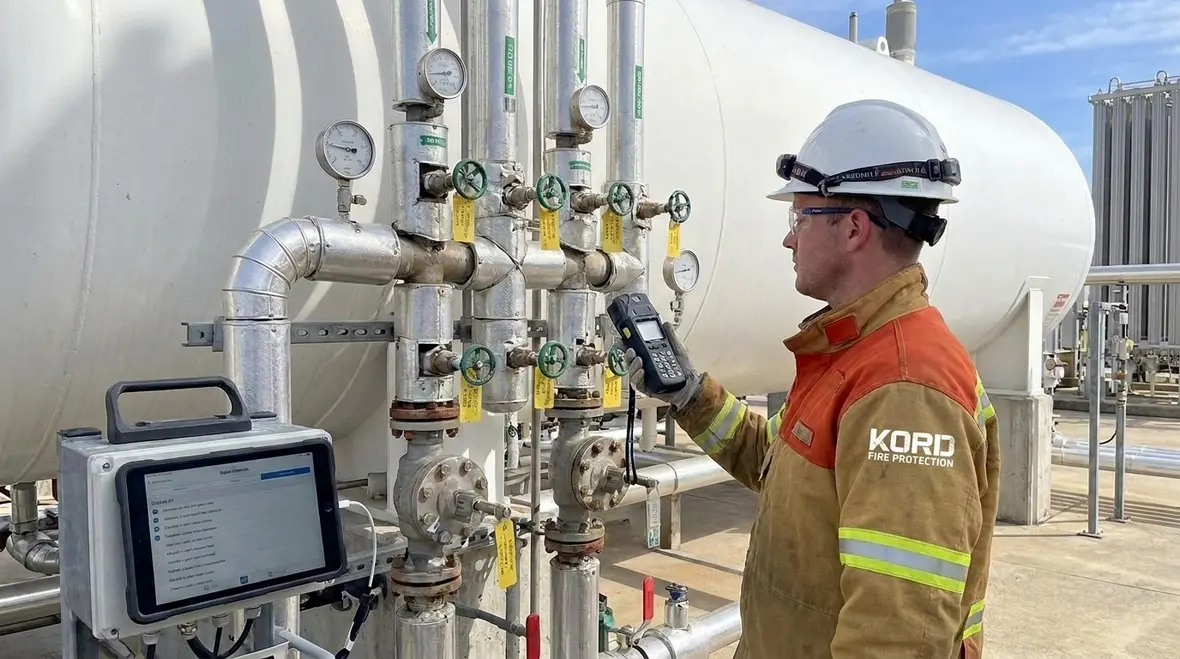
NFPA 52 Section 21.8: Testing and Purging LNG Containers
Quick Answer
NFPA 52 Section 21.8 establishes how LNG container systems must be tested and purged to verify safe operation and minimize hazardous release risks. The requirements focus on controlled procedures, appropriate purge media and conditions, monitoring, and documentation for ongoing compliance.
For broader compliance support, facilities can review fire protection compliance auditing guidance from Kord Fire Protection to strengthen documentation, inspection discipline, and correction tracking across LNG related safety programs.
What NFPA 52 Section 21.8 requires for LNG container testing and purging
Facilities seeking NFPA 52 LNG container testing purging requirements typically need a clear, repeatable process that confirms the container, associated piping, and vapor management components perform safely before service and after maintenance. Section 21.8 does not treat testing and purging as optional commissioning activities. It frames them as controlled safety steps that support leak management, stable pressure conditions, and reliable system readiness.
In commercial and industrial settings, the compliance burden often shows up during scheduled outages, retrofit work, and troubleshooting. Facilities must balance safe work practices, production continuity, and the operational realities of large cryogenic systems. Strong documentation and disciplined equipment checks are usually the difference between a smooth inspection cycle and costly corrections.
When testing and purging must occur
Section 21.8 aligns testing and purging with the lifecycle of the LNG container system. While the exact trigger language can vary across applicable subsections and related provisions, common scenarios include:
- Initial commissioning before placing a container system into service.
- After repairs, component replacement, or modifications that could affect container integrity or vapor handling.
- After planned outages when residual cryogenic media and vapor pathways require controlled removal.
- Following maintenance that could alter pressure boundaries, valves, relief pathways, instrumentation, or purge routing.
Operationally, the key compliance challenge involves determining what constitutes a system boundary that requires requalification. Many facilities underestimate how a change to valves, instrumentation, or purge skids can impact measured outcomes during subsequent verification. Kord Fire Protection commonly supports facilities by translating the standard into practical test plans, hold points, and inspection-ready records tailored to facility procedures.
How the testing procedure supports safety and compliance
Testing under Section 21.8 functions as a structured confirmation step. The goal is to verify that the LNG container system can maintain required conditions without unacceptable leakage, improper flow characteristics, or unsafe operational behavior during purge and normal use.
Key elements facilities must manage during testing
- Defined test objectives and acceptance criteria. The test must answer a specific safety question, such as verifying containment performance or confirming pressure boundary behavior.
- Controlled conditions. Testing needs temperature and pressure management practices appropriate for cryogenic systems. Improper assumptions about heat gain or vapor behavior can invalidate test outcomes.
- Accurate instrumentation and calibration status. Test results depend on reliable readings. Outdated calibration records and mismatched measurement ranges are frequent causes of failed review.
- Controlled isolation of system components. Valves and bypasses must be positioned correctly to ensure the test addresses the intended boundary.
- Documentation and traceability. Inspectors and internal reviewers expect test records that map to the facility’s written procedure and the actual equipment used.
Common failure points include overlooked valve positions, incorrect purge routing, missing or expired test equipment calibration, and inadequate monitoring of pressure trends during transitional phases. Facilities also struggle when testing interfaces with production constraints, especially at retail or commercial sites where downtime windows are limited.
Purge execution: controlling vapor, pressure, and ignition hazards
Purging removes flammable or oxygen-displacing atmospheres from container-related spaces and piping paths. For LNG systems, purge effectiveness depends on routing, flow path control, acceptable purge conditions, and verification that the system reaches the intended safe state.
Core purge control mechanisms
- Purge medium selection and delivery. The facility procedure must address the purge medium used, how it is introduced, and how it maintains consistent flow through the relevant pathways.
- Sequence and valve lineup. The purge sequence must reflect the system’s geometry and isolation strategy. Incorrect valve sequencing can leave pockets of residual gas.
- Monitoring and verification. Purge outcomes must be supported by measurements or indicators that demonstrate the system reached a safe condition.
- Pressure and vent management. Purge venting must be directed and managed to avoid unsafe accumulation, backflow risks, or exposure to ignition sources.
- Time and condition control. Purging needs a defined duration or condition target. Relying on elapsed time alone can fail when operational conditions differ.
In practice, purge failures are rarely caused by a single mistake. They more often result from multiple small deviations, such as slight differences in inlet flow rate, unexpected resistance through regulators, or incomplete isolation of a bypass line. Kord Fire Protection supports clients by helping establish maintenance and verification routines that reduce variability and keep purge activities inspection-ready.
Documentation, inspection readiness, and facility maintenance integration
Commercial and industrial facilities usually pass or fail compliance based on paperwork quality and operational discipline, not just the physical test itself. Section 21.8 outcomes must be traceable to a written procedure and executed with repeatable control.
What compliance reviewers typically look for
- Approved written procedures. Procedures should reflect the actual system configuration, including valve tagging and purge routing diagrams.
- Calibration evidence. Meter and sensor calibration certificates, ranges, and verification intervals.
- Test logs and purge records. Time stamps, measured parameters, equipment identifiers, and any deviations with corrective actions.
- As-built consistency. If field changes occurred, documentation must match the current configuration. Outdated drawings and valve maps are a frequent finding.
- Training and competency records. Operators and technicians need documented competency for cryogenic safety tasks and purge monitoring.
Facilities often integrate these steps into broader maintenance management systems. That integration is where many compliance programs break down: work orders do not include the required test hold points, purge verification steps are left out of checklists, or responsibilities are unclear between operations, maintenance, and safety teams.
To strengthen operational readiness, Kord Fire Protection can help facilities align written procedures, training expectations, and inspection documentation with the practical realities of testing and purging. For related LNG safety context, see NFPA 52 Section 16.4: Ignition Source Control at LNG Sites for complementary guidance on controlling ignition risk in LNG operations.
What can go wrong during LNG container testing and purging
Common issues tend to cluster around equipment, process control, and verification. Identifying these early reduces rework and avoids unsafe or noncompliant outcomes.
Frequent commercial facility pitfalls
- Valve lineup errors. Mispositioned valves lead to incomplete purging and invalid readings.
- Purge routing not matching the actual configuration. As-built changes that do not update purge diagrams produce pockets of residual atmosphere.
- Instrumentation not suited for the measured range. Wrong sensor selection or poor placement can obscure true purge progress.
- Inadequate vent dispersion planning. Vent locations and nearby ignition risk evaluations must be considered before purge operations begin.
- Underestimated effects of temperature swings. LNG systems behave differently when ambient conditions and heat leak assumptions change.
- Incomplete closure verification after maintenance. Missing checks after component work can allow leaks or improper operational behavior to go undetected.
These failure points are preventable through structured work instructions, disciplined pre-job checks, and consistent post-test documentation review. Kord Fire Protection typically adds value by providing compliance-aligned oversight support, helping clients close gaps before inspectors identify them.
Frequently Asked Questions
Next step: confirm your readiness now
If your facility needs to strengthen NFPA 52 Section 21.8 compliance, start by validating your test and purge procedures, instrumentation readiness, and documentation traceability against your current as-built system. Kord Fire Protection can support commercial LNG operators with practical compliance alignment, inspection-ready recordkeeping, and maintenance integration planning. Contact Kord Fire Protection today to assess your current process and close gaps before your next verification cycle.

Join Our Newsletter!
Get the latest fire safety tips delivered straight to your inbox From our Newsletter.


