NFPA 52 Section 21.6: Automatic Product Retention Valves on LNG Containers
Quick Answer: NFPA 52 Section 21.6 addresses how automatic product retention valves must be designed, installed, and maintained on LNG containers to limit release if a hose or connected system fails. Compliance focuses on functional reliability, appropriate locations, and inspection and maintenance practices.
For facilities building a broader inspection-ready safety program, fire safety compliance management with automated documentation is a practical companion resource because valve performance means a lot more when the records can actually prove it.
What NFPA 52 Section 21.6 is trying to prevent
NFPA 52 LNG automatic product retention valve requirements exist to reduce the consequences of unintended discharge from LNG containers. In real operations, the highest risk often comes from abnormal flow conditions created by mechanical damage, unintended separation, regulator or valve misoperation, or downstream piping failures. Section 21.6 targets those scenarios by requiring automatic product retention that can stop or limit product flow quickly enough to prevent a small incident from escalating into a major release.
This is especially important for commercial, industrial, and retail facilities that may have frequent activity near LNG equipment, multiple contractors performing work, and operational cycles that can stress valves and associated hardware.
Where automatic product retention valves apply on LNG containers
Automatic product retention valves are tied to specific container and transfer arrangements. The practical compliance question most facilities face is not only “does the system have retention valves,” but “does the configuration and placement match the intent of Section 21.6.” That means the valves must be provided where an automatic shutoff is required to limit product discharge during a credible failure event.
Common placement and system boundary issues include:
- Valves installed on the wrong side of a shutoff boundary, resulting in delayed retention during a separation or line rupture.
- Intervening components, such as check valves, manifolds, or quick disconnects, that can defeat the retention logic if not coordinated with the automatic valve action.
- Insufficient consideration of orientation and physical protection, which increases the likelihood of impact damage during routine operations or maintenance.
Facilities often discover these problems during compliance audits or post-incident reviews, when “as-built” configurations differ from design intent. Kord Fire Protection supports operators with document reviews, field verification, and evidence-ready inspection workflows that align with how inspectors evaluate actual installation condition.
How the valve mechanism is expected to work in an abnormal event
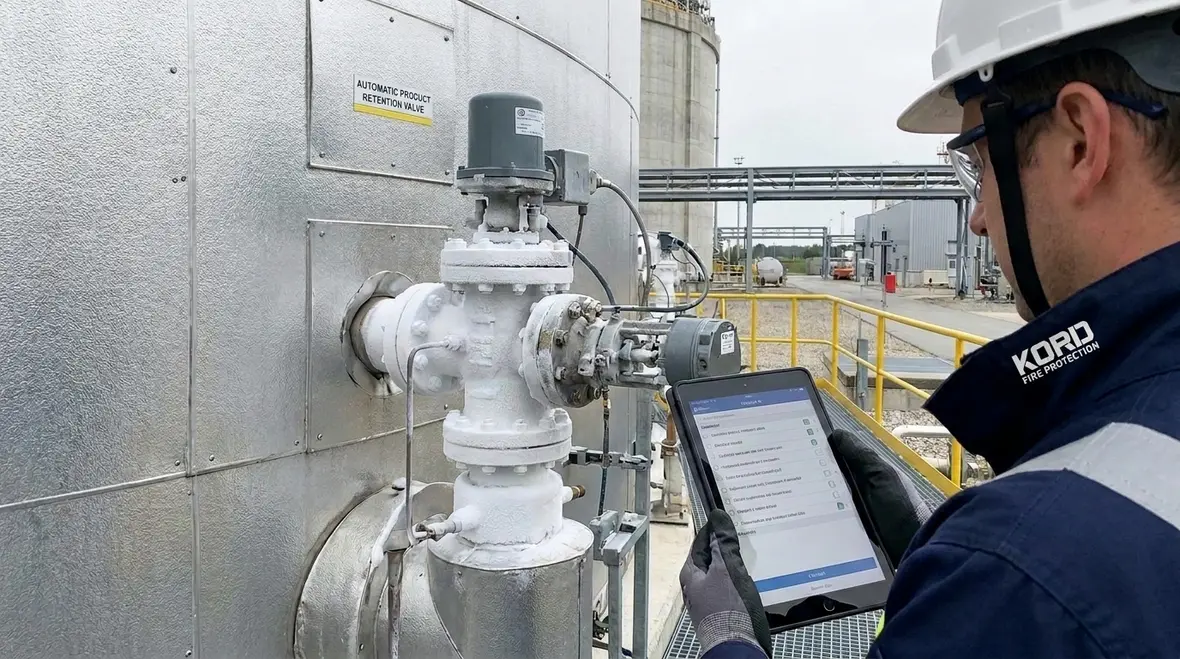
Automatic product retention valves must function reliably when abnormal conditions occur, with the goal of limiting product discharge. In practical terms, NFPA 52 LNG automatic product retention valve requirements focus on a mechanism that responds automatically to loss of normal flow control or other triggering conditions defined by the system design.
From an operational standpoint, inspectors and auditors typically look for consistent behavior across these performance themes:
- Rapid response: The valve action must occur promptly enough to prevent significant additional flow after a credible failure begins.
- Fail-safe characteristics: The valve must move to a retention condition without requiring operator intervention.
- Sealing capability: Once closed, the valve must limit leakage and flow to an acceptable level, considering LNG’s cryogenic temperatures and pressure changes.
- Repeatability: After cycling or minor disturbances, the valve must return to a functional state without persistent sticking or loss of performance.
In the field, the most common failure points come from conditions that degrade sealing surfaces, response force, or actuation paths. These include ice formation tendencies, contamination, seal material aging, improper lubrication practices (where applicable), damaged linkage or pilot components, and corrosion where insulation or protective housings have been compromised.
What compliance looks like during inspection and maintenance
For commercial facilities, the most challenging compliance area is rarely installation. It is maintaining verified performance over time, documenting it, and preventing drift due to maintenance activities by multiple teams.
Key compliance expectations typically include:
- Documented inspection intervals: Ensure the maintenance plan specifies inspection and testing steps that verify automatic closure capability and seal integrity.
- Condition checks on connected components: Retention valves can look correct while upstream or downstream components impair function, such as misaligned couplings, damaged hoses, or blocked passages.
- Cryogenic compatibility verification: Confirms materials, insulation integrity, and installation details remain compatible with LNG service conditions.
- Corrective maintenance evidence: If any valve, actuator component, or sealing surface is serviced, records must show what changed and how functional verification occurred afterward.
A frequent operational breakdown is “partial maintenance.” Contractors may replace a seal or repair a related fitting but fail to perform the functional verification required to confirm the retention valve still meets the behavior expected under abnormal conditions. This is where standardized procedures and skilled technicians matter.
Kord Fire Protection assists facility owners and managers with inspection-ready documentation, field verification processes, and maintenance support that strengthens ongoing compliance posture. When inspectors request proof of operational condition, organized records and clear testing evidence often determine the outcome.
Common installation and lifecycle problems that trigger enforcement risk
The following issues routinely create enforcement risk, findings, or delays during compliance reviews. Each one can affect the effectiveness of automatic retention in the exact scenario NFPA 52 is designed to address.
1) Valve placement that does not match the system failure scenario
Even when a retention valve is present, incorrect location relative to connected equipment can delay or prevent the intended shutoff. Facility teams should treat “as-built verification” as a recurring control, not a one-time construction step.
2) Insulation and protective hardware that degrade retention performance
Damaged insulation, missing jacketing, or poor protection can expose valve components to impacts and thermal stress. That stress can change response behavior and sealing reliability.
3) Contamination and seal degradation from maintenance practices
Debris from line work, incomplete cleaning steps, or incompatible servicing materials can cause sticking. Seals also age due to repeated thermal cycling.
4) Lack of functional verification after servicing
Servicing activities must include checks that the valve still performs automatically. Without that verification, the facility may remain exposed to uncontrolled discharge risk even after repairs.
Practical compliance support: make “evidence” part of maintenance
Compliance success typically depends on more than owning the correct equipment. It depends on consistent inspection practices, credible testing records, and disciplined lifecycle management. Operators in commercial and industrial settings benefit when their fire and safety program ties valve performance to documented maintenance actions and repeatable field checks.
If your facility needs support building an inspection and maintenance program for LNG container systems, consider engaging Kord Fire Protection as a service partner for ongoing testing, documentation, and verification workflows.
For additional guidance on practical fire protection program development and compliance planning, review Kord Fire Protection.
Frequently Asked Questions
Next step: schedule a compliance-focused valve review
Contact Kord Fire Protection to review your LNG container automatic product retention valve setup, confirm inspection and maintenance readiness, and align records with how compliance is evaluated in the field. Early identification of placement, hardware protection, and evidence gaps helps reduce inspection findings and improves operational confidence. Request an assessment today and put verified retention performance into your ongoing program.

Join Our Newsletter!
Get the latest fire safety tips delivered straight to your inbox From our Newsletter.