NFPA 52 Section 21.10: Instrumentation for LNG Containers
Quick Answer: NFPA 52 Section 21.10 focuses on how LNG container instrumentation monitors conditions that affect safe operation, including pressure, temperature, and related alarm or control functions. Owners and operators must maintain the system so readings remain accurate and protective actions occur as required.
Facilities building a broader compliance program can also explore fire protection services in Southern California to support inspection planning, repairs, and documentation readiness across connected life safety systems.
What does NFPA 52 Section 21.10 require for LNG container instrumentation?
NFPA 52 LNG container instrumentation requirements center on ensuring the instrumentation used on LNG containers provides dependable, readable, and correctly functioning measurements that support safe operation, alarm annunciation, and protective control. In practice, compliance depends as much on inspection and maintenance as it does on initial installation. Facilities supporting commercial, industrial, and retail operations often face recurring challenges: drift in sensors, damaged wiring in hazardous areas, bypasses after “nuisance alarms,” and calibration backlogs that quietly increase risk.
Because Section 21.10 ties instrumentation performance to safe outcomes, operators should treat the instrumentation system as a living safety function. Kord Fire Protection supports compliance through documentation control, field verification, and ongoing testing readiness so that the equipment performs when conditions change.
Instrumentation design intent: why the system matters in real operations
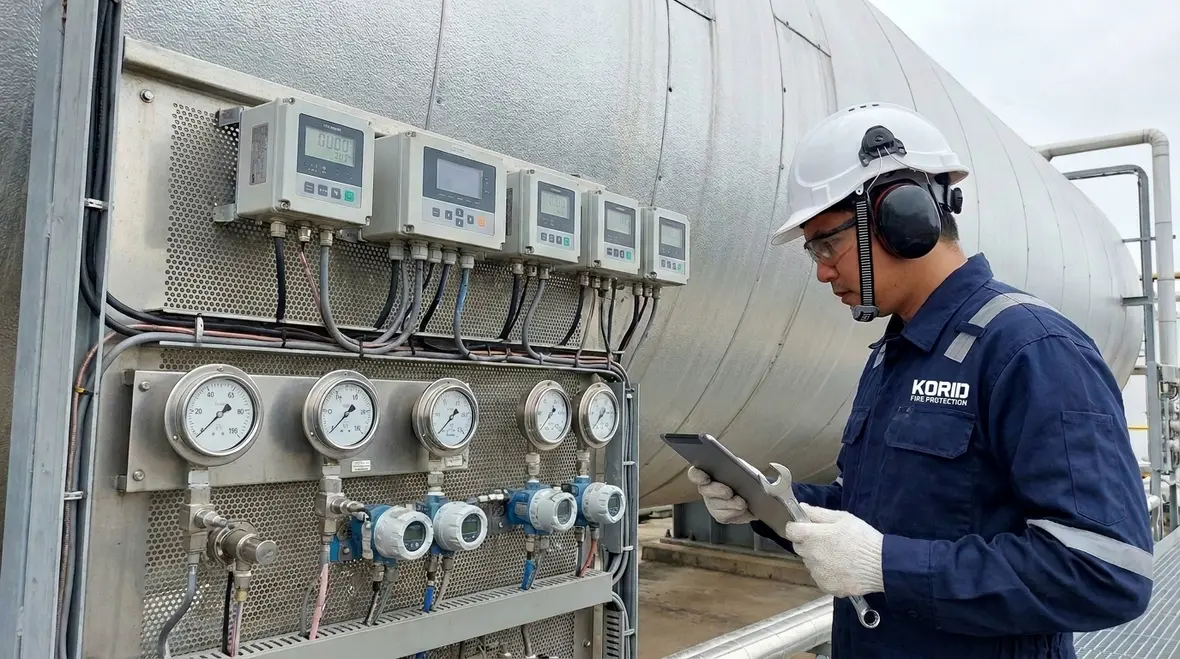
Instrumentation on LNG containers does not exist solely for remote viewing. It is used to detect abnormal conditions, provide information to operators, and initiate alarms or actions that reduce the likelihood or severity of unsafe scenarios. The key compliance concept is functional reliability: the instrumentation must produce accurate signals under the container’s operating environment, and it must remain reliable after routine service, vibration, thermal cycling, and environmental exposure.
Common monitored parameters tied to safe operation
Facilities typically rely on instrumentation for measurements such as:
Pressure indication and control support so operators can recognize conditions that may require mitigation.
Temperature monitoring to confirm expected thermodynamic behavior and detect deviations that could affect LNG integrity or system performance.
Alarm and setpoint behavior to ensure annunciations occur at the correct thresholds and do not fail silently.
Signal integrity across the full sensing path, including transducers, junctions, wiring, and alarm/control interfaces.
Even when sensors “appear to work,” drift, partial failures, and wiring degradation can shift readings enough to delay alarms or cause confusing displays. This creates operational risk and can also trigger nonconformities during inspections.
Where Section 21.10 compliance is tested during inspections
NFPA 52 Section 21.10 emphasizes that instrumentation must be suitable and maintained for intended use. Inspectors and AHJs typically assess not only the presence of gauges or transmitters, but also the overall evidence trail that confirms the instrumentation system stays within acceptable tolerances.
Verification areas that frequently create findings
Calibration evidence: Missing calibration certificates, expired intervals, or calibrations performed without documented traceability and acceptance criteria.
Alarm path performance: Alarms that are audible only, not visible as required, not tested for the full chain, or adjusted without documented approval.
Physical protection: Damaged conduit, degraded seals, or loose terminations that may compromise signal integrity in a hazardous environment.
Operational continuity: Instrumentation taken out of service, intermittent faults, or temporary bypasses that remain in place too long.
Labeling and documentation: Inconsistent setpoint labeling, unclear sensor mapping, or mismatch between as-built drawings and field wiring.
Commercial facilities often manage many asset categories at once. When instrumentation maintenance gets merged into broader “preventive maintenance,” the specific evidence needs for calibration and alarm testing can get lost. Kord Fire Protection helps close that gap by aligning field verification with inspection expectations and maintaining compliance-ready records.
Equipment mechanisms and common failure points
Understanding how instrumentation fails helps teams correct root causes, not just symptoms. The most frequent failure modes in LNG container instrumentation are not dramatic. They are incremental and can go unnoticed until a test reveals a condition outside tolerance.
Sensor drift and thermal effects
Temperature and pressure sensing elements can drift over time due to thermal cycling and exposure conditions. When drift occurs, the display or control system may still show plausible values, but the system may trip alarms too late or fail to reflect true operating status.
Wiring, terminations, and signal degradation
Vibration, corrosion exposure, and mechanical damage can degrade connections and cable insulation. A weak connection can produce intermittent faults that are difficult to troubleshoot because the instrumentation may only fail under specific load or environmental conditions.
Setpoint misconfiguration and “nuisance alarm” overrides
Operations teams may adjust setpoints or implement temporary overrides during troubleshooting. Without strict change control, those adjustments can persist and create unsafe drift away from original protective thresholds. This is a common compliance risk because it can reduce the protective intent of the instrumentation.
Maintenance practices that increase risk
Delayed calibration due to scheduling constraints or procurement lead times.
Incomplete functional testing that validates sensors but not the full alarm or control chain.
Documentation disconnect where field changes are not reflected in drawings or inspection-ready records.
For retail, industrial, and commercial LNG support sites, the practical solution is a planned maintenance workflow that includes calibration, functional testing, and documented change control. Kord Fire Protection supports those workflows with compliance-focused services designed to reduce rework and inspection exposure.
Maintenance and testing workflow for LNG container instrumentation
A compliant approach to NFPA 52 LNG container instrumentation requirements typically combines a calendar-based preventive program with condition-based checks. The goal is to keep readings accurate, alarms functional, and documentation defensible.
Step 1: Establish a documented inventory and mapping
Maintain an equipment register that links each sensor and transmitter to its location, instrument tag, alarm function, and control interface. Confirm the inventory matches as-built drawings. Any mismatch becomes a recurring operational and inspection issue.
Step 2: Calibration with traceable acceptance criteria
Calibration should include traceability to recognized standards and record acceptance criteria that match protective intent. Ensure that calibration intervals align with manufacturer guidance and internal risk assessments, then document any exceptions with approvals.
Step 3: Functional testing of alarms and indications
Verify not only the measurement output but also alarm annunciation and alarm behavior. Tests should confirm visibility, audibility, and correct triggering sequence. For control connected functions, verify that the protective logic behaves as intended.
Step 4: Manage changes with strict documentation control
Use a formal process for setpoint adjustments, component replacements, and temporary bypasses. Retain evidence showing who approved the change, what was changed, and the verification steps performed afterward.
Step 5: Prepare inspection-ready evidence
Before an inspection window, confirm that calibration records, test results, and updated drawings are complete. This shortens inspection time and reduces the likelihood of findings based on missing or inconsistent documentation.
To support ongoing readiness for commercial LNG and fire protection responsibilities, Kord Fire Protection also provides guidance on aligning maintenance programs with inspection expectations through its resources. For related fire protection compliance context, review NFPA 52 Section 16.4 ignition source control at LNG sites and Kord Fire Protection services and its approach to documented, field-tested readiness.
Frequently Asked Questions
Conclusion and Call to Action
NFPA 52 Section 21.10 drives compliance through instrumentation that performs reliably, alarms that annunciate correctly, and documentation that proves it. If your facility manages LNG containers for commercial or industrial operations, implement a disciplined calibration and functional testing workflow now, then verify evidence is inspection-ready. Partner with Kord Fire Protection to reduce risk, close documentation gaps, and keep your instrumentation system audit-proof throughout the year.

Join Our Newsletter!
Get the latest fire safety tips delivered straight to your inbox From our Newsletter.