
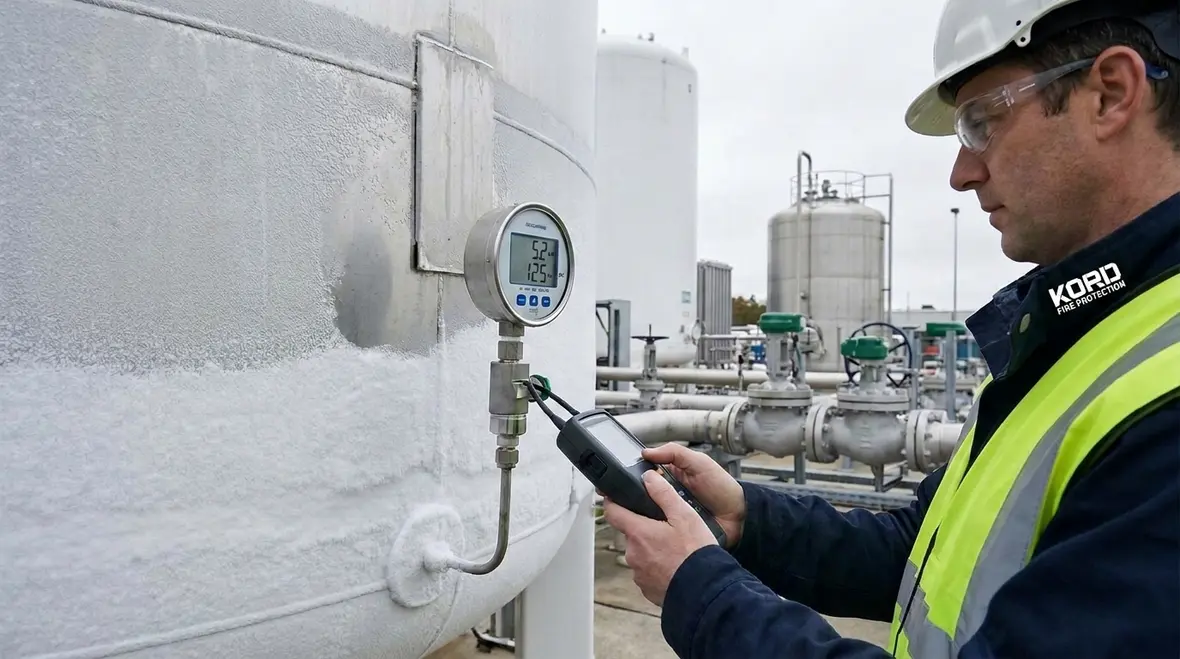
NFPA 52 Section 21.11: Pressure Gauging and Control for LNG Containers
Quick Answer: NFPA 52 Section 21.11 sets the operational and safety requirements for pressure gauging and control on LNG containers. It focuses on reliable instrumentation, safe control functions, and inspection and maintenance practices that prevent unsafe pressure excursions. Compliance depends on correct installation and ongoing verification.
For teams building a stronger compliance process around testing records and inspection readiness, see fire safety system documentation for compliance.
What problem does Section 21.11 solve?
NFPA 52 LNG pressure gauging control requirements exist to keep LNG container pressures within safe limits during normal operation, transfer, and abnormal conditions. Pressure gauges do more than display a number. They support alarms, interlocks, automatic controls, and operator decision making, all while maintaining accurate readings under cryogenic conditions and potential vapor and liquid stratification.
For commercial and industrial facilities, the challenge is practical: equipment must stay accurate through thermal cycling, remain functional during vibration and shock, and be maintainable without introducing leak paths, contamination risks, or instrumentation drift that can mask an overpressure event.
NFPA 52 LNG pressure gauging control requirements at a glance
At a high level, Section 21.11 requires that pressure gauging and control systems be suitable for LNG service and capable of reliably indicating and controlling container pressure. Systems must support safe actuation of pressure control devices and protective functions, with provisions for proper installation, protection, and upkeep.
NFPA 52 LNG pressure gauging control requirements are not just a one time acceptance concern. They directly affect the facility’s pressure management program, including calibration schedules, alarm set point verification, response testing, and documented maintenance.
Core compliance elements facilities typically must demonstrate
- Correct instrumentation selection for LNG temperature ranges, wetted material compatibility, and pressure rating.
- Accuracy and reliability appropriate to operational tolerances and alarm or control thresholds.
- Proper integration between gauges, transmitters, controllers, alarms, and any protective devices.
- Safeguards against incorrect indications due to blockage, icing, fouling, or sensor drift.
- Inspection and maintenance practices that preserve performance and prevent unsafe degradation.
How pressure gauging and control systems work in LNG container service
Pressure gauging and control for LNG containers typically involve one or more of the following: direct reading gauges for local verification, pressure transmitters for remote display and automated control, and control logic that actuates pumps, vaporizers, pressure relief pathways, or other system components depending on the station design.
Pressure measurement mechanisms and where accuracy fails
Common pressure sensing methods include mechanical elements and electronic pressure transducers. In LNG service, measurement accuracy can degrade due to:
- Thermal cycling that shifts calibration or changes sensor output characteristics.
- Condensation, icing, or stratification that affects how pressure is communicated to the sensing element.
- Blocked impulse lines or ports caused by process deposits or phase changes.
- Wiring or signal integrity issues that create erroneous readings or false alarms.
- Mechanical damage from maintenance activities, impact, or vibration.
These failure points matter because inaccurate pressure readings can delay protective actions or cause unnecessary cycling of control devices. Either outcome increases risk and can complicate compliance inspections.
Inspection, testing, and maintenance procedures that support compliance
Commercial facilities often treat pressure instruments as “set and forget” assets until an outage or compliance audit. Section 21.11 expectations push facilities toward a managed, evidence based approach that confirms the system remains capable of performing its safety function.
What an effective verification program usually includes
- Calibration and drift management for transmitters and any pressure sensing devices tied to alarms or controls.
- Impulse line inspection where applicable, including checks for blockage, leaks, and proper purge or equalization arrangements.
- Functional verification of alarms and interlocks to confirm set points trigger as intended.
- Control response checks to validate that actuators respond to control signals within expected timeframes.
- Documentation and traceability using test records, calibration certificates, and maintenance logs.
Common commercial compliance challenges
Facilities in industrial and retail settings face constraints that make compliance harder than it sounds:
- Limited downtime windows for calibration and testing, especially where customer fueling or uptime expectations are high.
- Environmental exposure to wiring, enclosures, and instrument housings that can affect reliability.
- Work order variability where multiple contractors service different components, increasing the risk of missed interface requirements.
- Unclear responsibility boundaries between operators and service providers for instrument verification and set point governance.
To reduce these issues, facilities benefit from a single, coordinated compliance plan that ties instrument verification to operating procedures, alarm management, and documented corrective actions.
How Kord Fire Protection supports ongoing NFPA 52 compliance
Pressure gauging and control systems directly influence pressure excursion prevention, alarm reliability, and safe operation. Kord Fire Protection helps commercial operators maintain that reliability through structured inspection support, testing coordination, and documentation practices aligned with operational realities.
For facilities needing to strengthen their evidence package for inspections and internal audits, Kord Fire Protection acts as a technical partner that focuses on performance outcomes and maintainability, not just paperwork. This partnership approach helps ensure that pressure instrumentation remains accurate and controls respond correctly throughout the equipment life cycle.
To explore broader fire protection and compliance support capabilities, refer to Kord Fire Protection services.
Frequently Asked Questions
Call to action
Review your LNG container pressure gauging and control program against NFPA 52 Section 21.11 expectations, with particular attention to calibration traceability, alarm and interlock verification, impulse line integrity, and documented corrective actions. If your facility needs an organized compliance plan and dependable maintenance support, contact Kord Fire Protection to strengthen testing, documentation, and ongoing reliability.
If you want a practical next step for records, audits, and corrective action tracking, review Kord’s fire protection compliance auditing guide.

Join Our Newsletter!
Get the latest fire safety tips delivered straight to your inbox From our Newsletter.


