
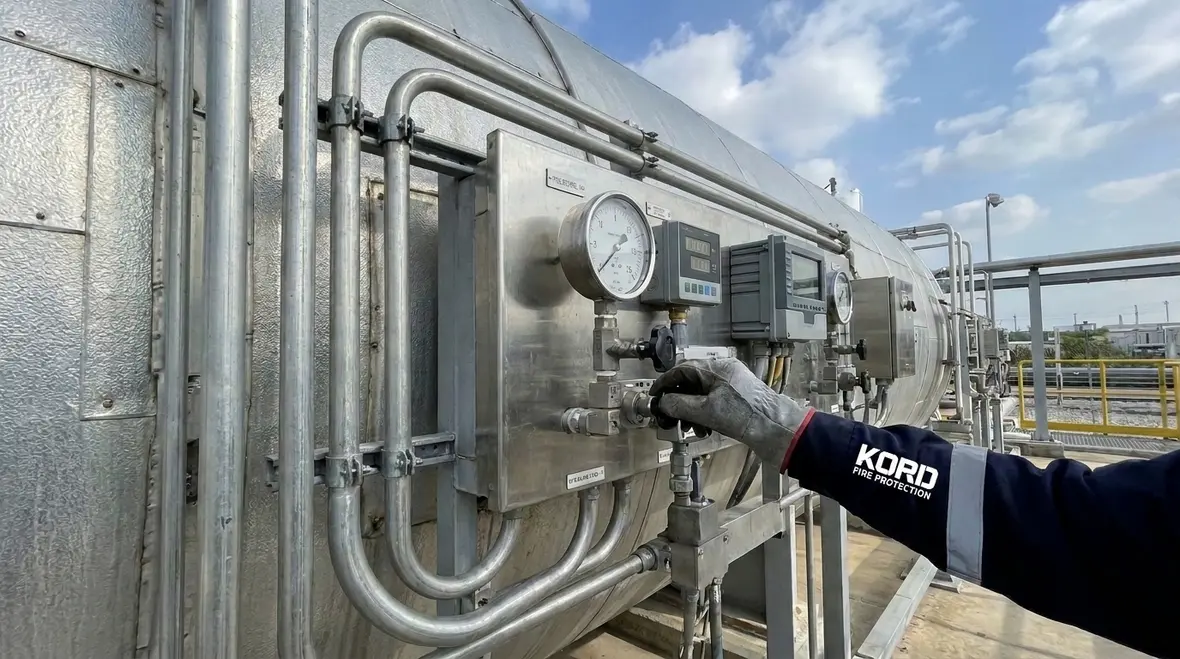
NFPA 52 Section 21.10: Instrumentation for LNG Containers
Quick Answer: NFPA 52 Section 21.10 sets minimum instrumentation expectations for LNG containers to support safe operations, monitor hazardous conditions, and enable alarms and shutdown actions. Compliance depends on correct sensor placement, functional testing, calibration control, and documentation.
For teams building stronger testing discipline around connected life safety systems, Kord Fire Protection’s fire pump testing requirements guide is a useful companion read on how dependable inspection, calibration, and documentation practices support compliance programs across critical equipment.
What NFPA 52 Section 21.10 is trying to prevent
NFPA 52 LNG container instrumentation requirements focus on one practical outcome: reducing the likelihood that LNG container hazards develop faster than protective actions can respond. Instrumentation does this by detecting abnormal thermodynamic or system conditions, then driving alarms, operator awareness, and protective shutdown or control logic. In commercial, industrial, and retail settings, the highest risk is rarely a “single broken device.” It is common failure of the full chain: sensor accuracy drift, wiring faults, missed alarm responses, delayed calibration, or inconsistent maintenance records.
Because the standard ties instrumentation function to safe operating boundaries, facilities typically treat Section 21.10 as a system reliability requirement, not a one time install checklist. Kord Fire Protection helps owners and operators structure inspection, testing, and maintenance practices so instrumentation remains dependable across seasonal load changes, alarm history, and facility turnarounds.
Where instrumentation fits in LNG container safety controls
In practical terms, LNG container instrumentation sits inside a layered safety strategy. Detection instrumentation provides measured inputs to controls and protective systems. Those protective systems typically include alarm annunciation and, when limits are exceeded, automatic protective actions or controlled shutdown sequences.
Typical measured conditions
Facilities should expect instrumentation to cover conditions that can indicate unsafe states, including parameters tied to pressure and temperature behavior, vapor release risk, and container system performance. Exact device scope and limits depend on the container design and system configuration, but compliance programs usually map each protective function to a corresponding sensor and response.
How the “instrument to action” chain gets verified
Compliance becomes defensible when the facility can demonstrate that each measurement point leads to the intended response. That means:
- Each sensor is correctly located and rated for the LNG environment and operating range.
- The control system interprets signals within specified tolerances.
- Alarms and interlocks function as designed under test conditions.
- Operators understand the alarm response procedures and escalation paths.
- Records show calibration, inspection findings, and corrective actions.
Instrumentation requirements under Section 21.10: what to scrutinize
Section 21.10 is often treated as “instrumentation only,” but auditors and insurers typically evaluate the full instrumentation lifecycle. The compliance question becomes: can the facility prove that the system will perform when required.
1) Sensor placement and environmental survivability
Placement affects measurement validity. If a sensor sits in a location that does not represent the container condition it is intended to measure, the system can either under detect or over detect. Environmental survivability also matters. Sensors and components must resist vibration, moisture ingress, thermal cycling, and corrosion typical to LNG container surroundings.
Common commercial facility issues include:
- Unintended relocation during maintenance or enclosure modifications
- Loose conduit seals or degraded fittings that permit water intrusion
- Improper cable routing that increases electrical noise or mechanical stress
2) Accuracy, calibration control, and tolerance management
Instrumentation drift is an expected aging mechanism. Section 21.10 compliance programs typically require calibration and verification to maintain measurement accuracy and ensure alarm thresholds are reached when intended. A mature program uses controlled calibration intervals, establishes acceptance criteria, and records the as found and as left values.
Operationally, facilities should expect to manage calibration tolerances alongside control system scaling and alarm setpoints. A typical failure point is when the sensor calibration changes, but the control system thresholds or logic does not get reviewed or documented, resulting in a mismatch between expected and actual alarm behavior.
3) Alarm annunciation, interlocks, and shutdown logic
Even accurate sensors do not ensure safety if the alarm and interlock path fails. Facilities should verify that:
- Alarms annunciate at the correct locations and at the correct severity
- Alarm delays, voting logic, and permissives align with safe operating design
- Shutdown or protective actions occur as intended, under test conditions
- Fail safe behavior is appropriate for the design (for example, loss of signal handling)
In many commercial operations, the most underestimated risk is operator response. If alarms are frequent, ambiguous, or not drilled, the facility can drift into delayed or incorrect actions. Kord Fire Protection commonly supports compliance by aligning testing outcomes with practical facility response expectations, including documentation and functional verification guidance.
Inspection and testing practices that stand up in the field
To meet NFPA 52 LNG container instrumentation requirements, testing must confirm both instrument health and system functionality. A reliable approach uses a planned test sequence tied to the instrument list, control logic mapping, and alarm records.
Functional test mechanics
Functional tests typically verify that instrument signals produce correct control system outputs. This often includes:
- Signal verification at the input and at the control logic interface
- Alarm setpoint confirmation against documented thresholds
- Interlock chain verification, including permissive and supervisory functions
- Response time checks where the design or facility safety philosophy requires them
As found versus as left documentation
Auditors and safety reviewers look for evidence that the facility did not merely “pass the test.” They want proof of instrument condition and corrective action. As found readings identify drift trends. As left readings confirm that corrective work restored performance to the required tolerance.
For commercial and industrial sites, this documentation becomes operationally important because it helps justify changes to calibration intervals, signal conditioning adjustments, and replacement decisions before a critical failure occurs.
Common failure points that drive noncompliance findings
NFPA 52 Section 21.10 issues often originate in predictable weak points. The following problem patterns frequently appear during compliance reviews:
- Calibration gaps: missed calibration dates or incomplete records, sometimes caused by vendor turnover or work order system limitations.
- Wiring and termination issues: intermittent faults, incorrect terminal labeling, or damage to cable insulation near heat sources.
- Control logic drift: setpoint changes without re validation, firmware updates without functional retesting, or incorrect scaling.
- Alarm fatigue: recurring nuisance alarms that operators learn to ignore, weakening response discipline.
- Sensor degradation: slow accuracy loss that does not trigger a failure immediately, but shifts measurements closer to unsafe boundaries.
Facilities reduce these risks by treating instrumentation as a managed safety system. That includes training, a disciplined work order process, and periodic functional verification. Kord Fire Protection provides ongoing compliance support, helping commercial sites maintain instrumentation integrity through structured testing and maintenance workflows.
How to build an instrumentation compliance program
A practical compliance program for Section 21.10 connects three elements: a clear instrument inventory, defined test frequency and acceptance criteria, and robust recordkeeping. The program should also align with your facility’s operational reality, including shift changes, access constraints around LNG equipment, and planned outage windows.
Program components facilities should implement
- Instrument inventory and mapping: a list of each sensor, its measured parameter, location, and associated alarms and interlocks.
- Calibration and verification plan: intervals, tolerances, and method descriptions tied to manufacturer requirements and site design needs.
- Functional testing procedure: test sequence, responsibilities, and pass fail criteria for alarms and protective actions.
- Corrective action tracking: root cause analysis, replacement decisions, and retest verification after repairs.
- Operator response review: documented alarm response steps, periodic drills, and escalation paths.
For internal planning and commercial facility alignment, teams often benefit from pairing NFPA 52 instrumentation governance with broader life safety documentation and test program structure. For related guidance on inspection and testing expectations for fire protection systems, Kord Fire Protection can support program design and execution. See fire pump testing protocols for reliable industrial uptime for a related service focused resource.
Frequently Asked Questions
Conclusion: take action now
NFPA 52 Section 21.10 instrumentation compliance succeeds when facilities manage the entire safety chain: sensors, control logic, alarms, interlocks, and documented testing. If your LNG container instrumentation program lacks a current instrument map, reliable calibration tracking, or consistent functional verification, it is time to tighten the process. Contact Kord Fire Protection to support testing, maintenance planning, and defensible compliance documentation tailored to commercial and industrial operating conditions.

Join Our Newsletter!
Get the latest fire safety tips delivered straight to your inbox From our Newsletter.


