
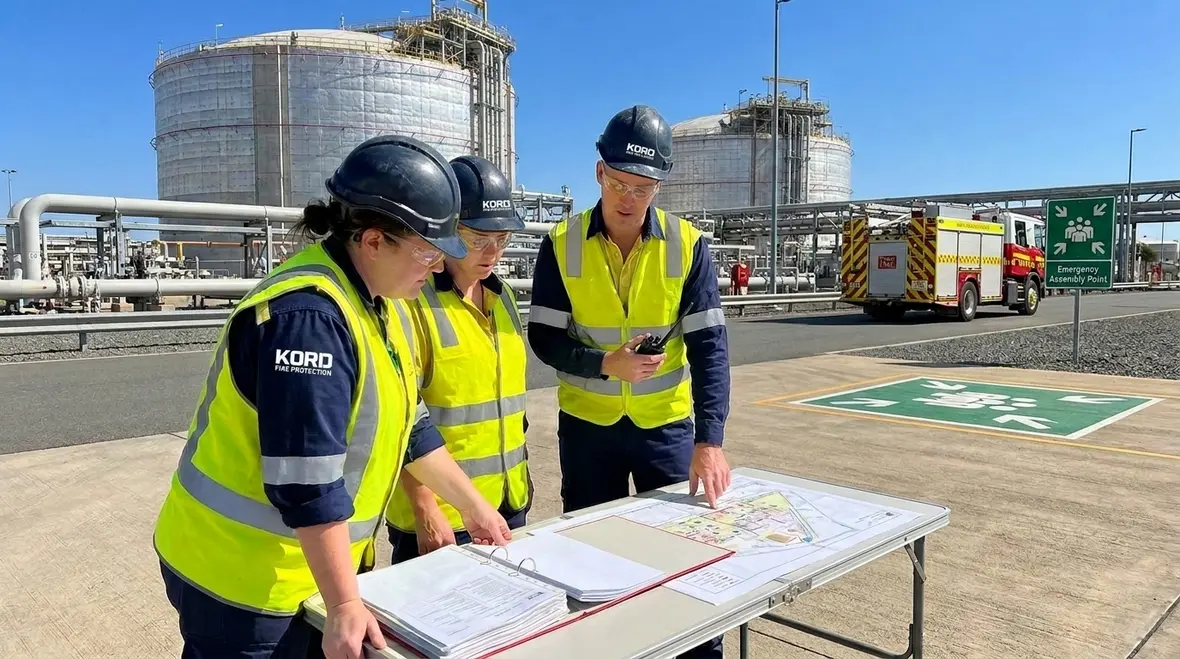
NFPA 52 Section 16.8: Emergency Response Measures for LNG Sites
Quick Answer: NFPA 52 Section 16.8 sets operational requirements for emergency response at LNG facilities, emphasizing pre-incident planning, coordination, training, alerting, and practiced procedures. Compliance focuses on life safety, hazard control, and maintaining readiness through inspection, drills, and documented maintenance.
Facilities that need broader support for inspections, repairs, and ongoing compliance can also explore fire protection services in Southern California for a practical path to coordinated service and readiness planning.
What NFPA 52 Section 16.8 requires for emergency response
For LNG facilities, NFPA 52 LNG site emergency response measures establish the foundation for responding to credible releases, fire exposure, and escalations that can occur during normal operations or abnormal events. Section 16.8 centers on preparedness: written procedures, trained responders, and coordination with site and offsite resources. The intent remains consistent across commercial, industrial, and retail-adjacent LNG service applications: protect people first, stabilize conditions second, and prevent secondary incidents through disciplined execution.
In practice, many facilities discover that the hardest part is not writing a plan, but proving it works under realistic time pressure, while equipment and systems remain within inspection and performance requirements.
How LNG site emergency plans should be built and maintained
Emergency organization, roles, and escalation triggers
A compliant emergency response framework assigns clear authority and responsibilities for command, communications, monitoring, evacuation support, and hazard control. Facilities should define escalation triggers tied to credible incident scenarios, such as unexpected loss of containment, prolonged abnormal venting, fire impingement, or hazardous atmospheric conditions in impoundment areas.
- Incident command: establishes decision-making, resource staging, and coordination with mutual aid.
- Communications: includes method, redundancy, and initial notifications to internal teams and external responders.
- Site control: defines access control points, perimeter responsibilities, and traffic management.
- Hazard monitoring: assigns who monitors and how results influence actions.
Written procedures that match site realities
Effective NFPA 52 LNG site emergency response measures must reflect actual facility layouts, access routes, monitor locations, and operating modes. Plans should map procedures to the systems most likely to actuate during an emergency, including detection, shutdown, ventilation control concepts (where applicable), and emergency isolation approaches.
Common failure points occur when emergency procedures do not align with how the facility actually transitions equipment under alarm conditions, or when responders do not understand constraints such as visibility limits, cryogenic hazard zones, or the time required to reach safe positions for defensive operations.
Pre-incident coordination and communications that reduce response delays
Coordination with fire services and offsite responders
Section 16.8 expectations typically translate into documented coordination with local fire departments, emergency medical response, and mutual aid resources. The coordination needs to cover more than awareness. It should include practical information responders can use immediately, such as site access, hazards, potential release pathways, and safe staging and approach routes.
For commercial and industrial operators, this coordination often faces operational constraints: limited staffing, rotating shift coverage, and contractors who change over time. A strong compliance program treats responder coordination as a living process rather than a one-time meeting.
Alerting systems and redundancy
Emergency alerting should connect discovery to action without excessive friction. Facilities should validate that alarms and notifications are audible and visible where personnel congregate, including control rooms, break areas, and remote operating positions. Where communications depend on radios, facilities should confirm coverage and reserve channels for incident command.
During inspections and drills, the focus should include what happens when primary means fail. That is where many LNG sites find gaps, such as single points of communication failure, unclear responsibility for radio distribution, or procedures that assume certain personnel are always present.
Training and drills: turning the plan into an executable response
Competency-based training for on shift and emergency roles
NFPA 52 LNG site emergency response measures require that personnel understand emergency duties before an incident occurs. Training should cover hazard recognition, decision steps, safe distances and approach rules, use of protective equipment, and coordination protocols. Training should also include operator actions tied to the facility’s abnormal condition response philosophy.
Commercial facilities often struggle with training continuity, especially when employees are cross-trained for other industrial functions. A best practice uses competency checks tied to role definitions, not just attendance.
Drills that stress realistic timing and coordination
Drills should test the full chain of response: initial alarm handling, command activation, notifications, staging, hazard assessment, and execution of protective actions. Drills must include communication delays, partial information, and realistic constraints such as emergency access route selection.
After-action reviews must translate findings into changes. If a drill reveals confusion about evacuation routes or misunderstandings about hazardous zone boundaries, the plan and training should update. “Passed the drill” outcomes without corrective action often lead to repeat findings and noncompliance during subsequent evaluations.
Equipment readiness and common compliance gaps during audits
Maintaining detection, shutdown interfaces, and emergency equipment
Emergency response effectiveness depends on equipment readiness. Facilities should maintain detection and alarm interfaces, emergency communications, and emergency response equipment that supports safe operations during incidents. Compliance should include inspection frequencies, acceptance criteria, and documented maintenance practices that verify performance.
Many LNG sites uncover recurring gaps during reviews:
- Outdated emergency maps or access routes after construction changes.
- Incomplete verification records for alarm audibility, radio coverage, or equipment checks.
- Equipment configuration drift caused by maintenance activities without verification steps.
- Procedures that reference systems that no longer match the current operational configuration.
Managing contractors and shift coverage
Retail-adjacent LNG operations and commercial service contracts often rely on contractors and third-party technicians. Section 16.8 preparedness expectations require that all personnel who could affect emergency outcomes understand their responsibilities. Facilities should ensure contractor onboarding covers emergency notification steps, site hazards, and location of critical response tools.
Partnering with Kord Fire Protection for ongoing LNG emergency readiness
NFPA 52 LNG site emergency response measures work only when maintenance, testing, and documentation stay current. Kord Fire Protection supports commercial and industrial operators with practical readiness programs that align emergency systems with real-world performance. This includes structured testing approaches, inspection readiness support, and maintenance coordination to help reduce audit risk and improve drill outcomes.
For additional context on fire and life safety implementation in commercial facilities, Kord Fire Protection can also help align documentation and readiness practices with broader compliance expectations. If you want to understand how fire protection responsibilities connect across a facility’s systems and documentation, see commercial fire suppression systems and services.
Frequently Asked Questions
Conclusion and call to action
NFPA 52 Section 16.8 demands more than a binder plan. LNG site emergency response measures must be executable, coordinated, and validated through training, drills, and evidence-based readiness maintenance. Facilities that treat emergency readiness as an ongoing program reduce audit risk and protect lives when conditions change fast. Engage Kord Fire Protection to evaluate your current emergency readiness, verify critical interfaces and documentation, and support a maintenance and testing plan that stands up to real-world demands.

Join Our Newsletter!
Get the latest fire safety tips delivered straight to your inbox From our Newsletter.


