NFPA 52 Section 16.4: Ignition Source Control at LNG Sites
Quick Answer
NFPA 52 Section 16.4 requires LNG facilities to control ignition sources to prevent ignition of flammable atmospheres. Facilities must identify ignition hazards, establish controls and separation, maintain safe operating practices, and verify effectiveness through inspections, testing, and documented procedures.
For facilities refining inspection planning and documentation discipline, Kord Fire Protection’s guidance on electrical area classifications for LNG sites fits naturally alongside ignition source control because zoning drift and equipment suitability problems tend to show up together during audits.
What NFPA 52 Section 16.4 is trying to prevent
At LNG sites, the credible ignition risk does not come from a single device. It comes from how multiple operational systems interact with hydrocarbon release scenarios. NFPA 52 LNG site ignition source control requirements target conditions that can create sparks, hot surfaces, arcs, static discharge, or flame impingement in areas where flammable methane air mixtures may exist.
In practice, facilities must prevent ignition during normal operations, foreseeable upset conditions, maintenance activities, and contractor work. Compliance hinges on controlling ignition sources with both engineering measures and strict administrative controls supported by inspection and maintenance.
Where ignition control applies across an LNG facility
Section 16.4 ignition control expectations typically follow the facility’s hazardous area philosophy and operating envelope. Ignition source control is not limited to process equipment. It extends to the site’s supporting systems and daily work practices.
Common high risk areas
- Areas around LNG receiving, unloading, and transfer points where releases can occur due to hose handling, connection operations, and valve operation.
- Vapor handling and flare systems, including locations where venting and transient rich vapor concentrations may appear.
- Compressor, pumps, and heat exchanger zones where mechanical failures, friction, or electrical faults can introduce ignition energy.
- Electrical rooms, instrument racks, and cable runs where arcing or poor installation practices can energize hazardous atmospheres.
- Maintenance and staging areas where hot work, temporary electrical loads, and tool use can create uncontrolled ignition sources.
Core ignition source control mechanisms
NFPA 52 ignition control is achieved through layered controls. These controls must be practical for industrial operations and verifiable during inspections.
1) Eliminate or reduce ignition sources
Facilities typically implement controls through equipment selection and design. Examples include explosion protected electrical equipment appropriate to the classified area, minimizing exposed energized components, and using fixed systems designed to avoid ignition energy during normal and abnormal states.
Where ignition sources cannot be eliminated, controls focus on reducing the probability of ignition energy release to the hazardous atmosphere.
2) Control hot surfaces and elevated temperature equipment
Hot surfaces can result from improper thermal design, malfunctioning temperature control systems, blocked flow paths, or degraded insulation. LNG sites must manage surface temperature through:
- Equipment temperature rating alignment with the hazardous area classification and gas detection strategy.
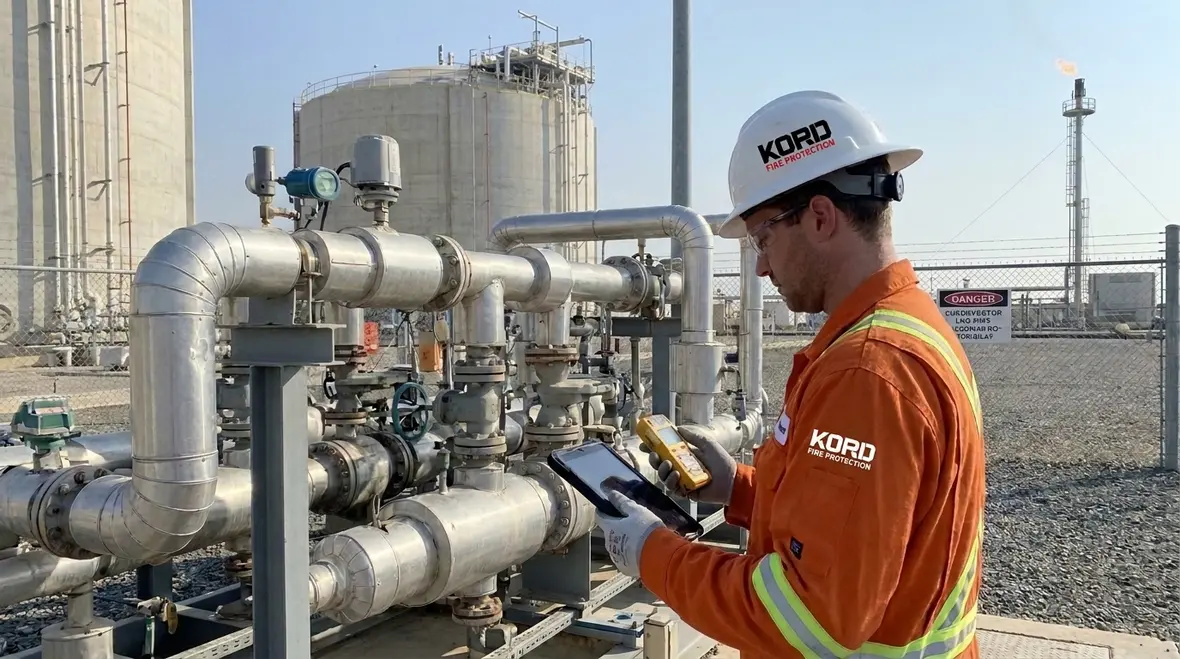
- Preventive maintenance to detect degraded heaters, malfunctioning fans, and failing controls.
- Inspection of heat tracing, insulation condition, and the integrity of protective covers.
3) Manage electrical ignition and fault scenarios
Electrical hazards include arcing, sparking at terminations, static driven discharge through grounding gaps, and failures that exceed the protective design assumptions of explosion proof or intrinsically safe equipment.
Effective ignition control requires strict adherence to installation and ongoing integrity verification, including:
- Inspection of enclosures, gasketing, and sealing practices at field connections.
- Verification that cable routing and termination practices match the approved hazardous area design.
- Routine checks of grounding and bonding systems where static control is critical during loading, purging, and maintenance.
4) Control mechanical ignition sources
Mechanical ignition can occur through friction, impact, or electrostatic generation. LNG facility maintenance and operations should address:
- Wear monitoring for rotating equipment and couplings, including bearing and seal condition checks.
- Foreign object prevention to reduce impact and sparking risks.
- Proper torque procedures and fastener management to prevent loosening and rubbing contact.
5) Implement hot work controls and contractor controls
Hot work and non routine tasks often create the greatest compliance challenge. Permitting alone does not control ignition source risk unless procedures also manage gas testing, ventilation, ignition source isolation, fire watch coverage, and post hot work verification.
Operationally strong programs typically require:
- Task specific risk assessment and documented control measures.
- Gas monitoring at the task location and in expected migration paths.
- Immediate cessation triggers tied to measured conditions.
- Verification that tools and temporary equipment meet the required ignition protection strategy.
What inspections and documentation typically need to prove
NFPA 52 Section 16.4 expectations depend on demonstrated effectiveness. Facilities should be prepared to show how ignition sources are managed and how controls are kept reliable over time.
Inspection readiness checklist
- Ignition source identification and mapping: Documented list of ignition hazards by area, task, and equipment category.
- Control method and rationale: Explanation of engineering, administrative, and procedural controls, including when controls change during operations.
- Maintenance and testing records: Evidence that explosion protection systems, grounding and bonding, and temperature controls receive preventive maintenance.
- Gas detection and operational interlocks: Proof that detection, alarm response, and shutdown or mitigation strategies align with ignition control objectives.
- Contractor program verification: Records of training, permit compliance, and post job checks for hot work and temporary power.
Common failure points auditors find
- Out of date area classifications or drift from the approved hazardous location design due to layout changes.
- Incomplete sealing and enclosure maintenance, especially after corrective repairs.
- Poor coordination between operations and maintenance when equipment is returned to service.
- Grounding and bonding defects discovered after static risk events or abnormal operations.
- Temporary electrical devices used during maintenance that do not match the approved ignition protection strategy.
How Kord Fire Protection supports ongoing compliance
Ignition source control becomes hard to manage when the program depends on tribal knowledge, infrequent inspections, or inconsistent contractor oversight. Kord Fire Protection helps commercial and industrial operators maintain defensible ignition source control programs through inspection, testing, and documentation support aligned with LNG and hazardous atmosphere operational realities.
For facilities managing layered life safety systems, Kord Fire Protection also supports cross program readiness and coordination with routine maintenance cycles. To expand on related fire protection responsibilities and site readiness planning, review Kord Fire Protection to understand how ongoing service supports audit readiness and reliable operational performance.
Frequently Asked Questions
Next step: build a defensible ignition control program
Facilities should treat NFPA 52 LNG site ignition source control requirements as an ongoing management system, not a one time compliance task. Contact Kord Fire Protection to assess ignition control risks, strengthen inspection and maintenance workflows, and improve documentation quality for audit readiness and continuous safe operation.

Join Our Newsletter!
Get the latest fire safety tips delivered straight to your inbox From our Newsletter.