
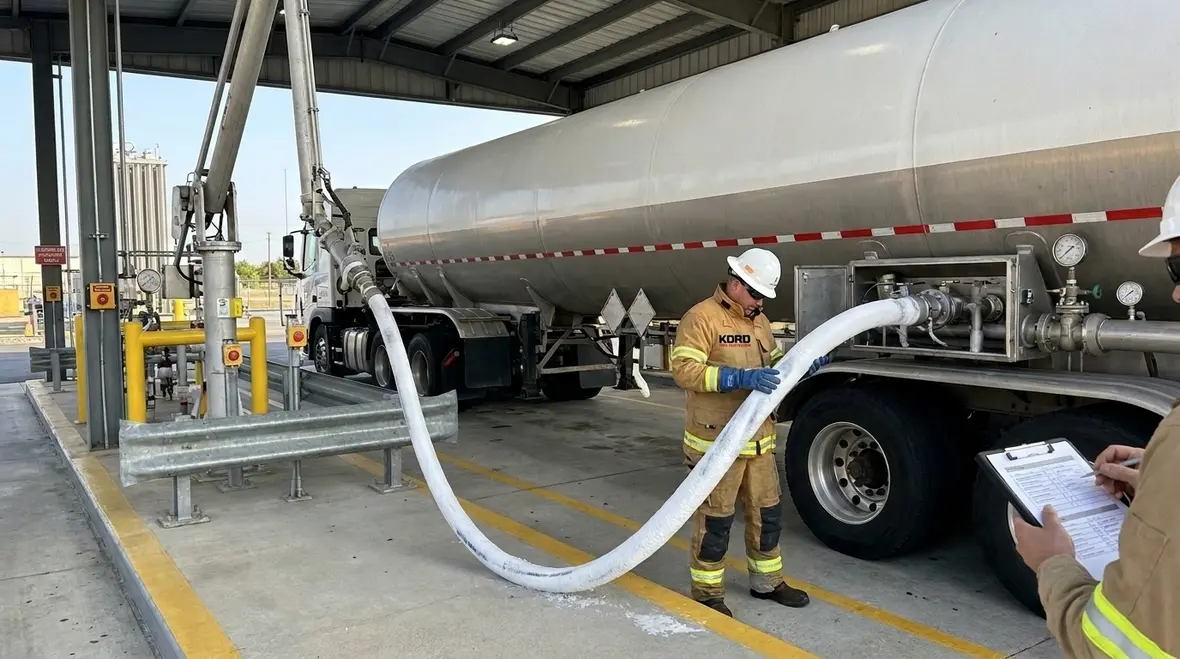
NFPA 52 Section 16.10: Unloading LNG From Cargo Transport (Practical Compliance Guide)
Quick Answer: NFPA 52 Section 16.10 sets the operational and safety controls for unloading LNG from cargo transport, including location, equipment readiness, transfer procedures, emergency coordination, and inspection expectations. Facilities must verify that systems, personnel practices, and safeguards align before and during every unloading operation.
What NFPA 52 LNG cargo transport unloading requirements cover under Section 16.10
NFPA 52 LNG cargo transport unloading requirements focus on preventing releases, controlling ignition sources, and ensuring that transfer operations remain within safe design and operating limits. Section 16.10 targets the unloading phase, where hazards concentrate due to pressure differences, cryogenic temperatures, moving connections, and rapid escalation potential if a gasket, valve, or hose fails.
In commercial environments, the most common compliance gap is not the written procedure, but the operational readiness behind it: equipment condition, verification steps, joint integrity, communications, and documented readiness checks performed the same way every time.
Facilities reviewing unloading risk alongside broader special hazard protection planning can also benefit from looking at commercial fire suppression system services early in the process, especially when inspection, testing, and maintenance responsibilities need to stay aligned across multiple protection layers.
Before unloading starts: site readiness and pre-transfer controls
NFPA 52 Section 16.10 expects facilities to prepare the unloading location and the receiving system so that unloading can proceed without improvisation. Key pre-transfer elements typically include:
- Unloading area control: establishing exclusion zones, managing vehicle positioning, and verifying safe access paths for emergency response.
- Approved operating configuration: confirming the receiving equipment configuration matches the unloading plan, including valves, isolation points, and flow paths.
- Equipment condition verification: ensuring cryogenic hoses, couplings, and transfer lines meet acceptance criteria and show no defects, damage, or evidence of improper prior service.
- Compatibility checks: verifying correct materials and connection interfaces to prevent seal failures caused by mismatched components or incorrect coupling engagement.
- Utilities and support systems readiness: confirming instrumentation, emergency shutdown logic, vapor handling provisions, and any required protective systems are operational.
Practical compliance challenge: facilities often focus on “being permitted” for unloading, while under-documenting day-of-operation checks. Auditors and insurers frequently evaluate whether crews can demonstrate that verifications happened in real time, not just in policy manuals.
Connections, transfer equipment, and integrity management during unloading
During unloading, the transfer system becomes the critical barrier set. Section 16.10 places importance on how unloading connections are made, monitored, and maintained so that leakage and uncontrolled flow do not occur.
Hoses, couplings, and joints: the failure points that drive incidents
Most credible risk pathways during unloading connect to mechanical or thermal issues:
- Improper coupling engagement: incomplete seating can create microleaks that worsen under cryogenic cycling.
- Damaged gaskets or seals: wear, pinching, or contamination can reduce sealing performance.
- Hose restraint or routing errors: strain and stress concentrate at connection points, increasing failure likelihood.
- Thermal mismatch: rapid temperature transitions can cause contraction effects that change how a joint behaves.
Monitoring and operational discipline
NFPA 52 controls transfer operations using disciplined monitoring. Facilities typically must ensure that:
- Personnel follow step-by-step transfer sequences without skipping verification points.
- Valves and flow paths respond as expected to control inputs.
- Observable indicators of leakage or abnormal operation trigger immediate corrective action per the emergency plan.
Operational best practice: use a standardized pre-unload checklist that includes connection verification, leak-check outcomes where applicable, and documented start-up confirmation of receiving equipment status. This creates repeatability across shifts and contractors.
Emergency coordination and abnormal condition handling
Unloading introduces rapid escalation potential. NFPA 52 Section 16.10 aligns transfer operations with emergency readiness, ensuring crews can stop the transfer and manage hazards without delay.
Coordination with response roles
Commercial facilities frequently involve multiple parties: the LNG carrier crew, the receiving facility operator, security staff, and local responders. Section 16.10 expectations typically translate into:
- Clear roles and communication pathways during abnormal events.
- Defined stop-transfer actions and escalation criteria.
- Ability to verify that emergency systems are available and functional before unloading proceeds.
Common abnormal scenarios and how they are managed
Facilities should plan for realistic failure modes such as:
- Leak detection indicating a joint or connection issue.
- Loss of pressure control or unexpected flow conditions.
- Equipment malfunction that prevents safe continuation.
- Environmental or access constraints that delay response.
Compliance insight: emergency plans often exist, but organizations sometimes lack evidence of practical readiness, such as drills aligned to unloading realities and verification that shutoff and communications work under time pressure.
Inspection, testing, and documentation: what “maintained” means in practice
NFPA 52 Section 16.10 compliance depends on whether equipment remains in acceptable condition over time. That requires a structured inspection and testing program that covers unloading-specific components and interfaces.
What to document so you can prove readiness
Strong documentation typically includes:
- Maintenance history for transfer hoses, couplings, fittings, and associated controls.
- Inspection results and corrective actions taken for deficiencies.
- Record of pre-unload checks performed for each unloading event.
- Verification of any required safety system functional checks.
Where facilities commonly fall behind
- Gaps between manufacturer guidance and internal checklists: crews use simplified steps that do not reflect real acceptance criteria.
- Infrequent inspection of unloading hardware: hoses and seals may degrade between events without a robust inspection schedule.
- Missing evidence for contractors: subcontractor controls sometimes do not meet the same documentation standard.
For ongoing compliance support, Kord Fire Protection helps commercial facilities maintain fire and safety readiness through inspection, testing, and maintenance programs aligned to real-world operational demands. This support is especially valuable when unloading operations involve multiple contractors, shifting schedules, and recurring safety system verification.
How to implement Section 16.10 controls at commercial and retail LNG sites
Implementing NFPA 52 unloading controls at industrial and retail LNG facilities often requires aligning safety requirements with day-to-day business operations. Typical implementation strategies include:
- Standard work for unloading: one consistent unloading sequence, used every time, with defined hold points.
- Training tied to checklists: crew competency includes the exact steps used in the field, not just general awareness.
- Management of change: updates to equipment, procedures, or vendors trigger a documented review before operations continue.
- Integration with facility safety systems: confirm that the unloading procedure interfaces correctly with detection, shutdown, and emergency arrangements.
Commercial facilities benefit from building a compliance “chain of evidence” that starts with equipment condition and ends with documented pre-transfer readiness and verified emergency capability.
To strengthen the external documentation strategy for your overall safety program, facilities can also cross reference related NFPA content. If your compliance program includes fire protection systems referenced by other NFPA standards, align maintenance cycles across all applicable requirements.
Frequently Asked Questions
Call to action
Review your unloading playbook against NFPA 52 Section 16.10 and validate that crews can demonstrate real-time readiness for connections, controls, and emergency coordination. Engage Kord Fire Protection to support inspection, testing, and maintenance programs that keep unloading safety systems reliable. Start by auditing your unloading checklist against installed equipment condition and last maintenance records today.

Join Our Newsletter!
Get the latest fire safety tips delivered straight to your inbox From our Newsletter.


