NFPA 52 Section 15.7: LNG Facility Training Requirements
Quick Answer: NFPA 52 Section 15.7 requires LNG facility training that ensures personnel can operate equipment safely, respond to abnormal conditions, and follow established emergency procedures. It also demands initial and refresher training aligned with role responsibilities, hazards, and documented competencies.
Why NFPA 52 Training Matters for LNG Safety
Commercial LNG sites depend on more than compliant hardware. They depend on competent people who understand cryogenic hazards, vapor dispersion risks, ignition control concepts, and the correct sequence of safe actions during normal operations and emergencies. In practice, training success comes down to role clarity, practical drills, and verification that workers can perform tasks under time pressure and unfamiliar conditions.
For teams tasked with managing compliance, the most common NFPA 52 LNG facility training requirements challenge is not simply collecting attendance records. Auditors typically expect the training program to reflect the facility’s actual hazards, equipment configurations, and operating procedures, including how personnel maintain readiness when systems are taken out of service for maintenance or inspection.
For a broader look at keeping systems and documentation aligned with operational readiness, see ITM fire protection inspection testing maintenance.
NFPA 52 Section 15.7 Training Scope: Who Must Be Trained and What They Must Know
Section 15.7 focuses on training that enables personnel to perform their duties safely and effectively. LNG facilities should define training expectations across categories such as operators, maintenance technicians, emergency responders assigned to the site, supervisors, and contractors with access to hazardous areas.
Role based training aligned to LNG hazards
Training should cover the specific hazards of LNG handling and storage, including the cryogenic nature of liquefied natural gas, the potential for rapid phase changes, and the consequences of leaks and vapor accumulation. Personnel must understand what “safe” looks like for their role, including restrictions on ignition sources, correct use of protective measures, and appropriate responses when abnormal conditions occur.
Operational competence, not just awareness
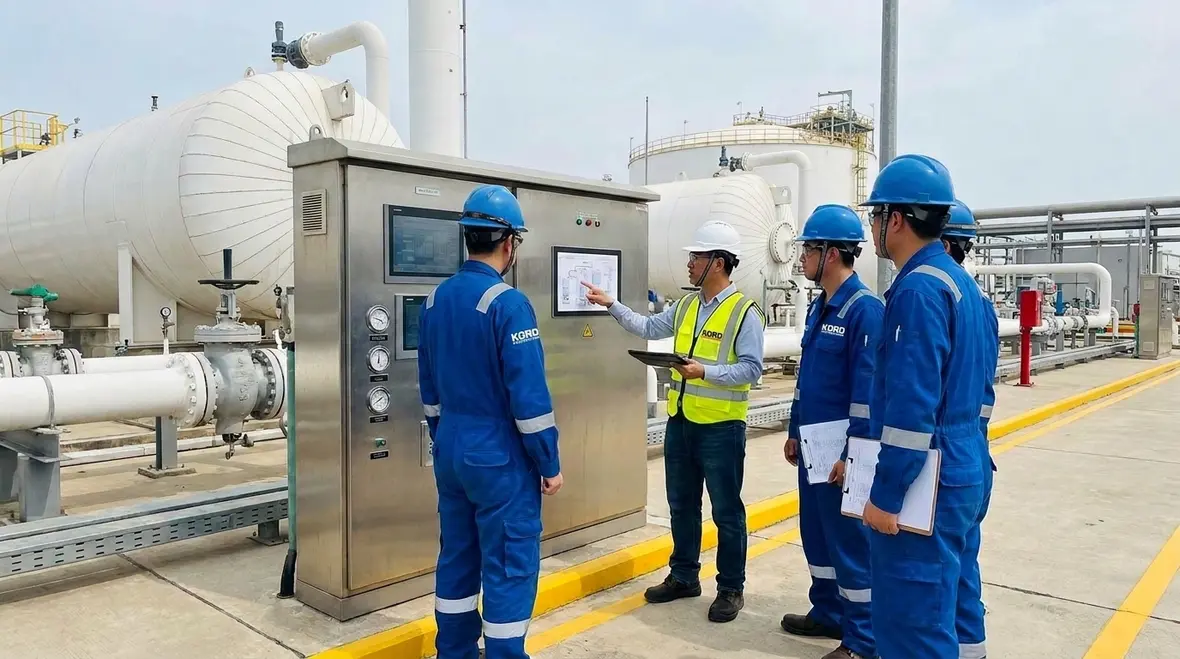
High value LNG training ensures personnel can execute procedures. This includes safe startup and shutdown behaviors, correct operation of monitoring and control systems, and recognition of equipment states that indicate abnormal performance. Training should also address how workers coordinate with other functions, such as operations and maintenance, during controlled system transitions.
What Training Programs Should Include to Pass Practical Compliance Review
Auditors and investigators commonly look for an integrated training program. That program should connect written procedures to field performance. The goal is measurable competence that stands up during routine operations and emergency scenarios.
Initial training for assigned duties
Initial training typically must cover facility specific hazards, the safety systems in place, and the procedures workers must follow during normal and abnormal conditions. For commercial and industrial facilities, training must also account for site logistics, alarm response expectations, and safe access or egress routes during an incident.
Refresher training and skill retention
Refresher training prevents drift between what is written and what people actually do. Effective programs refresh high risk tasks, reinforce emergency decision making, and incorporate changes from updates to operating procedures or equipment modifications.
Refresher training becomes especially important when facilities undergo upgrades such as new pumps, changes to vapor detection coverage, modifications to exclusion zones, or updates to alarm management strategies.
Emergency response training tied to drills
Training should align with the site emergency plan. Personnel need to understand how to respond to LNG releases, how to use alarms and communications properly, and how to support incident control measures without creating additional hazards. Drills should test coordination, not just individual knowledge, and should include clear after action review processes that feed improvements into future training.
Equipment, Systems, and Maintenance: Training Topics That Tie Directly to Failure Points
For many LNG facilities, incidents emerge from equipment states that personnel do not properly recognize or do not respond to in time. Training should therefore cover not only how equipment normally operates, but also how it fails and what indicators to watch.
Monitoring, detection, and alarm response
Personnel should understand what monitoring systems indicate during normal operation, what alarm thresholds signify, and how to act when alarms occur. Training should address the practical “what next” steps, including verifying conditions safely, initiating the correct procedural response, and escalating to the appropriate authority.
Cryogenic systems and safe handling awareness
Cryogenic equipment requires disciplined procedures because the hazards are not always visually obvious. Training should cover safe handling principles, recognition of abnormal frost patterns, understanding of insulation performance expectations, and the safe approach boundaries for personnel.
Maintenance related training and contractor coordination
Commercial, industrial, and retail facilities frequently rely on contractors. Training should define what contractors must complete before work begins, how they receive site specific hazard briefings, and how their tasks interface with operations and emergency readiness. A common compliance gap is inadequate alignment between contractor scope and the training needed for the hazards actually present at the work location.
How Kord Fire Protection Supports NFPA 52 LNG Facility Training Compliance
Kord Fire Protection helps commercial LNG site operators reduce training and maintenance risk by supporting compliance programs that remain current with operational realities. Effective compliance is not one time. It requires ongoing verification that training content, equipment testing, and maintenance practices stay aligned with current procedures and facility configuration.
To strengthen your overall readiness, Kord Fire Protection can support inspection, testing, maintenance, and documentation practices that help facilities demonstrate a defensible training and response capability. For related guidance on maintaining fire protection readiness, see Kord Fire Protection services.
Common Compliance Pitfalls in NFPA 52 LNG Facility Training Requirements
-
Training that is generic instead of facility specific. Content does not reflect the LNG hazards, equipment lineup, and operating procedures used on site.
-
Documentation that shows attendance only. Files lack competency verification, practical performance evidence, or role specific learning outcomes.
-
Insufficient emergency drill integration. Drills are not tied to roles, escalation pathways, or lessons learned updates.
-
Weak contractor onboarding. Contractors work in hazardous areas without training that matches the actual risk of the task location and scope.
-
Training not updated after changes. Equipment upgrades, procedure revisions, and maintenance learnings do not flow back into training content and refresher cycles.
Frequently Asked Questions
Conclusion and Call to Action
NFPA 52 Section 15.7 demands more than written policies. It requires practical, role based competence supported by documentation, drills, and ongoing updates as systems and procedures change. If your training records, contractor onboarding, or equipment readiness documentation needs strengthening, contact Kord Fire Protection to support a durable compliance program. Start with a gap review of your current training and maintenance alignment so your team stays ready when conditions matter most.

Join Our Newsletter!
Get the latest fire safety tips delivered straight to your inbox From our Newsletter.