NFPA 52 Section 14.3: Operation of Nonresidential CNG Fueling Appliances
Quick Answer
NFPA 52 Section 14.3 sets the operational expectations for nonresidential CNG fueling appliances, focusing on safe startup, controlled dispensing, emergency readiness, and verified performance. Facilities must align operator practices with appliance safeguards, inspection requirements, and maintenance to prevent unsafe releases.
For facilities tightening documentation and ongoing readiness, Kord Fire Protection also covers fire safety compliance management with automated documentation, which fits naturally with recurring fueling appliance verification and recordkeeping.
Why Section 14.3 matters for commercial fueling operations
NFPA 52 nonresidential CNG fueling appliance operation is not just a procedural checklist. Section 14.3 addresses how fueling appliances run in real service conditions, including how operators interact with interlocks, pressure regulation, ventilation assumptions, and shutdown features. For commercial, industrial, and retail locations, the risk profile is shaped by foot traffic, work orders, shared electrical and mechanical systems, and the operational reality of recurring fuel demand. Compliance becomes a systems approach, not a single inspection event.
Kord Fire Protection supports facilities with practical compliance planning, preventive maintenance coordination, and documentation support for ongoing readiness. That matters because operational failures often occur after installation, during routine use, or when equipment is serviced by multiple vendors without unified safeguards verification.
What “operation” covers under NFPA 52 Section 14.3
Section 14.3 governs the safe operation of nonresidential CNG fueling appliances. In practice, it requires that the appliance operates within its designed safety envelope and that operators follow established operating controls. The operational focus typically includes the sequence of start and stop actions, interaction with pressure regulating and metering components, management of system pressures, and readiness to respond to abnormal conditions.
Facilities should treat “operation” as encompassing four linked elements:
- Appliance control logic including interlocks, permissives, and shutdown functions.
- Physical safeguards such as valves, relief pathways, and leak management features.
- Operator procedures covering fueling steps, handoff controls, and abnormal condition response.
- Verification and maintenance ensuring that safety performance remains intact between checks.
Operational controls that must remain dependable
Nonresidential sites often include compressor systems, storage vessels, piping manifolds, and dispenser or fueling connectors. Section 14.3 expects that operational actions do not bypass safety protections. Common commercial compliance challenges arise when operational teams change staffing, shorten steps, or allow “temporary” workarounds that conflict with the appliance’s intended sequence.
How fueling sequences should be run in the real world
NFPA 52 nonresidential CNG fueling appliance operation should reflect the designed sequence of appliance states. While exact steps vary by equipment model and layout, safe operation generally includes controlled startup, confirmed permissives, monitored transfer, and orderly shutdown.
Start-up and “permissive” checks
Start-up should validate the conditions required for safe fueling. This frequently includes system pressure within expected limits, confirmation of correct valve positions, and evidence that safety functions are available. If the appliance includes ventilation assumptions, gas detection monitoring interfaces, or supervisory controls, operations must ensure those systems are available and functioning as required by the appliance design and the facility’s safety program.
Dispensing and transfer operations
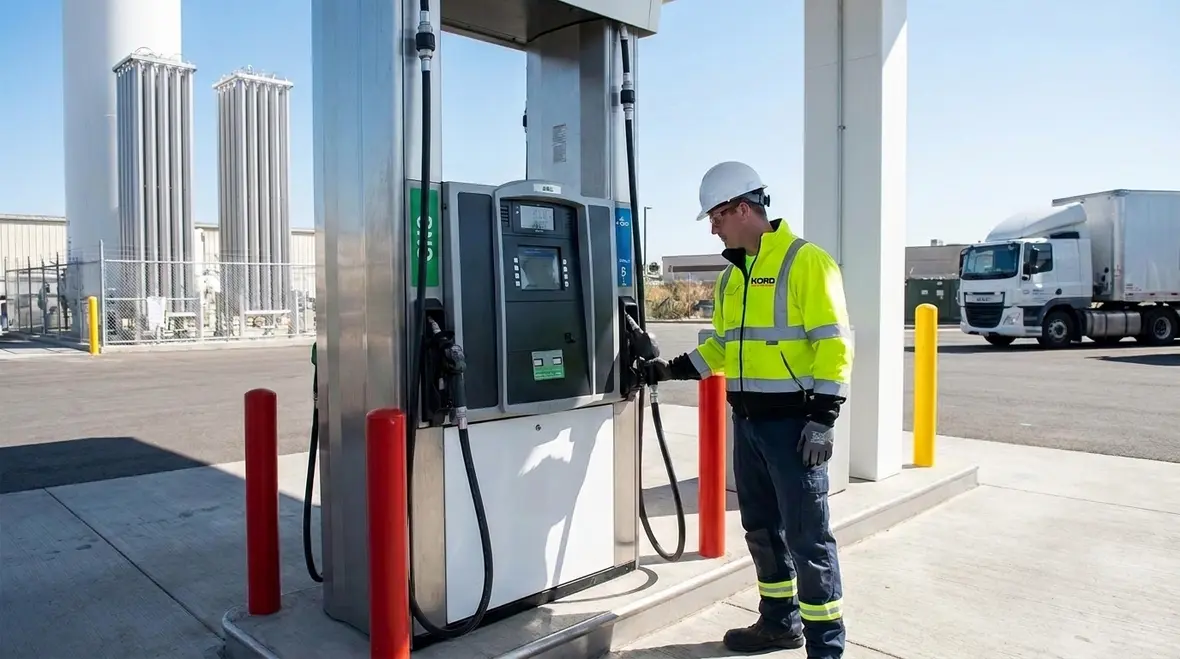
During fueling, operators must maintain control of the transfer process and avoid creating conditions that stress regulators, hoses, couplings, or metering hardware. In practice, error points include improper coupling alignment, premature release of connection hardware, and incomplete adherence to purge and disconnect steps. These errors can contribute to localized releases, pressure instability, or connector wear that degrades long term performance.
Shutdown and return to a safe state
Shutdown should place the appliance and connected components into a safe condition consistent with the equipment design. Facilities must define how the team verifies safe state transitions, especially after abnormal terminations or faults. A frequent failure pattern involves resetting alarms or fault conditions without determining the root cause, which can allow recurring unsafe operation.
Where compliance breaks down: common operational failure points
Even when the appliance is installed correctly, NFPA 52 nonresidential CNG fueling appliance operation can drift out of compliance due to maintenance gaps, imperfect training, or uncontrolled change management. The following issues appear frequently in commercial and industrial environments.
Bypassed interlocks and permissives
In busy facilities, teams may override alarms or apply temporary workarounds to restore service quickly. If the override removes a safety permissive, the appliance can operate outside its intended safe envelope. This is a high-risk operational practice because it changes system behavior without a verified safety basis.
Connector and hose wear from repeated cycling
Fueling connectors and hoses undergo repeated mechanical stress. Worn seals, damaged couplings, or misalignment can produce minor leaks that grow during higher pressure cycles. Operational practices should include disciplined inspection, and maintenance should include timely component replacement before wear becomes a release risk.
Fault resets without troubleshooting
Resetting faults without investigating root cause can mask recurring problems such as control valve sticking, sensor drift, or pressure regulator behavior changes. For commercial sites, this often shows up after vendor turnover or when service records are incomplete or fragmented across multiple contractors.
Inadequate documentation and maintenance traceability
Facilities need consistent records that demonstrate operational readiness and maintenance performance. When documentation is delayed or incomplete, compliance assessments become reactive rather than planned. Kord Fire Protection helps commercial teams maintain organized compliance support so operational staff can verify readiness and maintenance actions can be tied to safety performance.
Inspection, maintenance, and training expectations that support safe operation
Section 14.3 works in tandem with the broader NFPA 52 framework by emphasizing that safe operation depends on ongoing verification. For commercial facilities, this means appliance safety functions must remain reliable between scheduled checks and that operator training stays aligned with actual equipment behavior.
Operational readiness checks
Facilities should define what is confirmed before permitting fueling activity. This typically includes assurance that safety systems and controls are available, that abnormal shutdown or fault conditions are not lingering, and that the system is returned to normal operation after any work order.
Maintenance coordination across trades
In retail and industrial sites, multiple trades may interact with fueling equipment, nearby electrical rooms, gas detection hardware, ventilation systems, and control panels. To support NFPA 52 nonresidential CNG fueling appliance operation, the facility must coordinate maintenance windows, communicate equipment status, and confirm that post maintenance testing restores safe operation.
Operator training and competency
Training should cover normal fueling sequences, emergency response basics, abnormal condition recognition, and the correct process for reporting and isolating faults. Competency is not a one-time requirement. It must be reinforced when equipment is serviced, control software changes, or site staffing changes.
To support long term readiness and reduce operational drift, Kord Fire Protection provides commercial fire and life safety support that includes ongoing compliance planning, testing coordination, and documentation workflows. For related service coordination across controls and facility systems, see fire and electrical system support for compliance.
Emergency readiness and abnormal condition handling
Safe NFPA 52 nonresidential CNG fueling appliance operation depends on how the facility responds when the appliance transitions into an abnormal state. Section 14.3 expects that the operation includes safe handling of unsafe conditions, proper shutdown behavior, and readiness to prevent escalation.
Recognizing abnormal termination events
Operational teams should understand how faults present, which indications require stopping fueling immediately, and what actions are permitted versus prohibited during troubleshooting. Common commercial pitfalls include continuing operations after an incomplete fueling event or attempting to restore service without verifying that the system is stable.
Defined shutdown and escalation
The facility should use a defined escalation path that connects operators, maintenance staff, and qualified service personnel. That path should specify safe isolation steps and ensure the appliance does not resume operation until controls and safety functions are verified.
Post incident verification
After an abnormal event, operations should document what occurred and verify the appliance returns to normal safe operation through defined checks. Without post event verification, recurring faults can persist and produce repeat unsafe conditions.
Frequently Asked Questions
Conclusion and next step
NFPA 52 nonresidential CNG fueling appliance operation demands operational control, verified safety performance, and disciplined response to abnormal conditions. Facilities should review their fueling sequences, fault handling procedures, and post maintenance verification process to eliminate bypass habits and undocumented resets. The fastest compliance improvement typically comes from tightening documentation and coordinating recurring testing and training. Contact Kord Fire Protection to assess your site readiness, align maintenance workflows, and support ongoing compliance for nonresidential CNG fueling operations.

Join Our Newsletter!
Get the latest fire safety tips delivered straight to your inbox From our Newsletter.