
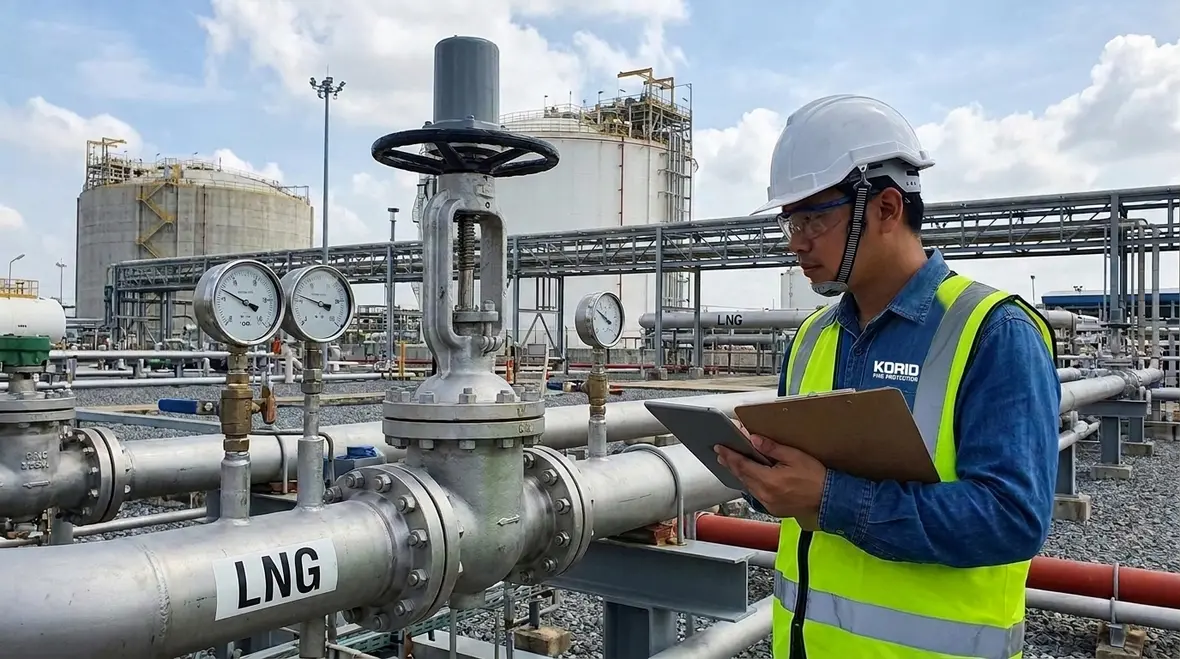
NFPA 52 Section 15.5: Operations and Maintenance Programs for LNG Facilities
Quick Answer: NFPA 52 Section 15.5 requires LNG facilities to operate and maintain equipment using documented, implemented, and reviewed programs. These programs cover inspections, testing, corrective actions, recordkeeping, and staff training to sustain safety-critical performance over time.
Why Section 15.5 matters for real-world LNG operations
NFPA 52 Section 15.5 sets the operating discipline that turns design safety into ongoing, day to day reliability. While the facility hardware may be compliant at commissioning, safety depends on how the facility runs between turnarounds, during production swings, and through seasonal and aging-related degradation. For owners and operators, the core compliance risk usually appears in the gap between “what the equipment is supposed to do” and “what it actually does under maintenance intervals, calibration drift, and changing operational conditions.”
In practice, the NFPA 52 LNG facility operations maintenance program becomes the system that ensures safety critical functions remain dependable through structured procedures, verification, and traceable documentation. This is especially important for commercial, industrial, and retail sites that may also share responsibilities for area access control, contractor coordination, and life safety systems integration.
What the NFPA 52 operations and maintenance program must include
Section 15.5 focuses on a comprehensive program that includes more than routine preventive maintenance. A compliant program typically addresses these elements end to end:
- Defined responsibilities: Clear roles for operations staff, maintenance personnel, engineering review, and management oversight.
- Documented procedures: Step by step methods for inspection, testing, lubrication, replacement, restoration, and shutdown or restart activities where required.
- Safety critical equipment identification: A documented basis for which components must be inspected and tested more frequently or to tighter acceptance criteria.
- Performance standards: Acceptance criteria aligned with design intent and applicable referenced requirements.
- Corrective action workflows: Timelines and escalation paths for deficiencies, out of tolerance conditions, and unsafe states.
- Recordkeeping and traceability: Completed work orders, inspection logs, test results, calibration documentation, and change history.
- Training and competency: Ongoing training tied to procedures and role based authorization.
For facilities with mixed-use or shared infrastructure, the program also needs interfaces that define who owns what during alarms, emergency shutdowns, and controlled isolations. This is where many commercial compliance programs fail to map responsibilities clearly, leading to delayed response or incomplete documentation.
Facilities that need broader ongoing support with inspections, repairs, and system coordination can also review fire protection services in Southern California to align maintenance planning with practical compliance execution.
How to operationalize inspections and testing without missing failure points
1) Establish inspection intervals tied to condition, not just time
A mature program uses a defensible schedule that reflects equipment criticality, operating mode, and environmental exposure. Time based intervals alone often fail when assets experience variable duty cycles, frequent start stop behavior, or conditions that accelerate wear. A risk-informed approach includes:
- Initial baseline verification and post maintenance validation
- Condition indicators that trigger additional inspection or testing
- Vendor or manufacturer recommendations integrated with site experience
2) Verify safety critical functions, not only “component status”
Many organizations record that equipment was serviced but do not confirm that the safety function remains effective. Section 15.5 programs should verify outcomes that matter, such as:
- Alarm function accuracy and setpoint integrity
- Correct operation of isolation sequences
- Availability and reliability of shutdown or control logic where applicable
- Leak detection performance and response verification for intended scenarios
3) Protect calibrations and measurement integrity
In LNG facilities, instrument drift can quietly erode safety margins. The program should control calibration, verification frequency, acceptance tolerances, and “as found” documentation. Calibration controls also need to address:
- Tool traceability and calibration certificate retention
- Correct maintenance of sensors exposed to cryogenic and ambient challenges
- Post calibration functional checks that confirm behavior under operating logic
4) Document corrective action with clear closure criteria
Corrective actions should not end at work completion. Closure should include verified functional performance where possible, updated records, and a root cause analysis when repeat failures occur. Common failure points that benefit from tighter corrective action discipline include:
- Valves with recurring seat leakage or sticking due to contamination or improper maintenance technique
- Insulation related issues that create abnormal thermal behavior
- Sensor degradation from exposure conditions and delayed replacement practices
- Inadequate segregation of maintenance tasks during ongoing operations
For related operational discipline on gas fuel facilities, see NFPA 52 Section 4.5: Operations and Maintenance Programs for CNG Facilities.
Records, change control, and audit readiness
NFPA 52 Section 15.5 compliance depends on more than field execution. The program must produce evidence. Auditors typically look for traceability from identified hazards to inspections, test results, defect handling, and closure.
To strengthen audit readiness, facilities should implement:
- Work order discipline: Each inspection or test maps to the procedure and references acceptance criteria.
- Calibration history: Every measurement device used for compliance trending is traceable.
- Deficiency management: Clear categorization, risk ranking, and documented disposition.
- Management review: Periodic review of trends, repeat defects, and overdue actions.
- Change control: Updated documentation and re verification when equipment, procedures, or operating parameters change.
In commercial and industrial environments, these controls also prevent “orphaned” maintenance steps when contractors rotate or when internal processes differ across shifts and units. A unified record standard helps ensure the NFPA 52 LNG facility operations maintenance program remains consistent across teams.
How Kord Fire Protection supports ongoing compliance and operational reliability
LNG facilities rely on coordinated fire and life safety measures that must remain functional under real operating conditions. Even when LNG systems drive the primary hazards, fire protection systems must meet performance expectations continuously. Kord Fire Protection supports facilities with field-ready compliance execution for fire protection equipment, testing, and documentation that integrates with the broader operations and maintenance framework.
When a facility treats fire protection maintenance as a living compliance program rather than a checklist, it reduces the most common audit issues: missing documentation, incomplete acceptance criteria, and delayed corrective actions. For more information on integrated fire protection services and compliance support, refer to Kord Fire Protection and its commercial service capabilities.
For operators building or tightening their program, Kord can help maintain the inspection and testing cadence that supports safety system availability and supports consistent evidence during regulatory reviews.
Facilities with special hazard needs may also benefit from Kord’s commercial fire suppression systems and services when integrating inspection, testing, repair, and ongoing maintenance into one compliance-focused workflow.
Implementation roadmap: building a compliant maintenance program fast
Facilities that need to improve quickly can use a structured approach that aligns with Section 15.5 expectations without disrupting operations:
- Inventory safety critical equipment: Build a living list linked to procedures, acceptance criteria, and test frequencies.
- Map procedures to hazards and functions: Ensure each procedure verifies safety performance outcomes, not only maintenance completion.
- Standardize recordkeeping: Adopt work order templates, calibration documentation standards, and corrective action closure requirements.
- Train and authorize personnel: Tie training to procedure mastery and role based authorization for shutdown and controlled restoration activities.
- Run a pilot compliance cycle: Execute a defined number of inspections and tests, then refine intervals, documentation, and corrective action workflows.
- Establish management review: Review trends, repeat defects, overdue actions, and update the program based on performance.
This roadmap supports consistent compliance for commercial, industrial, and retail stakeholders who depend on reliable safety systems across shared infrastructure and contractor activity.
Frequently Asked Questions
Take action now to strengthen compliance evidence
NFPA 52 Section 15.5 success depends on consistent field execution backed by traceable documentation and verified safety performance. Kord Fire Protection can help commercial and industrial facilities keep fire protection testing and maintenance aligned with operational requirements. Contact Kord Fire Protection to review your program structure, tighten maintenance documentation, and support ongoing compliance with reliable, audit ready execution.

Join Our Newsletter!
Get the latest fire safety tips delivered straight to your inbox From our Newsletter.


