NFPA 52 Section 10.7: Electrical Requirements for Outdoor CNG Installations
Quick Answer
NFPA 52 Section 10.7 sets enforceable electrical installation rules for outdoor CNG fueling systems to reduce ignition risk. It governs wiring methods, equipment ratings, bonding and grounding, hazardous locations classification, and inspection and maintenance expectations. Proper compliance protects people, assets, and operations.
For broader code-aware planning, facilities can pair these requirements with fire and electrical system support for compliance so electrical scope changes do not drift away from the original protection intent.
Why NFPA 52 Section 10.7 matters for outdoor CNG electrical work
Commercial facilities treat a CNG fueling area as a controlled risk zone where electrical systems must be designed to prevent ignition sources from energizing flammable gas atmospheres. The phrase NFPA 52 outdoor CNG electrical installation requirements captures the intent: electrical equipment, wiring, and connections must be selected and installed so that fault conditions do not create hazardous arcs, sparks, or surface temperatures capable of igniting CNG.
In practice, compliance failures often appear during retrofit projects, vendor changes, and “like for like” replacements that do not preserve the original electrical classification, sealing methods, or grounding topology. NFPA 52 Section 10.7 aims to keep these details consistent across design, installation, commissioning, and service.
Where Section 10.7 applies in a typical outdoor CNG site
Section 10.7 focuses on electrical components and installation practices associated with outdoor CNG equipment and their power, control, and protection circuits. This includes wiring serving the fueling system’s controls, site interface devices, and any outdoor electrical hardware that could be exposed to a potential release of natural gas.
Facilities should treat the following as common “scope touchpoints” that demand electrical verification during design reviews and after any field change:
- Outdoor power distribution feeding compressors, dispensers, controllers, heaters, and related ancillary equipment.
- Electrical wiring entering and routing within outdoor enclosures and field devices.
- Junction boxes, conduit bodies, and field connections exposed to outdoor conditions.
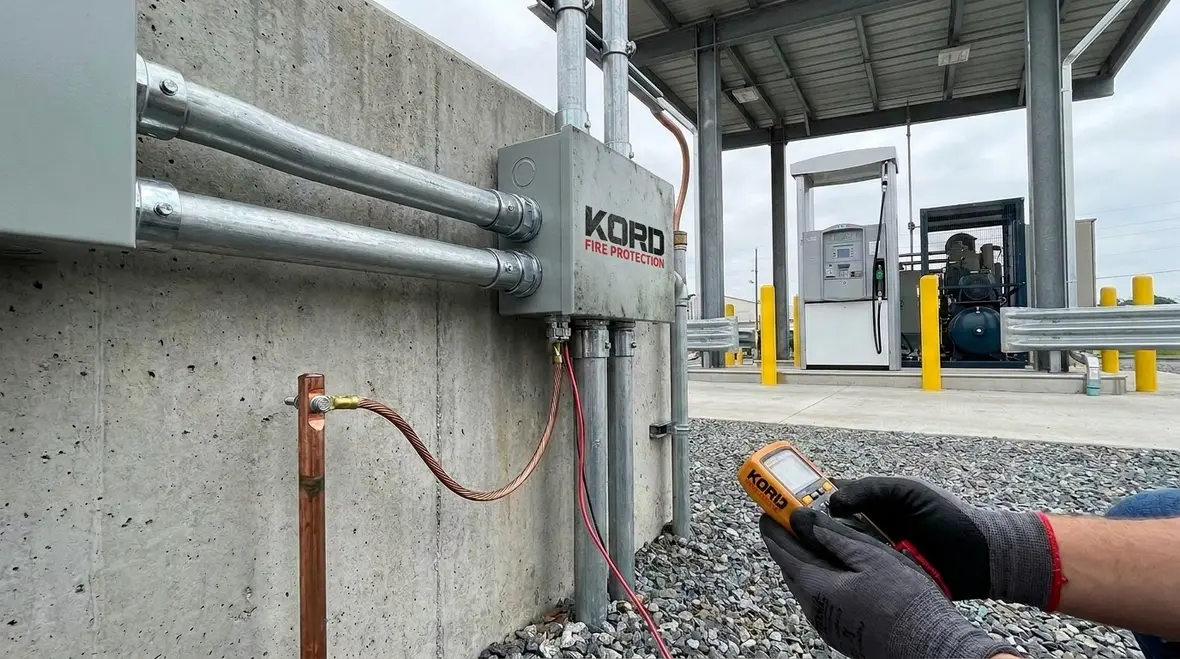
- Bonding and grounding systems linking equipment frames, piping, and grounding electrodes.
- Any electrical apparatus located in or near classified areas tied to potential gas release.
Operationally, commercial sites often expand fueling capacity, add dispensers, or modify control wiring. Each change can shift the risk profile and must be evaluated against the original intent of the installation. Kord Fire Protection supports ongoing compliance planning for commercial, industrial, and retail environments through field oriented review practices and maintenance documentation workflows.
Hazardous location and equipment selection: what must be verified
Section 10.7 requires that electrical equipment used outdoors at CNG fueling installations remains compatible with the hazardous gas conditions that could occur. That compatibility typically drives equipment type selection, including protection concepts used for electrical enclosures and components intended for gas atmospheres.
Key verification steps during design and commissioning
- Confirm hazardous location classification inputs used for equipment selection. Verify release assumptions, ventilation considerations, and proximity to potential leak sources as documented during project design.
- Verify equipment ratings match the required protection concept and temperature limits for the intended environment. Field labels and manufacturer documentation must align with the site classification and the as built wiring topology.
- Check for outdoor suitability including moisture and corrosion resistance, enclosure integrity, and cable gland integrity where used.
- Ensure control and power circuits follow the same intent as the “field devices” they serve. A common failure point involves control wiring changes that introduce unprotected junctions or incompatible apparatus.
Commercial facility standards also expect disciplined substitution controls. If a contractor substitutes a different brand or model of controller, disconnect, or junction box without re confirming hazardous compatibility, the install can drift out of compliance even when it appears functionally equivalent.
Wiring methods, conduit practices, and ingress protection
NFPA 52 Section 10.7 addresses how electrical wiring and conductor systems must be installed to reduce the probability of ignition in the presence of gas. While the exact method depends on the site design, the practical compliance focus stays consistent: wiring must be protected from damage, properly enclosed, and prevented from creating ignition hazards due to arcing, sparking, or compromised termination practices.
Common compliance points that inspection teams target
- Conduit integrity: Proper conduit routing and secure fittings prevent mechanical damage and reduce the likelihood of opening gaps that could allow gas migration to energized connections.
- Sealing and barrier requirements: Where required, openings and conductor entries must use methods intended to maintain protection and prevent gas movement into enclosures.
- Termination quality: Loose connections, damaged conductor insulation, and improper splicing can generate heat and arcs under load.
- Water and corrosion management: Outdoor wiring must prevent water ingress at terminations. Corrosion around terminations can increase resistance, leading to localized heating and eventual failure.
For commercial and retail operators, a frequent operational trigger is seasonal work orders: snow removal impacts cable runs, minor landscaping adjustments move conduit supports, and routine vendor visits replace a failed device. Each such event can compromise wiring protection and requires documentation that aligns with the original electrical design intent.
Bonding, grounding, and fault protection
Bonding and grounding systems are critical to electrical safety and to limiting ignition hazards caused by faults. In an outdoor CNG installation, a reliable grounding path supports proper operation of overcurrent protective devices and helps reduce dangerous voltage differentials during abnormal conditions.
Operational failure points to watch
- Missing or degraded bonding jumpers between equipment and site grounding points.
- Corroded grounding electrodes or loose connections at ground clamps.
- Unverified grounding continuity after maintenance activities, especially after equipment swaps.
- Incorrect bonding routing that may comply superficially but does not provide a robust fault current path.
Commercial sites benefit from a structured inspection routine that includes visual verification and continuity validation where required by the facility’s maintenance plan. Kord Fire Protection emphasizes practical compliance outcomes by supporting the recordkeeping and field review discipline that keeps grounding and bonding aligned with the original installation requirements.
Inspection, testing, and maintenance: staying compliant after turnover
Compliance does not end at installation. NFPA 52 Section 10.7 expectations align with a lifecycle approach where electrical systems remain functional and protective despite wear, weather, vibration, and service activity.
Maintenance practices that prevent drift
- Maintain labeling and documentation for hazardous location equipment, including as built wiring schematics and device submittals.
- Inspect cable glands and enclosure seals after any service call. Replace gaskets and seals using manufacturer guidance.
- Verify integrity after conductor terminations changes. Any termination work must be checked for torque integrity and insulation condition.
- Track corrosion indicators in outdoor electrical pathways. Moisture intrusion often creates hidden failure modes before total breakdown.
For a practical compliance roadmap and related code guidance that supports broader CNG fire safety systems, facility teams often coordinate electrical requirements with fire protection and safety management planning. You can also review Kord Fire Protection’s resources on fire protection services and commercial compliance support to align electrical maintenance practices with overall risk management.
Teams handling ongoing procedures may also want to review NFPA 52 Section 4.5 operations and maintenance programs for CNG facilities for a closely related look at documentation, accountability, and maintenance verification.
Frequently Asked Questions
Conclusion: confirm your electrical compliance before the next service cycle
NFPA 52 Section 10.7 requires electrical installations for outdoor CNG sites to maintain ignition safety through correct hazardous compatibility, wiring methods, sealing practices, and robust grounding. If your facility has recently modified equipment or is due for scheduled maintenance, Kord Fire Protection can help validate compliance priorities, support inspection readiness, and strengthen maintenance documentation so your outdoor CNG electrical system stays aligned between audits and service events.

Join Our Newsletter!
Get the latest fire safety tips delivered straight to your inbox From our Newsletter.