NFPA 52 Section 10.6: Outdoor Compression, Storage, and Dispensing Equipment
Quick Answer
NFPA 52 Section 10.6 sets safety requirements for outdoor CNG compression, storage, and dispensing equipment to reduce fire and explosion risk. Compliance focuses on safe placement, protection against vehicle and environmental hazards, ignition control, inspection readiness, and ongoing maintenance of mechanical and electrical systems.
If your site also needs a stronger operations and maintenance framework, it helps to review NFPA 52 Section 4.5 operations and maintenance programs for CNG facilities alongside these outdoor equipment requirements.
What Section 10.6 requires for outdoor CNG systems
NFPA 52 outdoor CNG compression storage dispensing equipment provisions address how components are installed and managed outdoors, where heat, weather, vehicle impact, and corrosion can degrade both pressure-bearing hardware and ignition controls. The intent centers on preventing uncontrolled releases, limiting ignition sources, and maintaining safe operating conditions through inspection and repair.
For commercial and retail sites that operate under strict downtime expectations, Section 10.6 also acts as a practical blueprint for inspection access, maintenance workflows, and documentation readiness. Kord Fire Protection supports facility teams by coordinating fire safety system compliance, inspection support, and ongoing service planning to help keep outdoor CNG assets in safe, testable condition.
Where Section 10.6 applies in the real world
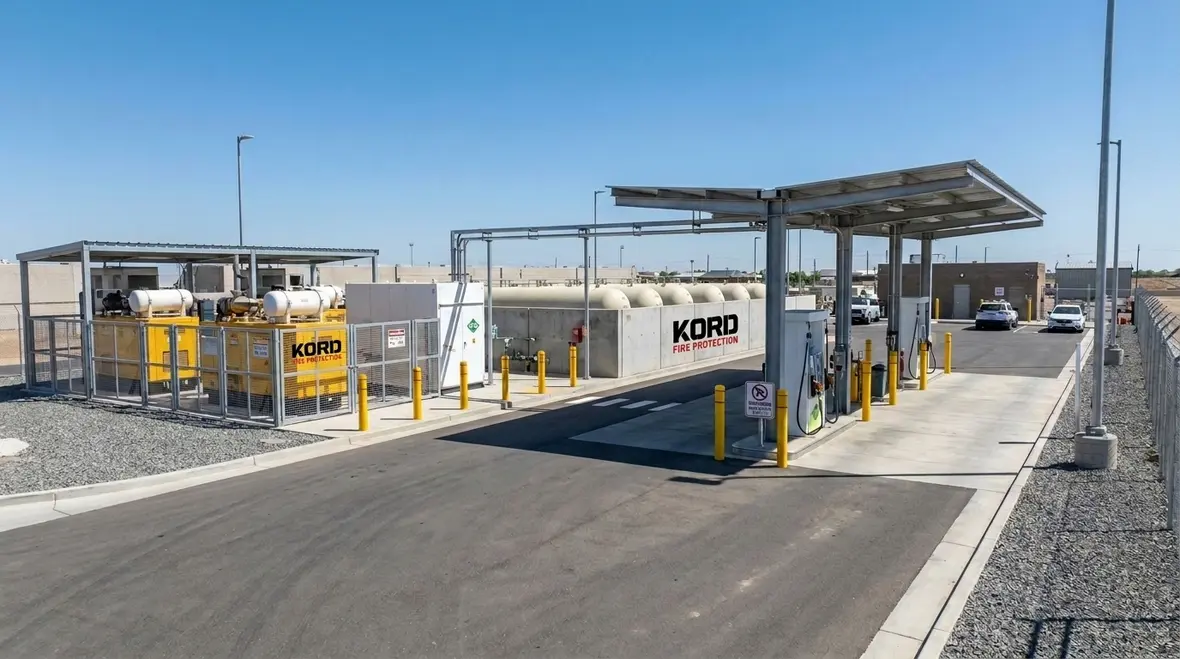
Section 10.6 applies to outdoor installations that include compression equipment, storage vessels, and associated dispensing components. In typical commercial layouts, the site includes one or more compressor skids, high pressure storage banks, associated piping and valves, electrical controls, and a fueling interface with hoses, nozzles, and dispensing hardware.
Outdoor conditions create a unique compliance challenge. Even when indoor electrical systems meet code at installation, outdoor exposure can drive changes over time: weather infiltration into enclosures, loosening of conduit seals, deterioration of flexible connections, and corrosion under insulation or supports. NFPA 52 outdoor CNG compression storage dispensing equipment requirements therefore depend on both correct initial configuration and disciplined maintenance practices.
How NFPA 52 Section 10.6 manages ignition control and release risk
1) Placement, separation, and impact protection
One of the most common field failure points is not the pressure rating itself, but the physical environment around it. Outdoor stations and industrial facilities face risks from vehicle traffic, maintenance equipment, and drifting debris. Section 10.6 emphasizes installation that supports safe separation and provides protection from foreseeable hazards, including impact.
Facility teams typically address this with robust barriers, bollards, and protected cable and hose routing. They also ensure that equipment areas maintain clear access paths for inspection and emergency response. Where site constraints force close configurations, documentation must show that the installation still meets the separation and protection intent of NFPA 52.
2) Equipment integrity and safe handling of pressure components
Outdoor compression and storage equipment relies on valves, regulators, relief devices, and high pressure piping to prevent leaks and to manage pressure events. Over time, vibration, thermal cycling, and moisture can degrade gaskets, gland seals, and threaded connections. The most expensive failures usually begin as small leaks or regulator performance drift.
Compliance requires that components operate within designed limits and that relief and isolation features remain functional. For commercial operators, this means tracking maintenance cycles for seals, checking torque verification where applicable, and ensuring that any replacement parts match manufacturer and code requirements.
3) Electrical and instrumentation designed for outdoor service
Ignition prevention depends heavily on the condition and rating of electrical components and enclosures. Outdoor-rated enclosures, properly sealed conduit fittings, correct grounding, and functioning controls help prevent hazardous conditions from forming.
A common compliance gap appears after routine upgrades. Technicians sometimes replace a damaged component with a part that matches electrically but does not meet the original hazardous location, weather sealing standard, or control logic expectations. Each substitution should be reviewed against the equipment classification and the installation basis used for compliance. For a related electrical perspective, see electrical risk assessment services for industry.
What inspections and maintenance should look like (and what often goes wrong)
For NFPA 52 outdoor CNG compression storage dispensing equipment, compliance does not end at commissioning. The code expectation relies on ongoing maintenance to preserve ignition control and mechanical integrity. Inspections should focus on both visible and operational indicators.
Daily to monthly checks that catch problems early
- Leak detection awareness: Observe for odorization markers where used, localized frost patterns, residue at fittings, and abnormal compressor behavior.
- Physical condition: Verify protective covers, insulation condition, and enclosure door seals are intact and closing properly.
- Hose and nozzle readiness: Confirm hose routing avoids abrasion, and dispensing components show no signs of wear or damage.
- Grounding and bonding: Check for corrosion at bonding points and damaged cable jackets.
Periodic testing and documentation discipline
Periodic testing typically aligns with manufacturer requirements and site safety management. The key compliance risk is losing traceability. When documentation is incomplete, it becomes difficult to prove that required inspections were performed and that corrective actions occurred in a timely manner.
Kord Fire Protection can support commercial, industrial, and retail facilities by integrating fire protection and safety documentation into the broader compliance program, helping teams maintain inspection readiness across both fixed systems and fueling equipment interfaces. This reduces the likelihood of nonconformities during audits.
Emergency response interfaces: fueling zones, access, and drills
Outdoor fueling environments require predictable emergency response conditions. Section 10.6 expectations connect to operational controls that influence how personnel and responders manage a suspected leak or fire scenario.
- Clear access routes: Maintain unobstructed pathways for access to shutoff controls, electrical disconnects, and manual isolation points.
- Shutoff recognition: Ensure operators can identify and actuate emergency shutdown procedures quickly without bypassing safeguards.
- Training cadence: Train on abnormal fueling indicators such as unusual compressor cycling, pressure deviations, and dispensing anomalies.
When emergency readiness is treated as a one time event, it commonly fails during real incidents. Facilities benefit from drill schedules that incorporate equipment recognition and communications practices aligned with the site emergency action plan.
Compliance support resources for commercial operators
Facilities often need to align multiple compliance domains, including fire protection systems, inspection and maintenance records, and fueling equipment safety controls. Kord Fire Protection helps coordinate those requirements into an organized ongoing service approach.
For additional context on fire protection planning and field operational considerations, refer to fire protection services in Southern California. This can support how facilities structure maintenance and compliance workflows around high consequence hazards.
Frequently Asked Questions
Next steps for facility compliance
Outdoor CNG equipment safety depends on more than initial installation. Review your NFPA 52 outdoor CNG compression storage dispensing equipment maintenance records, verify protective features and ignition control components are intact, and confirm emergency access and shutdown readiness. Then schedule a compliance focused service visit with Kord Fire Protection to align documentation, inspections, and corrective actions into a sustainable program that reduces downtime and improves audit performance.

Join Our Newsletter!
Get the latest fire safety tips delivered straight to your inbox From our Newsletter.