
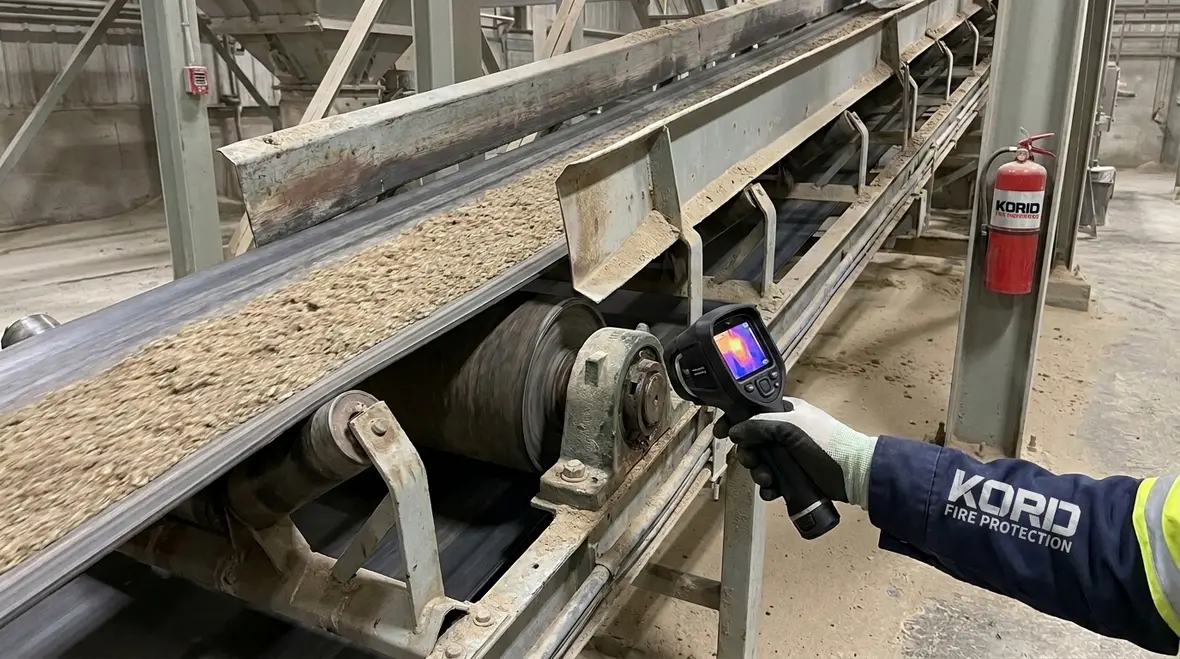
NFPA 36 Section 8.3: Conveying Systems for Solids
Quick Answer
NFPA 36 Section 8.3 establishes safety requirements for conveyors that handle combustible solids, focusing on ignition control, fire detection and suppression where required, component integrity, and operational maintenance. Facilities must verify equipment design, housekeeping, and inspection practices to maintain compliant fire safety performance.
If your facility is reviewing combustible dust hazards more broadly, this guide to controlling combustible dusts and residues is a strong companion because it connects conveying risks with the housekeeping and control practices that keep small problems from turning into very expensive excitement.
What NFPA 36 solids conveying systems requirements actually target
NFPA 36 solids conveying systems requirements address one primary risk driver: combustible dust or bulk solids can create fast growing fires and explosions when confinement, air entrainment, impact, friction, or ignition sources combine. Section 8.3 therefore concentrates on conveying system design features and on how facilities keep those features working over time.
In practical commercial, industrial, and retail environments, compliance is not achieved by equipment alone. It depends on operational discipline, inspection frequency, documented maintenance, and the ability to quickly identify abnormal conditions such as belt slippage, plugged chutes, leaking seals, or failed bearings.
Scope of Section 8.3: where conveying systems create fire risk
Section 8.3 covers conveying systems used to move solid materials through transfer points, hoppers, chutes, ducts, galleries, and connected handling equipment. The intent is to prevent ignition and limit fire and smoke spread within the conveying pathway and at connected equipment.
For facilities, that means the “system” is rarely a single piece of machinery. It typically includes:
- Feeders and hoppers that meter solids into a conveyor
- Belt, screw, pneumatic, bucket, or other conveying components
- Transfer points where material drops and entrains dust
- Seals, liners, bearings, and motor housings
- Discharge chutes, discharge seals, and dust collection interfaces when used
Common compliance challenges arise when teams treat these as standalone components instead of one interconnected fire exposure pathway.
Key compliance controls in conveyance: ignition prevention and confinement
Section 8.3 emphasizes preventing ignition sources and reducing conditions that allow combustible solids to become airborne and ignite. In real facilities, ignition events often originate from mechanical or electrical failure rather than from the “material itself.” The most frequent operational failure points include:
1) Mechanical friction, impact, and misalignment
Belt conveyors that run out of alignment can create friction and abrasion at edges and idlers. Screw conveyors with worn flights can increase torque, leading to overheating. Transfer points that do not maintain proper clearances can cause material impact that generates localized heating.
Compliance is maintained when facilities follow documented inspection routines that catch early wear, confirm correct alignment, and replace parts before overheating becomes likely.
2) Bearing, motor, and electrical component integrity
Overheating from bearing failure is a high risk contributor because bearings operate continuously in harsh, dust laden environments. Electrical issues also increase hazard: damaged insulation, loose connections, and failed motor protective devices can introduce ignition sources.
Facilities typically need to verify that components are suitable for the environment and that protective features remain functional. When dust accumulation is present around electrical equipment, it can raise surface temperatures and interfere with cooling. For facilities tightening equipment reliability and hazard-specific protection, industrial fire protection system design support can help connect process conditions with the right protection strategy.
3) Leaking seals and uncontrolled dust escape at transfer points
Seals at discharge and intermediate transfer points prevent dust release into surrounding spaces. When seals degrade or are improperly adjusted, combustible dust can accumulate on floors, ledges, and inside electrical enclosures.
That accumulation creates secondary ignition pathways and can complicate housekeeping compliance. Tightening seal performance and verifying ducting interfaces supports compliance with NFPA 36 solids conveying systems requirements.
Operations, housekeeping, and maintenance: how compliance is sustained
NFPA 36 safety outcomes rely on ongoing operational control. Even compliant design can fail if normal wear and improper cleaning practices are not managed.
Preventive maintenance must match the hazard
Maintenance programs should include inspection of belts, idlers, and tracking mechanisms; inspection of screw flights and drive assemblies; verification of motor protection devices; and evaluation of wear in liners and chutes.
When maintenance personnel do not track degradation trends, failures occur without warning. A practical approach focuses on:
- Measuring vibration and temperature trends where applicable
- Documenting belt tension checks and tracking adjustments
- Scheduling bearing replacements based on runtime and condition indicators
- Verifying that guards and access panels remain installed after servicing
Housekeeping: control dust where it settles
Settled combustible dust is a persistent hazard, especially around transfer points. Cleaning methods matter. Facilities should use cleaning approaches that do not re disperse dust into the air, and they should establish clear frequencies for internal areas and elevated surfaces.
Housekeeping verification needs to include “hard to see” areas such as inside belt enclosures, behind panels, and around discharge chutes. These locations often accumulate dust first, yet become visible only after problems worsen.
Operational controls: start up, shut down, and abnormal conditions
Many conveyor incidents occur during startup, jam clearing, or abnormal load conditions. Facilities should train staff to recognize signs of friction or overload, such as unusual noise, abnormal motor current, belt slippage, or repeated fault trips.
Jam clearing procedures must prevent creating ignition risks. For example, clearing methods should avoid tools or practices that can generate sparks near dust accumulations. Documented “stop work and report” thresholds reduce the chance that minor abnormalities become fire events.
Inspection and documentation: demonstrating ongoing conformance
Commercial facility managers typically need to demonstrate that the fire safety intent of Section 8.3 remains met between inspections. A robust inspection program usually combines:
- Visual inspections for alignment, wear, and dust leakage
- Functional checks for guards, covers, and protective devices
- Condition monitoring where feasible (temperature, vibration, current draw)
- Verification that housekeeping is effective and repeated at the right interval
- Maintenance records that show timely corrective actions
One common gap is inspection without traceability. If an inspector notes excessive dust near a transfer point but documentation does not show corrective action verification, the facility cannot confidently demonstrate compliance during audits.
Working with Kord Fire Protection to manage compliance risk
Conveying systems for solids operate continuously, so fire safety assurance must be continuous as well. Kord Fire Protection supports commercial and industrial facilities with practical compliance services that align fire protection testing and inspection programs to operational realities. That includes helping teams identify where conveying system hazards are most likely to escalate and supporting ongoing maintenance, testing, and documentation workflows.
If your operation includes combustible dust, bulk solids, or transfer point processing, partnering with a service provider like Kord Fire Protection helps reduce downtime risk and improves the defensibility of your NFPA compliance posture.
Frequently Asked Questions
Call to action
Review your conveying system hazards now: confirm transfer point seal performance, verify mechanical and electrical component condition, and tighten housekeeping verification. Then align your inspection and maintenance documentation to NFPA 36 solids conveying systems requirements. For support with testing, inspection, and compliance planning, contact Kord Fire Protection to build an ongoing program that protects people, operations, and your audit readiness.

Join Our Newsletter!
Get the latest fire safety tips delivered straight to your inbox From our Newsletter.



