
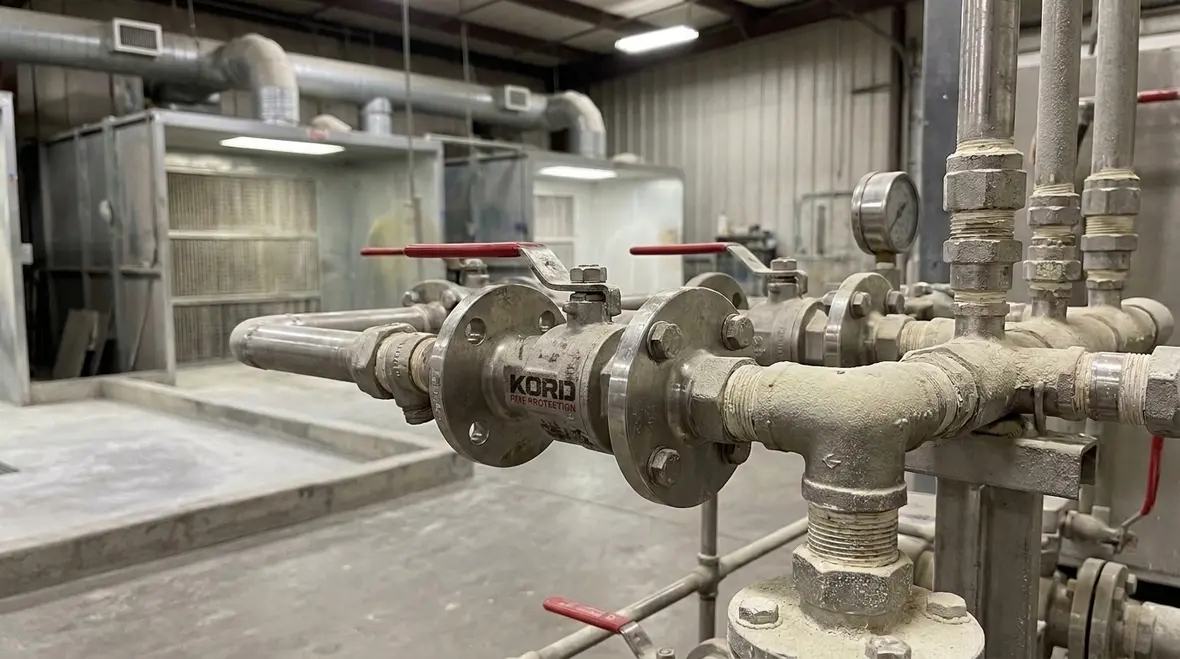
NFPA 35 Section 6.2: Piping, Valves, and Fittings for Coating Processes
Quick Answer: NFPA 35 Section 6.2 sets practical requirements for process piping, valves, and fittings used in coating operations. It focuses on safe materials, construction, connection methods, and installation practices that reduce leak potential, ignition risk, and deterioration during service.
For related guidance on keeping records straight before they turn into a very long afternoon, see Fire Protection System Documentation Checklist.
What does NFPA 35 Section 6.2 control for coating process piping?
NFPA 35 Section 6.2 addresses how coating process piping systems manage flammable, combustible, or reactive materials. The section concentrates on design and installation details that prevent conditions that can lead to vapor release, pipe rupture, or ignition at joints and components. In practical terms, NFPA 35 process piping valves fittings requirements influence what facilities can install, how they must be connected, how they must be supported, and how they should be maintained over time.
Commercial facilities that coat, blend, spray, or transfer coatings typically face recurring compliance issues: aging gaskets and seals, corrosion under insulation, incompatible elastomers, and “temporary” repairs that remain in service. Section 6.2 is written to reduce those failure modes through component selection, secure installation, and inspection readiness.
Materials and component selection: where compliance often breaks down
NFPA 35 Section 6.2 requires piping, valves, and fittings to be suitable for the service conditions of the coating process. In the field, suitability is not a checkbox. It depends on chemical compatibility, temperature, pressure, and exposure to coating constituents and cleaning agents.
Common failure points in valve and fitting materials
- Incompatible seals and packing that swell, harden, or crack when exposed to coating solvents or additives.
- Corrosion and under-deposit leakage in threaded fittings or crevice areas, especially where product and washdown solutions concentrate.
- Elastomer degradation on valve seats and gasket faces, leading to slow seepage at flanged or threaded connections.
- Improper rating selection for pressure, temperature, and vacuum conditions typical of transfer and spray support systems.
Facilities often inherit older valve assemblies from prior process changes. A valve type that was acceptable for one formulation can become unacceptable when solvent content, aromatic fraction, or cleaning chemistry changes. Compliance teams should treat “process change” as a trigger for a component suitability review rather than relying on historical acceptance.
Connections and installation practices that control leak risk
Piping systems in coating operations depend on connection integrity. Section 6.2 places emphasis on installation practices that minimize the likelihood of leaks at joints, flanges, threaded connections, and other mating surfaces.
Operational realities that increase connection stress
- Thermal cycling from batch heating or washdown, which can relax threaded joints or compromise gasket compression.
- Vibration from pumps, compressors, and spray systems, which can loosen fittings that are not properly secured.
- Mechanical impacts during maintenance access or cleaning that damage supports, sleeves, and protective guards.
- Wrong repair materials such as sealants, tape, or gaskets not matched to the coating chemistry.
To address these risks, commercial operators should establish written installation standards for thread types, gasket selection, torque or tightening procedures, and alignment checks. Documentation should include the coating formulation date or change control record that drove the compatibility decision for each valve and fitting.
Valves in coating service: function, placement, and maintenance discipline
Valves in coating process piping support safe flow control, isolation, and safe shutdown. Section 6.2 expectations become practical when operators understand how valve components fail during normal production.
What inspectors look for during compliance checks
- Seepage and stem packing condition, including evidence of residue buildup that can indicate slow leakage.
- Correct valve orientation for functional performance and safe drain behavior, where applicable.
- Secure mounting and support to avoid side loading on valve bodies and flanges.
- Operational reliability, including full stroke movement without binding, sticking, or partial closure.
In commercial coating facilities, maintenance intervals often lag behind solvent exposure cycles. Facilities should schedule inspection and testing for valves and fittings based on observed leakage history, coating formulation changes, and cleaning frequency. A disciplined maintenance program is a cost control strategy, not just a safety requirement.
Inspection, testing, and documentation: how to keep systems compliant over time
NFPA 35 Section 6.2 is only effective if the installed piping, valves, and fittings remain suitable throughout their service life. That means inspection and documentation must match the way coating systems operate.
A practical compliance workflow
- Component verification: confirm the valve and fitting materials and ratings against current coating chemistry and operating conditions.
- Connection inspection: verify flange gasket condition, thread integrity, and the presence of appropriate protective measures for vulnerable joints.
- Leak trending: record seepage observations, washdown residue patterns, and the locations of repeated failures.
- Repair controls: standardize approved repair kits, compatible gaskets, and sealant or packing specifications.
- Maintenance closure: document what was replaced, what compatibility basis was used, and when retesting is performed.
Kord Fire Protection supports commercial operators with ongoing inspection, testing oversight, and compliance documentation practices that reduce drift between “installed condition” and “actual condition.” This matters in industrial and retail-adjacent coating operations where maintenance crews, contractors, and process specialists frequently coordinate under production pressure.
For related guidance on managing fire protection compliance programs across facilities, see Kord Fire Protection.
Frequently Asked Questions
Next step: protect production and compliance
Review your coating process piping, valves, and fittings against NFPA 35 Section 6.2 using your current coating formulations, maintenance history, and inspection records. If you want a clear path to sustained compliance, partner with Kord Fire Protection for practical documentation, inspection support, and maintenance program alignment. Start now by compiling your valve and fitting register and identifying components with the longest leak or degradation history.

Join Our Newsletter!
Get the latest fire safety tips delivered straight to your inbox From our Newsletter.



