
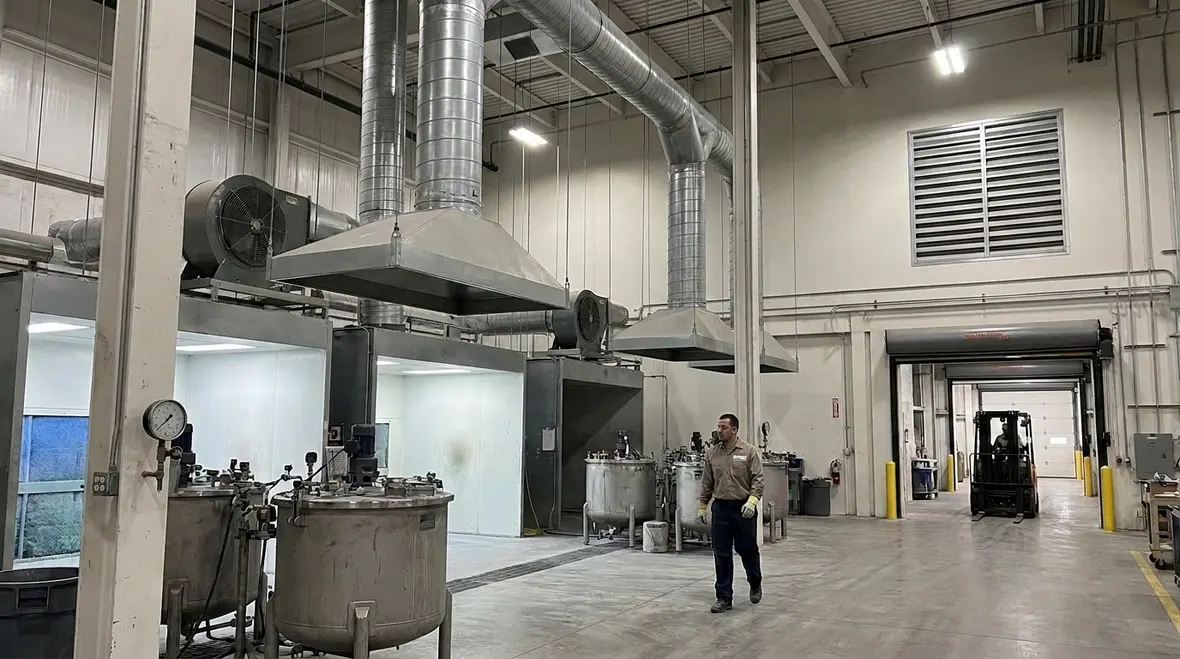
NFPA 35 Section 5.4: General Ventilation of Coatings Plant Buildings
Quick Answer: NFPA 35 Section 5.4 sets performance based expectations for general ventilation in coatings plant buildings. It focuses on maintaining safe air movement, controlling accumulation of flammable vapors, and supporting effective local exhaust. Compliance also depends on reliable operation, inspection, and maintenance of ventilation systems.
If you’re mapping out a broader compliance plan, it helps to start with fire protection services in Southern California so ventilation verification, inspections, and corrective actions are not treated like a last minute scramble.
What NFPA 35 plant building ventilation requirements mean in practice
NFPA 35 plant building ventilation requirements address how coatings plant buildings should manage contaminated air at the whole building level. Section 5.4 does not replace local exhaust. Instead, it establishes general ventilation as a supporting control so vapors are diluted, exhausted, and prevented from reaching hazardous concentrations in areas beyond the direct capture zone. Facilities typically use this section alongside related provisions for ducting, exhaust discharge, and equipment safeguards to form an integrated ventilation strategy.
From a compliance standpoint, the biggest challenge is operational continuity. Ventilation systems often change over time due to production schedules, door openings, HVAC set point drift, filter loading, and modifications to exhaust or makeup air. A compliant design can become noncompliant if the system cannot reliably deliver the expected airflow and pressure relationships.
How Section 5.4 fits with coatings safety controls
NFPA 35 treats ventilation as a layered defense. In coatings operations, general ventilation supports primary hazard control methods such as:
-
Local exhaust ventilation at mixing, application, drying, and any points where vapors are generated.
-
Containment and work practice controls, including storage practices and limiting releases outside of capture zones.
-
Ignition source control and safe electrical design for hazardous locations where applicable.
-
Process monitoring where the facility uses it to confirm ventilation performance.
General ventilation under Section 5.4 must coordinate with local exhaust. If general ventilation pulls air in the wrong direction, it can strip vapors from capture zones and distribute them across the building. If it is insufficient, vapors can accumulate in less ventilated areas. Successful compliance depends on airflow balance, reliable operation, and documented verification.
For related context on how ventilation controls support coatings safety more broadly, see NFPA 33 Section 9.2: Protecting Ventilation Systems in Spray Operations.
Core operational expectations under Section 5.4
1) Maintain safe airflow patterns and dilution
General ventilation should provide dilution and air movement that reduce the likelihood of flammable vapor accumulation beyond the local exhaust effectiveness zone. In real buildings, this means airflow patterns must account for layout changes, mezzanines, permanent barriers, and airflow obstructions such as partitions, duct runs, and stored materials.
Common failure points include:
-
Door traffic that reverses airflow and disrupts pressure control during production shifts.
-
Incorrect makeup air delivery locations that create short circuiting or pull vapors into clean corridors.
-
Changes to HVAC balancing after renovations, without re validation of ventilation performance.
2) Protect ventilation system integrity during operations
Ventilation effectiveness depends on the system remaining stable during peak production. That requires controls that respond appropriately to changes in exhaust demand and maintains required airflow where coatings are used.
Facilities should verify that:
-
Supply and exhaust fans operate as intended during all relevant modes.
-
Any interlocks between process equipment and ventilation controls function correctly.
-
Fire and smoke control interactions do not disable normal ventilation without a safe alternative strategy.
3) Ensure ventilation does not spread contamination
General ventilation must not inadvertently distribute flammable or combustible vapors to adjacent areas. This includes adjacent offices, storage rooms, and circulation spaces that could become unprotected pathways if airflow is misdirected.
Practical mitigation steps typically involve:
-
Confirming pressure relationships across zones during production.
-
Balancing supply and exhaust rates to minimize uncontrolled migration.
-
Reviewing HVAC control logic so ventilation does not ramp down during active coating activities.
Inspection, testing, and maintenance: where compliance is won or lost
Even when a system is originally designed to meet ventilation intent, the ongoing compliance outcome depends on consistent verification. Section 5.4 style requirements are only sustainable with inspection and maintenance procedures that address both mechanical performance and control reliability.
Ventilation equipment checks that frequently impact compliance
-
Fan performance and belt drive condition: worn belts, slipping sheaves, clogged impellers, or wrong rotation can reduce airflow.
-
Duct and damper condition: sticking dampers, disconnected linkages, and leaking duct joints change flow distribution.
-
Filter loading: dirty filters reduce supply performance and can cause bypass behavior or pressure drift.
-
Airflow balancing drift: seasonal HVAC tuning and building envelope changes can alter air movement over time.
-
Control system reliability: sensor calibration errors and controller logic changes can defeat intended ventilation behavior.
Verification methods used during compliance programs
Common verification practices include airflow measurements at representative locations, pressure differential trending, functional testing of interlocks, and documenting fan and damper status. For many coatings plants, a documented ventilation verification program is the best way to sustain confidence that general ventilation continues to perform as intended throughout changing production cycles.
Kord Fire Protection supports commercial facilities by coordinating inspection and maintenance processes for ventilation related safety systems, helping teams identify performance drift early and maintain defensible documentation for audits and management review. For more information, review Kord Fire Protection services.
If your team is also comparing how other coatings standards treat airflow and containment, this breakdown of NFPA 33 Section 15.7 ventilation and dust collection for powder coating adds useful contrast.
Commercial compliance challenges for coatings plant buildings
Coatings plant buildings often operate in environments shared with other commercial functions such as light industrial warehousing, retail distribution, or administrative office spaces. That increases the practical complexity of NFPA 35 plant building ventilation requirements because the ventilation strategy must manage both hazardous process areas and protected nonprocess areas.
Change management and renovation risk
Renovations are one of the most common triggers for noncompliance. Changes to racking, new partitions, upgraded HVAC equipment, new exhaust tie ins, or re routed ductwork can invalidate an airflow study if the ventilation performance is not re verified.
Seasonal performance and building envelope effects
Seasonal temperature changes alter stack effect and outdoor air conditions. If makeup air controls do not compensate, general ventilation rates can drift outside the designed window. This is especially common where loading dock doors open frequently or where wind impacts outdoor air intakes and exhaust outlets.
Operational workarounds
Even with engineering controls in place, day to day operational practices affect ventilation. Examples include propping doors open during rush periods, bypassing ventilation interlocks to address nuisance alarms, and adjusting HVAC schedules to improve comfort. These practices can create conditions where vapors migrate beyond intended areas.
Frequently Asked Questions
Next step: strengthen ventilation compliance with documented verification
If your coatings operation has shifting production schedules, recent modifications, or recurring ventilation performance issues, act early. Engage Kord Fire Protection to support ongoing inspection, testing, and maintenance focused on ventilation reliability and documentation quality. This approach helps your team maintain defensible compliance with NFPA 35 plant building ventilation requirements, reduce audit risk, and protect workers by ensuring ventilation performs as intended during real operations.
A good companion read is NFPA 35 Section 1.1 Scope: What Organic Coatings Plants the Standard Covers, especially if your team is still defining where NFPA 35 applies across the facility.

Join Our Newsletter!
Get the latest fire safety tips delivered straight to your inbox From our Newsletter.



