
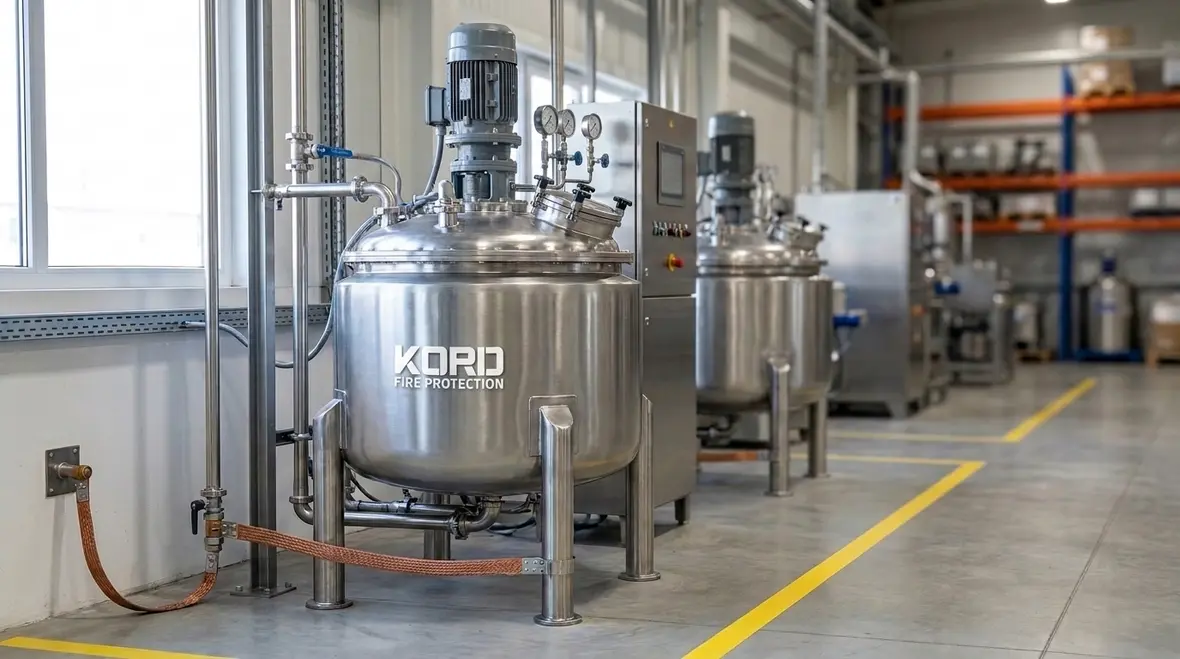
NFPA 35 Section 6.6: Mixers and Mixing Tanks Requirements
Quick Answer
Nano-grade compliance depends on how your facility designs, operates, vents, grounds, and maintains mixers and mixing tanks. NFPA 35 Section 6.6 focuses on preventing fire and explosion by controlling ignition sources, managing static, and ensuring equipment, relief, and inspection practices match the process hazard.
If you’re reviewing broader system readiness at the same time, Kord Fire’s commercial fire suppression services page is a useful next stop for understanding how inspection, maintenance, and code-compliant support fit into real facility operations. ([kordfire.com](https://kordfire.com/fire-suppression/?utm_source=openai))
Why NFPA 35 mixers mixing tanks requirements matter in commercial operations
Many commercial and industrial facilities treat “mixing” as routine. In practice, mixers and mixing tanks concentrate flammable, reactive, or combustible liquids and vapors into confined systems. That combination increases the consequences of ignition, static discharge, mechanical failure, or improper venting. This is why NFPA 35 mixers mixing tanks requirements require deliberate design controls, disciplined operation, and documented maintenance.
For facilities handling paints, coatings, adhesives, solvents, plastics processing inputs, or chemical formulations, Section 6.6 provides a structured approach to ignition control and equipment integrity. It also aligns with day to day realities such as hot work permitting, lockout tagout practices, instrument calibration, and scheduled inspections.
What NFPA 35 Section 6.6 typically requires for mixers and mixing tanks
NFPA 35 Section 6.6 addresses the full lifecycle of mixer and mixing tank use. Requirements generally fall into these control categories:
- Equipment selection and installation so mixers and tanks function safely under expected pressure, temperature, and chemical compatibility conditions.
- Ignition source control including electrical classification alignment, mechanical component protection, and process operating limits.
- Ventilation and pressure management to prevent unsafe vapor accumulation and to manage pressure development where it can affect vessel integrity.
- Bonding and grounding practices to mitigate static electricity hazards during charging, mixing, and transfer.
- Inspection, testing, and maintenance to keep safeguards effective and to catch common deterioration before it creates a fire scenario.
In the field, the most common compliance failure is not the absence of an engineered safeguard. It is drift over time: missing torque on fasteners, degraded gaskets, incorrect electrical sealing, vent obstruction, or sensors left out of calibration.
How mixers create ignition risk, and how Section 6.6 addresses it
Mixing introduces multiple pathways for ignition. Turbulence increases vapor generation at liquid surfaces. Charging operations can create electrostatic charge. Mechanical components can create frictional heat or sparks if alignment fails or bearings wear. Process control deviations can lead to temperature or concentration changes that move the mixture toward flammable behavior.
1) Static electricity during charging and mixing
Static hazards often appear during transfer and charging, especially when tank fill rates are high or when dissimilar materials increase charge generation. NFPA 35 mixer and mixing tank safety expectations require bonding and grounding methods that prevent charge accumulation and ensure any induced potential dissipates safely. Facilities typically reduce risk through:
- Bonding tank and piping runs to a defined grounding system.
- Using approved conductive hoses or connections where applicable.
- Verifying that insulated fittings are not unintentionally breaking the grounding path.
- Maintaining charging procedures that match the process hazard, including controlled fill and dwell times where required by engineering controls.
2) Mechanical ignition and rotating equipment wear
Mixer agitation systems often include rotating shafts, seals, and bearings. Seal degradation can allow leakage to reach hot surfaces or energized equipment. Bearing wear can introduce friction heat or cause unintended contact. Section 6.6 style expectations drive facilities to treat rotating equipment as safety critical, not just production equipment.
Common operational controls include verified seal integrity checks, routine bearing inspections, correct belt or coupling alignment, and monitoring for abnormal vibration or temperature at bearings and motors. When these controls slip, the probability of an ignition event increases sharply.
3) Electrical and instrumentation hazards
Mixing rooms and tank enclosures can develop hazardous locations when vapors are present. To stay compliant with NFPA 35 mixers mixing tanks requirements, facilities generally ensure electrical components, motor controls, and instrumentation meet the expected area classification and process conditions. That includes keeping:
- Conduit seals intact and properly installed.
- Enclosures closed during operation to prevent ingress.
- Cable glands and seals inspected for deterioration.
- Control system sensors calibrated so interlocks actuate as intended.
Venting, pressure control, and vapor management: where facilities get tripped up
Mixing tanks often need venting strategies that limit vapor accumulation and manage pressure changes. NFPA 35 mixer and mixing tank safety practices typically emphasize that vents must function as designed. In practice, this becomes an inspection and maintenance problem.
Vent obstruction is a high risk pattern
Filters, moisture traps, flame arresters, rupture disks, or vent terminations can accumulate residue or be blocked by process byproducts. When vent components clog, pressure increases, vapor concentrations change, and safeguards can fail.
Relief device maintenance and documentation
Facilities that rely on relief devices or pressure management components must ensure those devices remain within service condition. That includes ensuring correct setpoints, proper installation orientation, and that discharge routing does not introduce new hazards. A frequent gap involves incomplete documentation for inspection intervals, poor traceability of service history, and missing evidence that venting and relief components were functionally verified.
Inspection and maintenance: the compliance schedule that prevents fire events
NFPA 35 Section 6.6 requirements translate into recurring verification activities. The highest value approach combines operational rounds with formal inspection and testing. The focus should include both hardware integrity and safety system readiness.
What inspectors and maintenance teams should verify
- Bonding and grounding continuity for tanks, piping, and transfer connections.
- Rotating equipment condition including seals, bearings, couplings, and shaft integrity.
- Electrical enclosure integrity including seals, cable glands, and motor control protections.
- Vent and relief equipment condition including flame arresters or vent paths, residue buildup, and functional obstructions.
- Interlocks and controls that prevent operation outside safe temperature, concentration, or sequence conditions.
- Housekeeping and spill control to prevent vapor sources and ignition propagation pathways.
Commercial facilities also need a clear “who does what” matrix. Production teams often maintain mixers, but fire protection and electrical support teams typically own hazard verification. When responsibility boundaries are unclear, tests and corrective actions get delayed.
To support ongoing compliance, Kord Fire Protection can assist commercial operators with inspection coordination, impairment documentation, and targeted maintenance support for fire protection and life safety systems that intersect with NFPA 35 mixing hazards. If you need a partner that understands both compliance outcomes and day to day production constraints, reach out through Kord Fire’s main fire protection services team. ([kordfire.com](https://kordfire.com/?trk=organization_guest_main-feed-card-text&utm_source=openai))
Common failure points that trigger noncompliance findings
NFPA 35 mixers mixing tanks requirements are frequently challenged during audits because of predictable, repeatable conditions. Typical problem areas include:
- Grounding path breaks caused by replacement hoses, nonconductive components, or changes to piping without a hazard review.
- Missing or outdated inspection records that prevent verification of required intervals and corrective actions.
- Improper vent routing or vent modifications that were performed for convenience and not revalidated for hazard outcomes.
- Seal and gasket degradation that leads to leakage near ignition capable components.
- Electrical protection impairment such as open conduits, damaged seals, or unsecured enclosures.
- Operating procedure drift including changes to fill rates, dwell times, or charging sequence without updating hazard controls.
The practical takeaway is simple: treat mixers and mixing tanks as engineered hazard systems. Every change in hardware, procedure, or maintenance staffing should trigger a documented review of fire and explosion controls.
Frequently Asked Questions
Conclusion and next step
NFPA 35 mixers mixing tanks requirements succeed or fail based on how reliably you maintain ignition controls, venting performance, and grounding integrity over time. Conduct a focused hazard based inspection of mixers and mixing tanks, then close gaps in vent pathways, electrical protections, rotating equipment condition, and bonding continuity. For commercial facilities that need faster compliance verification and reliable maintenance support, contact Kord Fire through its fire suppression inspection guide or broader service team to build an inspection and maintenance plan aligned with your mixing operations. ([kordfire.com](https://kordfire.com/fire-suppression-inspection-southern-california-guide/?utm_source=openai))

Join Our Newsletter!
Get the latest fire safety tips delivered straight to your inbox From our Newsletter.



