NFPA 35 Section 1.2 Purpose: Fire and Explosion Prevention in Coating Manufacturing
Quick Answer
NFPA 35 Section 1.2 establishes the fire and explosion prevention intent for coating manufacturing. It drives a risk focused approach to controlling ignition sources, managing flammable process hazards, and maintaining protective features so facilities can reduce catastrophic loss, injury, and downtime.
Facilities looking at broader industrial protection planning can also explore manufacturing fire suppression planning with Kord Fire Protection for related context on keeping production spaces protected and operational.
Why NFPA 35 Section 1.2 matters in coatings operations
NFPA 35 sets minimum requirements for fire and explosion hazards in processes involving coatings. NFPA 35 purpose fire explosion prevention coatings is not a theoretical statement. Section 1.2 establishes the standard’s intent: reduce the likelihood that a flammable atmosphere or hazardous condition becomes ignitable during normal operations, startup, shutdown, maintenance, and upset conditions.
For commercial, industrial, and retail environments that include coating lines, the practical compliance challenge often involves balancing production schedules with risk controls. Paint booths, mixing rooms, solvent storage, and drying or curing spaces frequently share ventilation infrastructure, electrical equipment, and hot work boundaries. When those systems drift out of alignment, the facility loses its engineered basis for safety.
How Section 1.2 shapes the safety framework
Section 1.2 functions as the “purpose” foundation for the technical requirements that follow. It influences how inspectors and facility teams evaluate whether controls are truly preventing fire and explosion events, not merely reacting after damage occurs. In practice, that means facilities should treat these elements as an integrated system:
- Ignition source control: Electrical, mechanical, static, and thermal ignition risks require documented hazard awareness and reliable protective design.
- Flammable vapor management: Ventilation effectiveness and confinement strategies must maintain conditions that limit ignition probability.
- Process upset readiness: Startup, shutdown, cleaning, and abnormal runs must remain within the intended safety envelope.
- Maintenance and inspection discipline: Fire and explosion prevention depends on features that stay functional over time, not just installed once.
Operational reality: the controls are only as strong as the maintenance
Coating facilities commonly encounter recurring failure modes tied to degraded performance. Examples include clogged spray booth filtration, malfunctioning exhaust dampers, worn fan belts, failed purge logic, and leaking drum lids or hoses. When any of these conditions increase flammable vapor concentration or increase ignition potential, the assumptions behind prevention can collapse quickly.
That is why Kord Fire Protection typically positions ongoing inspection, testing, and corrective maintenance as a core compliance service rather than a one-time project. A recurring schedule helps confirm that the prevention approach in NFPA 35 remains credible throughout the year. For more on that side of the equation, see ITM fire protection inspection, testing, and maintenance.
Where coatings facilities experience fire and explosion risk
To comply with the intent behind Section 1.2, facility leaders should map risk to real operating points. NFPA 35 emphasizes controlling hazards where they form, accumulate, and ignite. The most common high risk areas in coating manufacturing include:
1) Solvent handling and bulk transfers
Drum tipping, bulk tote connection, closed transfer failures, and inadequate bonding or grounding can generate ignition risk through static discharge or frictional heating. Even minor leaks can create flammable atmospheres in adjacent mixing or ventilation dead zones.
2) Spray application and booth operations
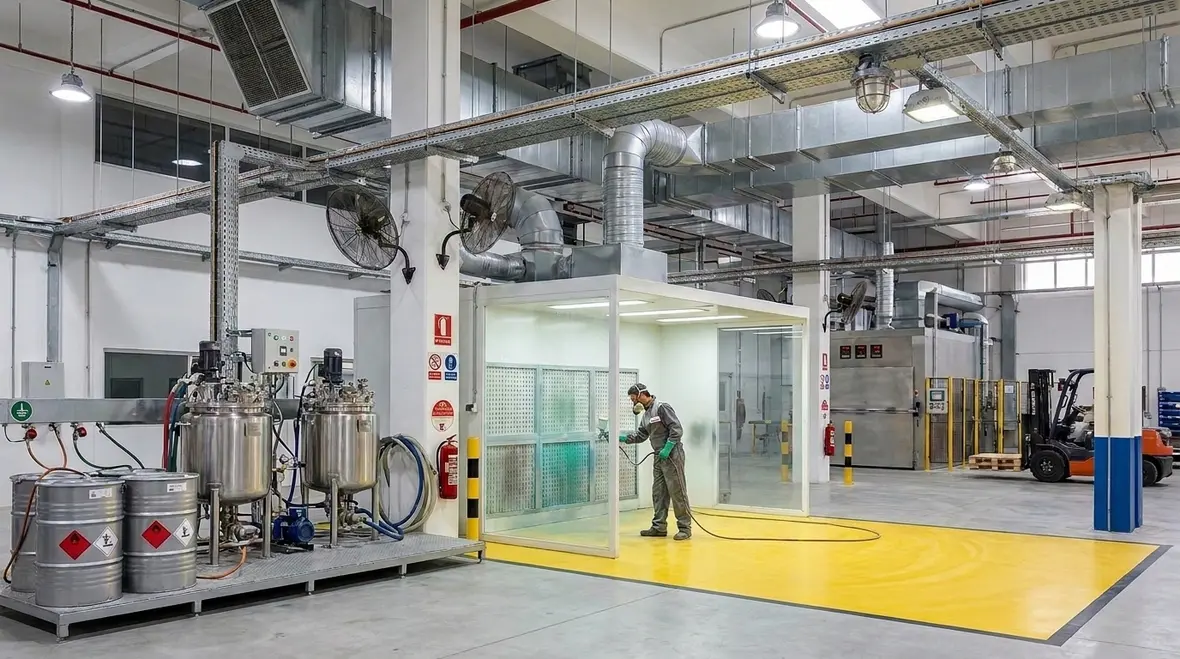
During spraying, atomized coating material and solvent vapors can produce difficult to predict concentration gradients. Booth airflows, overspray management, and interlocks determine whether the space remains below ignition relevant conditions. Filter loading changes airflow patterns and can shift hazardous zones closer to ignition sources.
3) Mixing, reduction, and preparation
Mixing tanks, metering pumps, and viscosity adjustment processes can introduce ignition sources if equipment selections do not match the hazard classification or if maintenance bypasses safeguards. Procedural gaps, such as improper lid closure or extended open transfer, often create the “small leak, big risk” scenario.
4) Drying, curing, and thermal processes
Heat adds ignition potential. The facility must ensure that heating controls, temperature monitoring, and exhaust systems prevent solvent vapor accumulation. Cycling events, thermostat miscalibration, and failed exhaust fans can produce conditions that the prevention intent was meant to avoid.
What compliance teams should verify to meet the Section 1.2 intent
Section 1.2 provides intent, but compliance lives in evidence. Facility teams should verify that prevention measures remain effective across normal operations and during non-routine tasks.
Ventilation and airflow performance
- Confirm exhaust and make up air operation remains within design parameters during spraying and curing.
- Validate interlocks and alarms that protect against loss of airflow.
- Implement a filter management practice aligned with loading and seasonal humidity changes.
Electrical and ignition source controls
- Ensure equipment in hazardous areas remains appropriate for the process classification.
- Maintain tight control of inspection and repair practices that prevent improper substitution or unapproved modifications.
- Verify that wiring, grounding, and bonding practices do not degrade over time.
Hot work boundaries and maintenance work control
Many incidents occur during maintenance. Cutting, grinding, and electrical troubleshooting can introduce ignition sources. Strong control procedures should include permits, area monitoring where appropriate, temporary ventilation adjustments, and documented clearance. Section 1.2 intent requires the facility to manage risk during these activities, not just during steady production.
Inspection, testing, and documentation
A credible compliance program includes recurring inspection records for protective features. Kord Fire Protection supports commercial operations by helping facilities plan and document inspections and maintenance so that the prevention strategy stays verifiable. This typically includes confirming protective system performance, identifying drift in protective features, and prioritizing repairs before production losses or enforcement issues occur.
Common failure points that undermine NFPA 35 purpose
Even when a facility believes it follows NFPA 35 requirements, practical breakdowns often occur at predictable points. These issues frequently defeat the NFPA 35 purpose fire explosion prevention coatings intent by increasing either flammable conditions or ignition probability.
Failure point: bypassed or deactivated safety interlocks
Interlocks get bypassed during troubleshooting or production upsets. Over time, bypass practices can become informal, increasing the likelihood that spray or heat continues without intended ventilation or control logic.
Failure point: ventilation drift due to filter loading
Overspray filtration and exhaust components accumulate residue. Airflow decreases, causing vapor concentrations to increase. The booth can still “look operational,” but airflow measurement reveals the loss of protective performance.
Failure point: static control not treated as a living program
Grounding and bonding degrade with wear, corrosion, and improper reassembly after maintenance. Transfer hoses, drum covers, and carts also require periodic checks to maintain static control.
Failure point: curing area hazards misunderstood as isolated from spraying
Some facilities rely on the assumption that different rooms are automatically safer. In reality, solvent migration, shared exhaust pathways, and maintenance access can connect the hazard across locations. Section 1.2 intent supports a whole-process viewpoint.
Partnering for ongoing compliance: how Kord Fire Protection helps
Commercial coating facilities need more than installation. They need ongoing verification that prevention measures remain functional, documented, and aligned with current operating realities. Kord Fire Protection helps facilities build a practical maintenance and compliance rhythm, focusing on the protective features that support NFPA 35 purpose fire explosion prevention coatings outcomes.
If your program includes periodic testing, inspection scheduling, and corrective action tracking, you reduce the likelihood of enforcement exposure and operational downtime. For related guidance on protecting commercial environments and maintaining system performance, visit Kord Fire Protection.
If you want a broader look at system selection in hazard-heavy environments, industrial fire suppression solutions for real hazards is a useful next read.
Frequently Asked Questions
Conclusion and call to action
NFPA 35 Section 1.2 purpose sets a clear prevention intent for coating manufacturing. Facilities should validate ventilation, ignition control, work permitting, and maintenance discipline as an integrated system. If your program lacks consistent inspection documentation, airflow checks, or maintenance verification for ignition and process controls, schedule a compliance review with Kord Fire Protection to strengthen ongoing readiness and reduce the risk of fire or explosion events.
Join Our Newsletter!
Get the latest fire safety tips delivered straight to your inbox From our Newsletter.