
NFPA 33 Section 5.3: Spray Booth Construction Requirements
Quick Answer
NFPA 33 Section 5.3 sets construction requirements for spray booths to reduce ignition hazards, control overspray, manage airflow, and support safe maintenance. Compliance depends on correct materials, electrical layout, ducting, ventilation performance, and practical inspection readiness across the booth system.
Facilities reviewing booth construction issues often also benefit from related guidance on spray operations equivalency and alternative compliance, especially when an existing installation has drifted away from the original basis of design.
What NFPA 33 spray booth construction requirements actually require
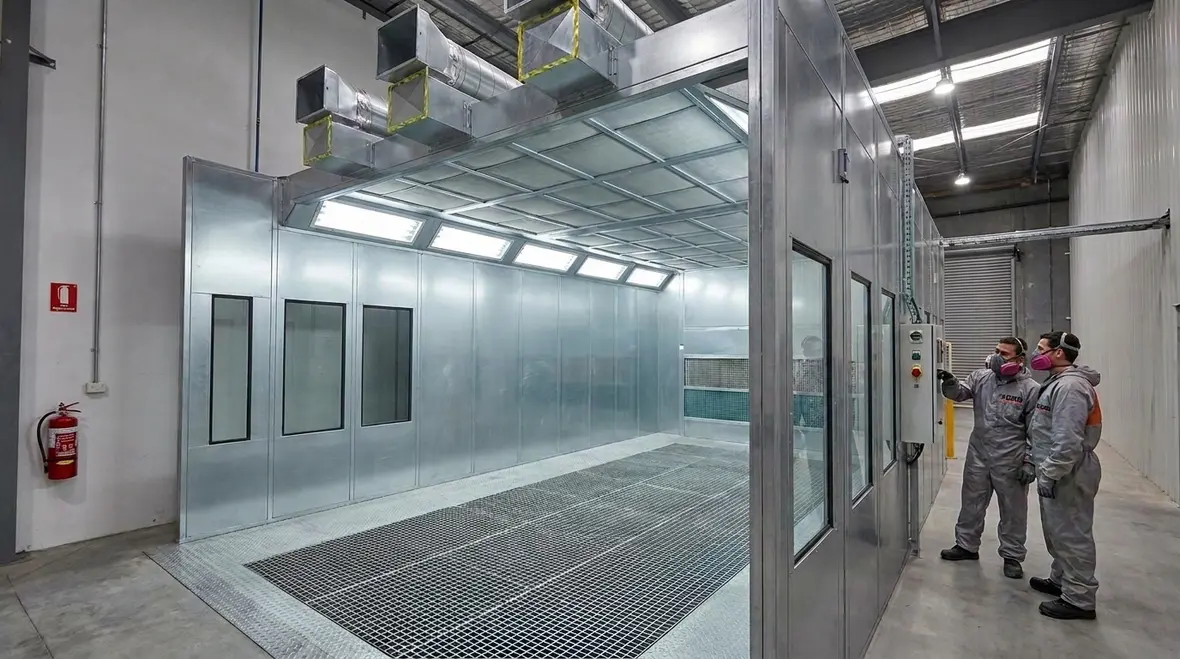
NFPA 33 spray booth construction requirements focus on building the booth so it can safely contain and control hazardous atmospheres created by spraying operations. Section 5.3 addresses how the booth enclosure, openings, ventilation interfaces, electrical components, and supporting systems work together to prevent ignition and limit the conditions that allow flashback, sustained burning, or rapid fire growth.
In commercial facilities, the most common compliance failures do not come from a single missing item. They come from mismatched installation details, unverified ventilation performance, and changes made during renovations that shift the booth configuration away from the listed or inspected design basis. A construction review must therefore consider the installed configuration, not the original drawing set.
How Section 5.3 shapes booth construction, containment, and fire safety performance
NFPA 33 spray booths operate as engineered systems. Section 5.3 ties construction features to fire safety outcomes, including containment of spray material, stable airflow to manage flammable vapor and overspray, and safe integration with exhaust and ductwork. The booth shell, access doors, lighting, wiring routes, and filters all affect whether the booth can maintain safe conditions during normal operation and abnormal scenarios such as filter loading or airflow impairment.
Booth enclosure integrity and controlled openings
Construction must support a reliable physical barrier around the spraying process. The design must manage where openings exist and how they are sealed or controlled during operation. Loose or damaged panels, gaps around access doors, and improperly aligned openings often allow leakage of flammable atmospheres into adjacent spaces. For inspectors and insurers, repeated observations of air leakage and visible smoke staining around joints usually indicate the booth enclosure is not performing as intended.
Substructure, support framing, and durability
Spray booth construction also includes the durability of supporting structures. Corrosion resistance matters because coating operations deposit reactive residues and solvents. Degraded supports can distort airflow paths and create uneven collection and recirculation behavior. This becomes a fire risk when airflow changes allow localized vapor accumulation.
Access doors, maintenance positioning, and safety of service activities
Section 5.3 construction requirements support safe maintenance access. Filters, ducts, and electrical components must be reachable without bypassing safety controls. Many facilities fail compliance during retrofit work because maintenance doors, access panels, or wiring compartments are reconfigured without reassessment of airflow and ignition control boundaries.
Ventilation and exhaust interfaces: the construction details that prevent ignition escalation
Spray booths depend on ventilation to keep flammable vapors and overspray within safe limits. While other parts of NFPA 33 cover ventilation performance criteria in greater depth, Section 5.3 sets construction expectations for how ventilation systems connect to and operate with the booth.
Ducting configuration, transitions, and flame propagation control
Ductwork and transitions must be constructed to maintain performance and reduce the ability for a fire to extend through the ventilation path. Poorly aligned duct joints, missing or ineffective closures, and duct sections that accumulate residue increase risk. In practice, duct residue buildup is a leading indicator of insufficient airflow distribution or filter bypass.
Exhaust termination and system compatibility
Exhaust discharge locations and termination construction must support safe operation. Facilities often add roof penetrations, relocate fans, or extend duct runs without verifying that the revised geometry still supports safe airflow patterns and collection effectiveness. The result can be increased vapor concentration and greater sensitivity to ignition sources.
Airflow stability during loading and maintenance
Construction and layout should allow stable airflow even as filters load or components are serviced. A booth that cannot be maintained to its designed condition often ends up with degraded airflow, higher overspray carryover, and more combustible deposits that raise incident severity.
Electrical and ignition source control built into booth construction
Electrical systems inside and associated with the spray area require careful construction and installation controls. Ignition sources can include motors, switches, lighting, and wiring routes. Section 5.3 construction expectations support overall safety by requiring that the booth’s built environment does not create new ignition pathways or expose electrical components to hazardous deposits.
Wiring routes, junction access, and segregation from hazardous deposits
Construction must guide wiring away from areas where overspray or condensate can collect. Facilities commonly add sensors, retrofit PLC modules, or install temporary lighting without addressing how those changes affect ignition control boundaries. During inspections, damaged insulation, improper cable routing, and open junction boxes in deposit-prone areas frequently become root causes that trace back to construction gaps.
Lighting and visibility without creating ignition risk
Spray operations require lighting and visibility. The booth’s lighting system must be installed as part of the construction configuration, with fixtures protected from direct overspray impingement and compatible with hazardous location requirements when applicable. Missing covers, cracked lenses, and poorly sealed fixture penetrations can permit ingress and buildup that increase ignition susceptibility.
Motor and fan installations that match the exhaust system
Fan and motor assemblies must be constructed and installed to maintain safe operation and airflow integrity. Replacing a fan or changing fan speed without evaluating system performance can defeat the designed ventilation effect. Over time, motor and fan performance degradation also affects airflow stability, changing the deposit pattern inside the booth and duct system.
Common construction failure points during real-world compliance inspections
Commercial facilities often meet the intent of NFPA 33 during initial installation, then drift out of compliance during renovation, maintenance, or equipment replacement. The following issues commonly affect NFPA 33 spray booth construction requirements during field reviews.
Filter installation errors and bypass leakage
Improper filter seating, incorrect filter grades, and worn gaskets lead to bypass. Bypass increases overspray escape and combustible residue buildup. Inspectors often correlate bypass evidence with airflow imbalance and duct residue severity.
Airflow imbalance caused by duct modifications
Changing duct length, adding elbows, or relocating fans without recalculating airflow can create dead zones. These zones increase vapor concentration and overspray deposition on surfaces not designed for combustible loading.
Seal failures at joints, doors, and penetrations
Spray booths endure vibration, thermal cycling, and chemical exposure. Construction sealant failures at joints and penetrations allow leakage. The most actionable corrective step is usually not only replacement of seal material. It is verification of the installed airflow and smoke test results to confirm the booth enclosure performs as constructed.
Electrical retrofits that do not respect hazardous deposit exposure
Added controls, convenience outlets, and non-rated components create hidden ignition risks when they become deposit magnets. A construction-compliant approach ensures electrical additions match the surrounding booth environment and maintenance practices.
Maintenance, testing, and documentation: how to keep construction compliant long term
Construction compliance does not stop at installation. Ongoing maintenance protects the safety margin that Section 5.3 construction features create. Commercial operators need inspection routines that validate booth condition, ventilation integrity, and control reliability.
Operational checks that should be part of a documented program
- Verify exhaust operation and airflow performance after any filter change, duct service, or fan replacement.
- Inspect booth seams, doors, and penetrations for leakage indications and residue patterns.
- Confirm lighting and electrical components remain sealed and free of damaging deposit accumulation.
- Track filter maintenance history to identify early onset of bypass or excessive residue deposition.
Why Kord Fire Protection supports real compliance outcomes
Kord Fire Protection helps commercial facilities maintain inspection readiness through practical planning, documentation support, and on-site verification aligned with NFPA expectations. Because booth construction and ventilation performance interact with everyday maintenance, Kord Fire Protection can support ongoing testing and maintenance to reduce the likelihood of last-minute compliance findings during audits.
For related guidance on hazard recognition and inspection planning, visit this fire inspection preparation checklist.
Frequently Asked Questions
Conclusion and CTA
NFPA 33 spray booth construction requirements demand more than matching specifications. They require installed integrity, stable ventilation interfaces, ignition source control, and maintenance that preserves the constructed safety intent. Kord Fire Protection can help commercial facilities verify readiness, address construction drift, and maintain safe operating conditions through practical inspection and maintenance support. Schedule a compliance review to confirm your booth system matches current installed performance and maintenance reality.

Join Our Newsletter!
Get the latest fire safety tips delivered straight to your inbox From our Newsletter.



