
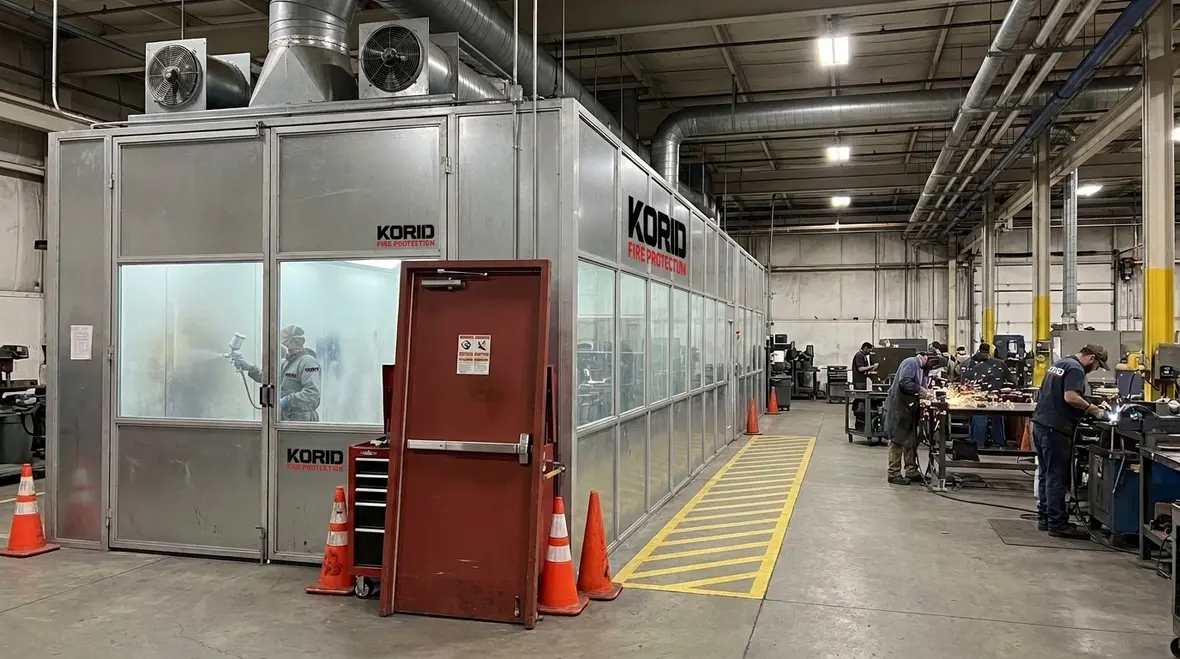
NFPA 33 Section 5.5: Separating Spray Spaces From Other Operations
Quick Answer: NFPA 33 Section 5.5 requires spray spaces to be separated from other operations to reduce ignition risks, limit the spread of flammable vapor, and control hazardous residue. Compliance focuses on how openings, airflow, ignition sources, and maintenance practices preserve separation over time.
NFPA 33 spray area separation other operations is not a one time construction detail. It is an ongoing performance requirement that affects airflow, ignition control, door and opening management, and inspection readiness. Facilities that treat separation as “just walls and doors” often discover gaps during walkthroughs, commissioning, or post change management reviews.
Facilities reviewing spray hazards often benefit from a stronger spray booth fire suppression approach alongside separation planning, especially when inspection readiness, system performance, and day to day production changes all need to stay aligned.
Why Section 5.5 matters in real commercial operations
In industrial finishing, aerosol application, coating, adhesive spraying, and similar processes, flammable vapors and combustible residues can migrate beyond the spray zone if separation controls fail. NFPA 33 Section 5.5 targets that failure mode by requiring spray spaces to be isolated from other operations that may introduce ignition sources, disturb air balance, or allow hazardous transfer through openings.
Commercial facilities often face additional complexity: multi tenant layouts, shared loading docks, maintenance work occurring near spray areas, and frequent equipment changes. The result is that spray area separation is frequently challenged not at initial installation, but after renovations, roof or HVAC repairs, electrical work, or door hardware replacements.
What separation must accomplish, not just what it looks like
NFPA 33 Section 5.5 centers on controlling hazardous spread. Separation measures typically include physical isolation of the spray space and operational controls that prevent the spray atmosphere from interacting with other activities. In practice, compliance is evaluated based on:
-
Limiting ignition exposure from adjacent operations such as welding, cutting, grinding, open flames, and non rated electrical devices.
-
Reducing vapor and residue transport through openings, shared ventilation pathways, floor penetrations, or poorly managed doors.
-
Maintaining air handling intent so the spray space does not pressurize into adjacent areas.
-
Preserving integrity over time through correct maintenance, repair procedures, and inspection documentation.
Facilities that meet “construction” requirements but fail in operations and maintenance can still be found non compliant. Common examples include propped doors, exhausted airflow changes that reverse pressure relationships, and temporary fan or filter swaps that remain in place after work concludes.
Where separation breaks down: practical failure points
1) Openings, doors, and penetrations
Separation controls commonly fail at the interfaces. Doors and openings can allow airflow shortcuts that pull spray mist and vapor into adjacent spaces. Penetrations for cable trays, piping, ducting, and lighting frequently become weak links if not sealed correctly or if patching materials are replaced later during remodeling.
-
Door equipment mismatch such as wrong closer tension, missing smoke seals, or delayed latching.
-
Uncontrolled access during production peaks, maintenance rounds, or housekeeping.
-
Service openings left open after filter changes or inspections.
2) Air system interaction with “other operations”
Even with strong wall separation, HVAC and exhaust systems can undermine the intent. If the spray space shares ductwork, return air paths, or makes up air from adjacent work areas, vapors can migrate. Pressure relationships can also shift after routine maintenance, filter loading changes, fan belt replacements, or damper adjustments.
Inspection teams typically look for evidence that airflow direction is controlled and verified. Without current test data and stable commissioning settings, separation becomes theoretical.
3) Ignition sources nearby the boundary
“Other operations” often continue during spray activities. That creates a duty to control ignition risks around the spray area separation boundary. Problem sources include:
-
Temporary heaters, portable generators, or powered industrial equipment used near the boundary.
-
Uncontrolled hot work in adjacent bays.
-
Non listed or non suitable electrical equipment in spaces that can receive spray mist or vapor migration.
When facilities do not coordinate permits, scheduling, and boundary controls, the physical separation does not prevent hazardous interaction.
How to keep NFPA 33 spray area separation other operations effective day to day
Section 5.5 compliance is strongest when separation becomes part of daily operational discipline. The most effective programs combine written procedures, supervised access control, and verified performance testing.
Access control during spraying
-
Implement a documented door management procedure to prevent propping and unauthorized entry.
-
Require coordination between production scheduling and any adjacent “hot work” activities.
-
Use controlled staging so carts, parts, and tools do not introduce ignition risk near boundary openings.
Housekeeping and residue management
Residue can become a secondary ignition hazard. Housekeeping procedures must support separation by preventing accumulation outside the spray space, maintaining clean tracks for airflow, and ensuring spill responses do not expand contamination into adjacent work areas.
Change management for HVAC, exhaust, and doors
Whenever a facility changes filters, fans, dampers, door hardware, or duct routing, separation performance may change. Kord Fire Protection routinely supports commercial sites by aligning inspection documentation with operational reality, including verifying that installed conditions continue to meet the separation intent after modifications.
To strengthen internal planning, facilities can reference Kord Fire Protection resources on fire protection services in Southern California to build an inspection cadence that matches how systems actually operate.
Inspection and maintenance expectations that auditors look for
Auditors and AHJ representatives typically expect evidence that separation controls exist, function as intended, and remain in serviceable condition. Strong documentation reduces the risk of repeating corrective actions after failed walkthroughs.
What “good evidence” looks like
-
Current inspection reports tied to the spray area boundaries and adjacent operations.
-
Airflow and pressure verification data supporting the intended direction of air movement.
-
Door and seal inspection records showing hardware condition and seal integrity.
-
Maintenance records for exhaust fans, dampers, duct sealing, and filter handling procedures.
Maintenance common errors
Maintenance crews often address symptoms rather than root causes. Examples include continuing operations despite a failing door closer, patching penetrations with materials that do not maintain integrity under service conditions, or leaving temporary bypass jumpers in place after troubleshooting.
Kord Fire Protection helps commercial facilities close these gaps by providing professional technical oversight, practical training reinforcement, and compliance focused service for ongoing testing and maintenance.
If a facility needs a broader compliance roadmap, Kord Fire Protection also supports commercial fire safety audit planning for industrial and commercial environments.
Frequently Asked Questions
Next step: verify separation performance before it becomes a finding
Facilities should evaluate spray area separation other operations using a performance focused checklist for openings, airflow interaction, ignition source controls, and maintenance discipline. Kord Fire Protection can support walkthrough assessments, inspection readiness, and ongoing testing and maintenance so separation remains effective after real world changes. Contact Kord Fire Protection to schedule a compliance focused review and build a practical service plan.

Join Our Newsletter!
Get the latest fire safety tips delivered straight to your inbox From our Newsletter.



