
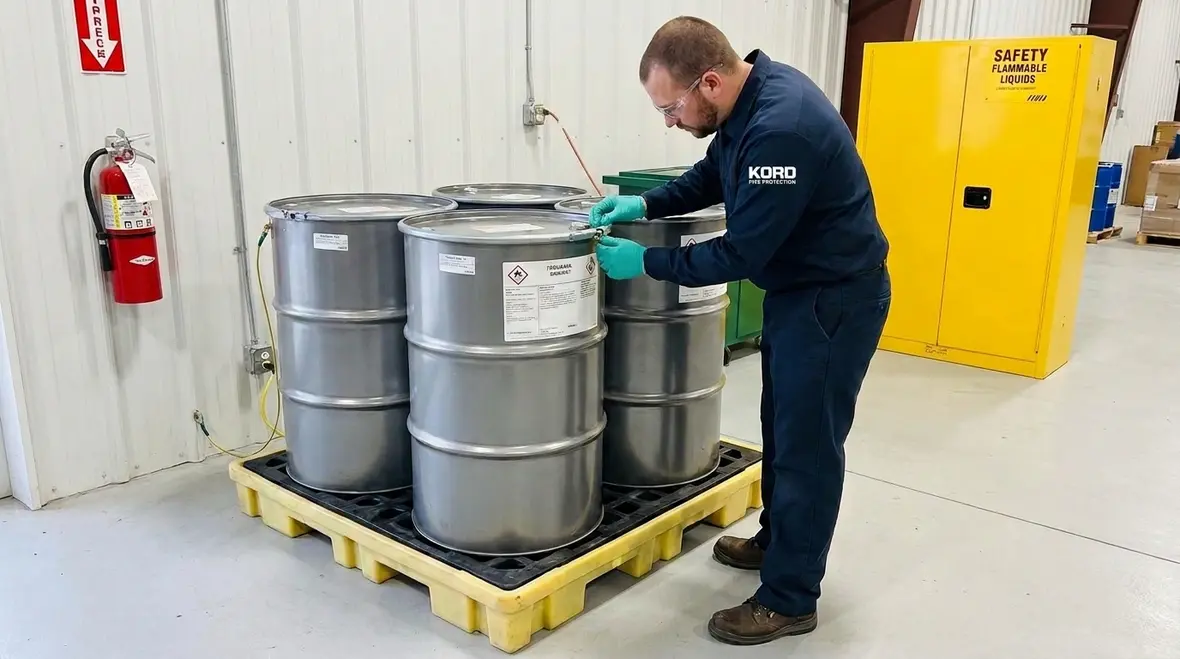
NFPA 34 Section 8.2 General: Overview of Ignitible Liquid Rules
Quick Answer
NFPA 34 Section 8.2 establishes baseline expectations for how ignitable liquids are stored and handled in commercial settings. It focuses on ignition source control, safe operating practices, equipment integrity, and inspection readiness. Facilities that align procedures, training, and maintenance reduce fire risk and inspection gaps.
For a broader look at inspection readiness and recordkeeping, commercial fire safety audits can help connect day to day field conditions with the documentation inspectors actually expect to see.
What NFPA 34 Section 8.2 Generally Requires for Ignitable Liquids
NFPA 34 ignitible liquid storage handling general rules set a practical framework for day to day operations. Section 8.2 General does not try to replace every detailed application rule across the standard. Instead, it establishes foundational requirements that influence how a facility manages ignition hazards, container condition, transfer practices, and control of release events.
In commercial facilities, the recurring compliance problem is not understanding the text. The issue is implementing and sustaining control measures across shift handoffs, contractor work, equipment aging, and housekeeping variations. A clear safety program built around Section 8.2 expectations helps keep the “baseline controls” consistent, auditable, and defensible.
How Facilities Apply the “General” Rules in Real Operations
1) Control ignition sources near storage and handling
Section 8.2 general expectations translate into ignition source management in and around storage rooms, cabinets, dispensing areas, and transfer zones. Operationally, that means:
- Managing hot work permits and ensuring safe separation during cutting, grinding, or brazing.
- Using approved electrical equipment and verifying classifications where ignitable vapors can accumulate.
- Maintaining static control practices during transfer, including bonding and grounding where the risk assessment calls for it.
- Preventing smoking and open flame exceptions outside explicitly controlled procedures.
Common failure points include “temporary” work that becomes routine, portable heaters used near flammable materials, and equipment maintenance performed without verifying ignition hazard controls.
2) Maintain safe container and closure integrity
Ignitable liquid controls depend on keeping containers and closures in serviceable condition. In practice, that includes:
- Ensuring lids, bungs, caps, and seals remain functional and compatible with the liquid.
- Preventing corrosion, bulging, or damaged fittings that can lead to release.
- Using compatible gaskets and avoiding improvised closures.
- Keeping containers closed except during necessary fill, transfer, or sampling.
During inspections, small sealing defects often appear first during routine rounds. Facilities that treat container condition checks as an informal task usually struggle to demonstrate consistent oversight. Documented inspection routines improve continuity across teams and shift schedules.
3) Prevent spill and release from becoming an ignition event
Section 8.2 expectations align with a core principle: released ignitable liquid must be controlled quickly enough to avoid ignition. Operational controls commonly include:
- Spill prevention during transfer and decanting.
- Secondary containment where required by facility process design and hazard analysis.
- Prompt spill response procedures and trained personnel.
- Cleanliness practices that prevent residues and pooled liquids from accumulating around drums, cabinets, and dispensers.
Maintenance gaps can quietly degrade performance. For example, worn siphon components, leaking hoses, or deteriorated absorption materials reduce response effectiveness when a release occurs.
Inspection, Documentation, and Maintenance Practices That Hold Up During Audits
NFPA 34 ignitible liquid storage handling general rules become enforceable through implementation evidence. Inspectors and internal audits typically look for operational traceability, not just the presence of equipment. Facilities strengthen compliance by building inspection and maintenance processes around the failure modes that matter most.
What to inspect regularly (and record)
- Container and cap condition, including compatibility and visible defects.
- Area housekeeping and evidence of residue, stains, or concealed leakage.
- Transfer equipment condition, including hoses, couplings, and shutoff devices.
- Spill response supplies readiness, including absorbent type and placement.
- Electrical and mechanical controls affecting ignition source management.
Maintenance mechanisms that commonly fail
Commercial facilities often standardize equipment, then neglect the details. Typical issues include:
- Gaskets and seals replaced without verifying chemical compatibility.
- Bonding and grounding connections that loosen over time due to vibration or maintenance work.
- Fire protection impairment procedures that delay restoration after inspections and testing.
- Training drift when new operators or contractors join without hazard familiarization.
Kord Fire Protection supports compliance programs with service plans that align inspection readiness, testing coordination, and maintenance verification for ongoing NFPA alignment. For facilities that manage multiple rooms, multiple liquid types, or multiple vendors, structured support reduces the risk of operational “blind spots.”
If you want to tighten the paperwork side before an inspection gets awkward, this fire protection system documentation checklist is a practical companion to the field controls discussed here.
For additional guidance on integrated fire protection readiness, see Kord Fire Protection and discuss how a site specific compliance review can support your ongoing program.
Training and Procedures: Where Compliance Breaks Most Often
Section 8.2 focuses on general principles, but day to day compliance lives in procedures and training. Commercial operators must understand how to execute safe handling steps under normal and abnormal conditions.
Shift handoff controls
A common operational gap is that the storage handling configuration changes slightly over time. Tanks, cabinets, transfer hoses, and portable equipment may be moved, substituted, or temporarily reconfigured. Facilities should:
- Use a standardized log for equipment location and status.
- Require supervisor confirmation for any temporary arrangement near storage areas.
- Verify that the “controls in place” match the hazard level for the current product mix.
Contractor and maintenance coordination
Contractors create a predictable variability problem: their work method and equipment may not match the site’s established ignition control strategy. Effective compliance procedures specify:
- Hot work permitting requirements and clear stop criteria.
- Pre job hazard briefing content for ignitable liquid areas.
- Verification steps for electrical and ignition related controls before work resumes.
Abnormal event readiness
Training should include practical response to container leaks, drum valve defects, and spill discovery. The goal is to prevent responders from treating an incident as “maintenance” rather than a potential ignition and fire hazard.
Common Commercial Compliance Pitfalls Under Section 8.2 General
Even when facilities “know the rules,” certain patterns repeatedly cause noncompliance findings. The following issues typically appear in inspections across industrial and retail environments.
1) Inconsistent housekeeping around storage and dispensing points
Residues, absorbent debris, and minor pooled liquids can expand the hazard profile by increasing vapor generation and ignition potential. Routine cleaning must include verification under equipment, behind cabinets, and around transfer points.
2) Uncontrolled ignition sources during maintenance
Small deviations can matter, such as running non rated portable tools near vapor capable areas. Facilities reduce this risk with clear work authorization, equipment standards, and ignition hazard awareness.
3) Improvised transfer practices
Improvised hoses, mismatched couplings, and shortcuts in closure management increase leak probability. A documented approved equipment list and periodic inspection support safer operations.
4) Weak documentation and inspection traceability
When records do not match field conditions, compliance confidence drops quickly. Facilities should establish inspection frequencies, responsibility assignments, and corrective action tracking tied to Section 8.2 baseline expectations.
Frequently Asked Questions
Call to Action
Review your current ignitable liquid storage and handling controls against NFPA 34 Section 8.2 baseline expectations, then tighten the areas that drift over time: ignition source management, container integrity, transfer equipment condition, and documentation. Kord Fire Protection can support your ongoing compliance through coordinated inspection readiness, testing support, and maintenance verification. Contact Kord Fire Protection’s inspection, testing, and maintenance services to schedule a site assessment and build an actionable, sustainable compliance plan.

Join Our Newsletter!
Get the latest fire safety tips delivered straight to your inbox From our Newsletter.



