
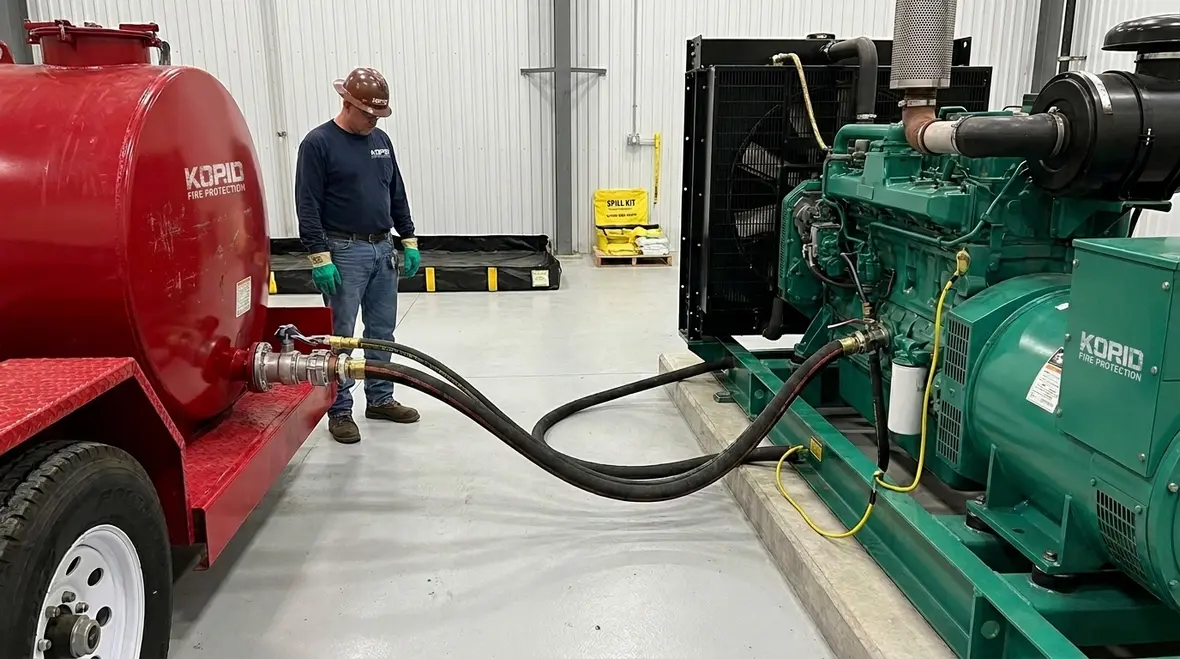
NFPA 37 Section 6.9: Transferring Liquid Fuel to Engines
Quick Answer: NFPA 37 Section 6.9 sets expectations for safe, controlled transfer of liquid fuel to engines. It focuses on preventing spills, controlling ignition sources, using appropriate transfer equipment, and maintaining systems so transfers can be performed reliably under routine and abnormal conditions.
For facilities that also need broader pump compliance support, Kord Fire Protection’s fire pump testing requirements guide gives useful context on inspection cadence, documentation, and staying audit ready.
What does NFPA 37 Section 6.9 cover for engine fuel transfers?
NFPA 37 Section 6.9 addresses the hazards created when liquid fuel moves from storage to engines. In commercial and industrial settings, fuel transfer operations can involve portable containers, fixed piping, pumps, hoses, and connectors used across loading bays, generator rooms, pump skids, and service areas. The core objective is to manage ignition risk and spill risk throughout the transfer process, including setup, connection, pumping, and post transfer clearing and drainage.
In practice, NFPA 37 liquid fuel transfer to engines requirements drive facility managers to standardize procedures, verify compatibility of transfer equipment with the fuel being handled, and ensure that transfer hardware is installed and maintained to avoid leaks and uncontrolled fuel release.
Where compliance breaks down in real facilities
Even when facilities have an emergency plan, day to day transfer procedures often fail in predictable ways. Common breakdown points include the following:
- Improper hose and connection management: Staff use mismatched couplings, worn gaskets, or damaged hoses that do not seat correctly, increasing the likelihood of spray or seepage during connection and disconnection.
- Uncontrolled transfer start and stop: Transfers begin before equipment is positioned and grounded, or stops occur without following shut down steps that clear lines and reduce residual fuel escape.
- Inadequate housekeeping: Fuel residue and oily debris accumulate near transfer connections, creating an ignition fuel source for hot surfaces, static discharge, or electrical equipment.
- Maintenance gaps: Leak testing is skipped, couplings are not inspected on a defined cadence, and worn components are not replaced before performance degrades.
- Device drift: Valves, check valves, pressure controls, and overfill prevention elements lose function due to wear, corrosion, or misadjustment.
These issues directly impact whether the transfer operation remains predictable and safe, which is the practical intent behind NFPA 37 Section 6.9.
Operational controls and transfer equipment expectations
NFPA 37 Section 6.9 expects fuel transfer systems and procedures to manage both ignition and leakage. Facilities typically meet the intent through layered controls across equipment selection, installation, and operating discipline.
1) Use fuel compatible transfer hardware
Transfer hoses, fittings, gaskets, and seals must remain compatible with the specific liquid fuel. Compatibility failures show up as softening, cracking, swelling, or permeability increase over time. For commercial fuel transfer to engines, these failures often appear first at:
- Coupling interfaces and gasket seats
- Hose ends where abrasion occurs from handling
- Clamps, crimp points, and transition fittings
2) Prevent ignition during connection, pumping, and discharge
Fuel transfers introduce ignition hazards from static electricity, friction, and nearby electrical or mechanical equipment. Good compliance practices include controlling ignition sources around transfer points and ensuring bonding and grounding where required by the system design and facility standards. In many commercial sites, inspectors focus on whether the equipment supports safe operation without creating a predictable ignition pathway.
3) Control flow rate, pressure, and line integrity
Line integrity and correct flow control prevent overpressure leaks and minimize mist or spray. Facilities typically address this with rated pumps, appropriate valves, pressure relief arrangements where applicable to the system design, and clear operating limits established in written procedures and job hazard analyses.
4) Manage disconnection and post transfer clearing
Shut down steps matter. When hoses or transfer lines remain pressurized or contain residual fuel, disconnection can lead to drips and spray. Facilities that build compliance into their standard work typically define a sequence such as stopping transfer flow, relieving pressure where the system design requires it, and draining or clearing lines using controlled methods.
Inspection, testing, and maintenance for ongoing compliance
Compliance under NFPA 37 liquid fuel transfer to engines requirements does not end at installation. Facilities should treat fuel transfer points like critical safety systems. A defensible maintenance program reduces sudden failures and supports consistent transfer performance.
What to inspect during routine checks
- Hoses and fittings: Look for cracking, abrasion, bulging, loose clamps, and gasket deformation.
- Valves and shutoff devices: Verify proper operation, full travel, and no seepage at packings.
- Check valves and backflow prevention: Confirm they do not leak or fail to hold under expected conditions.
- Grounding and bonding points: Inspect for corrosion, missing fasteners, and damaged conductors.
- Secondary containment or spill control: Ensure sumps, berms, drains, and absorbents remain serviceable and accessible.
Common failure points that trigger enforcement attention
During compliance walks, fire safety professionals often focus on recurring indicators of system degradation:
- Wet spots at couplings after transfers
- Evidence of repeated repairs with temporary components
- Inconsistent transfer behavior such as surging, delayed shutoff, or pressure loss
- Missing documentation for maintenance, inspections, and repairs
How Kord Fire Protection supports commercial compliance
Kord Fire Protection helps commercial and industrial facilities maintain safe and inspection ready fuel transfer operations by supporting documentation, assessment, and scheduled service. Their work aligns transfer point safety with practical facility standards, helping reduce the gap between written procedures and real world system condition. For related commercial fire protection topics, facilities can review resources at Kord Fire Protection and engage for system review and ongoing maintenance planning.
How facilities can build a compliant fuel transfer workflow
Strong compliance depends on how personnel execute transfers. Facilities should standardize procedures and train staff so each transfer has the same safety controls, regardless of day or shift. Key workflow elements often include:
- Pre transfer readiness: Confirm equipment condition, verify correct fuel type, and prepare spill control materials.
- Controlled setup: Position equipment to prevent hose strain, protect connections from damage, and limit traffic hazards.
- Connection discipline: Use correct fittings, seat connections fully, and verify tightness without over-torque that damages components.
- Transfer operation controls: Start transfer per procedure, monitor for leaks, and stop immediately upon abnormal conditions.
- Completion and clearing: Follow a defined shut down and line clearing sequence to prevent residual release during disconnection.
- Post transfer housekeeping: Wipe residue, remove absorbent materials properly, and restore the area to a clean and safe condition.
Documenting this workflow and auditing adherence supports the intent of NFPA 37 Section 6.9 and improves readiness for inspection.
Featured checklist: NFPA 37 liquid fuel transfer to engines requirements
| Control Area | What inspectors commonly verify | Facility action to stay compliant |
|---|---|---|
| Equipment condition | Hoses, fittings, valves, and seals show no active leaks or unsafe degradation | Use defined inspection intervals and documented repairs |
| Connection and disconnection | Connections do not spray or drip during normal operation | Follow line clearing and controlled shut down steps |
| Ignition control | Transfer areas limit ignition sources and support safe transfer mechanics | Maintain bonding and grounding, manage nearby ignition risk |
| Spill prevention and response | Secondary containment and clean up capability remain available and serviceable | Keep spill kits, absorbents, and disposal procedures ready |
| Documentation and training | Written procedures exist and staff understand execution steps | Train shifts, track competency, and audit repeat failures |
Frequently Asked Questions
Next step: get your transfer points audit ready
Facilities that rely on fuel transfer to engines should schedule a documented review of transfer equipment condition, operating procedures, and inspection coverage. Kord Fire Protection can help identify common failure points, align maintenance documentation to expected standards, and support an inspection ready program. Contact Kord Fire Protection to plan an assessment and maintenance strategy tailored to your site’s transfer setup and operating cadence.

Join Our Newsletter!
Get the latest fire safety tips delivered straight to your inbox From our Newsletter.



