
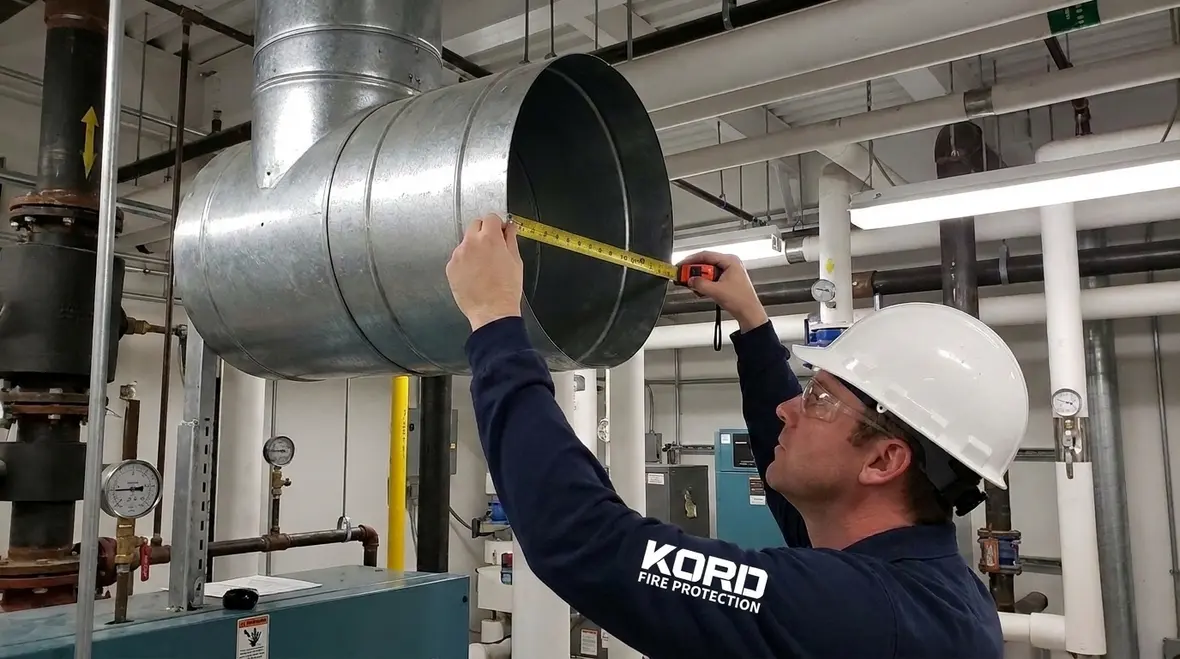
NFPA 34 Section 7.9: Exhaust Duct Cross-Section Dimensions
Quick Answer: NFPA 34 Section 7.9 focuses on sizing exhaust ducts correctly so hazardous fumes and effluent transfer efficiently without creating unsafe velocity loss, excessive pressure drop, or pooling at the duct inlet. Compliance depends on consistent cross sectional sizing from hood to discharge, verified through commissioning and inspection.
What NFPA 34 exhaust duct cross-section dimensions require in practice
NFPA 34 exhaust duct cross-section dimensions are not a paperwork exercise. Section 7.9 requires exhaust systems to be sized so contaminants are captured and conveyed with adequate performance under expected operating conditions. In commercial, industrial, and retail facilities, the most common compliance failures come from duct changes made during tenant buildouts, replacement of duct sections with incorrect sizes, and installation shortcuts that reduce effective flow area.
Because exhaust performance affects the likelihood of flammable vapor and combustible deposits entering occupied spaces or protected environments, inspectors and AHJs often evaluate duct sizing indirectly through system balancing behavior, airflow verification results, and field workmanship. Kord Fire Protection supports ongoing compliance by coordinating documentation reviews, performing practical system verification, and developing maintenance plans that address the failure points that drift over time.
For a related look at how commercial facilities document exhaust system performance, NFPA 33 Section 7.11 on exhaust fans and their drives fits naturally into the same compliance conversation by connecting airflow behavior, fan loading, and maintenance records.
Where Section 7.9 duct cross-section sizing shows up during inspections
Inspectors typically look for consistency between the designed exhaust system and the installed condition. Although Section 7.9 centers on cross sectional dimensions, the field interpretation connects directly to how the duct system behaves during operation.
Key field checks that reveal cross-section problems
- Mismatch between plan and installed duct: Retrofit ductwork, vendor substitutions, or “temporary” changes that become permanent.
- Inlet hood performance issues: Poor capture at the hood opening often indicates restricted flow area or abnormal pressure drop.
- Unexpected airflow shortfall: Airflow readings below design intent can be tied to reduced effective cross section, collapsed sections, or internal obstructions.
- Condensate and residue accumulation: Even when the system initially meets sizing, deposits can reduce duct area and degrade transport performance.
- Pressure drop escalation: As components wear or foul, the system may not maintain required velocities across the duct run.
These issues matter because the exhaust system must keep contaminants from escaping the intended capture path. A duct run that is too small can over stress fans and create pressure imbalances, while a duct run that is too large can drop transport velocity and encourage settling and buildup.
How duct cross-section affects velocity, transport, and pressure drop
Duct cross-section dimensions drive two operational realities: airflow velocity through the duct and pressure loss across the duct system. Section 7.9 effectively aims to keep the exhaust system operating within a safe and reliable performance range.
Small cross-section risks
- Increased pressure drop: Higher static pressure requirements can lead to fan overload, bypassing of dampers, or underspeed operation.
- Reduced controllability: Controls may not reach setpoints consistently, especially during staged start ups or changing load conditions.
- More aggressive fouling impacts: Any reduction in remaining free area causes a faster performance decline over time.
Large cross-section risks
- Lower transport velocity: Lower velocity increases the likelihood of residue settling, wetting, or accumulation.
- Nonuniform flow distribution: At transitions, elbows, and branches, improper sizing can produce dead zones with reduced capture.
- Delayed clearing: The system may not remove contaminants quickly enough to prevent escape during short operating cycles.
Commercial systems also experience operational variability. Filters load, dampers age, and duct joints accumulate deposits. Kord Fire Protection helps facilities maintain the designed performance by pairing compliance-oriented documentation with verification and routine inspection guidance focused on the areas most likely to drift from the original duct sizing basis.
Common cross-section dimension failure points in commercial installations
Even when engineering calculations are correct, installation and lifecycle maintenance determine whether NFPA 34 exhaust duct cross-section dimensions remain compliant.
Top causes of drift from compliant duct sizing
- Field splicing with incorrect fittings: Using mismatched reducers or couplings that change effective internal area.
- Improper transitions and reducers: Sudden area changes increase turbulence and can destabilize flow distribution.
- Blocked or partially blocked inlets: Temporary caps, construction debris, or bent duct liners.
- Duct deformation: Damage from maintenance access, impacts, or inadequate support spacing.
- Internal liner degradation: Corrosion or liner sag can create local restrictions and reduce effective cross section.
- Accumulated residue: Deposits decrease free area and increase roughness, raising pressure drop and lowering effective transport performance.
To strengthen compliance, facilities should treat duct sizing as a living configuration, not a one-time installation detail. Any modification that affects duct diameter, cross-sectional shape, or internal obstructions should trigger reassessment, balancing verification, and inspection updates.
Operational verification and maintenance that support Section 7.9
NFPA 34 compliance is sustained through operational verification and maintenance practices that confirm the exhaust system still behaves as intended.
Verification practices that align with duct dimension intent
- Commissioning airflow verification: Document airflow performance at relevant operating conditions, ensuring results reflect the installed duct dimensions.
- System balancing after changes: Rebalance when duct sections are replaced, when fans are serviced, or when filters and suppression devices change.
- Check damper operation: Confirm damper travel and control logic maintain stable flow distribution and intended velocities.
- Measure and trend pressure drop: Track for early signs of fouling, obstruction, or cross-section reduction.
Maintenance actions that prevent cross-section loss
- Scheduled cleaning: Remove residues and deposits that reduce free area.
- Joint and seam inspection: Identify leakage, deformation, or misalignment at transitions.
- Support inspection: Ensure duct supports prevent sagging that can create localized reductions.
- Filter and component replacement: Replace elements on a defined schedule or when pressure drop targets indicate performance change.
For internal planning resources on safe management of fire and life safety systems, many teams coordinate broader inspection cycles with fire extinguisher inspections and testing requirements. While extinguisher scope differs from exhaust duct cross-section sizing, both require disciplined inspection records and documented evidence of maintained readiness.
Kord Fire Protection serves as a commercial compliance partner by helping facilities build inspection routines, document corrective actions, and verify that installed exhaust systems continue to meet the duct sizing intent of NFPA 34 over time.
Frequently Asked Questions
Conclusion and call to action
NFPA 34 exhaust duct cross-section dimensions directly affect exhaust velocity, transport, and pressure stability. Facilities that maintain duct configuration, verify airflow performance, and schedule cleaning and inspection reduce the risk of drifting out of compliance after buildouts and equipment changes. Kord Fire Protection can review your installed system against design intent, support verification and inspection programs, and help sustain long-term performance. Contact Kord Fire Protection to schedule a compliance focused exhaust system assessment.

Join Our Newsletter!
Get the latest fire safety tips delivered straight to your inbox From our Newsletter.



