
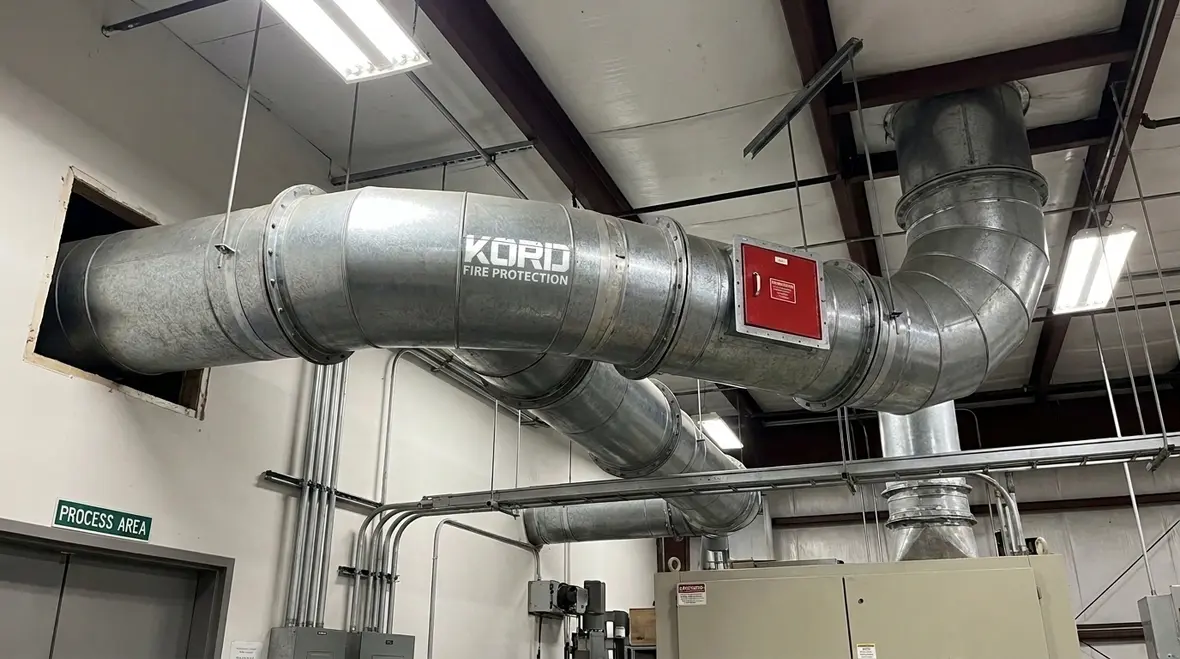
NFPA 34 Section 7.5: Routing Exhaust Ducts From Process Areas
Quick Answer: NFPA 34 Section 7.5 sets the rules for how exhaust ducts leave process areas, including routing, separation, support, and safe conveyance of hazardous effluents. Proper design and installation reduce fire propagation risk, support reliable operation, and simplify inspection and maintenance.
For a practical look at inspection documentation and keeping critical systems audit-ready, see this inspection and documentation guide.
What NFPA 34 expects when ducting leaves process areas
When facilities route exhaust from process areas, the duct system becomes part of the fire and life safety strategy. NFPA 34 exhaust duct routing process areas must be planned so duct runs do not create ignition pathways, do not compromise protection provided to the process, and maintain dependable performance under normal operating conditions and upset scenarios. Early coordination between production, mechanical engineering, and fire protection prevents costly rework during permitting and commissioning.
Know the intent of Section 7.5 before you start routing
NFPA 34 Section 7.5 focuses on preventing duct systems from becoming channels that spread fire, heat, or burning effluent beyond where control measures were intended to operate. In commercial, industrial, and retail operations, the most common compliance failures come from design shortcuts during routing and from installation practices that degrade system integrity over time.
Typical intent areas include:
- Limiting exposure of ductwork to external ignition sources and hot surfaces.
- Maintaining safe separation from combustibles and other building components.
- Supporting reliable containment and conveyance so duct systems perform as designed.
- Ensuring duct systems remain accessible enough for inspection and maintenance without disrupting operations.
Because duct routing connects multiple risk zones, inspectors frequently evaluate the “path,” not just the duct material. A technically compliant duct path can still fail if it bypasses required clearances, ignores protection boundaries, or cannot be verified during field acceptance.
Routing principles that drive compliance outcomes
In practice, NFPA 34 exhaust duct routing process areas means every duct run leaving a process area should be treated as a controlled engineered pathway. The following routing principles usually determine whether the system passes first time or triggers correction notices.
1) Control the path and avoid unnecessary complexity
Long, convoluted runs increase the number of joints, offsets, and transitions, which raise leakage risk and complicate documentation. From an inspection standpoint, each change in direction and each connection becomes a potential failure point. Maintain as direct a route as feasible while still meeting clearances and equipment access requirements.
2) Protect the duct from hazards in surrounding areas
Routing through corridors, storage rooms, or areas with potential ignition sources requires deliberate separation. Ducts should not be positioned where external combustibles or heat sources can contact or ignite duct materials or accumulate residue around joints and seams.
For commercial facilities, a common issue is rerouting ductwork during tenant improvements without updating the fire protection narrative. Maintenance teams later add accessories, labels, or insulation, unknowingly reducing required separation or interfering with intended protection.
3) Maintain correct clearances and support spacing
Section 7.5 expectations typically translate into field verification of support strength, alignment, and spacing. Proper support prevents sagging that can alter airflow, increase condensation or residue pooling, and stress connections.
Practical compliance checks include:
- Verifying supports are installed at the required intervals and anchored properly.
- Confirming vibration isolation and flexible connections, when used, do not introduce uncontrolled leakage paths.
- Ensuring duct sections remain aligned to prevent seam strain and seal failures.
4) Manage transitions, joints, and connections like critical components
Exhaust duct performance depends on intact seams, properly made joints, and correctly installed connections. In many facilities, failures begin at the first “handmade” connection made during install or later modifications. Inspectors commonly look for:
- Condition and workmanship of joints and seams.
- Evidence of sealant degradation, missing fasteners, or corrosion.
- Unauthorized field changes that do not match the approved design.
How routing interacts with protection measures and inspection readiness
Section 7.5 does not stand alone. Duct routing decisions directly affect how other protective measures perform, such as detection, suppression, or containment strategies where applicable. This matters during commissioning and later during periodic inspection, testing, and maintenance cycles.
Commissioning evidence: what facilities should document
Facilities improve compliance outcomes when they treat routing documentation as part of the fire protection record, not a mechanical closeout appendix. Strong commissioning packages usually include:
- As-built duct routing drawings with process area origins clearly identified.
- Clearance callouts and cross-references to supporting fire stopping or protective measures.
- Photo documentation of difficult-to-access runs and connections.
- Field test results that validate airflow and operational continuity.
Maintenance readiness: where systems fail after the first year
The most frequent operational breakdowns come from residue buildup, moisture issues, and unplanned duct adjustments. Over time, buildup can obstruct airflow, increase heat exposure, and increase the severity of upset events. Maintenance teams may also relocate sensors or add access panels without confirming impacts to separation and joint integrity.
A practical approach is to establish maintenance routines that align with the specific duct route and process loading, then verify those routines during scheduled inspections.
Common noncompliance patterns in commercial and industrial facilities
NFPA 34 exhaust duct routing process areas regularly surface the same recurring problems during code reviews and field inspections. Recognizing these patterns helps teams correct issues before they become repeat findings.
- Routing changes after permit approval: tenant modifications or “quick fixes” that alter duct paths without updated compliance documentation.
- Inadequate separation near combustibles: insulation additions, ceiling material changes, or stored items create new ignition conditions around ducts.
- Unsupported or improperly supported duct runs: sagging affects performance and stresses seams and joints.
- Compromised joints and seams: missing fasteners, poor sealing, or corrosion that developed because of condensation and residue.
- Reduced inspection access: duct sections become hard to reach, preventing timely verification of condition and performance.
These issues often show up during insurance reviews or recurring inspections, where inspectors focus on the entire duct path from process area to discharge. A strong fire protection partner can help maintain a defensible record across the system lifecycle.
Partnering with Kord Fire Protection for ongoing compliance
NFPA 34 exhaust duct routing process areas require consistent verification after installation, not just during initial signoff. Kord Fire Protection supports commercial facilities with practical inspection guidance, documentation discipline, and field-ready recommendations that reduce repeat findings.
If your facility needs a compliance review, maintenance plan alignment, or assistance validating inspection readiness for duct routing and related safeguards, Kord Fire Protection can help your team stay audit ready.
Frequently Asked Questions
Next step: validate your duct routing now
Confirm that every exhaust duct route leaving process areas is documented as-built, supports required separation and access, and matches installed workmanship. Then schedule a focused inspection review for joints, supports, and routing changes that occurred during operations. Contact Kord Fire Protection to assess NFPA 34 compliance readiness and develop an inspection and maintenance approach that stands up during audits and insurance reviews.

Join Our Newsletter!
Get the latest fire safety tips delivered straight to your inbox From our Newsletter.



