
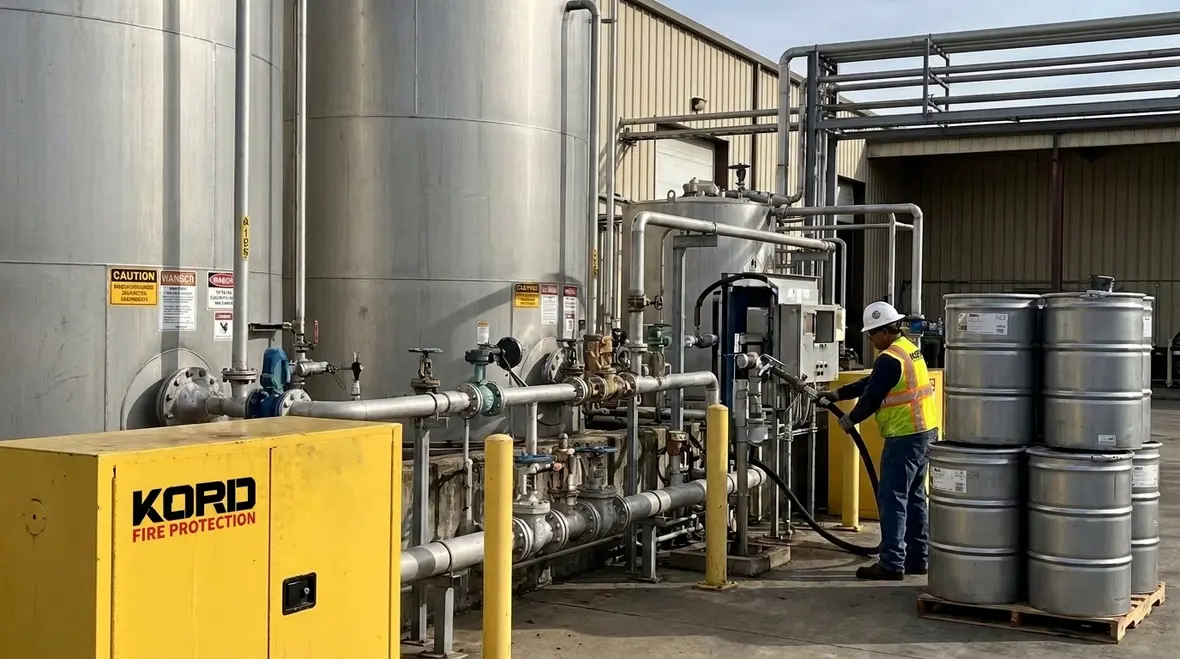
NFPA 34 Section 8.1 Scope: Storage, Handling, and Distribution of Ignitible Liquids
Quick Answer: NFPA 34 Section 8.1 defines what the standard covers for storing, handling, and distributing ignitible liquids in commercial, industrial, and certain retail operations. It establishes the compliance boundaries for tanks, piping, containers, ventilation, transfer areas, and inspection expectations that facilities must manage.
Facilities building a stronger compliance program often pair this topic with fire protection compliance auditing guidance so inspection records, corrective actions, and field conditions all tell the same story.
What does NFPA 34 Section 8.1 scope actually cover?
Many facilities interpret “scope” as a simple definition, but in NFPA 34 it becomes the compliance roadmap for how ignitible liquids move through a facility and how the facility controls ignition hazards. The NFPA 34 ignitible liquid storage handling chapter scope in Section 8.1 frames where the requirements apply, which operations fall inside the rules, and how employers must align procedures, equipment condition, and inspection discipline to the hazards presented by ignitible liquids.
From a practical standpoint, compliance teams use Section 8.1 to answer questions such as: Which storage methods trigger the chapter requirements, which transfer points are considered “handling” under the standard, and which distribution activities require controls to prevent ignition. Commercial and industrial operators typically discover that missing documentation, degraded transfer hardware, or unverified ventilation performance creates the most frequent inspection findings.
For facilities seeking a structured compliance program, Kord Fire Protection supports ongoing testing, documentation review, and remediation coordination to keep ignitible liquid operations aligned with current expectations.
Section 8.1 scope: where the rules apply across facility operations
NFPA 34 Section 8.1 scope focuses on ignitible liquids that are stored, handled, or distributed. In operational terms, this typically covers the lifecycle of the liquid inside the facility boundaries, including receipt, storage, transfer, and distribution to point of use. The scope also guides how facilities evaluate process areas and auxiliary spaces where ignition sources could contact flammable vapor or mists produced by the liquid.
Storage activities that commonly fall within the scope
- Tanks and tank systems used for storing ignitible liquids, including associated appurtenances
- Approved containers and drums where liquids are temporarily or permanently held
- Areas where liquid is staged prior to transfer to production or dispensing points
Handling activities that commonly fall within the scope
- Transfer operations such as pumping, gravity feed, or gravity discharge
- Decanting, draining, and container-to-container movements
- Dispensing and utilization at workstations where vapors can be generated
Distribution activities that commonly fall within the scope
- Piping routes and distribution systems from storage to production or dispensing points
- Manifolds, valves, hose systems, and coupling equipment used for distribution
- Point of use interfaces that can leak or create vapor release
Facility teams often assume that “only the tank area” is in-scope. Inspectors frequently treat transfer routes, valves, and connection points as part of the handling and distribution pathway. This is where maintenance quality and inspection records become decisive.
Operational procedures: aligning workflow with the scope
Scope compliance fails most often when procedure and hardware drift out of alignment. Section 8.1 scope is not only about equipment; it also shapes how operations control risk during routine work, abnormal conditions, and maintenance.
Transfer and dispensing controls that inspection teams evaluate
- Written procedures for starting, stopping, and changing transfer operations
- Requirements for grounding and bonding during liquid transfer when applicable to the liquids and system design
- Methods to manage spills, drips, and residual liquid after transfer completion
- Clear communication rules for shift changes and during work coordination
Common procedure gaps
- No defined acceptance criteria for when a transfer line is “safe to disconnect”
- Inconsistent labeling and segregation between ignitible liquids and other materials
- Uncontrolled transfer practices during maintenance, such as bypassing valves or temporary hose routing without documentation
Commercial and retail environments also face a different risk profile. Foot traffic, customer proximity, and frequent operational interruptions increase the likelihood of improper housekeeping or delayed spill response. These realities heighten the importance of training records and rapid response readiness.
Equipment and maintenance: the scope becomes real at the hardware
Within the NFPA 34 ignitible liquid storage handling chapter scope framework, hardware condition and verification testing matter because ignitible liquid hazards can change quickly when systems degrade. Inspections commonly focus on how systems prevent or limit ignition sources and how they limit the release of flammable vapor or mists.
Where deficiencies typically concentrate
- Hoses, couplings, and quick connect devices with worn gaskets or damaged ends
- Valves and fittings with corrosion, seepage, or inadequate torque verification
- Piping supports and secondary containment that do not maintain integrity or drainage
- Ventilation components in transfer and storage areas that have not been inspected or balanced
Inspection and documentation expectations
Facilities should be prepared to show consistent inspection records, corrective action tracking, and a schedule that reflects actual usage patterns. A robust program typically includes:
- Documented visual inspection criteria for transfer points and connection interfaces
- Recorded functional checks for relevant safeguards
- Maintenance history for hoses, couplings, pumps, and valves
- Evidence that procedures match current equipment configuration
To strengthen compliance continuity, Kord Fire Protection can support facility teams with practical, inspection-ready documentation support and ongoing maintenance verification. This approach helps prevent “pass the inspection today” behavior that leads to repeated findings across cycles.
How facilities interpret “handling” and “distribution” during audits
In enforcement settings, the most critical interpretive decisions happen at the boundaries. Inspectors and fire code officials frequently evaluate whether an area is simply adjacent to ignitible liquids or whether it functions as part of the storage, handling, or distribution pathway.
Boundary questions auditors ask
- Does a laydown or staging area receive or temporarily store ignitible liquids before transfer?
- Are there flexible hose connections used for distribution to mobile equipment or dispensers?
- Do ventilation and ignition control measures remain effective during maintenance, startup, and shutdown?
- Is spill control and cleanup executed quickly and consistently with documented spill procedures?
Commercial reality: why “small changes” matter
Common triggers for noncompliance include adding a new point of dispensing, rerouting hoses temporarily, or changing container types without updating the risk controls. These changes may not look significant to operations teams, but they can shift the hazard profile and expand the practical application of the NFPA 34 ignitible liquid storage handling chapter scope.
For broader code background and practical facility guidance, many teams also cross reference related NFPA fire protection topics and internal fire safety standards. If you maintain an integrated approach, it reduces contradictions between operational procedures and fire protection expectations.
For additional technical support and compliance services, visit Kord Fire Protection services.
Compliance readiness checklist for Section 8.1 scope
Use the following checklist to verify that your facility aligns with the practical intent of NFPA 34 Section 8.1 scope across storage, handling, and distribution. This list emphasizes what usually impacts inspections and audits.
| Area | What to verify | Typical failure point |
|---|---|---|
| Storage | Container and tank suitability, condition, and identification controls | Degraded appurtenances or unclear container labeling |
| Handling | Transfer procedures, spill controls, and safe connection practices | Uncontrolled hose routing or inconsistent disconnect criteria |
| Distribution | Piping, valves, and connection integrity across the route | Seepage at fittings or poor maintenance records |
| Ventilation and area controls | Verification that ventilation remains functional during operations | Out of date inspection or no performance verification |
| Documentation | Inspection frequency, corrective action tracking, and training records | Procedures not updated after equipment or workflow changes |
When these elements remain disciplined, facilities reduce ignition hazard exposure and demonstrate a defensible compliance program under NFPA 34 ignitible liquid storage handling chapter scope expectations.
Frequently Asked Questions
Conclusion and Call to Action
NFPA 34 Section 8.1 scope is a functional compliance boundary, not a generic definition. Facilities should verify that storage, handling, and distribution hardware, procedures, and documentation stay consistent as operations and equipment change. Kord Fire Protection can help you build inspection-ready maintenance and verification workflows, reduce recurring findings, and maintain defensible compliance across the full ignitible liquid lifecycle. Contact Kord Fire Protection today to align your program with NFPA expectations.
If your team is tightening records and verification steps, Kord’s fire safety system documentation for compliance article is a useful next read for keeping the paperwork from becoming the weak link.

Join Our Newsletter!
Get the latest fire safety tips delivered straight to your inbox From our Newsletter.



