
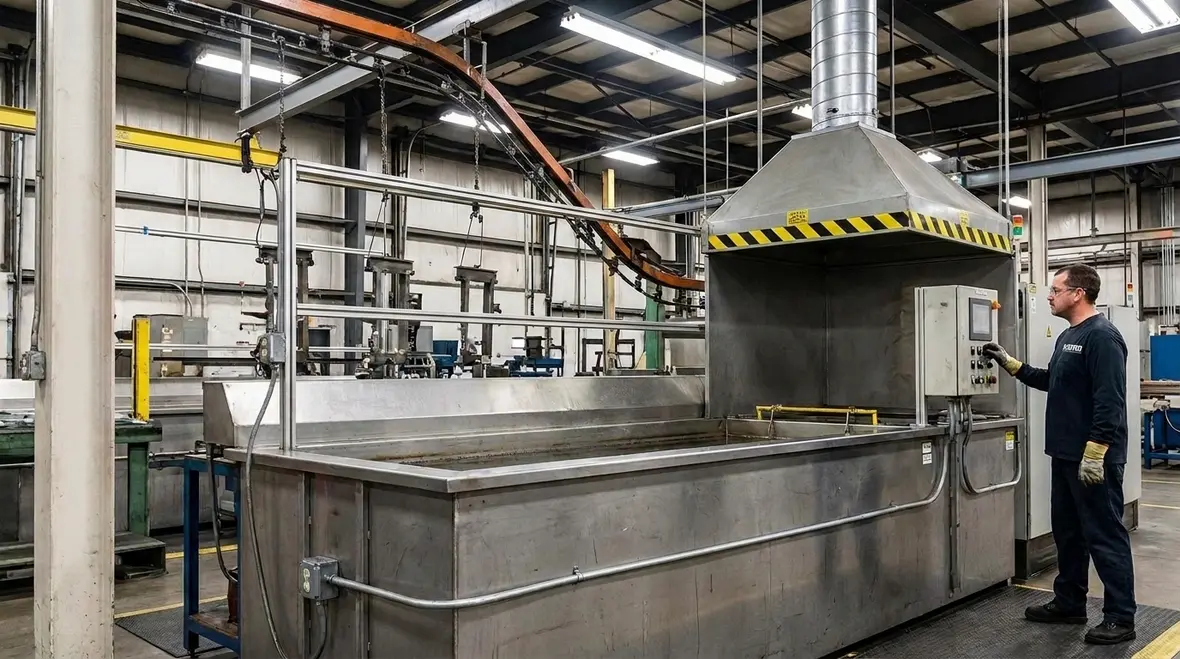
NFPA 34 Section 4.7: The Classification Scheme for Dipping, Coating, and Printing Processes
Quick Answer
NFPA 34 Section 4.7 establishes how dipping, coating, and printing operations get classified for fire protection purposes based on combustible and flammable liquid handling, process design, and operating conditions. The correct classification drives equipment selection, ventilation requirements, electrical design, and inspection focus points.
For related context on how these hazard controls extend into real operating areas, review dipping, coating, and printing fire safety under NFPA 1 Section 43.10. If your process includes heated downstream stages, it also helps to compare these classification decisions with drying, curing, and fusion process requirements.
Why NFPA 34 Section 4.7 matters in real facilities
Commercial and industrial facilities often treat process classification as a paperwork exercise. In practice, the NFPA 34 classification scheme dipping coating processes determines how a fire safety plan gets implemented, not just how it gets documented. Facilities that struggle with compliance typically miss one of three operational variables: the actual liquid composition and flash fire hazards, the process temperature and dwell times, and the physical containment and ventilation method around tanks, dip racks, conveyors, and drying zones.
When classification gets done incorrectly, common consequences include wrong electrical installation class and zone decisions, inconsistent ventilation performance targets, and inadequate inspection intervals for extinguishing and detection systems. These failures can show up during insurance reviews, AHJ plan checks, or internal fire drills as delayed response or unsafe process behavior.
What Section 4.7 is trying to standardize
NFPA 34 Section 4.7 provides the classification framework to organize dipping, coating, and printing processes into categories that reflect fire and ignition risk. The scheme connects process characteristics to the likelihood that flammable vapors or ignitable mixtures can form and persist long enough to ignite.
In day to day operations, this means the facility classification must reflect more than a single solvent or a general room rating. The classification approach considers how materials behave during application, draining, transfer, coating deposition, and subsequent drying or curing. It also considers how the equipment and workflow affect vapor generation and accumulation.
How to apply the NFPA 34 classification scheme to dipping, coating, and printing
NFPA 34 classification scheme dipping coating processes works best when the classification team ties each line item to actual operating conditions. A practical approach includes the following steps.
1) Identify the process inventory and actual operating media
Start with the current product formulations used in production, not the closest historical material. Document the liquid components and the relevant fire hazard information used in the classification process. Then confirm process setpoints: preheat temperatures, viscosity ranges, spray or dip dwell times, and any agitation methods that may increase evaporation.
2) Map equipment and stages that generate vapors
Dipping and coating lines typically include tank or reservoir areas, drain or rack dwell zones, conveyor transfer points, and drying or curing equipment. For classification accuracy, facilities should map the physical location of vapor generating stages and the airflow paths from local exhaust to occupied areas.
3) Confirm ventilation effectiveness and air movement patterns
Classification decisions often assume ventilation controls that prevent vapor accumulation. Facilities should verify local exhaust capture at the tank openings, drain racks, and transitional spaces. The recurring failure point is ducting that was designed for a different line speed, different rack geometry, or changed product viscosity that alters evaporation rates.
4) Validate ignition source control mechanisms
Ignition controls include electrical equipment selection, bonding and grounding for flammable liquid transfer, and operational controls that prevent unsafe conditions during startup and shutdown. Even if classification is correct, ignition control maintenance failures can undermine compliance. For teams reviewing electrical exposure points, Kord Fire also covers electrical and ignition source control in coating environments.
5) Document classification results with a reviewable rationale
Operational teams need a classification record that is traceable. This record should link the classification inputs to facility procedures, such as how the line is operated during normal production, cleaning cycles, and emergency shutdown operations.
Common compliance challenges that derail classification accuracy
Facilities typically fail classification during inspection when the process has drifted from the design assumptions. The following are recurring issues in commercial, industrial, and retail operations that handle coatings or dip materials.
Drift in chemical usage and untracked formulation changes
Substitutions occur due to supply chain constraints or performance requirements. If the facility does not update classification when products change, the hazard profile can shift while protective systems remain unchanged.
Drain time and line speed changes that increase vapor exposure
Higher throughput often increases vapor generation because the line may not allow adequate draining or time for local exhaust capture. The result can be higher vapor concentration in the surrounding space than classification assumptions intended.
Ventilation performance problems that are not connected to process variability
Duct obstructions, fan degradation, filter loading, and poorly maintained hood positions reduce capture efficiency. Over time, these changes can create conditions that are inconsistent with the classification scheme.
Drying or curing operations that do not match the classification boundary
Many lines transition from wet processing to heated drying. Heat can increase evaporation rates and change vapor behavior. Facilities that treat the drying stage as separate and unclassified can create gaps in coverage for detection, suppression, or ventilation.
Inspection and maintenance priorities tied to classification
Once classification is established, the facility should align inspection and maintenance to the hazard profile. The goal is to prevent degradation that can move the process back into an unprotected operating range.
Local exhaust and ventilation checks
- Verify capture performance at tank and drain rack areas after seasonal changes or line modifications.
- Inspect ducting for obstructions, leaks, and alignment issues that reduce airflow delivery.
- Confirm fan performance and motor condition, especially in environments with heat and particulate load.
Detection and emergency response readiness
If the fire safety strategy includes detection or interlocks, the facility should verify sensor placement, calibration intervals, and response testing procedures. Operational teams should be trained on what interlocks do during abnormal conditions and how they affect process continuity.
Electrical and bonding and grounding maintenance
Electrical equipment must remain compatible with the classification assumptions. Regularly inspect wiring integrity, enclosures, seals, and grounding connections. A frequent failure point is damage from maintenance activities or equipment reconfiguration that leaves an enclosure compromised.
Housekeeping and spill control in classified zones
Solid residues, waste containers, and lingering wet drips can create ignition opportunities. Housekeeping controls should be integrated into the operating schedule, including during shift changes and cleaning cycles.
How Kord Fire Protection supports ongoing compliance for coating and dip lines
Classification under NFPA 34 provides the framework, but maintaining compliance in a living production environment requires continuous validation. Kord Fire Protection helps commercial facilities translate NFPA 34 requirements into practical inspection plans, documentation support, and field verification aligned to actual operating conditions.
For teams that need structured safety support across process lines, Kord Fire Protection services typically focus on the full compliance lifecycle: assessment, system testing alignment, and maintenance recommendations to reduce drift from the classified design intent. For related guidance, facility teams can also review Kord Fire Protection’s fire protection services and explore additional fire protection and life safety support options.
Frequently Asked Questions
Conclusion and call to action
NFPA 34 Section 4.7 classification shapes how coating and dip lines get protected, but compliance depends on keeping the classified conditions aligned with real production. If your facility handles dipping, coating, or printing operations and classification documentation has not been validated against current products, temperatures, ventilation performance, and line speeds, contact Kord Fire Protection to schedule a practical compliance review and develop an inspection and maintenance plan that stays current.

Join Our Newsletter!
Get the latest fire safety tips delivered straight to your inbox From our Newsletter.



