
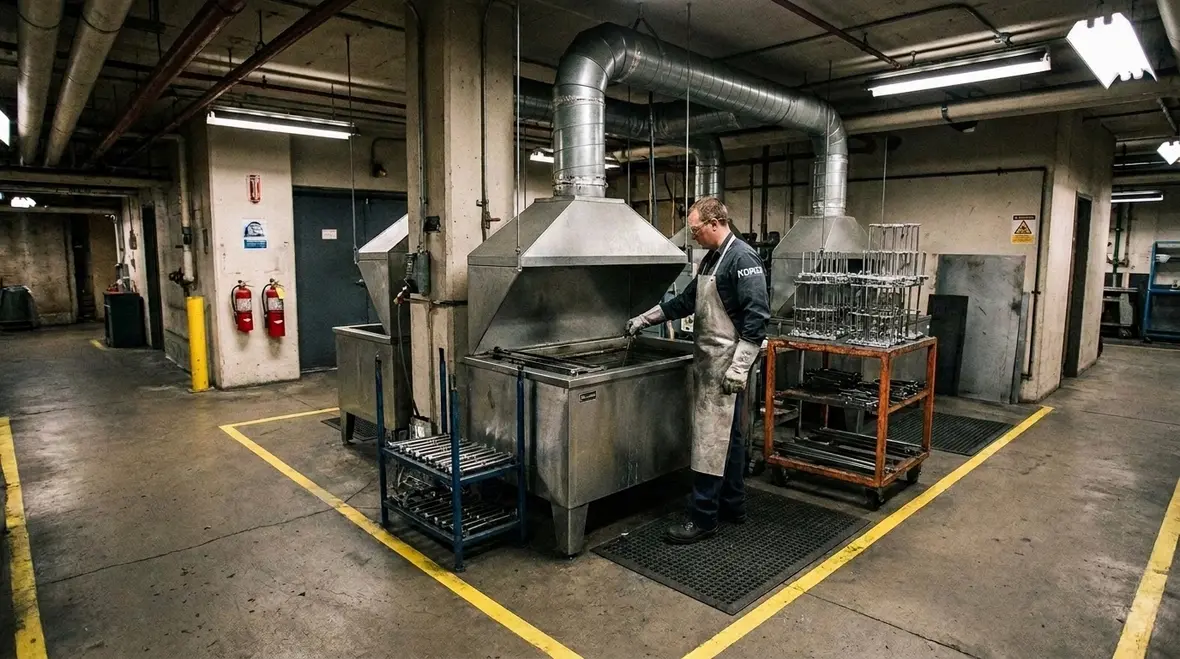
NFPA 34 Section 4.3: Dipping and Coating Processes in Basements, What’s Allowed
Quick Answer: NFPA 34 Section 4.3 restricts basement dipping and coating operations due to fire and explosion hazards from flammable vapors, ignition sources, and poor ventilation. Allowed approaches typically rely on strict process limits, protected equipment, controlled ventilation, and detailed housekeeping and maintenance safeguards.
For facilities building a broader compliance strategy, it helps to connect this topic with fire protection services in Southern California, where inspections, repairs, and preventive maintenance can support ongoing readiness.
What does NFPA 34 mean for basement dipping coating process requirements?
Facilities asking “what is allowed” under the NFPA 34 basement dipping coating process requirements typically discover the same compliance theme: the code does not treat basements as business as usual. It evaluates how liquids are handled, how vapors migrate, what ignition controls exist, and whether the operating design prevents accumulation of flammable atmospheres. Section 4.3 focuses on the practical reality of basement spaces: lower ceiling heights, limited egress visibility, constrained ventilation, and frequent mixing of ignition sources with chemical vapors during production cycles.
In most commercial and industrial settings, the compliance path becomes a documented system of engineering controls, safe operating procedures, and inspection testing. This is where Kord Fire Protection supports ongoing readiness through inspection coordination, hazard control verification, and maintenance oversight so facilities can sustain compliance rather than prepare only for initial commissioning.
NFPA 34 Section 4.3 operating intent: why basements get stricter controls
Basements create higher consequences when a coating or dipping process releases flammable vapors. NFPA 34 addresses these risks by concentrating on four operational outcomes:
- Vapor control: preventing flammable concentrations from forming in the basement atmosphere.
- Ignition source management: controlling or isolating electrical and mechanical ignition capable components.
- Limiting release and migration: containing liquids, mists, and vapors at the source, then exhausting safely.
- Consistent maintenance and housekeeping: ensuring controls remain effective after daily production wear, chemical build up, and filter loading.
In real facilities, noncompliance often emerges from “small” process changes: switching to a more volatile formulation, adding production steps without revalidating ventilation, modifying duct runs, or deferring maintenance on exhaust systems. Section 4.3 expects operations to remain within the safety envelope the design and risk assessment were based on.
What’s typically allowed under Section 4.3: process design controls that stand up to inspections
NFPA 34 Section 4.3 does not simply list a generic yes or no. Instead, it typically allows basement operations when the process is engineered and managed to prevent flammable atmospheres and ignition hazards. Although the exact permissibility depends on your chemicals, temperatures, and equipment configuration, successful compliance packages usually include the following elements.
1) Controlled ventilation and vapor removal
Effective ventilation is usually the backbone of approval for basement dipping and coating work. Inspections and enforcement commonly focus on whether the exhaust system can maintain safe conditions during peak operation, not just during steady state.
- Exhaust capture positioned to remove vapors and mist at the point of release.
- Documented airflow and performance targets that match your operating conditions.
- Verification that ducting, dampers, and fan components remain unobstructed and properly balanced.
Common failure point: exhaust performance drifting over time due to filter loading, duct corrosion, or a fan that loses speed because of maintenance gaps. These issues can lead to increased vapor accumulation and higher likelihood of flammable conditions.
2) Process containment and release prevention
NFPA 34’s basement approach assumes that open handling increases vapor migration. Facilities often succeed when they reduce vapor escape from the dipping tank, coating applicator, and drying staging area.
- Tank covers or lids when compatible with process requirements.
- Appropriate splash containment to limit liquid carryover into the basement.
- Controlled transfer steps to minimize evaporation and mist formation.
Common failure point: production-driven adjustments such as leaving covers open longer than specified, changing pour rates, or bypassing equipment interlocks. These can undermine the control assumptions used in hazard evaluation.
3) Ignition source controls and protected equipment
Basement environments often include electrical distribution, motors, lighting, and mechanical components that can become ignition sources. Section 4.3 expectations typically align with preventing ignition capability in areas exposed to flammable vapor.
- Equipment selection consistent with hazardous location requirements.
- Wiring and cable routing that prevents damage exposure and minimizes ignition risk.
- Mechanical integrity to prevent sparking, overheating, or friction ignition.
Common failure point: using general-purpose equipment in areas that experience vapor during normal operation, then relying on “good housekeeping” alone. NFPA 34 focuses on engineered controls, not reactive cleaning.
4) Chemical management, housekeeping, and spill control
Vapor hazards rise quickly when residues accumulate, especially in corners, floor drains, or around operating equipment. Insurers and AHJs frequently look for a sustained housekeeping culture.
- Spill response procedures that match chemical hazards and response times.
- Flooring and drainage practices that prevent flammable liquid migration.
- Preventive cleaning schedules aligned to production volume and chemical type.
Common failure point: cleaners and absorbents that do not match the solvent type, improper storage of waste, and delayed cleanup that allows residues to generate vapor between production runs.
Inspection and maintenance checkpoints: where compliance breaks during real operations
Even when a system gets approved, compliance can degrade. Section 4.3 expectations translate into recurring field verification. Commercial facilities should plan for documented checks that match operating intensity.
Exhaust system performance verification
- Filter and fan inspection intervals based on loading conditions.
- Verification of airflow at the control points during normal and peak operation.
- Inspection for duct damage, loose connections, and accumulation on fan housings.
Equipment integrity and ignition risk control
- Preventive maintenance for pumps, heaters, and transfer systems that may generate heat or friction.
- Condition monitoring for electrical enclosures, seals, and conduit integrity.
- Inspection of interlocks and safeguards that prevent operation outside safe windows.
Housekeeping and waste handling discipline
- Cleaning records tied to operational schedules.
- Waste container labeling, closure practices, and storage limits.
- Drain protection strategies that prevent unexpected vapor generation.
Because commercial operations change regularly, Kord Fire Protection recommends treating these items as an ongoing compliance program. For facilities seeking support, Kord Fire Protection helps coordinate the verification and maintenance practices that keep dipping and coating controls effective over time.
How facilities document “allowed” operations: practical compliance package elements
Basement coating and dipping work is most defensible when the facility can show that the process matches the safety design and operating requirements. A strong documentation set typically includes:
- Process description with chemicals, temperatures, and operating time at each step.
- Ventilation design basis including exhaust capture details and target airflow rates.
- Hazard control verification showing how ignition sources are controlled.
- Operating procedures such as startup, shutdown, and upset conditions.
- Maintenance and inspection records proving continued effectiveness.
For teams aligning with broader fire protection compliance efforts, Kord Fire Protection supports facilities with recurring inspection services and maintenance planning. This reduces the operational downtime that often results when gaps are found only during an annual compliance event. If your project may require a different compliance path, you may also want to review NFPA 34 Section 1.5 equivalency for coating and dipping as a related resource.
Frequently Asked Questions
Get a compliance-ready plan for your basement process
Basement dipping and coating safety requires more than a one-time setup. Kord Fire Protection helps commercial facilities maintain NFPA 34-aligned controls through inspection coordination, maintenance verification, and practical documentation support. Contact Kord Fire Protection to assess your current ventilation performance, ignition controls, and housekeeping program, then build a sustained compliance schedule your team can follow.

Join Our Newsletter!
Get the latest fire safety tips delivered straight to your inbox From our Newsletter.



