
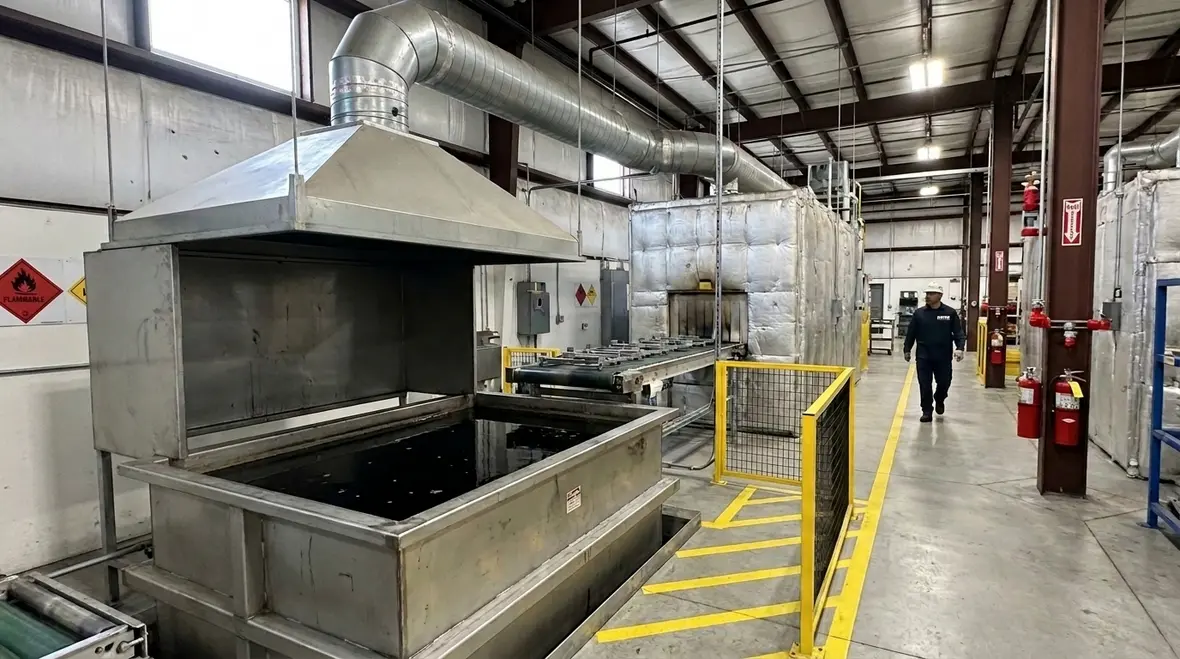
NFPA 34 Section 4.1: Location Rules for Dipping, Coating, and Printing Processes
Quick Answer
NFPA 34 Section 4.1 sets location requirements for dipping, coating, and printing operations to reduce fire and explosion exposure. Compliance focuses on separation distances, control of ignition sources, ventilation and vapor management, and maintaining safe operating boundaries around flammable liquid process areas and storage.
For broader compliance support tied to inspections, repairs, and ongoing system readiness, explore fire protection services in Southern California.
Why NFPA 34 Section 4.1 location rules matter in real facilities
Commercial compliance teams often treat “location” as a site plan problem only. In practice, NFPA 34 location requirements dipping coating processes are enforced through ongoing operational controls, physical separation, and verification that vapor and ignition hazards remain contained and managed. Inspectors and internal audits typically connect three elements: how flammable vapors form, how far those vapors can travel, and whether ignition sources can access the vapor space.
When a facility changes production, process chemistry, or operating hours, the hazard profile can shift without obvious equipment upgrades. That is why NFPA 34 location requirements dipping coating processes must remain stable over time through disciplined maintenance, documented inspection intervals, and proper enforcement of “no ignition within hazardous location” boundaries.
What Section 4.1 is trying to control: vapor, ignition, and access
NFPA 34 addresses process hazards typical to dipping, coating, and printing operations using a location based approach. The core intent is to prevent the creation of ignitable vapor clouds in areas where ignition sources can be present. Location rules typically influence:
- Proximity of process vessels and drying or curing equipment to other building operations, traffic aisles, and utilities.
- Control of ignition source exposure such as motors, switches, heat producing devices, static discharge points, and open flames.
- Management of flammable vapor movement through ventilation design, vapor containment practices, and airflow discipline.
- Physical barriers and facility layout that limit direct flame spread or vapor transport pathways.
Facilities that treat these as “one time” layout decisions often experience drift over months. Examples include stored combustible materials added near process areas, modified ductwork after HVAC upgrades, or new production lines placed closer to dipping or coating tanks. Section 4.1 location controls need to remain effective after those changes.
For related background on how the standard defines covered operations, see NFPA 34 Section 1.1 Scope: What Dipping, Coating, and Printing Processes the Standard Covers.
Common compliance review points for dipping and coating areas
During compliance reviews, fire protection professionals focus less on paperwork and more on what the building actually allows to happen during normal operations and foreseeable upset conditions. The following checkpoints consistently affect whether a process area meets NFPA 34 expectations.
1) Process tank placement and separation from other activities
Tank location affects vapor spread potential and how quickly vapors reach ignition sources. Facilities often overlook that the drying or curing stage can present hazards similar to the dip or coat stage. Layout review should confirm that:
- Process vessels and associated drainage and overflow collection points maintain safe separation from adjacent work zones.
- Traffic pathways and foot traffic do not create frequent exposure of ignition capable equipment near vapor releasing surfaces.
- Nearby combustibles, including cartons, pallets, and rags, remain controlled and segregated.
2) Drying and curing equipment proximity
Heating stages can drive vapor release and create ignition opportunities if not carefully controlled. A key operational failure point is when drying equipment is repositioned, ducted differently, or modified for production changes. Review should verify that any changes preserve safe boundaries established under NFPA 34 location requirements dipping coating processes.
3) Electrical and equipment ignition control within hazardous boundaries
Even if the layout matches the original plan, ignition control can fail due to installation drift. Common issues include:
- Unrated temporary wiring, extension cords, or improperly sealed conduit penetrations.
- Motors, fans, and switching devices placed within vapor producing zones without proper classification controls.
- Access doors or removable panels left open during operation, allowing vapor to escape into adjacent areas.
Operational verification should include observation of normal production, cleaning cycles, and maintenance activities where ignition sources can be introduced or moved.
4) Ventilation effectiveness and vapor management
Location requirements rely on hazard controls that must work day to day. Poor capture at dip tanks, coating lines, or printing stations can cause vapors to travel beyond intended safe zones. Compliance checks typically evaluate:
- Airflow performance against design intent, including capture at openings and vapor releasing points.
- Exhaust duct integrity, damper function, and absence of bypass conditions.
- Maintenance of filters, fans, and make up air so ventilation does not degrade over time.
Inspection readiness: how facilities demonstrate Section 4.1 compliance
Commercial fire protection compliance succeeds when it produces repeatable evidence. For NFPA 34 location rules, evidence often includes site walk documentation, equipment condition records, and a change management trail.
Operational evidence inspectors expect to see
- Clear boundaries in the form of marked exclusion zones and controlled storage practices.
- Ventilation and exhaust performance logs that reflect commissioning and ongoing maintenance.
- Ignition source controls including inspection of electrical equipment boundaries and containment of heat producing devices.
- Housekeeping discipline around tank edges, drainage areas, and drying zones.
Maintenance and “small changes” that break location compliance
Many commercial facilities experience repeated nonconformities that relate to maintenance actions. Examples include reworking duct runs without updating fire safety documentation, replacing fans with different airflow rates, or changing chemical mixtures that increase volatility. A best practice is a documented process change review that routes any chemical, equipment, or layout changes through fire safety and engineering review before commissioning.
For ongoing support that helps facilities sustain compliance, Kord Fire Protection provides commercial fire protection services focused on risk controls and inspection readiness, including testing and maintenance coordination. This partnership approach reduces the likelihood that location requirements drift out of compliance after routine production changes.
To explore additional guidance related to fire protection strategy for hazardous industrial processes, see Kord Fire Protection services.
Designing for commercial, industrial, and retail realities
NFPA 34 location requirements dipping coating processes apply regardless of industry sector, but the implementation differs. Commercial and retail environments often face tighter floor space, more public or customer adjacency, and frequent tenant or workflow changes. Industrial facilities typically have larger hazard zones but more equipment modifications from production engineering.
Facility challenges and practical mitigations
- Tight layouts: Use clear physical demarcation and controlled access to process areas. Avoid storing materials near vapor releasing zones.
- Frequent production changes: Maintain a documented change management checklist that triggers a fire safety review for any chemical or equipment modifications.
- Maintenance downtime variability: Establish procedures for cleaning and filter changes that prevent temporary conditions from increasing exposure to ignition sources.
- Contractor work: Require permit controls for hot work, electrical changes, and temporary equipment. Confirm that temporary ignition controls do not undermine location boundaries.
The strongest compliance programs treat NFPA 34 location requirements as a living system tied to training, maintenance execution, and periodic verification. That approach aligns with how inspectors evaluate conditions during walkthroughs and what internal safety teams must validate continuously.
Frequently Asked Questions
Next step: verify your location controls now
Review the current layout of dipping, coating, and printing equipment against NFPA 34 Section 4.1 expectations, then validate ventilation and ignition controls during real operating conditions. If your facility has changed chemicals, equipment, or ductwork since the last audit, schedule an assessment and corrective action plan with Kord Fire Protection to keep your NFPA 34 location requirements dipping coating processes aligned and inspection ready.

Join Our Newsletter!
Get the latest fire safety tips delivered straight to your inbox From our Newsletter.



